Introduction
Travel in 2026 is becoming more personalized, flexible, and technology-driven. Travelers are increasingly looking beyond traditional sightseeing and choosing trips based on experiences, wellness, local culture, affordability, sustainability, and convenience.
From AI-powered travel planning to slow travel and lesser-known destinations, several trends are changing how people decide where to go and how they experience a trip.
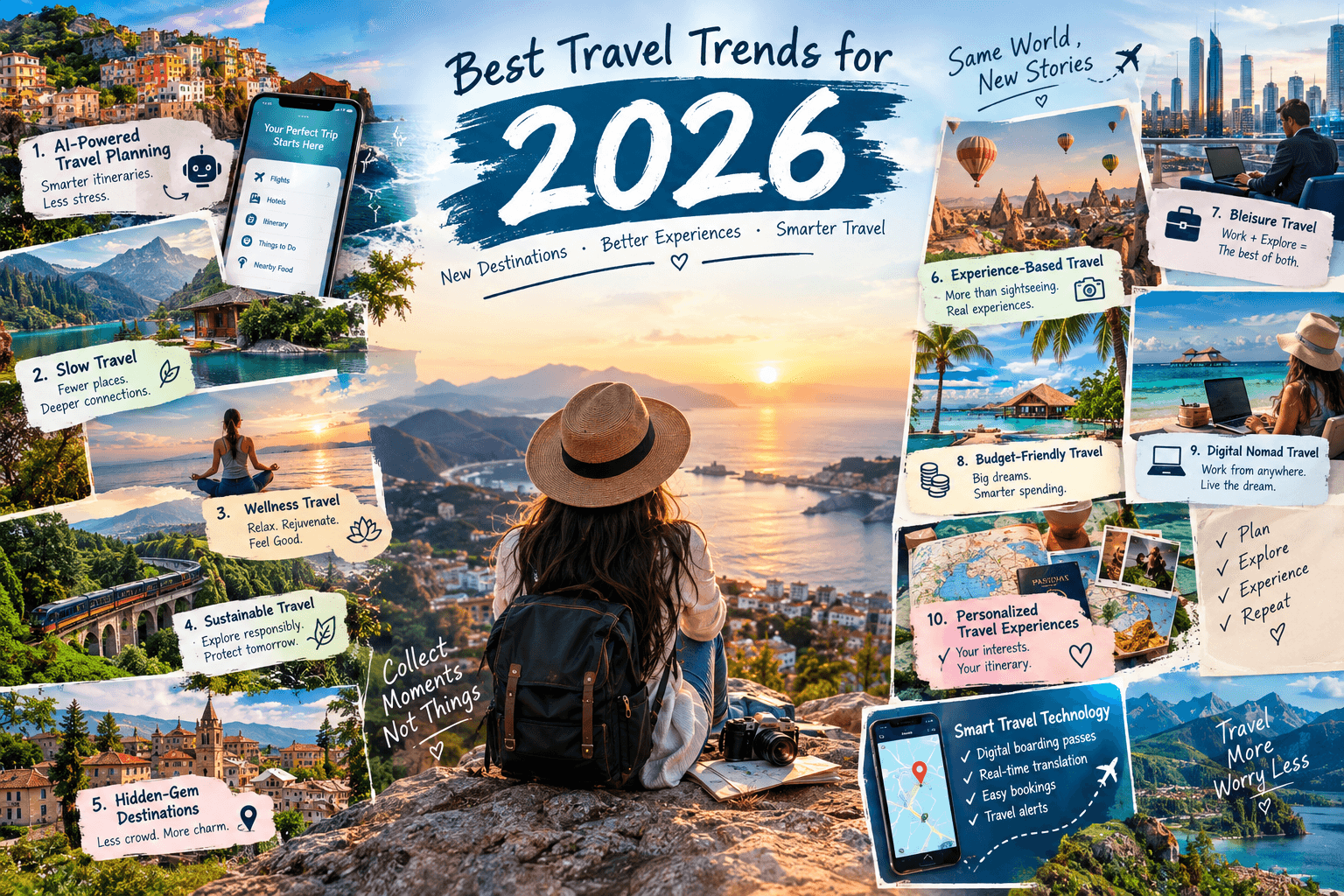
1. AI-Powered Travel Planning
Artificial intelligence is becoming an increasingly useful travel-planning tool.
AI can help travelers organize:
Destination ideas
Daily itineraries
Hotel options
Restaurant suggestions
Transportation plans
Packing lists
Budget estimates
Instead of spending hours comparing information across different websites, travelers can use digital tools to organize trip ideas in one place.
2. Slow Travel Is Growing
Slow travel focuses on spending more time in fewer places rather than rushing through multiple destinations.
A traveler might spend a week exploring one city or region instead of visiting several locations in a few days.
This approach can provide more opportunities to experience local food, neighborhoods, traditions, and everyday life.
3. Wellness Travel
Wellness is becoming an important part of travel planning.
Travelers are looking for experiences involving:
Spa treatments
Yoga and meditation
Nature retreats
Healthy food
Fitness activities
Digital-detox experiences
Peaceful destinations
Wellness trips can range from luxury resorts to affordable countryside retreats.
4. Sustainable Travel
Environmental awareness is influencing travel choices.
Some travelers are becoming more interested in:
Public transportation
Eco-friendly accommodation
Local businesses
Longer stays
Reusable travel products
Nature conservation
Lower-impact travel options
Sustainable travel does not necessarily mean avoiding flights completely. Small decisions throughout a trip can also influence its environmental footprint.
5. Hidden-Gem Destinations
Instead of visiting only the world's most famous tourist destinations, travelers are increasingly interested in lesser-known places.
Smaller cities, rural areas, coastal towns, mountain communities, and emerging destinations can offer different experiences while sometimes being less crowded.
This trend can also help travelers discover local culture beyond the most popular tourist attractions.
6. Experience-Based Travel
Many travelers are placing more emphasis on experiences rather than simply collecting destinations.
Popular experiences can include:
Cooking classes
Hiking
Cultural festivals
Local food tours
Photography trips
Adventure activities
Wildlife experiences
Traditional craft workshops
These activities can make a trip feel more personal and memorable.
7. Bleisure Travel
“Bleisure” combines business and leisure travel.
People traveling for work may extend their trips by a few days to explore the destination.
For example, someone attending a business conference could stay longer to visit museums, restaurants, historical sites, or nearby attractions.
The continued use of flexible and remote work arrangements can make this style of travel easier for some workers.
8. Budget-Friendly Travel
Rising travel costs are encouraging people to search for smarter ways to manage their budgets.
Travelers may compare:
Flights
Hotels
Travel dates
Public transportation
Local restaurants
Attractions
Travel packages
Traveling during less busy periods can sometimes provide different pricing and fewer crowds.
9. Digital Nomad Travel
Remote work has created opportunities for some people to work while traveling.
Digital nomads often choose destinations based on factors such as:
Internet availability
Accommodation
Cost of living
Safety
Community
Transportation
Visa rules
However, visa and tax requirements can vary significantly between countries, so travelers should check official information before planning a long stay.
10. Personalized Travel Experiences
Travel is becoming increasingly customized.
Instead of following a standard tourist itinerary, travelers can build trips around their personal interests.
For example:
Food lovers: local restaurants and cooking experiences
Adventure travelers: hiking, diving, skiing, or trekking
History lovers: museums and heritage sites
Nature lovers: national parks and wildlife
Photography enthusiasts: scenic landscapes and cultural locations
Personalization allows travelers to create trips that match their interests and budgets.
Smart Travel Technology in 2026
Technology is changing almost every part of the travel experience.
Travelers can use smartphones for:
Digital boarding passes
Navigation
Translation
Currency conversion
Hotel reservations
Travel alerts
Digital payments
Itinerary management
AI-powered tools can also help organize information and make personalized recommendations.
How to Travel Smarter
Plan the Important Parts Early
Book important transportation and accommodation ahead of time when necessary, especially during busy travel periods.
Compare Options
Check different transportation and accommodation choices before making a reservation.
Research Local Rules
Visa requirements, entry regulations, transportation rules, and local customs can vary by destination.
Keep Important Documents Accessible
Maintain secure digital and physical copies of important travel documents.
Leave Some Flexibility
A completely packed itinerary can make a trip stressful. Leaving free time can allow travelers to explore unexpected places.
Conclusion
are moving toward smarter planning, meaningful experiences, personalization, wellness, sustainability, and flexibility.
Technology is making travel planning easier, while travelers are increasingly looking for authentic experiences rather than simply visiting as many destinations as possible.
Whether you're planning a short holiday, a family vacation, an adventure trip, or a longer remote-work journey, understanding these trends can help you build a travel experience that matches your interests, schedule, and budget.
FAQs
1. What are the biggest travel trends in 2026?
Major trends include AI-powered travel planning, slow travel, wellness tourism, sustainable travel, hidden destinations, experience-based trips, and personalized itineraries.
2. What is slow travel?
Slow travel means spending more time exploring fewer destinations instead of rushing between many places.
3. How is AI changing travel?
AI tools can help travelers research destinations, create itineraries, compare options, translate languages, and organize travel information.
4. What is wellness tourism?
Wellness tourism focuses on travel experiences related to relaxation, health, fitness, mindfulness, and personal well-being.
5. What is sustainable travel?
Sustainable travel aims to reduce negative environmental and social impacts while supporting local communities and responsible tourism.
6. What are hidden-gem destinations?
They are lesser-known locations that may offer interesting culture, scenery, history, or experiences with fewer tourists than major attractions.
7. What is experience-based travel?
It focuses on activities and meaningful experiences rather than simply visiting tourist attractions.
8. What is bleisure travel?
Bleisure combines business travel with leisure by extending a work trip for personal exploration.
9. Is budget travel still popular?
Yes. Many travelers compare transportation, accommodation, food, and travel dates to manage costs.
10. What is digital nomad travel?
It involves working remotely while living or traveling in different locations, subject to local immigration and other rules.
11. How can travelers save money?
Comparing prices, choosing flexible dates, considering different accommodation types, and traveling during less busy periods can help manage expenses.
12. Why are travelers interested in local experiences?
Local experiences can provide deeper exposure to food, traditions, communities, history, and everyday life.
13. What should I consider when choosing a destination?
Consider your budget, weather, transportation, safety information, visa requirements, activities, accommodation, and personal interests.
14. Is sustainable travel more expensive?
Not necessarily. Options such as public transportation, local businesses, longer stays, and reusable products can sometimes be affordable.
15. What technology is useful while traveling?
Navigation apps, translation tools, digital payment systems, travel-booking platforms, digital boarding passes, and itinerary apps can all be useful.
16. Why are lesser-known destinations becoming popular?
Some travelers want fewer crowds, different cultural experiences, and alternatives to heavily visited tourist locations.
17. What is personalized travel?
Personalized travel involves creating an itinerary around an individual's interests, schedule, budget, and preferred activities.
18. How can I make travel less stressful?
Prepare essential documents, research transportation, keep important reservations accessible, and avoid overloading your itinerary.
19. Should travelers plan everything in advance?
Important elements may benefit from advance planning, but leaving some free time can make a trip more flexible.
20. What will travel look like in the future?
Travel is likely to become increasingly personalized and technology-assisted, while experiences, sustainability, wellness, and flexibility remain important considerations.