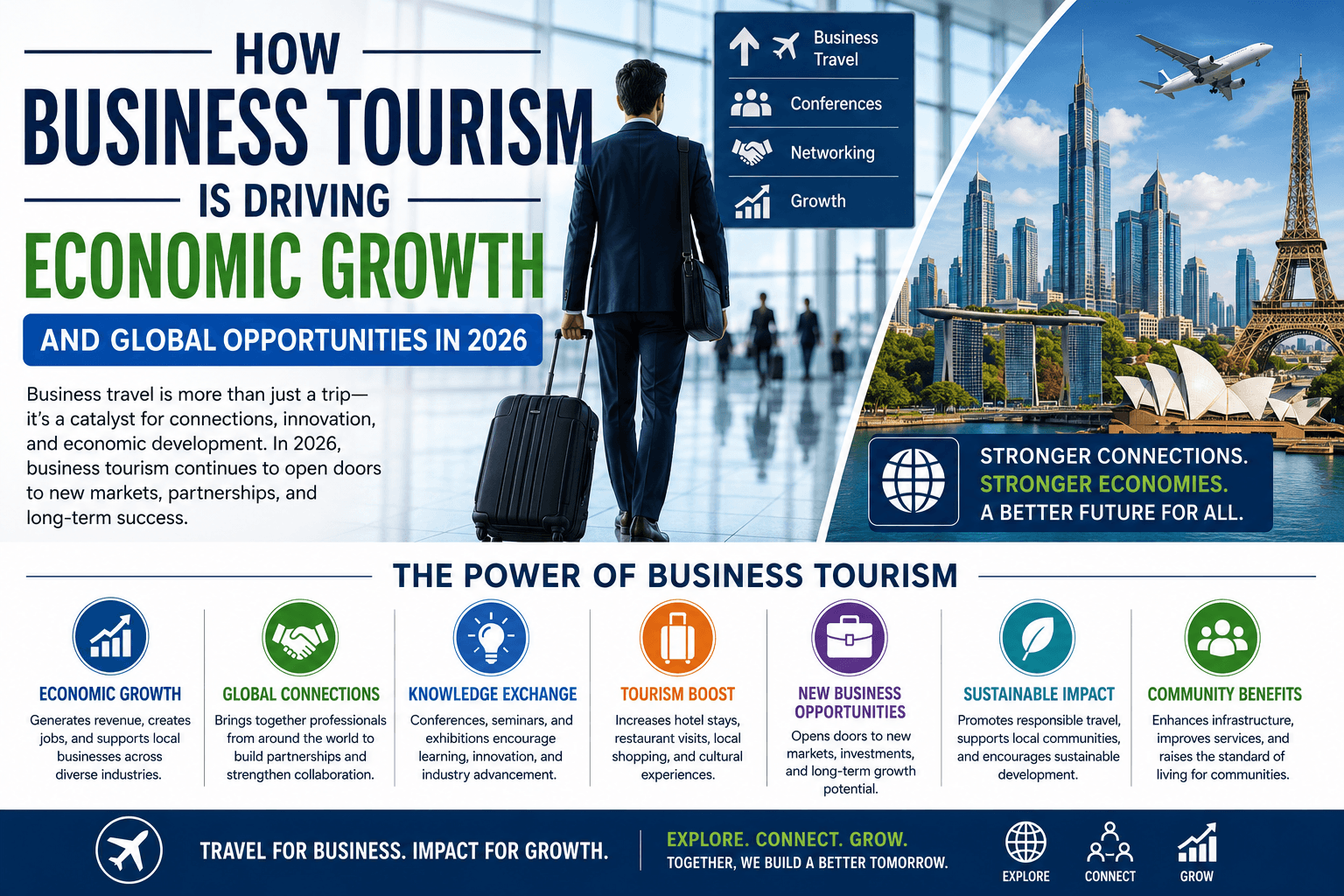

Business tourism has become one of the fastest-growing segments of the global travel industry. While leisure travel focuses on relaxation and recreation, business tourism connects professionals, entrepreneurs, investors, and organizations through conferences, exhibitions, trade fairs, corporate meetings, and networking events. In 2026, this sector continues to play a crucial role in economic development, international collaboration, and business expansion.
As companies increasingly seek opportunities beyond their local markets, business travel has evolved into a strategic investment rather than simply a business expense. Whether attending international trade shows, meeting potential clients, or exploring new investment destinations, business tourism creates valuable opportunities that benefit both organizations and local economies.
Understanding Business Tourism
Business tourism refers to travel undertaken primarily for professional or commercial purposes. Unlike traditional vacations, these trips are designed to support business objectives such as networking, education, partnerships, product launches, and market expansion.
Common forms of business tourism include:
International conferences
Corporate meetings
Trade exhibitions
Business networking events
Investment forums
Industry seminars
Professional training programs
Incentive travel for employees
These activities help businesses exchange knowledge, discover innovations, and build long-term professional relationships.
Business Tourism Boosts Local Economies
One of the greatest benefits of business tourism is its direct economic impact. Business travelers typically spend more than leisure tourists on accommodation, transportation, dining, event registration, and professional services.
This spending supports a wide range of industries, including:
Hotels and resorts
Airlines
Restaurants
Local transportation
Event management companies
Technology providers
Retail businesses
Tourist attractions
The result is increased employment opportunities, higher tax revenues, and stronger local business ecosystems.
Conferences Create Business Opportunities
Industry conferences remain among the most valuable events for professionals seeking knowledge and growth.
These events allow participants to:
Learn from industry experts
Discover emerging technologies
Explore new market trends
Build strategic partnerships
Meet potential investors
Exchange innovative ideas
Businesses often return from conferences with valuable insights that influence product development, marketing strategies, and operational improvements.
Trade Shows Connect Buyers and Sellers
Trade exhibitions provide businesses with opportunities to showcase products and services to targeted audiences.
For exhibitors, trade shows help generate qualified leads, increase brand visibility, and establish industry credibility.
For visitors, these events offer direct access to suppliers, product demonstrations, and market innovations.
Many long-term business partnerships begin with conversations held during international exhibitions.
Digital Technology Is Transforming Business Travel
Technology has significantly improved the business travel experience.
Modern travelers now benefit from:
Online booking platforms
Digital boarding passes
Virtual event registration
AI-powered travel assistants
Mobile expense management
Cloud collaboration tools
These innovations reduce administrative work while improving efficiency for both travelers and organizations.
Hybrid conferences that combine in-person and virtual participation have also expanded access to global audiences.
Tourism Destinations Are Investing in Business Infrastructure
Many cities are investing heavily in convention centers, business hotels, transportation systems, and digital connectivity to attract international business events.
Successful business destinations typically offer:
Modern conference facilities
Reliable transportation
High-speed internet
Quality accommodations
Safe environments
Cultural attractions
International airports
These investments strengthen both tourism and long-term economic development.
Business Travelers Often Become Leisure Tourists
An increasingly popular trend is "bleisure travel," where professionals extend business trips to enjoy local attractions, cultural experiences, and recreational activities.
This trend benefits destinations by increasing hotel stays, restaurant visits, shopping, and tourism spending.
Businesses also recognize that allowing employees additional personal travel time can improve job satisfaction and overall travel experiences.
Sustainability in Business Tourism
Environmental responsibility has become an important consideration for event organizers and corporate travelers.
Many organizations now prioritize:
Paperless conferences
Sustainable venues
Carbon reduction initiatives
Energy-efficient hotels
Public transportation
Local suppliers
Waste reduction programs
Sustainable business tourism helps protect destinations while supporting responsible economic growth.
Supporting Small Businesses
Business tourism creates opportunities not only for large corporations but also for small and medium-sized enterprises.
Local businesses benefit by providing:
Catering services
Event planning
Transportation
Printing services
Photography
Local tours
Corporate gifts
Hospitality services
This broader distribution of economic activity strengthens local entrepreneurship and community development.
Business Tourism Encourages Innovation
International events expose businesses to new technologies, management practices, and emerging market trends.
Professionals often return with fresh ideas that improve:
Customer service
Product development
Operational efficiency
Digital transformation
Marketing strategies
Workforce training
Knowledge sharing remains one of the most valuable outcomes of business travel.
Challenges Facing Business Tourism
Despite its continued growth, business tourism faces several challenges.
Organizations must consider:
Rising travel costs
Global economic uncertainty
Cybersecurity concerns
Visa requirements
Environmental responsibilities
Health and safety planning
Careful planning and flexible travel policies help businesses manage these challenges effectively.
The Future of Business Tourism
The future of business tourism is expected to combine physical events with advanced digital experiences.
Artificial intelligence, virtual reality, and smart event technologies will continue improving networking opportunities and attendee engagement.
However, face-to-face interaction remains irreplaceable for building trust, negotiating partnerships, and strengthening professional relationships.
As globalization continues, international business travel will remain an important driver of innovation and economic cooperation.
Conclusion
Business tourism has become far more than corporate travel. It is a powerful contributor to economic development, knowledge sharing, entrepreneurship, and international collaboration.
By connecting professionals, investors, and organizations from around the world, business tourism creates opportunities that benefit businesses, destinations, and local communities alike.
As technology advances and global markets become increasingly interconnected, companies that strategically invest in business tourism will be better positioned to build partnerships, discover new opportunities, and achieve sustainable growth.
In 2026, business tourism continues to prove that travel is not only about reaching destinations—it is about creating opportunities, driving innovation, and shaping the future of global business.