HAHow AI Is Changing Everyday Life in 2026: Smart Living Trends to Know
Modern life is becoming increasingly busy. Work responsibilities, digital devices, social media, and constant connectivity can make it difficult to maintain a balanced lifestyle. In 2026, more people are focusing on sustainable habits that support physical health, mental well-being, productivity, and personal happiness.
A healthy lifestyle does not necessarily require dramatic changes. Small, consistent improvements in daily routines can make a meaningful difference over time.
Prioritizing Quality Sleep
Sleep is one of the most important foundations of a healthy lifestyle.
A consistent sleep schedule can help support energy, concentration, mood, and overall well-being. Instead of focusing only on the number of hours slept, people can also pay attention to sleep quality.
Creating a relaxing evening routine, reducing unnecessary screen time before bed, and maintaining a comfortable sleeping environment can support better rest.
Making Healthy Food Choices
A balanced diet plays an important role in everyday energy and wellness.
Rather than following extreme diets, a sustainable approach can include a variety of fruits, vegetables, whole grains, protein sources, and healthy fats.
Planning meals in advance can also make it easier to avoid unhealthy convenience foods when life becomes busy.
The goal is not perfection. A healthy lifestyle should be realistic enough to maintain over the long term.
Staying Physically Active
Regular movement is essential for maintaining an active lifestyle.
Exercise does not always have to involve an intensive gym workout. Walking, cycling, stretching, swimming, dancing, or recreational sports can all provide opportunities to stay active.
For people who spend long periods sitting at work, taking short movement breaks throughout the day can also be useful.
Protecting Mental Well-Being
Mental wellness is becoming an increasingly important part of modern lifestyle planning.
Constant notifications, social media, work pressure, and information overload can contribute to stress and mental fatigue.
Taking regular breaks, spending time outdoors, practicing relaxation techniques, maintaining social connections, and creating boundaries around work can help support emotional well-being.
Reducing Digital Overload
Technology is useful, but excessive screen time can interfere with sleep, concentration, relationships, and daily routines.
A healthier digital lifestyle can involve turning off unnecessary notifications, taking regular screen breaks, and creating periods of the day without phones or social media.
Digital boundaries can help people become more intentional about how they spend their attention.
Spending More Time Outdoors
Spending time outdoors can be a simple way to disconnect from digital environments and reconnect with the physical world.
Walking in a park, gardening, hiking, or simply sitting outside can provide an opportunity to slow down and relax.
Outdoor activities can also encourage physical movement and social interaction.
Building Meaningful Relationships
Strong relationships are an important part of a fulfilling lifestyle.
Spending quality time with family and friends can provide emotional support and create a stronger sense of connection.
In an increasingly digital world, meaningful face-to-face conversations can be especially valuable.
Creating a More Productive Routine
A good lifestyle is not only about health. It is also about managing time effectively.
Planning important tasks, setting realistic goals, and reducing unnecessary distractions can help people make better use of their day.
A simple daily routine can provide structure while still allowing flexibility.
Practicing Financial Wellness
Personal finance is also connected to lifestyle.
Managing spending, building savings, reducing unnecessary debt, and setting financial goals can reduce financial stress and create greater stability.
Financial wellness does not mean avoiding every enjoyable purchase. Instead, it means creating a balance between enjoying the present and preparing for the future.
Choosing Sustainable Habits
Sustainability is becoming part of modern lifestyle choices.
People can make small changes such as reducing unnecessary waste, reusing products, conserving energy, choosing durable items, and considering environmentally responsible transportation options.
Sustainable living does not require perfection. Consistent small choices can contribute to a more responsible lifestyle.
The Importance of Personal Balance
One of the biggest lifestyle lessons for 2026 is the importance of balance.
Work, health, relationships, entertainment, finances, and personal development all require attention.
Trying to optimize every part of life simultaneously can create unnecessary pressure. Instead, people can focus on a few meaningful improvements and gradually build healthier routines.
Conclusion
A better lifestyle does not have to involve complicated plans or dramatic changes.
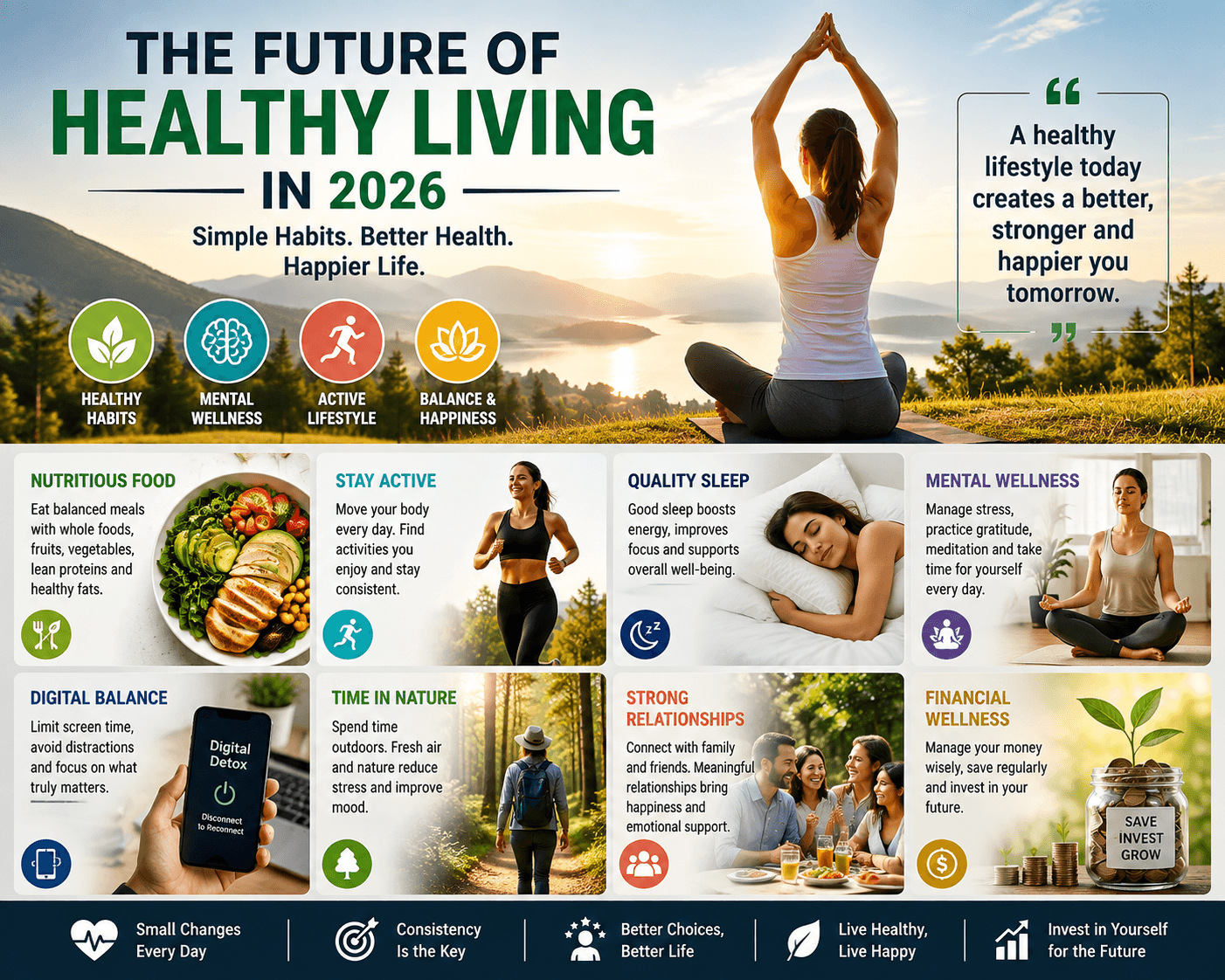
Prioritizing sleep, eating balanced meals, staying active, protecting mental well-being, reducing digital distractions, maintaining relationships, and managing finances can create a stronger foundation for everyday life.
In 2026, the goal of healthy living is increasingly shifting from short-term perfection to long-term consistency, balance, and sustainable habits.
Small changes made regularly can ultimately create a healthier, happier, and more fulfilling lifestyle.
FAQs: The Future of Healthy Living in 2026
1. What does a healthy lifestyle mean in 2026?
A healthy lifestyle involves maintaining a balanced approach to physical health, mental well-being, nutrition, sleep, exercise, relationships, digital habits, and personal finances.
2. Why is sleep important for a healthy lifestyle?
Quality sleep supports energy, concentration, mood, and everyday functioning. Maintaining a consistent sleep routine and creating a relaxing environment can support better sleep.
3. How can I improve my daily diet?
Focus on a balanced variety of vegetables, fruits, whole grains, protein sources, and healthy fats. Planning meals ahead can also make healthy choices easier.
4. How much exercise should people get?
The appropriate amount varies by person. Regular movement throughout the week—including walking, cycling, swimming, stretching, or other enjoyable activities—can support overall fitness.
5. How can people reduce stress?
Useful strategies can include taking breaks, spending time outdoors, maintaining social connections, practicing relaxation techniques, and creating reasonable boundaries between work and personal time.
6. Why is reducing screen time important?
Excessive screen use can interfere with sleep, concentration, physical activity, and personal relationships. Setting digital boundaries and taking regular breaks can encourage healthier technology habits.
7. How does spending time outdoors benefit lifestyle?
Outdoor activities provide opportunities for movement, relaxation, and connection with nature. Walking, gardening, hiking, or simply spending time outside can become part of a balanced routine.
8. Why are relationships important for well-being?
Meaningful relationships can provide emotional support, companionship, and a sense of connection. Making time for family and friends can contribute to overall life satisfaction.
9. What is financial wellness?
Financial wellness involves managing money responsibly, setting financial goals, controlling unnecessary spending, building savings, and preparing for future needs.
10. How can someone build healthier habits?
Start with small, realistic changes rather than trying to change everything at once. Consistency is generally more sustainable than pursuing perfection.
11. What is a balanced lifestyle?
A balanced lifestyle means giving appropriate attention to health, work, relationships, personal interests, finances, rest, and recreation without allowing one area to completely dominate daily life.
12. What are the most important lifestyle trends in 2026?
Key trends include mindful technology use, regular physical activity, better sleep routines, balanced nutrition, mental wellness, outdoor activities, financial wellness, sustainable living, and personalized health habits.