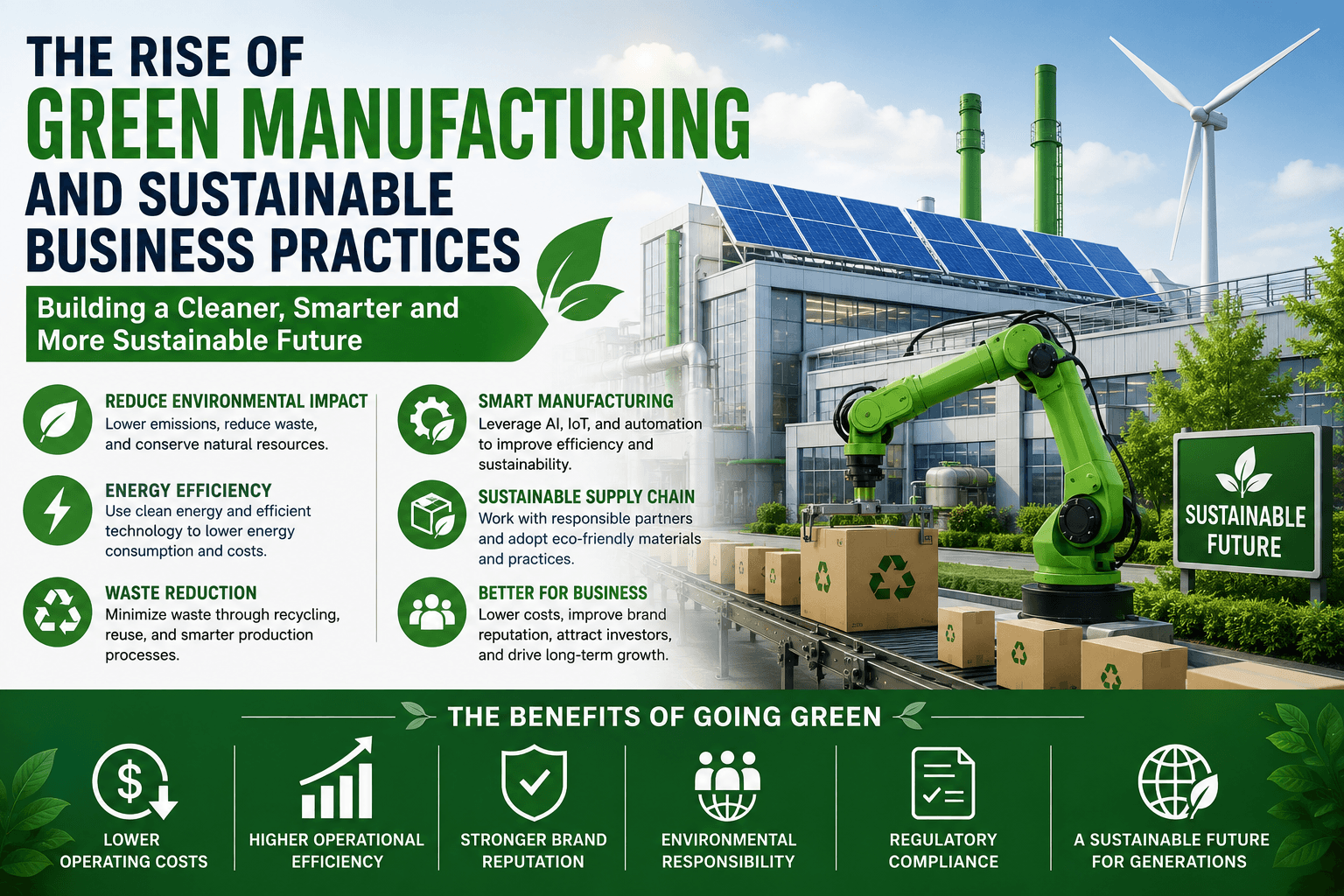
Sustainability has become one of the defining priorities for businesses in 2026. As climate concerns, environmental regulations, and consumer expectations continue to grow, companies are increasingly adopting green manufacturing and sustainable business practices to reduce their environmental impact while improving operational performance.
Today, sustainability is no longer viewed as a corporate responsibility initiative alone—it has become a strategic business advantage. Organizations that invest in environmentally responsible operations often benefit from lower costs, stronger brand reputation, improved efficiency, and increased customer loyalty.
Green manufacturing is transforming industries around the world, from automotive and electronics to food production, construction, and consumer goods.
What Is Green Manufacturing?
Green manufacturing refers to the design, production, and distribution of products using processes that minimize environmental impact while maximizing resource efficiency.
Its primary goals include:
Reducing waste
Lowering energy consumption
Conserving natural resources
Minimizing pollution
Increasing recycling and reuse
Improving production efficiency
The objective is to create sustainable operations without sacrificing product quality or profitability.
Why Sustainability Matters More Than Ever
Businesses face increasing pressure from customers, investors, governments, and partners to operate responsibly.
Consumers are more likely to support companies that demonstrate environmental responsibility through sustainable products and transparent business practices.
At the same time, governments continue introducing environmental regulations designed to reduce carbon emissions and encourage cleaner production methods.
Companies that embrace sustainability early are often better prepared for future regulatory and market changes.
Energy-Efficient Manufacturing
Reducing energy consumption is one of the most effective ways businesses can lower operating costs while reducing environmental impact.
Manufacturers are investing in:
Energy-efficient machinery
Smart lighting systems
Renewable energy sources
Automated energy monitoring
High-efficiency production equipment
These improvements often generate long-term financial savings while supporting sustainability goals.
Reducing Industrial Waste
Waste reduction has become a major focus for manufacturers seeking greater efficiency.
Modern production facilities use advanced technologies to:
Optimize material usage
Reduce defective products
Improve production planning
Increase recycling
Reuse manufacturing materials
Lower waste levels contribute to both environmental protection and improved profitability.
Circular Economy Principles
Rather than following the traditional "produce, use, dispose" model, many businesses are adopting circular economy strategies.
This approach emphasizes:
Product recycling
Material recovery
Equipment refurbishment
Product redesign
Extended product life cycles
Circular business models reduce waste while creating additional economic value.
Smart Manufacturing Supports Sustainability
Artificial intelligence, robotics, and IoT technologies are helping manufacturers become more environmentally efficient.
Smart factories monitor:
Energy consumption
Equipment performance
Water usage
Material waste
Production efficiency
Real-time analytics allow businesses to identify opportunities for continuous improvement.
Sustainable Supply Chains
Environmental responsibility extends beyond the factory floor.
Businesses increasingly evaluate suppliers based on:
Carbon emissions
Ethical sourcing
Transportation efficiency
Recycling initiatives
Sustainable packaging
Building environmentally responsible supply chains strengthens long-term resilience and corporate reputation.
Green Packaging Innovations
Packaging plays an important role in sustainability.
Companies are replacing traditional materials with:
Recyclable packaging
Biodegradable materials
Reusable containers
Reduced plastic packaging
Lightweight shipping materials
Sustainable packaging reduces waste while meeting growing consumer expectations.
Financial Benefits of Green Manufacturing
Contrary to common misconceptions, sustainability often improves profitability.
Key business benefits include:
Lower operating costs
Reduced energy bills
Improved resource efficiency
Higher investor confidence
Greater customer loyalty
Stronger brand reputation
Many organizations find that environmental responsibility supports long-term financial performance.
Challenges Businesses Face
Transitioning to sustainable manufacturing requires careful planning.
Common challenges include:
Initial Investment
Energy-efficient equipment and new technologies require upfront capital.
Technology Integration
Older manufacturing systems may need upgrades before implementing sustainable solutions.
Employee Training
Workers must understand new technologies and sustainability practices.
Measuring Environmental Performance
Businesses need reliable systems to monitor emissions, energy usage, and resource consumption.
Despite these challenges, long-term benefits often outweigh implementation costs.
The Future of Sustainable Manufacturing
Several innovations are expected to shape the future of green manufacturing, including:
AI-powered energy optimization
Carbon-neutral production facilities
Hydrogen-powered industrial processes
Smart recycling technologies
Digital twins for sustainability planning
Advanced renewable energy integration
Autonomous energy management systems
These technologies will help manufacturers operate more efficiently while reducing environmental impact.
Conclusion
Green manufacturing is becoming a cornerstone of modern business strategy. Companies that invest in sustainable operations can improve efficiency, reduce costs, strengthen customer trust, and prepare for future environmental regulations.
As sustainability continues to influence global markets, businesses that embrace green manufacturing today will be better positioned for long-term growth, resilience, and competitive success. In 2026 and beyond, sustainable business practices are not just good for the environment—they are essential for building stronger and more profitable organizations.