
TNTech News 2026: New Gadgets, Big Tech & Digital Trends
Artificial intelligence has become a core part of modern business, powering everything from customer service and cybersecurity to financial forecasting and supply chain management. As AI adoption accelerates, organizations are recognizing that innovation alone is not enough. In 2026, AI governance has become a top priority, helping businesses use AI responsibly, securely, and in compliance with emerging regulations.
What Is AI Governance?
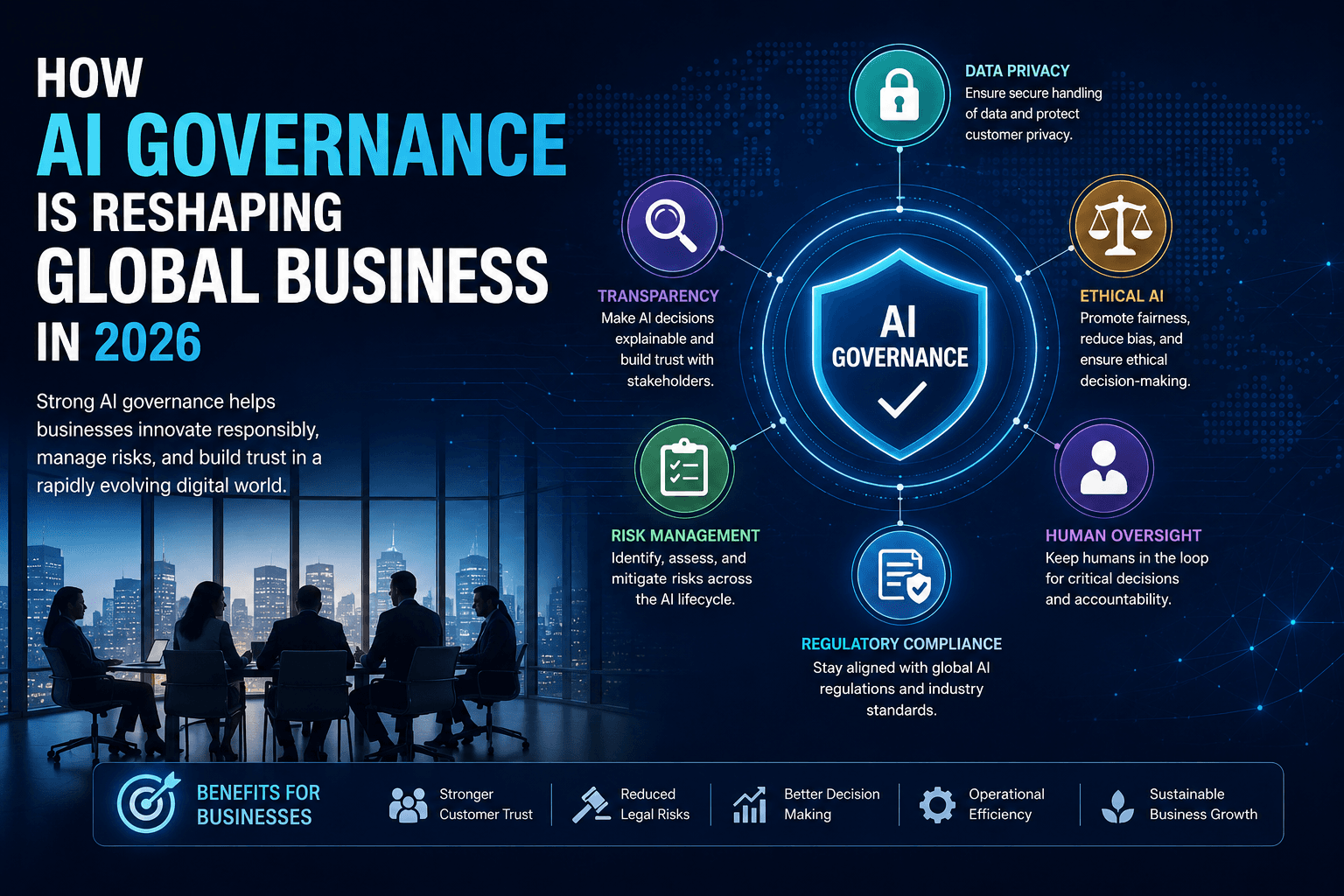
AI governance refers to the policies, processes, and technologies that ensure artificial intelligence is developed and used ethically, transparently, and responsibly. It helps organizations manage AI risks while maintaining trust with customers, employees, investors, and regulators.
An effective AI governance framework includes:
Data privacy protection
AI transparency
Risk management
Regulatory compliance
Human oversight
Ethical decision-making
These principles enable businesses to deploy AI confidently without compromising security or public trust.
Why AI Governance Matters
As AI systems become more autonomous, businesses face growing concerns about data misuse, biased decision-making, cybersecurity threats, and legal compliance. Governments around the world are introducing AI regulations that require organizations to demonstrate accountability for how AI models are trained and used.
Companies that fail to establish strong governance may face legal penalties, reputational damage, and loss of customer confidence.
Building Trust Through Responsible AI
Trust has become one of the most valuable business assets. Customers are more likely to engage with companies that clearly explain how AI makes decisions and how personal data is collected, stored, and protected.
Responsible AI practices also help organizations reduce bias, improve fairness, and ensure that automated decisions remain accurate and explainable.
Strengthening Cybersecurity
AI governance also plays a critical role in cybersecurity. Businesses are implementing continuous monitoring, access controls, and regular security audits to protect AI systems from cyberattacks, data breaches, and model manipulation.
Secure AI environments help organizations safeguard sensitive business information while maintaining operational resilience.
Preparing for Global Regulations
Many countries are introducing AI-related laws that require businesses to meet strict standards for transparency, accountability, and consumer protection. Organizations with strong governance frameworks are better prepared to adapt to changing regulations without disrupting operations.
Proactive compliance reduces legal risks and strengthens long-term business stability.
Competitive Advantage Through Governance
Companies that prioritize AI governance gain more than regulatory compliance. They improve customer confidence, attract investors, reduce operational risks, and build stronger partnerships.
Responsible AI is increasingly becoming a competitive differentiator, especially in industries such as healthcare, finance, manufacturing, and retail where trust is essential.
The Future of AI Governance
Over the next few years, AI governance will become a standard business function alongside cybersecurity, privacy, and corporate compliance. Organizations will invest in AI auditing tools, governance platforms, and dedicated AI risk management teams to ensure responsible innovation.
Businesses that establish strong governance today will be better positioned to scale AI technologies while maintaining public trust and regulatory compliance.
Conclusion
AI governance is no longer just a legal or technical requirement—it is a strategic business necessity. As artificial intelligence continues to reshape industries worldwide, organizations that embrace responsible AI practices will be better equipped to innovate, protect their reputation, and achieve sustainable growth in the digital economy.