
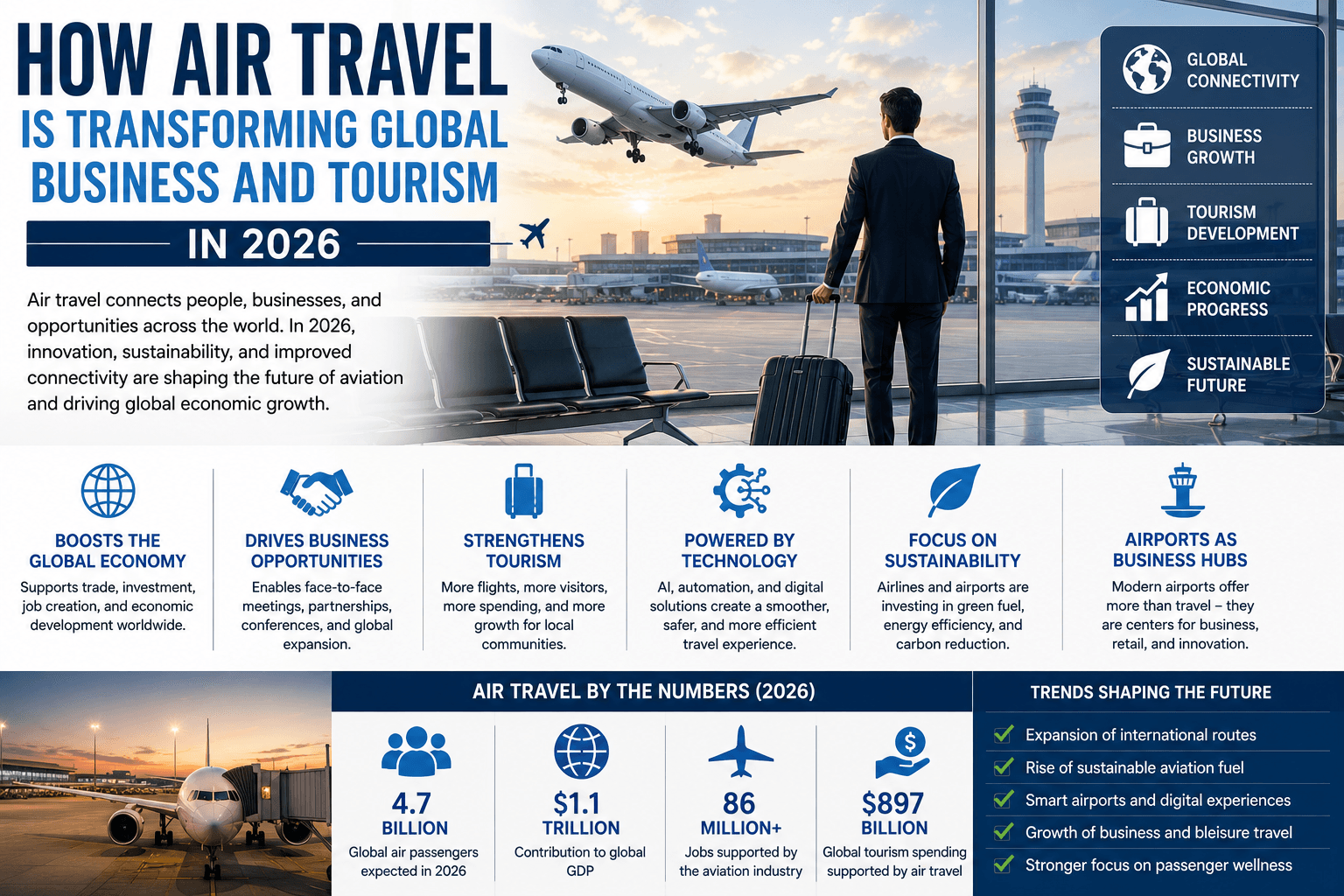

Air travel has long been one of the world's most important drivers of economic development, international trade, and tourism. In 2026, the aviation industry continues to play a vital role in connecting businesses, cultures, and people across continents. From enabling international conferences and investment opportunities to supporting leisure tourism and global supply chains, air travel remains essential to the modern economy.
As technology advances and passenger expectations evolve, airlines and airports are embracing innovation to improve efficiency, sustainability, and customer experience. These developments are not only benefiting travelers but also creating significant opportunities for businesses operating in tourism, hospitality, logistics, retail, and related industries.
This article explores how air travel is reshaping business and tourism in 2026 and why it remains a cornerstone of global economic growth.
Air Travel Supports the Global Economy
The aviation sector contributes billions of dollars to the global economy every year by facilitating trade, tourism, and business expansion. Every commercial flight supports a network of industries, including airports, airlines, hotels, restaurants, transportation services, travel agencies, retailers, and event organizers.
Air connectivity enables companies to reach international markets, establish partnerships, attend trade exhibitions, and meet clients efficiently. At the same time, tourism destinations benefit from increased visitor arrivals, supporting local businesses and creating employment opportunities.
Business Travel Continues to Drive Growth
Although virtual meetings remain useful for routine communication, face-to-face meetings continue to play an essential role in building trust and strengthening professional relationships.
Business travelers frequently fly to:
Attend international conferences
Meet clients and investors
Participate in trade exhibitions
Visit manufacturing facilities
Negotiate business partnerships
Explore new markets
These activities often lead to investment opportunities, knowledge sharing, and long-term commercial relationships.
Tourism Benefits from Better Air Connectivity
Tourism thrives when destinations are easily accessible. New airline routes allow travelers to visit emerging destinations that were previously difficult to reach.
Improved connectivity encourages:
Higher international visitor numbers
Longer tourist stays
Increased hotel occupancy
Growth in local businesses
Greater cultural exchange
Expanded tourism investment
Destinations with reliable air connections often become more attractive for both leisure travelers and international investors.
Airlines Invest in Passenger Experience
Modern travelers expect more than transportation. Airlines are enhancing the passenger experience through technology and improved services.
Recent developments include:
Digital boarding passes
Self-service check-in
Faster baggage handling
High-speed onboard Wi-Fi
Mobile travel apps
Personalized travel updates
Improved cabin comfort
These innovations simplify travel while increasing customer satisfaction.
Technology Is Reshaping Aviation
Digital transformation continues to modernize the aviation industry.
Airlines and airports increasingly use:
Artificial intelligence
Biometric identity verification
Smart baggage tracking
Predictive maintenance
Cloud-based operations
Automated customer service
Data analytics
These technologies improve operational efficiency while reducing delays and enhancing passenger safety.
Sustainable Aviation Gains Momentum
Environmental responsibility has become a major priority across the aviation industry.
Airlines are investing in initiatives such as:
Sustainable aviation fuel (SAF)
More fuel-efficient aircraft
Carbon reduction programs
Electric ground vehicles
Recycling initiatives
Optimized flight routes
Energy-efficient airport terminals
While achieving net-zero emissions remains a long-term challenge, these investments demonstrate the industry's commitment to sustainability.
Airports Become Business Hubs
Modern airports have evolved into more than transportation facilities. Many now function as business and commercial centers.
International airports often include:
Conference facilities
Hotels
Retail shopping
Restaurants
Business lounges
Cargo terminals
Logistics centers
These services support both travelers and businesses while contributing significantly to regional economies.
Air Cargo Strengthens Global Trade
Passenger flights receive much attention, but air cargo is equally important.
Air freight supports industries by transporting:
Medical supplies
Electronics
High-value goods
Fresh food
Pharmaceuticals
Manufacturing components
Fast and reliable air cargo services enable businesses to maintain global supply chains and respond quickly to customer demand.
Opportunities for the Travel Industry
Growth in air travel creates opportunities for numerous businesses, including:
Hotels and resorts
Travel agencies
Tour operators
Car rental companies
Insurance providers
Airport retailers
Hospitality businesses
Entrepreneurs who adapt to changing traveler expectations can benefit from continued demand for high-quality travel experiences.
Challenges Facing the Aviation Sector
Despite strong growth, airlines continue to face several challenges.
These include:
Rising fuel costs
Weather disruptions
Cybersecurity risks
Airport congestion
Skilled workforce shortages
Regulatory requirements
Sustainability targets
Addressing these issues requires collaboration between airlines, governments, airports, and technology providers.
The Future of Air Travel
The aviation industry is expected to become increasingly digital, efficient, and environmentally responsible.
Future innovations may include:
AI-powered travel assistants
Automated airport processes
Expanded use of sustainable aviation fuel
Smarter aircraft maintenance
Enhanced biometric security
Improved digital customer experiences
As global connectivity continues to expand, air travel will remain one of the most important drivers of business growth and international tourism.
Conclusion
Air travel remains a cornerstone of the global economy, connecting businesses, supporting tourism, and enabling international trade. Advances in technology, customer service, and sustainability are transforming how people travel while creating new opportunities for industries worldwide.
Businesses that understand these trends and adapt to changing traveler expectations will be well positioned for success in the evolving aviation landscape.
In 2026, air travel is more than a means of transportation—it is a catalyst for innovation, investment, collaboration, and sustainable economic development across the world.