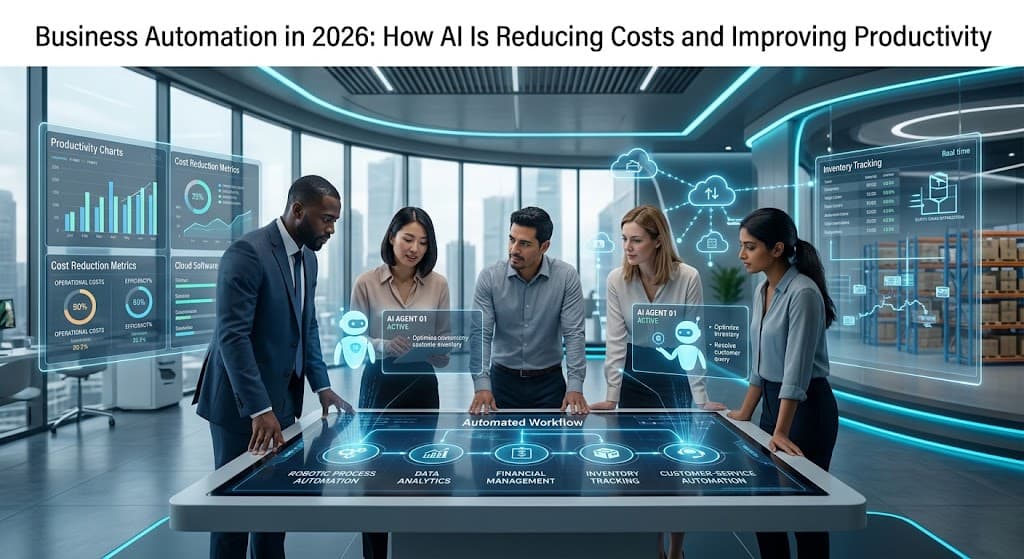
Introduction
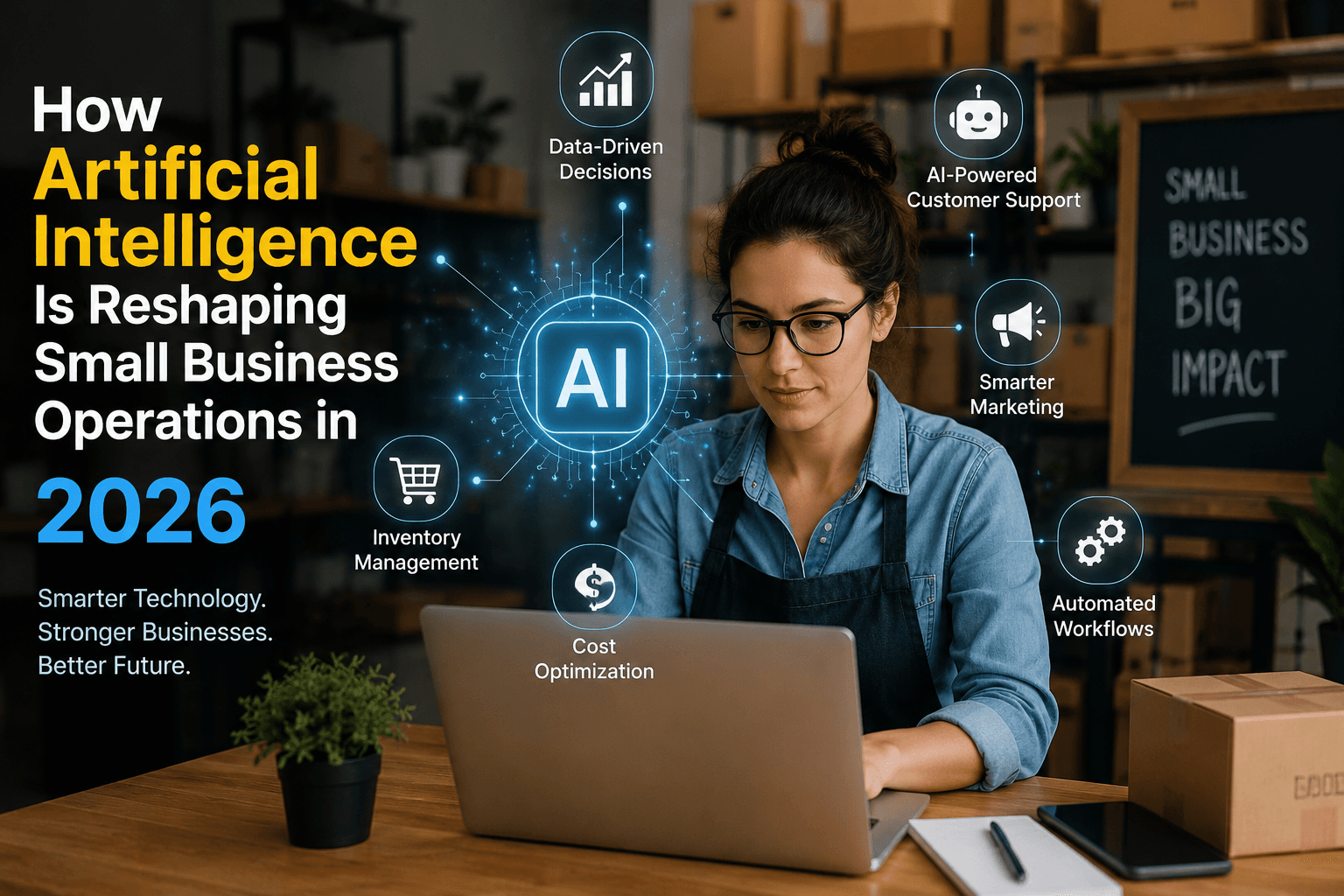
Artificial Intelligence (AI) has become one of the most influential technologies shaping the future of business. What was once considered a competitive advantage for large enterprises has now become an accessible and affordable solution for businesses of every size. In 2026, small businesses are embracing AI not simply to automate repetitive tasks but to improve customer experiences, increase productivity, make data-driven decisions, and remain competitive in rapidly evolving markets.
Cloud computing, generative AI, predictive analytics, and intelligent automation have lowered the barriers to AI adoption. Business owners no longer need expensive infrastructure or large IT departments to implement advanced technologies. Instead, they can access AI-powered platforms through affordable subscriptions that integrate seamlessly with existing business applications.
As customer expectations continue to rise and operational costs increase, AI is helping entrepreneurs work smarter rather than harder. From marketing and sales to finance, inventory, customer support, and cybersecurity, artificial intelligence is becoming a core driver of business growth.
Why Small Businesses Are Investing in AI
Small businesses operate with limited budgets, fewer employees, and intense competition. AI helps overcome these challenges by automating routine operations while allowing teams to focus on strategic activities that create value.
Several factors are accelerating AI adoption in 2026:
Affordable cloud-based AI platforms
Easy integration with existing software
Improved data analytics capabilities
Growing customer demand for personalized experiences
Increased availability of no-code AI solutions
Faster return on technology investments
Rather than replacing employees, AI enhances human capabilities by eliminating repetitive work and providing insights that improve decision-making.
AI-Powered Customer Service
Customer experience has become one of the strongest competitive advantages for small businesses. AI-powered customer service tools enable businesses to provide fast, personalized, and consistent support without significantly increasing operational costs.
Modern AI chatbots can answer common questions, process appointments, recommend products, and assist customers 24 hours a day. Unlike traditional chat systems, today's AI assistants understand context, learn from previous conversations, and deliver increasingly accurate responses.
Key benefits include:
Instant customer responses
Reduced waiting times
Lower support costs
Increased customer satisfaction
Continuous service availability
Human support teams can focus on resolving complex customer issues while AI handles routine inquiries efficiently.
Smarter Marketing with Artificial Intelligence
Marketing has evolved from broad advertising campaigns to highly personalized customer experiences. AI enables small businesses to analyze customer behavior and create targeted marketing campaigns based on real-time insights.
Businesses are using AI to:
Generate marketing content
Personalize email campaigns
Improve SEO performance
Predict customer preferences
Optimize advertising budgets
Schedule social media content
Analyze campaign performance
AI also helps businesses identify which products customers are most likely to purchase, allowing marketing teams to deliver personalized recommendations that increase engagement and conversions.
Instead of guessing what customers want, businesses can rely on data-driven strategies that improve marketing efficiency while reducing advertising costs.
Better Decision-Making Through Data Analytics
Every business generates valuable information through sales, customer interactions, website traffic, and operational activities. AI transforms this raw data into meaningful insights that support smarter decision-making.
Advanced analytics platforms can identify:
Customer buying trends
Seasonal demand patterns
Sales opportunities
Inventory shortages
Profitability insights
Market changes
Business owners no longer need to rely solely on intuition. AI-powered dashboards provide real-time information that enables faster and more confident business decisions.
Predictive analytics also helps companies prepare for future demand instead of reacting after problems occur.
Financial Management Made Easier
Managing finances is one of the most time-consuming responsibilities for small business owners. AI simplifies financial operations through intelligent automation and predictive forecasting.
Common AI applications include:
Automated bookkeeping
Invoice processing
Expense tracking
Cash flow forecasting
Budget planning
Fraud detection
Tax preparation assistance
By reducing manual accounting tasks, businesses save time, minimize errors, and improve financial accuracy.
AI also identifies unusual financial activities that may indicate fraud, helping organizations strengthen financial security.
Inventory and Supply Chain Optimization
Inventory management directly affects profitability. Overstocking increases storage costs, while understocking leads to lost sales.
AI improves inventory management by analyzing historical sales, seasonal demand, supplier performance, and customer purchasing behavior.
Benefits include:
Better inventory forecasting
Reduced stock shortages
Lower storage costs
Faster replenishment
Improved supplier management
These insights help businesses maintain optimal inventory levels while reducing waste and improving customer satisfaction.
AI in Human Resources
Recruiting and managing employees requires significant time and effort. AI streamlines HR processes by automating repetitive administrative tasks.
Businesses use AI to:
Screen resumes
Schedule interviews
Analyze candidate qualifications
Automate employee onboarding
Track employee performance
Identify training opportunities
Rather than replacing HR professionals, AI helps them focus on employee development and strategic workforce planning.
Strengthening Cybersecurity
Cyber threats continue to increase as businesses become more digitally connected. Small businesses are often attractive targets because they typically have limited cybersecurity resources.
AI improves security by continuously monitoring networks for suspicious activity.
Modern AI security systems can:
Detect unusual login attempts
Identify malware
Monitor network behavior
Prevent phishing attacks
Respond to threats in real time
This proactive approach significantly reduces the risk of data breaches and financial losses.
Traditional Operations vs AI-Powered Operations
Traditional Business | AI-Powered Business |
|---|---|
Manual data entry | Automated workflows |
Reactive decisions | Predictive insights |
Generic marketing | Personalized campaigns |
Limited customer support hours | 24/7 AI assistance |
Manual inventory tracking | Smart demand forecasting |
Basic financial reports | Real-time financial analytics |
Manual scheduling | Intelligent automation |
This comparison demonstrates how AI enables small businesses to operate more efficiently while delivering better customer experiences.
Challenges of AI Adoption
Although AI offers significant advantages, successful implementation requires careful planning.
Some common challenges include:
Employee training requirements
Data privacy concerns
Integration with existing software
Initial implementation costs
Choosing the right AI tools
Maintaining data quality
Businesses should begin with small AI projects, measure results, and gradually expand AI adoption across different departments.
Best Practices for Implementing AI
To maximize return on investment, businesses should follow a structured implementation strategy.
Recommended steps include:
Identify repetitive tasks suitable for automation.
Define clear business objectives.
Choose AI tools that integrate with existing systems.
Train employees to work alongside AI.
Monitor performance using measurable KPIs.
Continuously optimize AI workflows.
Successful AI adoption depends on combining intelligent technology with skilled employees rather than replacing human expertise.
The Future of AI for Small Businesses
AI will continue evolving throughout the coming years. Future innovations will include autonomous business agents, advanced predictive analytics, AI-powered digital employees, intelligent business assistants, and highly personalized customer experiences.
Generative AI will create marketing content, customer communications, reports, and business insights in seconds. AI-powered decision support systems will become increasingly capable of recommending strategic actions based on market conditions and customer behavior.
Businesses that adopt AI early will be better positioned to improve efficiency, reduce costs, increase innovation, and compete successfully in digital markets.
Conclusion
Artificial Intelligence is no longer a technology reserved for large enterprises. In 2026, it has become an essential business tool that enables small businesses to operate more efficiently, improve customer satisfaction, strengthen financial management, and make smarter decisions based on real-time data.
From automating repetitive tasks to delivering personalized customer experiences and enhancing cybersecurity, AI provides practical solutions that help businesses grow while controlling operational costs. As technology continues to become more accessible, organizations that embrace AI today will be better prepared for tomorrow's increasingly competitive business landscape.
Rather than replacing people, artificial intelligence empowers teams to focus on creativity, innovation, and strategic growth. Small businesses that combine human expertise with AI-driven capabilities will be well-positioned to achieve sustainable success and unlock new opportunities in the years ahead.