Global logistics has become one of the most critical drivers of economic growth and business success. As international trade continues expanding and consumer expectations evolve, companies are investing heavily in modern logistics technologies to improve efficiency, reduce costs, and strengthen supply chain resilience. In 2026, smart logistics is reshaping how goods move across the world through automation, artificial intelligence, real-time tracking, and data-driven decision-making.
The logistics industry is no longer limited to transporting products from one location to another. It has become a strategic business function that directly influences customer satisfaction, profitability, and competitive advantage. Businesses that build efficient supply chains can respond faster to market demand, minimize operational disruptions, and improve overall performance.
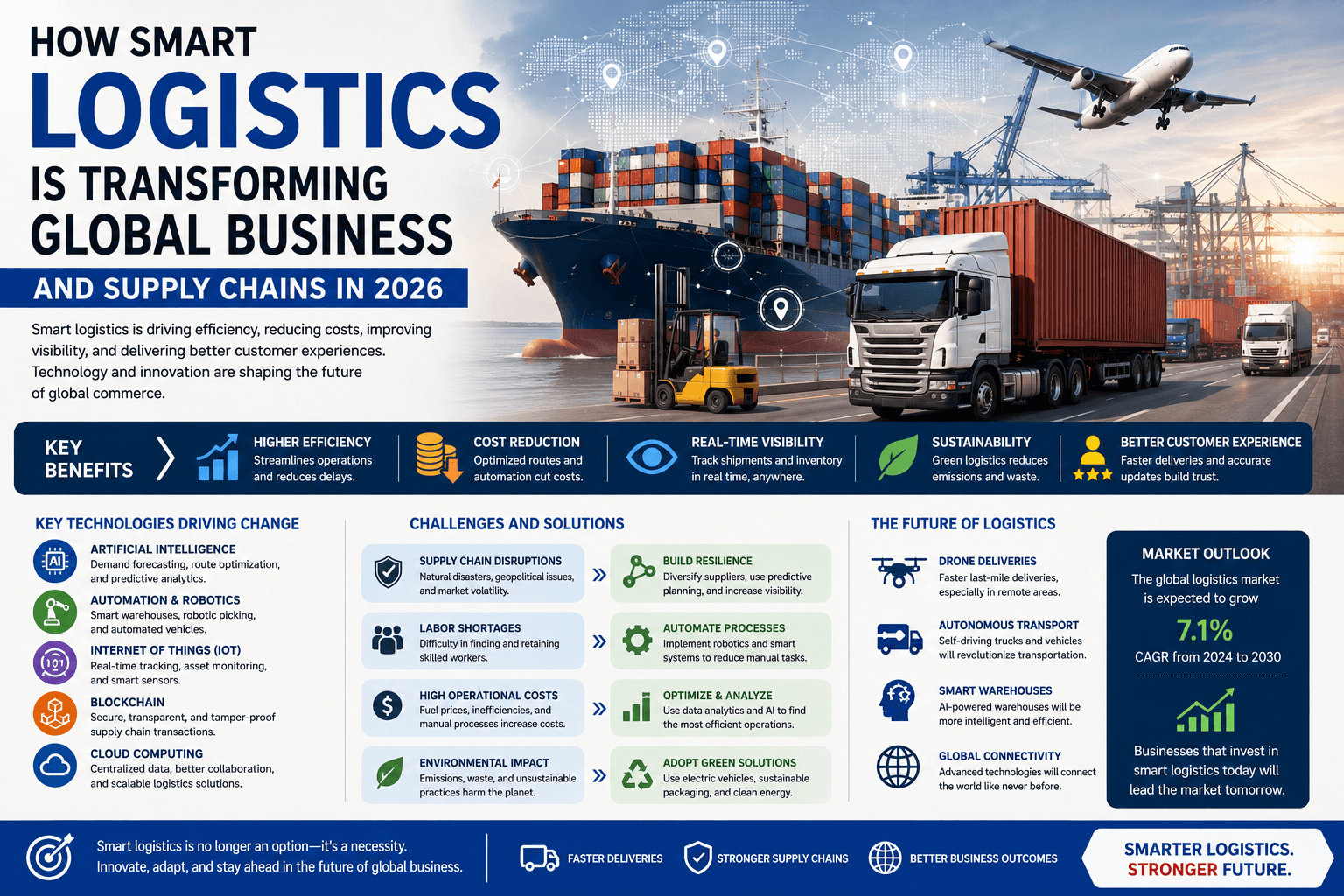
One of the biggest innovations in logistics is the integration of artificial intelligence. AI-powered systems analyze massive volumes of supply chain data to forecast demand, optimize delivery routes, manage warehouse operations, and reduce transportation costs. Predictive analytics help logistics companies anticipate delays caused by weather, traffic congestion, or geopolitical events, allowing businesses to make proactive decisions before problems occur.
Warehouse automation has also transformed modern logistics operations. Robotic systems now assist with inventory management, order picking, packaging, and shipment preparation. Automated warehouses operate more efficiently while reducing human error and improving order accuracy. Smart sensors and Internet of Things (IoT) devices continuously monitor inventory levels, equipment performance, and environmental conditions, ensuring products remain safe throughout storage and transportation.
Real-time shipment tracking has become a standard expectation for businesses and consumers alike. GPS technology, cloud-based logistics platforms, and IoT-enabled tracking devices provide complete visibility across the supply chain. Companies can monitor shipments at every stage, improving communication with customers while reducing uncertainty during transportation.
E-commerce growth has significantly increased demand for faster and more reliable logistics services. Consumers now expect same-day or next-day delivery, encouraging logistics providers to optimize last-mile delivery operations. Companies are investing in route optimization software, local distribution centers, and electric delivery vehicles to improve efficiency while reducing transportation costs and carbon emissions.
Sustainability has become an essential part of logistics strategy. Businesses are adopting green logistics practices by using fuel-efficient vehicles, electric trucks, renewable energy-powered warehouses, and eco-friendly packaging materials. Route optimization software also reduces unnecessary fuel consumption, helping organizations lower operating costs while meeting environmental goals.
Supply chain resilience remains a top priority for businesses worldwide. Recent global disruptions have highlighted the importance of diversifying suppliers, improving inventory planning, and increasing supply chain visibility. Companies are using digital technologies to identify risks earlier, strengthen supplier relationships, and improve business continuity planning.
Cloud computing has revolutionized logistics management by enabling organizations to access real-time operational data from anywhere in the world. Cloud-based transportation management systems improve collaboration between manufacturers, distributors, freight companies, and retailers while streamlining documentation and shipment coordination.
Blockchain technology is emerging as another valuable tool for logistics. By creating secure and transparent digital records, blockchain improves shipment traceability, reduces paperwork, minimizes fraud, and enhances trust between supply chain partners. Businesses handling international trade increasingly recognize blockchain's potential to simplify customs procedures and improve cross-border logistics.
Data analytics has become essential for logistics optimization. Companies analyze transportation costs, delivery performance, warehouse productivity, fuel consumption, and customer satisfaction to identify opportunities for improvement. Advanced reporting enables organizations to make strategic decisions that improve profitability while maintaining high service standards.
The future of logistics also includes autonomous technologies. Self-driving trucks, autonomous warehouse robots, and drone deliveries continue advancing through pilot programs and commercial testing. Although widespread adoption may take time, these technologies have the potential to increase efficiency, reduce labor shortages, and improve delivery speed.
International trade continues driving demand for advanced logistics solutions. As businesses expand into new markets, efficient transportation networks become increasingly important. Companies capable of managing global supply chains effectively are better positioned to serve international customers while maintaining operational efficiency.
Small and medium-sized businesses are also benefiting from digital logistics platforms. Cloud-based freight management systems, warehouse software, and shipping solutions allow smaller organizations to compete with larger enterprises by improving operational visibility and reducing transportation costs.
Investment in logistics technology is expected to continue growing as businesses seek greater efficiency and resilience. Artificial intelligence, automation, robotics, blockchain, cloud computing, and sustainable transportation will remain key drivers shaping the industry's future.
Organizations that prioritize innovation within their logistics operations will likely achieve lower costs, faster deliveries, improved customer satisfaction, and stronger long-term competitiveness. Smart logistics has become more than an operational function—it is a strategic business advantage in today's interconnected global economy.
Conclusion
Modern logistics is transforming global business through intelligent technology, automation, and data-driven supply chain management. Companies investing in digital logistics solutions are improving efficiency, strengthening resilience, and delivering better customer experiences. As technology continues evolving, smart logistics will remain one of the most important foundations of successful business growth and international trade.