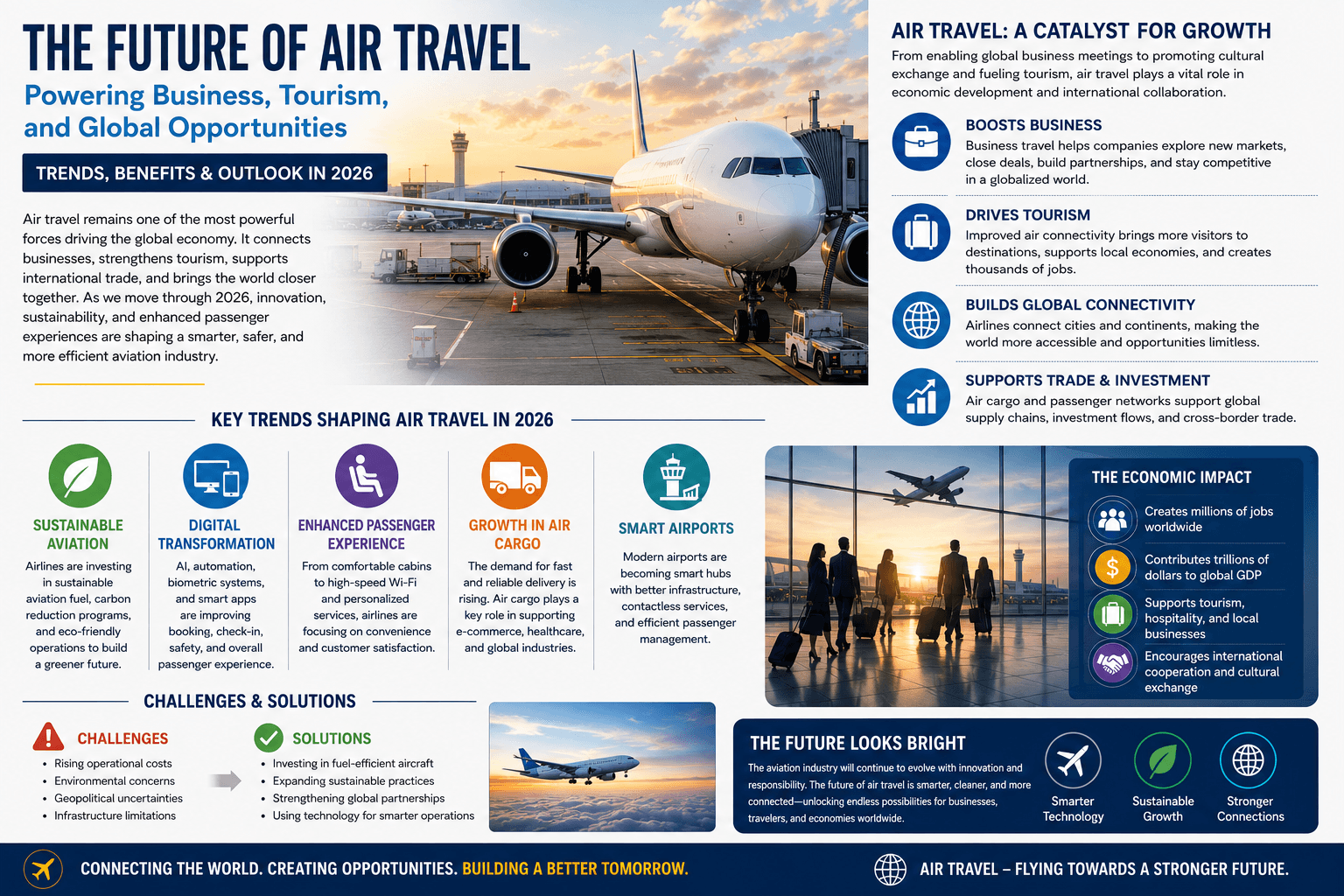
Air travel has always been one of the strongest foundations of the global economy. It connects people, businesses, cultures, and markets across continents in a matter of hours. In 2026, the aviation industry is entering a new phase driven by technological innovation, sustainability, digital transformation, and changing passenger expectations.
For businesses, air travel opens doors to international expansion, investment opportunities, and global partnerships. For tourism, it provides access to new destinations and supports millions of jobs across hospitality, transportation, retail, and entertainment industries.
As governments and private companies continue investing in aviation infrastructure, the future of air travel looks more connected, efficient, and environmentally responsible than ever before.
Aviation as an Economic Engine
The aviation industry contributes significantly to global economic development by facilitating trade, tourism, investment, and employment.
Every commercial flight supports a vast network of industries, including:
Airlines
Airports
Hotels
Restaurants
Travel agencies
Logistics companies
Retail businesses
Event organizers
The economic impact extends beyond airports, benefiting local communities through job creation, increased tourism spending, and infrastructure development.
International Business Depends on Air Connectivity
Modern businesses operate across borders. Companies regularly travel to meet clients, negotiate contracts, inspect manufacturing facilities, attend conferences, and explore investment opportunities.
Although digital communication has become more advanced, face-to-face meetings remain essential for building trust and strengthening long-term partnerships.
Reliable air connectivity allows businesses to respond quickly to market opportunities and maintain strong international relationships.
Tourism Continues to Expand
International tourism continues growing because air travel has become more accessible and efficient.
Improved flight networks encourage travelers to explore both established and emerging destinations.
This growth benefits:
Hotels and resorts
Tour operators
Local guides
Restaurants
Transportation providers
Cultural attractions
Small businesses
Tourism spending supports local economies while encouraging investment in public infrastructure.
Technology Is Modernizing Aviation
Technology is transforming every stage of the passenger journey.
Today's airlines increasingly rely on:
Artificial intelligence
Mobile applications
Digital boarding passes
Self-service check-in kiosks
Biometric identification
Smart baggage tracking
Cloud-based operations
These innovations improve convenience while reducing delays and operational costs.
Passengers now enjoy faster airport experiences and more personalized travel services.
Smarter Airports
Airports are becoming intelligent transportation hubs.
Many international airports now use:
Automated security systems
Contactless payments
Digital navigation
Real-time flight information
AI-powered customer assistance
Energy-efficient infrastructure
Smart airport technology improves operational efficiency while enhancing passenger satisfaction.
Sustainable Aviation Takes Center Stage
Environmental sustainability has become one of the aviation industry's highest priorities.
Airlines are investing in:
Sustainable Aviation Fuel (SAF)
Fuel-efficient aircraft
Carbon reduction programs
Electric airport vehicles
Renewable energy
Waste reduction initiatives
Many airports are also introducing green building designs and energy-efficient terminals to reduce environmental impact.
These investments support long-term industry resilience while addressing growing environmental expectations.
Business Travel Is Evolving
Corporate travel continues adapting to new workplace trends.
Businesses increasingly combine in-person meetings with virtual collaboration tools.
At the same time, professionals often extend work trips for personal travel, creating the growing "bleisure" travel market.
Companies are also placing greater emphasis on employee well-being by selecting convenient flight schedules, quality accommodations, and flexible travel policies.
Air Cargo Supports Global Commerce
Passenger travel represents only part of aviation's importance.
Air cargo enables rapid transportation of:
Medical equipment
Pharmaceuticals
Electronics
Fresh food
High-value products
Manufacturing components
Reliable air freight keeps international supply chains functioning efficiently while supporting e-commerce and global trade.
Digital Transformation Creates Business Opportunities
The aviation industry's modernization is generating opportunities for technology companies, startups, and entrepreneurs.
Growth areas include:
Travel software
Airport automation
Cybersecurity
Smart logistics
AI-powered customer service
Sustainable aviation technology
Digital payment solutions
Businesses providing innovative aviation solutions are expected to experience continued demand over the coming years.
Challenges Facing the Industry
Despite positive growth, aviation continues facing several important challenges.
These include:
Rising operating costs
Fuel price volatility
Climate-related disruptions
Cybersecurity threats
Airport capacity constraints
Skilled workforce shortages
Addressing these challenges will require collaboration between governments, airlines, technology providers, and airport authorities.
Investment in Airport Infrastructure
Many countries are investing heavily in modern airports to support future passenger demand.
Infrastructure improvements include:
Expanded terminals
New runways
High-speed rail connections
Smart passenger systems
Improved cargo facilities
Digital security technologies
These investments strengthen tourism while attracting international business and foreign investment.
Customer Experience Becomes a Competitive Advantage
Passenger expectations continue rising.
Travelers increasingly value:
Comfortable seating
Reliable Wi-Fi
Mobile booking
Transparent pricing
Efficient customer support
Fast baggage delivery
Flexible ticket options
Airlines that consistently deliver positive customer experiences often build stronger brand loyalty and long-term profitability.
The Future of Air Travel
Over the next decade, aviation will continue evolving through innovation and sustainability.
Future developments may include:
Artificial intelligence for personalized travel planning
Expanded use of sustainable aviation fuel
Smarter airport automation
Improved biometric security
Advanced aircraft technologies
Digital travel ecosystems
Enhanced global connectivity
These innovations will make flying safer, more efficient, and environmentally responsible while supporting continued growth in tourism and international business.
Conclusion
Air travel remains one of the world's most powerful drivers of business, tourism, and economic development. As airlines, airports, and technology companies continue investing in innovation, passengers can expect faster, safer, and more sustainable travel experiences.
For businesses, improved air connectivity creates opportunities to expand into new markets, strengthen partnerships, and participate in the global economy. For tourism destinations, aviation brings visitors, investment, and employment that contribute to long-term prosperity.
In 2026, the future of air travel extends far beyond transportation—it serves as a catalyst for innovation, international cooperation, and sustainable economic growth. Businesses that embrace these changes will be well-positioned to thrive in an increasingly connected world.