
The New Era of Private Equity: From Financial Engineering to Operational Alpha
L
For over a decade, the private equity (PE) industry coasted on a smooth, predictable highway. Ultra-low interest rates, rapidly expanding valuation multiples, and cheap, abundant debt leverage acted as massive tailwinds. If you bought a decent company, waited a few years, and sold it into a rising market, you were almost guaranteed a strong return.
But that era is officially over. The financial landscape has shifted to a much steeper, more demanding terrain. Today, PE firms cannot rely on the macro environment to bail them out or manufacture their returns. Success is no longer about scale or basic financial engineering; it is about precision, deep industry specialization, and aggressive operational value creation.
---
## 1. The Core Shift: Making Alpha, Not Buying It
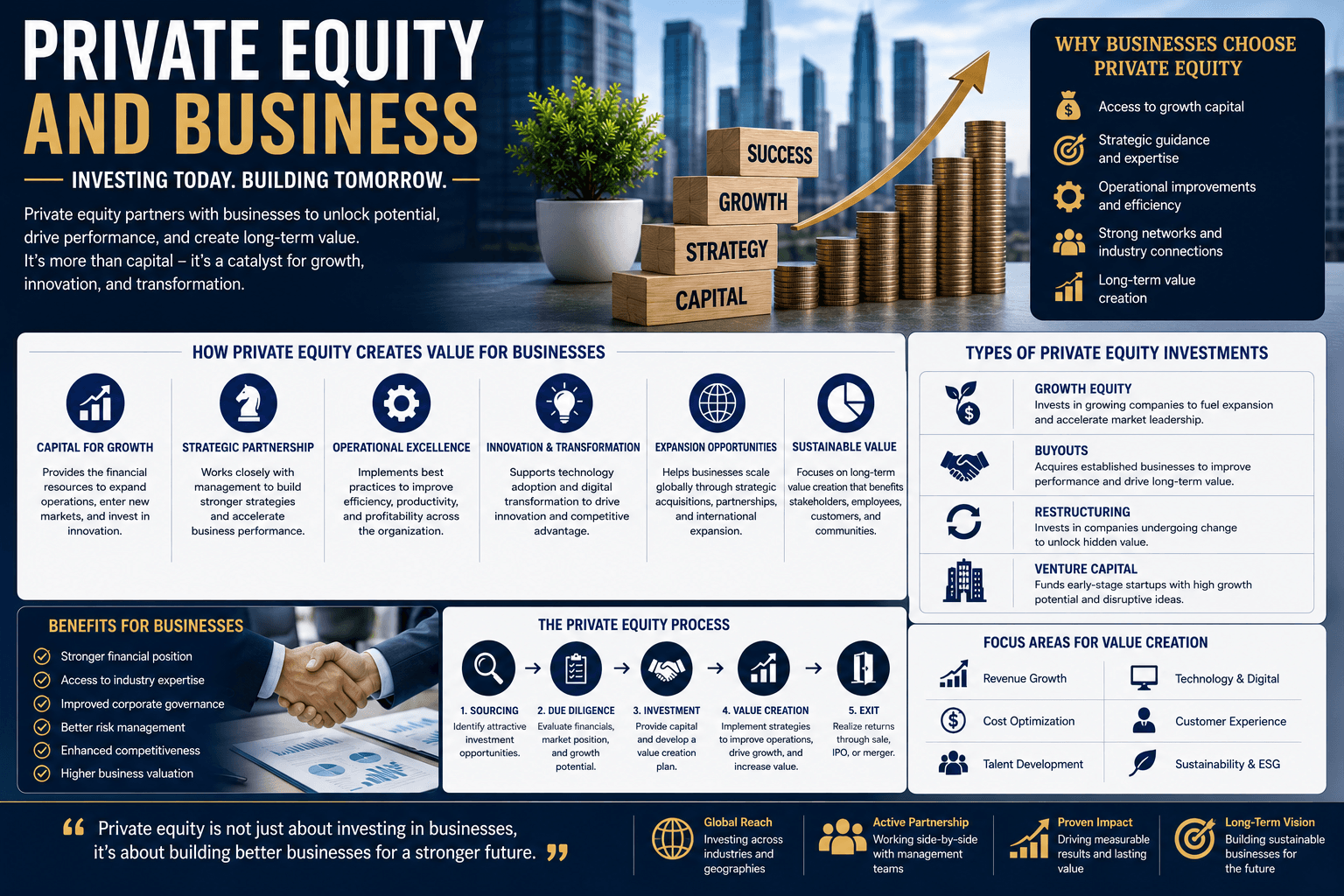
In the past, the classic private equity playbook relied heavily on **multiple expansion** (selling a company for a higher valuation multiple than it was bought for) and high leverage ratios. Today, with persistently disciplined interest rates and compressed margins, that formula is broken.
Average purchase prices remain high, while leverage ratios have moderated significantly. This means private equity funds must generate **operational alpha**—true, tangible value created by physically improving how a business runs.
```
Old PE Playbook: High Leverage + Rising Market Multiples = Returns
New PE Playbook: Strategic Focus + Operational Efficiency + Tech Transformation = Returns
```
Top-performing funds are no longer generalists. They are sector specialists who understand specific business models inside and out—whether that’s highly fragmented, cash-generative home services or niche enterprise software. By focusing on clear, repeatable playbooks, specialized firms can spot inefficiencies faster, execute smoother buy-and-build strategies, and protect their margins.
---
## 2. The Tech & AI Paradigm: Defending the Moat
Artificial Intelligence is no longer just a theoretical buzzword discussed by venture capitalists; it is actively reshaping private equity portfolios. However, AI represents a double-edged sword for the industry:
* **The Value Creation Side:** Forward-looking PE firms are aggressively embedding generative AI into their mid-market portfolio companies. They are using it to automate customer service, streamline software development, and optimize pricing models. This drastically reduces operational costs and builds a deeper competitive moat before the company is eventually sold.
* **The Disruption Side:** On the flip side, AI is actively threatening legacy software assets. Credit managers and equity sponsors are closely watching "SaaS-pocalypse" scenarios, where nimbler, AI-native startups erode the sticky, recurring revenue models that traditional PE software valuations were built upon.
Because of this, tech due diligence has become intensely rigorous. Investors aren't just looking at a company's current balance sheet; they are assessing its structural vulnerability to AI disruption.
---
## 3. The Liquidity Drought and the Rise of Secondaries
One of the biggest pain points in modern finance is the persistent "liquidity drought". For the past few years, exits—whether through initial public offerings (IPOs) or sales to strategic corporate buyers—have been notoriously clogged.
Because traditional exit paths have slowed down, Limited Partners (LPs—the institutional investors who fund PE, like pension funds and endowments) have shifted their expectations. They are no longer content looking at "paper marks" (unrealized gains on a spreadsheet). They want **DPI (Distribution to Paid-In Capital)**—actual, realized cash returned to their pockets.
To solve this liquidity puzzle, the industry has innovated:
> **Continuation Vehicles & Secondaries:** Instead of forcing a premature sale in a weak market, General Partners (GPs) are increasingly moving their best portfolio companies into "continuation funds". This allows them to hold onto winning assets longer, while offering liquidity to the LPs who want out. Secondary markets are no longer viewed as a last-resort release valve; they have become a permanent, sophisticated feature of modern asset management.
---
## 4. The Bifurcated Fundraising Landscape
The demand for proven cash distributions has created a stark, K-shaped recovery within the private equity ecosystem itself.
| Mega-Funds & Established Giants | First-Time & Mid-Sized Managers |
| --- | --- |
| Capturing the lion's share of global commitments. | Facing an incredibly uphill battle to raise new capital. |
| Benefiting from massive platform scale and diverse strategies (like infrastructure and private credit). | Risking consolidation, mergers, or quietly winding down if they lack strong, realized track records. |
| LPs favor these entities for their operational sophistication and predictability. | Must differentiate sharply through extreme sector specialization to survive. |
---
## The Bottom Line
Private equity is experiencing a profound structural maturation. The firms winning today aren’t waiting around for central banks to lower interest rates back to zero or for public markets to wildly inflate valuations. They are rolling up their sleeves, diving deep into the operations of their businesses, and actively manufacturing their own growth. In this new landscape, operational excellence isn't just a bonus—it is the baseline for survival.
| Category | Details |
|---|---|
| Topic | Private Equity |
| Author | Lora |
| Published | 26/06/2026 |
| Read Time | Not set |
L