PFPersonal Finance in 2026: Smart Ways to Save Money & Build Wealth
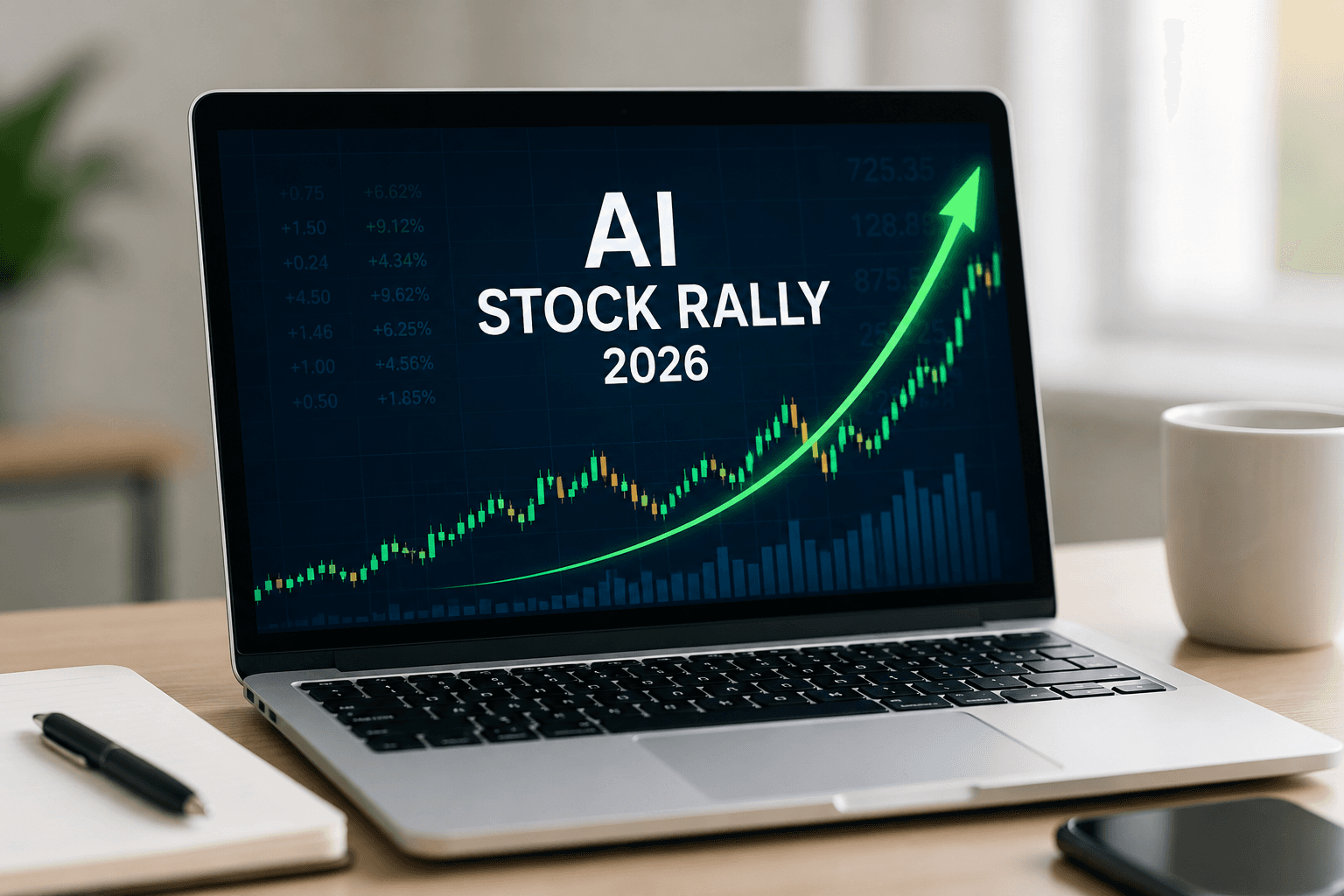
Artificial intelligence (AI) has become one of the most influential forces in the global economy, transforming industries, redefining business strategies, and reshaping financial markets. Throughout 2026, AI-related companies have continued to attract significant investor attention, fueling one of the strongest technology-driven stock rallies in recent years. As businesses accelerate digital transformation and governments invest in advanced technologies, AI is no longer viewed as a niche sector—it has become a central pillar of long-term economic growth.
For investors, the AI revolution presents both exciting opportunities and important challenges. Understanding the factors driving the AI stock rally is essential for making informed investment decisions in an increasingly competitive market.
AI Investment Continues to Accelerate
Over the past few years, demand for AI technologies has expanded beyond software companies. Today, AI is transforming healthcare, finance, manufacturing, logistics, retail, education, cybersecurity, and transportation. Businesses are investing heavily in machine learning, automation, cloud computing, robotics, and data analytics to improve productivity and reduce operating costs.
This rapid adoption has encouraged institutional investors and private investors alike to increase exposure to companies leading AI innovation.
Technology giants continue investing billions of dollars in AI infrastructure, including advanced processors, cloud platforms, data centers, and enterprise software. At the same time, startups focused on generative AI, automation, and intelligent analytics are attracting substantial venture capital funding.
Semiconductor Companies Remain at the Center
One of the biggest beneficiaries of AI growth has been the semiconductor industry.
Powerful AI systems require advanced graphics processing units (GPUs), high-performance memory, and specialized AI chips capable of handling enormous workloads. As organizations deploy increasingly sophisticated AI models, demand for semiconductor technology continues to rise.
Companies involved in chip manufacturing, equipment production, cloud infrastructure, and networking technologies have experienced significant investor interest because they provide the foundation for AI development.
Although share prices have experienced periods of volatility, long-term demand for AI hardware remains strong as businesses continue expanding their computing capabilities.
Why Investors Are Prioritizing AI
Several factors explain why AI remains one of the most attractive investment themes in 2026.
Businesses are actively seeking automation solutions that reduce costs while increasing efficiency. AI-powered customer service, predictive analytics, intelligent manufacturing, fraud detection, and personalized marketing are delivering measurable business value.
Governments around the world are also increasing investments in AI research, digital infrastructure, and innovation programs designed to strengthen economic competitiveness.
These developments have created strong long-term confidence among investors looking for industries with sustainable growth potential.
AI Is Changing Traditional Investment Strategies
The AI boom has encouraged investors to rethink traditional portfolio allocation.
Rather than focusing solely on established technology companies, many investors are diversifying across the broader AI ecosystem. This includes cloud computing providers, cybersecurity firms, semiconductor manufacturers, industrial automation companies, healthcare technology providers, and enterprise software developers.
Exchange-traded funds (ETFs) focused on artificial intelligence have also gained popularity by offering diversified exposure to multiple AI-related businesses while reducing the risk associated with investing in a single company.
Portfolio diversification has become increasingly important as AI expands into nearly every sector of the global economy.
Market Volatility Remains a Reality
Despite the optimism surrounding AI, investors should recognize that rapid stock price growth often leads to increased volatility.
Technology stocks can experience significant fluctuations following earnings reports, economic data releases, interest rate expectations, or changes in government policy.
Valuation concerns also remain a key topic among market analysts. Some AI companies are trading at historically high valuation levels, meaning investors expect strong future earnings growth. If companies fail to meet those expectations, stock prices may experience short-term corrections.
Successful investors typically balance growth opportunities with disciplined risk management rather than chasing short-term market momentum.
Businesses Are Investing Beyond the Hype
One reason many analysts remain optimistic is that AI adoption is producing measurable business results.
Organizations are using AI to optimize supply chains, improve inventory management, detect cybersecurity threats, automate repetitive administrative tasks, and deliver personalized customer experiences.
Financial institutions rely on AI for fraud detection and risk management.
Healthcare providers use AI to assist with diagnostics and medical research.
Manufacturers employ AI-driven predictive maintenance to reduce equipment downtime.
Retailers use AI-powered recommendation engines to improve customer engagement and increase sales.
These practical applications demonstrate that AI is creating real economic value rather than being driven solely by investor enthusiasm.
Long-Term Opportunities
The AI economy is expected to continue expanding throughout the remainder of the decade.
Emerging technologies such as autonomous vehicles, robotics, smart factories, digital healthcare, intelligent logistics, and advanced cybersecurity solutions will likely create additional investment opportunities.
Businesses capable of successfully integrating AI into their operations may improve productivity, reduce costs, and strengthen their competitive advantage.
For investors, identifying companies with sustainable business models, strong financial performance, and consistent innovation may prove more valuable than simply following short-term market trends.
Conclusion
Artificial intelligence has become one of the defining investment themes of 2026. While market volatility remains inevitable, AI continues transforming industries, improving productivity, and creating new opportunities for businesses worldwide.
Investors who focus on long-term fundamentals, maintain diversified portfolios, and understand the broader AI ecosystem will be better positioned to navigate changing market conditions.
As AI technology continues evolving, its influence on global investment strategies is likely to grow even further, making it one of the most important sectors to watch for years to come.