
PFPersonal Finance in 2026: Smart Ways to Save Money & Build Wealth
Building Customer Confidence in an AI-Driven Business world
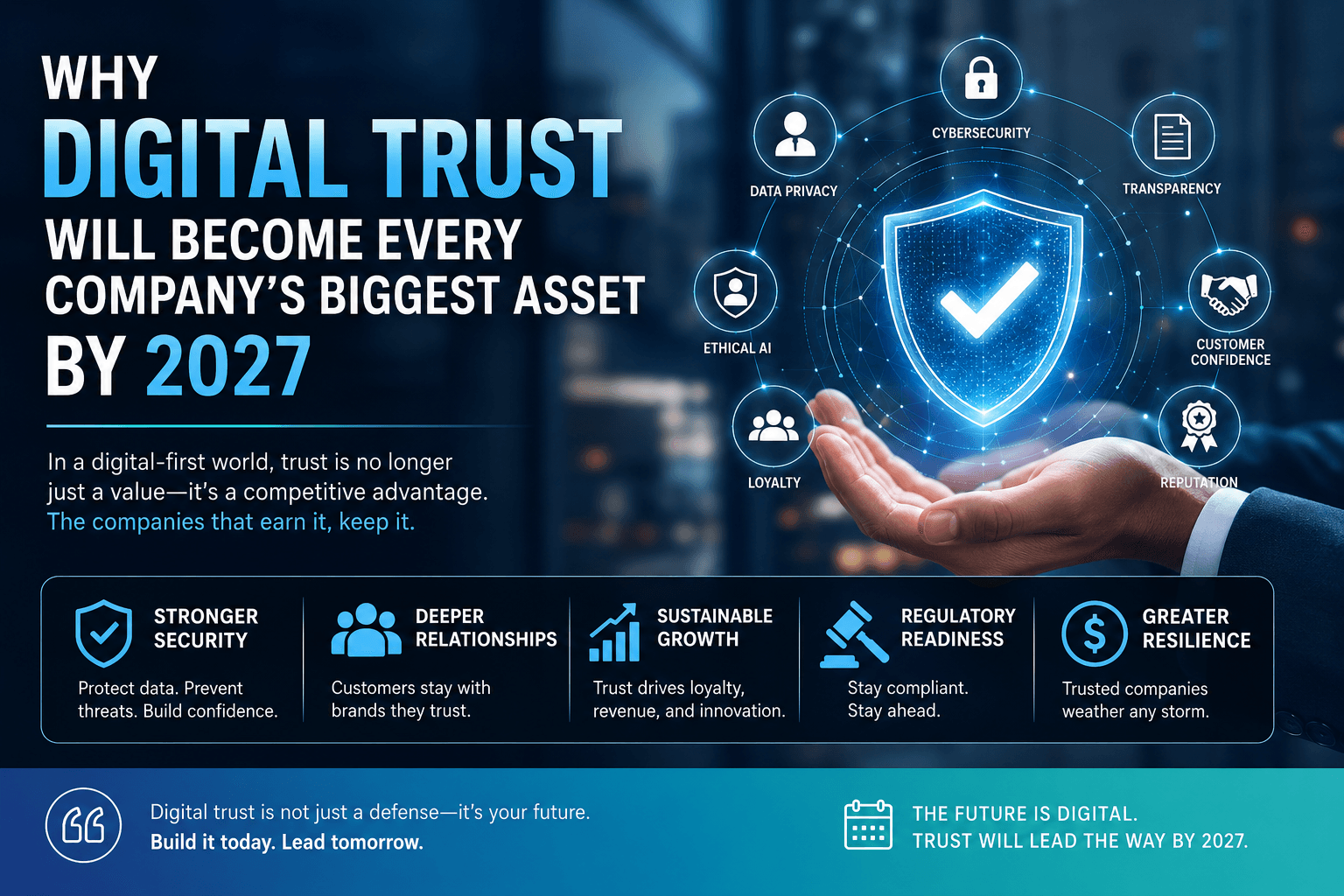
In today's rapidly evolving digital economy, trust has become one of the most valuable assets any organization can possess. As businesses increasingly rely on artificial intelligence, cloud computing, digital payments, connected devices, and online services, customers expect companies to protect their personal information while delivering secure, transparent, and reliable experiences.By 2027, digital trust will no longer be viewed as simply an IT or cybersecurity concern. Instead, it will become a core business strategy that directly influences customer loyalty, investor confidence, regulatory compliance, and long-term profitability.
What Is Digital Trust?
Digital trust refers to the confidence that customers, employees, partners, and investors have in an organization's ability to securely manage data, protect privacy, operate ethically, and maintain reliable digital services.
It extends beyond cybersecurity to include:
-
Data privacy
-
AI transparency
-
Ethical technology use
-
Secure online transactions
-
Identity verification
-
Regulatory compliance
-
Reliable digital infrastructure
Every online interaction contributes to building—or damaging—digital trust.
Why Digital Trust Is Becoming a Competitive Advantage
Consumers today are more aware than ever of how companies collect and use their data. High-profile cyberattacks, identity theft, and data breaches have increased concerns about digital privacy.
As a result, customers increasingly choose brands they trust.
Companies that demonstrate strong security practices and transparent communication often enjoy:
-
Higher customer retention
-
Increased online sales
-
Better brand reputation
-
Stronger customer engagement
-
Improved investor confidence
Trust is becoming just as important as price, quality, and customer service when making purchasing decisions.
Cybersecurity Forms the Foundation
A company's digital trust strategy begins with cybersecurity.
Organizations are investing heavily in advanced security technologies such as:
-
Multi-factor authentication
-
Zero Trust security architecture
-
AI-powered threat detection
-
Endpoint protection
-
Cloud security platforms
-
Security awareness training
Rather than reacting to attacks, businesses are adopting proactive strategies that continuously monitor systems for suspicious activity.
Strong cybersecurity not only protects sensitive information but also strengthens customer confidence.
Artificial Intelligence Requires Responsible Governance
AI is transforming industries by automating processes, improving customer experiences, and supporting better decision-making. However, customers also want reassurance that AI systems are fair, transparent, and accountable.
Businesses are increasingly adopting responsible AI frameworks that focus on:
-
Transparent decision-making
-
Bias reduction
-
Human oversight
-
Ethical data usage
-
Explainable AI models
Organizations that use AI responsibly will earn greater public trust while reducing regulatory risks.
Privacy Has Become a Business Priority
Privacy is no longer just a legal requirement—it is a key customer expectation.
Modern consumers want greater control over their personal information, including how it is collected, stored, shared, and deleted.
Leading companies are implementing privacy-by-design principles that integrate data protection into products and services from the beginning.
Clear privacy policies, simple consent options, and secure data handling practices help strengthen digital trust.
Transparency Builds Long-Term Relationships
Trust grows when companies communicate openly.Customers appreciate organizations that explain:
How personal data is used
-
How AI makes decisions
-
What security measures are in place
-
How incidents are handled
-
What improvements are being made
Transparent communication reduces uncertainty and demonstrates accountability.
Even during cybersecurity incidents, honest and timely communication often preserves customer confidence.
Digital Identity Verification Is Evolving
As online fraud continues to increase, businesses are adopting stronger identity verification technologies.
Biometric authentication, behavioral analysis, passwordless logins, and digital identity platforms are making online services both safer and more convenient.
Secure identity management helps reduce fraud while improving the user experience.
Regulations Continue to Expand
Governments worldwide are introducing stricter regulations covering data privacy, cybersecurity, and artificial intelligence.Organizations must comply with evolving legal requirements while maintaining customer confidence.
Businesses that proactively invest in governance, compliance, and risk management will be better prepared for future regulations and avoid costly penalties.
Digital Trust Supports Business Growth
Digital trust is directly linked to business performance.Companies with strong trust frameworks often experience:
-
Faster customer acquisition
-
Higher employee confidence
-
Stronger partner relationships
-
Easier market expansion
-
Increased investor interest
-
Greater resilience during crises
Trust enables businesses to innovate with confidence while reducing operational risks.
Emerging Technologies Will Shape the Future
Several technologies are expected to strengthen digital trust by 2027, including:-
Blockchain for secure digital records
-
Decentralized identity systems
-
Quantum-resistant encryption
-
AI-powered fraud detection
-
Confidential cloud computing
-
Advanced authentication technologies
These innovations will help organizations create safer and more reliable digital ecosystems.
Preparing for 2027
Businesses should begin strengthening digital trust today by:
Investing in cybersecurity infrastructure
-
Implementing responsible AI policies
-
Protecting customer privacy
-
Training employees on security best practices
-
Improving transparency
-
Conducting regular security audits
-
Building strong governance frameworks
Organizations that embed trust into every digital interaction will be better positioned for long-term success.
Conclusions
As the global economy becomes increasingly digital, trust will become one of the most valuable competitive advantages a company can possess. Customers are no longer evaluating businesses solely on products or pricing—they are also judging how organizations protect data, use technology responsibly, and communicate openly.
By 2027, digital trust will influence purchasing decisions, investment strategies, regulatory compliance, and brand reputation more than ever before. Companies that prior
itize security, privacy, transparency, and ethical innovation today will build stronger customer relationships and sustainable business growth for years to come.