Passive Income Ideas That Can Help Build Long-Term Wealth in 2026
R
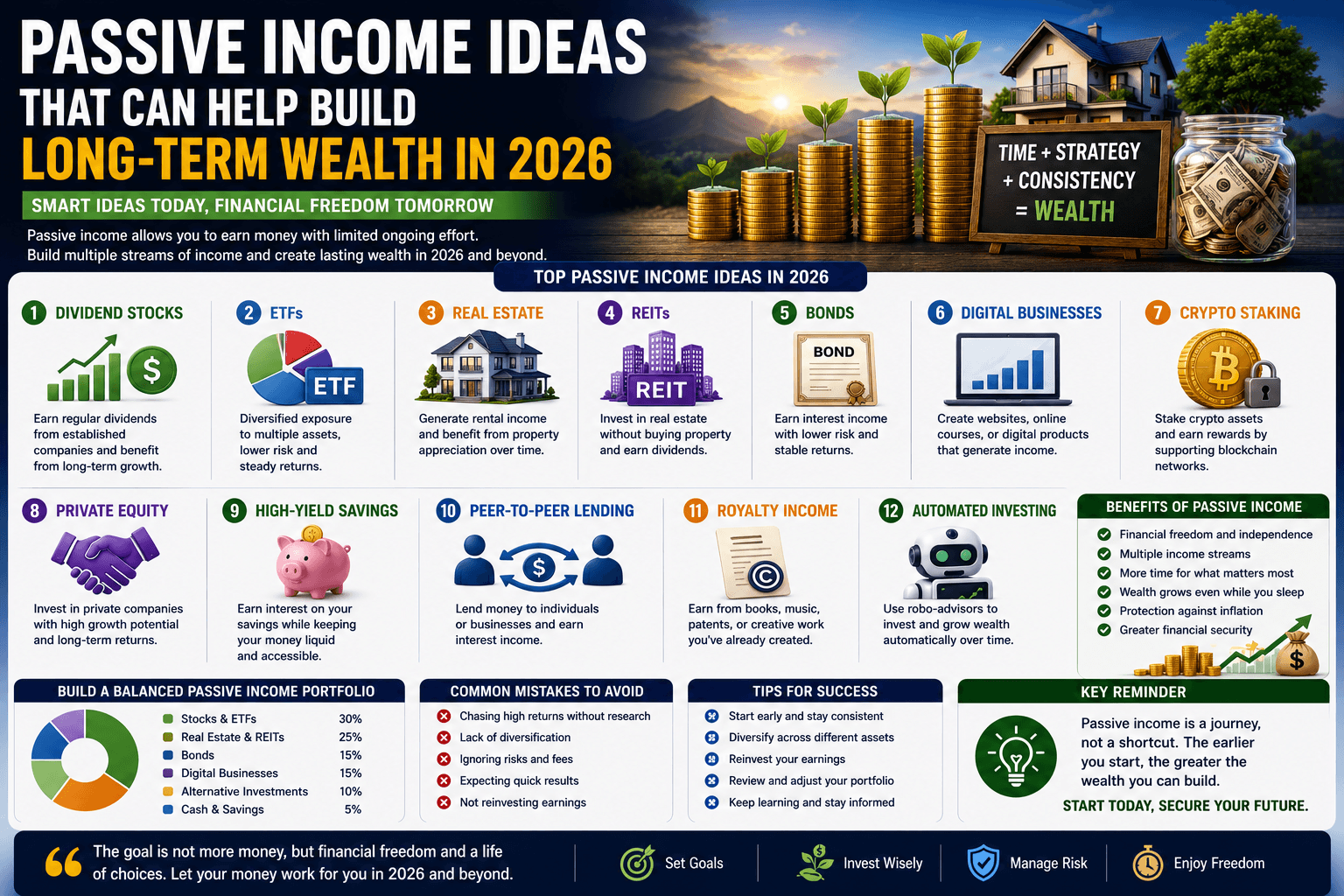
Passive income has become one of the most searched financial topics worldwide, and for good reason. While active income depends on the hours you work, passive income focuses on generating earnings from investments, assets, or businesses that continue producing revenue with limited ongoing effort.
In 2026, advances in technology, digital finance, and global investment opportunities have made it easier than ever to build multiple streams of income. Although creating passive income usually requires time, planning, and in many cases an initial investment, it can become an important part of long-term financial security.
This guide explores some of the most popular passive income strategies available today and explains how they can contribute to sustainable wealth creation.
Why Passive Income Matters
Relying on a single source of income can increase financial risk.
Building multiple income streams may help:
Improve financial stability
Support long-term wealth creation
Increase savings potential
Reduce dependence on one employer
Create greater financial flexibility
Passive income is often most effective when combined with disciplined investing and long-term financial planning.
Dividend Stocks
Dividend-paying companies remain one of the most established passive income investments.
Many mature businesses distribute a portion of their profits to shareholders through regular dividend payments.
Advantages include:
Consistent income
Potential capital appreciation
Dividend reinvestment opportunities
Exposure to established companies
Dividend investing is particularly popular among long-term investors seeking both income and portfolio growth.
Exchange-Traded Funds (ETFs)
ETFs offer diversified exposure across multiple companies through a single investment.
Many investors choose dividend-focused ETFs or broad market ETFs to generate long-term returns while reducing individual company risk.
Benefits include:
Diversification
Lower management costs
Easy accessibility
Long-term growth potential
ETFs remain one of the most practical investment options for beginners and experienced investors alike.
Real Estate Investments
Property ownership has historically been an important source of passive income.
Rental properties may provide:
Monthly rental income
Property appreciation
Inflation protection
For investors who prefer not to purchase physical property, Real Estate Investment Trusts (REITs) provide exposure to commercial and residential real estate through stock exchanges.
Bonds
Government and corporate bonds continue providing income through periodic interest payments.
Although returns may be lower than equities during strong markets, bonds often contribute stability and diversification within balanced portfolios.
Digital Businesses
Technology has created new opportunities for passive income.
Examples include:
Educational websites
Online publications
Digital products
Subscription services
Software applications
While building a successful online business requires significant effort initially, established digital platforms can generate recurring revenue over time.
Cryptocurrency Staking
Certain blockchain networks allow participants to earn rewards by supporting network operations through staking.
Although cryptocurrency remains volatile, staking has become an additional income opportunity for investors who understand the associated risks.
Careful research and secure storage remain essential when participating in digital asset markets.
Private Equity Opportunities
Private equity traditionally serves institutional investors, but broader access to alternative investments continues expanding.
Private equity focuses on investing in businesses with long-term growth potential before they become publicly traded.
These investments generally require longer holding periods but may contribute to diversified wealth-building strategies.
High-Yield Savings and Cash Management
Maintaining emergency savings remains an important part of financial planning.
Interest-bearing savings accounts and cash management solutions may provide modest income while preserving liquidity.
Although returns vary, maintaining accessible savings supports overall financial resilience.
Creating a Balanced Passive Income Portfolio
Many investors combine multiple passive income sources.
A diversified approach may include:
Dividend Stocks
ETFs
Real Estate
REITs
Bonds
Digital Businesses
Cash Reserves
Selected Alternative Investments
Diversification reduces reliance on any single income stream.
Common Mistakes to Avoid
Investors should be cautious of unrealistic expectations.
Common mistakes include:
Chasing unusually high returns
Ignoring diversification
Investing without research
Underestimating risk
Focusing only on short-term income
Successful passive income strategies typically require patience and consistent long-term planning.
The Role of Technology
Artificial intelligence and financial technology continue making investing more accessible.
Modern investment platforms provide:
Automated portfolio management
Dividend tracking
Investment research
Financial planning tools
Performance monitoring
Technology helps investors manage income-generating portfolios more efficiently.
Long-Term Wealth Building
Passive income should be viewed as part of a broader financial strategy.
Successful investors often focus on:
Consistent investing
Reinvesting earnings
Maintaining diversification
Managing risk
Reviewing portfolios regularly
Small, consistent contributions over many years can produce meaningful long-term results through the power of compounding.
Looking Ahead
As financial markets continue evolving, passive income opportunities are expected to expand across traditional investments and digital assets.
Innovation in financial technology, real estate, renewable energy, and online business models will likely create additional opportunities for investors seeking diversified income sources.
Those who combine education, patience, and disciplined investing will be better positioned to benefit from these long-term trends.
Conclusion
Passive income remains one of the most effective strategies for building long-term financial security. Whether through dividend stocks, ETFs, real estate, bonds, digital businesses, or carefully selected alternative investments, creating multiple income streams can strengthen financial resilience and support wealth creation.
While no investment guarantees success, disciplined planning, diversification, and continuous learning remain the foundation of sustainable passive income.
As technology and global financial markets continue advancing, investors who begin building passive income today may be better prepared for tomorrow's opportunities.
| Category | Details |
|---|---|
| Topic | Finance |
| Author | Rose |
| Published | 26/06/2026 |
| Read Time | Not set |
R