How AI Is Changing Everyday Life Around the World
R
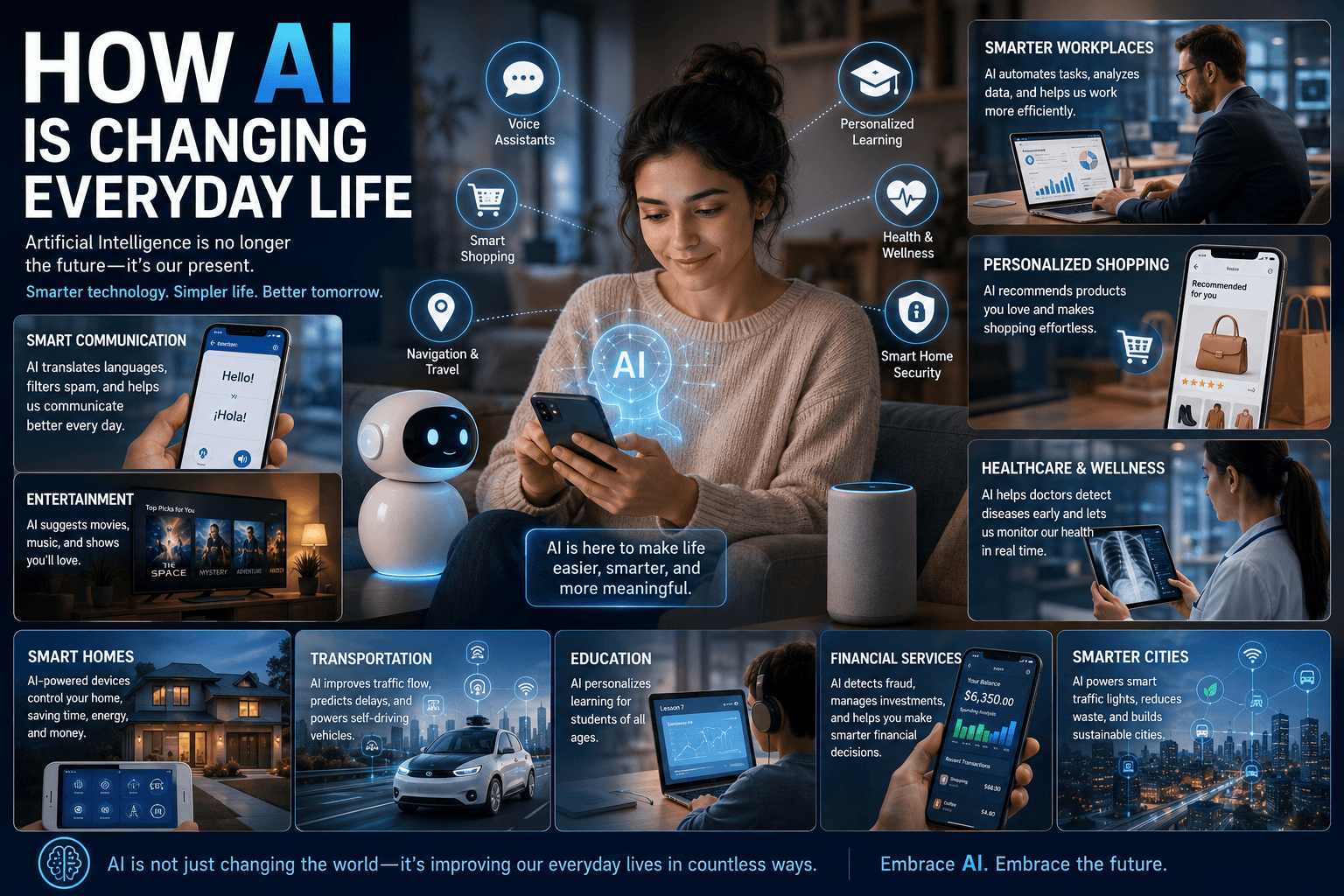
Artificial intelligence (AI) is no longer a futuristic concept limited to science fiction movies or research laboratories. Today, AI has become an integral part of everyday life, influencing how people communicate, work, shop, learn, travel, and manage their health. As technology continues to evolve, AI is transforming daily routines in ways that many people may not even realize.
From personalized recommendations on streaming platforms to smart assistants that answer questions instantly, artificial intelligence has become deeply embedded in modern society. Businesses, governments, and consumers are increasingly embracing AI-powered solutions to improve efficiency, convenience, and decision-making. As adoption continues to grow, AI is expected to play an even greater role in shaping the future of everyday life.
AI in Communication and Information Access
One of the most visible ways AI has changed everyday life is through communication. People now use AI-powered applications to send messages, translate languages, summarize information, and generate content within seconds.
Virtual assistants help users perform tasks using simple voice commands. Whether setting reminders, checking the weather, finding directions, or answering questions, these systems make information more accessible than ever before.
Language translation tools powered by AI have also broken down communication barriers between people from different countries and cultures. Real-time translation allows businesses and individuals to communicate more effectively across borders, supporting global collaboration and cultural exchange.
Search engines have become more intelligent as well. Instead of simply matching keywords, AI helps deliver more relevant results by understanding user intent and context, making information easier to find.
Transforming the Workplace
Artificial intelligence is significantly changing how businesses operate and how employees perform their jobs. Across industries, organizations are using AI to automate repetitive tasks, analyze large amounts of data, and improve productivity.
Customer service departments increasingly rely on AI-powered chatbots that can answer common questions and provide support around the clock. This helps businesses improve response times while allowing human employees to focus on more complex issues.
In offices, AI tools assist with scheduling meetings, organizing emails, generating reports, and managing workflows. Professionals can spend less time on routine administrative work and more time on strategic decision-making.
Data analysis has become faster and more accurate through AI-powered systems capable of identifying patterns and trends that might otherwise go unnoticed. This enables businesses to make informed decisions and respond quickly to changing market conditions.
While automation may change some job roles, AI is also creating new opportunities in technology, data science, cybersecurity, and digital innovation.
Personalized Shopping Experiences
The retail industry has been transformed by artificial intelligence. Online shopping platforms use AI algorithms to analyze customer preferences, browsing behavior, and purchasing history to provide personalized product recommendations.
Consumers frequently receive suggestions for products they are likely to be interested in, making the shopping experience more convenient and efficient. Businesses benefit by improving customer satisfaction and increasing sales.
AI also helps retailers manage inventory, forecast demand, and optimize supply chains. These improvements reduce waste and ensure products remain available when customers need them.
In physical stores, AI-powered technologies are being used for automated checkout systems, customer insights, and enhanced security. The combination of digital and in-store innovation continues to reshape the retail landscape.
AI in Healthcare and Wellness
Healthcare is one of the areas where artificial intelligence is making a particularly meaningful impact. AI-powered tools help healthcare professionals analyze medical data, support diagnoses, and develop treatment plans.
Wearable devices equipped with AI capabilities can monitor heart rate, sleep quality, physical activity, and other health indicators in real time. Users receive valuable insights into their health and wellness, encouraging healthier lifestyle choices.
Telemedicine platforms use AI to improve virtual healthcare experiences by streamlining appointments and assisting medical professionals with patient information management.
AI is also contributing to medical research by analyzing large datasets and identifying potential patterns that could lead to new treatments and discoveries. These advancements have the potential to improve healthcare accessibility and patient outcomes worldwide.
Revolutionizing Education
Artificial intelligence is transforming how people learn. Educational platforms increasingly use AI to create personalized learning experiences based on individual strengths, weaknesses, and progress.
Students can receive customized lessons, practice exercises, and feedback tailored to their needs. This personalized approach helps improve learning outcomes and keeps students engaged.
Teachers benefit from AI tools that assist with grading, lesson planning, and administrative tasks, allowing them to spend more time supporting students directly.
Online learning platforms powered by AI make education more accessible for people of all ages. Learners can access courses, tutorials, and educational resources from virtually anywhere, expanding opportunities for personal and professional development.
As AI technology advances, educational systems are expected to become even more adaptive and effective.
Smarter Transportation and Travel
Transportation is another area where artificial intelligence is making daily life easier. Navigation applications use AI to analyze traffic conditions, suggest optimal routes, and provide real-time travel updates.
Ride-sharing services utilize AI to match passengers with drivers efficiently and predict demand patterns. Public transportation systems increasingly rely on intelligent technologies to improve scheduling and reduce delays.
Airports, airlines, and travel companies use AI to streamline operations, enhance customer service, and improve security measures. Travelers benefit from more personalized recommendations, faster check-ins, and better travel experiences.
Future developments in autonomous vehicles and smart transportation infrastructure may further transform how people move from one place to another.
Entertainment Tailored to Individual Preferences
Artificial intelligence has changed the way people consume entertainment. Streaming platforms use AI algorithms to recommend movies, television shows, music, and podcasts based on user behavior and preferences.
Instead of searching through thousands of options, users receive personalized suggestions that align with their interests. This creates a more engaging and enjoyable entertainment experience.
Content creators are also using AI-powered tools to assist with video editing, graphic design, music production, and content planning. These technologies help streamline creative workflows and expand opportunities for innovation.
As AI continues to evolve, entertainment experiences may become increasingly interactive and immersive.
Smart Homes and Connected Living
The rise of smart home technology demonstrates how AI is becoming part of everyday living. Smart devices can control lighting, temperature, security systems, and household appliances through voice commands or mobile applications.
AI-powered home assistants learn user preferences over time and automate routine tasks to improve convenience and efficiency. For example, smart thermostats can adjust temperatures based on occupancy patterns, helping save energy and reduce utility costs.
Security systems equipped with AI can recognize unusual activity and provide real-time alerts to homeowners. These technologies contribute to greater comfort, safety, and energy efficiency.
As smart home ecosystems continue to expand, connected living is expected to become increasingly common.
Enhancing Financial Services
Financial institutions are using artificial intelligence to improve customer experiences, strengthen security, and streamline operations. AI-powered systems help detect fraudulent transactions, assess risks, and provide personalized financial recommendations.
Consumers benefit from digital banking services that offer faster account management, automated support, and intelligent budgeting tools. AI can analyze spending habits and provide insights that help individuals make informed financial decisions.
Investment platforms increasingly use AI to analyze market trends and support portfolio management. While human expertise remains important, intelligent systems provide valuable assistance in navigating complex financial environments.
The integration of AI into financial services is helping create more efficient and accessible banking experiences.
The Future of Everyday AI
Artificial intelligence is no longer limited to specialized industries or advanced research environments. It has become a practical tool that supports millions of daily activities around the world. From healthcare and education to transportation, entertainment, and business operations, AI is improving efficiency, convenience, and accessibility.
As technology continues to advance, AI is expected to become even more integrated into everyday life. Future innovations may bring smarter digital assistants, more personalized services, enhanced healthcare solutions, and increasingly connected environments.
While discussions about privacy, ethics, and responsible development remain important, the overall impact of artificial intelligence is clear. AI is transforming how people live, work, and interact with the world, making it one of the most influential technologies of the modern era.
The continued evolution of artificial intelligence promises exciting opportunities that could further improve quality of life, drive innovation, and shape the future of society for years to come.
| Category | Details |
|---|---|
| Topic | AI |
| Author | Rose |
| Published | 19/06/2026 |
| Read Time | Not set |
R