HAHow AI Is Changing Everyday Life in 2026: Smart Living Trends to Know
A healthy and balanced lifestyle is not about making huge changes overnight. It is about developing small, consistent habits that improve your physical health, mental well-being, productivity, and overall happiness. In today’s busy world, people often focus so much on work and responsibilities that they forget to take care of themselves. A better lifestyle begins with simple choices that can easily become part of your daily routine.
1. Start Your Day With a Healthy Routine
The way you begin your morning can influence the rest of your day. Instead of immediately checking social media or emails, give yourself some quiet time. Drink a glass of water, stretch your body, make your bed, and think about what you want to accomplish during the day.
A simple morning routine can help you feel organized and motivated. You do not need to wake up extremely early; consistency is more important than following a complicated routine.
2. Eat a Balanced Diet
Food plays an important role in both physical and mental health. Try to include vegetables, fruits, whole grains, protein, and healthy fats in your meals. Drinking enough water is equally important.
You do not have to completely avoid your favorite foods. Instead, focus on balance and moderation. Preparing more meals at home can also help you make healthier choices and become more aware of what you are eating.
3. Make Movement Part of Your Day
Exercise does not always mean spending hours at the gym. Walking, cycling, stretching, dancing, or playing a sport can all help keep your body active.
Aim to move regularly throughout the day, especially if you spend many hours sitting. Even a short daily walk can support your energy, fitness, and mood.
4. Protect Your Mental Well-Being
A good lifestyle includes taking care of your mind as well as your body. Constant stress can affect your energy, concentration, sleep, and relationships.
Make time for activities that help you relax. Reading, journaling, listening to music, spending time outdoors, praying or meditating, and talking to someone you trust can provide valuable mental breaks.
It is also important to recognize when you need rest. Being productive does not mean being busy every minute of the day.
5. Get Enough Quality Sleep
Sleep is one of the most important parts of a healthy lifestyle. Poor sleep can leave you feeling tired and can make it harder to concentrate during the day.
Try to maintain a consistent sleep schedule. Keep your bedroom comfortable and reduce screen use before bedtime when possible. A relaxing evening routine can also signal to your body that it is time to rest.
6. Reduce Unnecessary Screen Time
Technology has become an important part of modern life, but excessive screen time can take away from sleep, physical activity, personal relationships, and relaxation.
Set specific periods during the day when you step away from your phone. You can use this time to enjoy a meal, talk with family, take a walk, read a book, or simply relax without notifications.
7. Build Meaningful Relationships
Healthy relationships contribute greatly to happiness. Make time for family members, friends, and people who make you feel respected and supported.
Small actions can strengthen relationships. Send someone a thoughtful message, have a conversation without distractions, or spend quality time together. At the same time, learn to establish healthy boundaries with relationships that constantly create unnecessary stress.
8. Create a More Organized Environment
Your surroundings can influence your mood and productivity. Keeping your home, workspace, or room reasonably organized can make daily life feel less overwhelming.
You do not need to clean everything at once. Spend a few minutes each day putting things back in their proper place. A cleaner environment can make it easier to focus and relax.
9. Make Time for Yourself
Personal time is not selfish. Everyone needs moments to enjoy their own interests and recharge.
Whether you enjoy cooking, photography, reading, gardening, fashion, travel, gaming, or creative activities, make space for things that genuinely make you happy. Hobbies can provide a healthy break from everyday responsibilities.
10. Practice Consistency Instead of Perfection
One of the biggest lifestyle mistakes is expecting instant results. You may miss a workout, eat an unhealthy meal, stay up late, or have a stressful day. That does not mean you have failed.
The goal is to return to your healthy habits instead of giving up completely. Small improvements repeated over time can have a much greater impact than short periods of extreme effort.
Conclusion
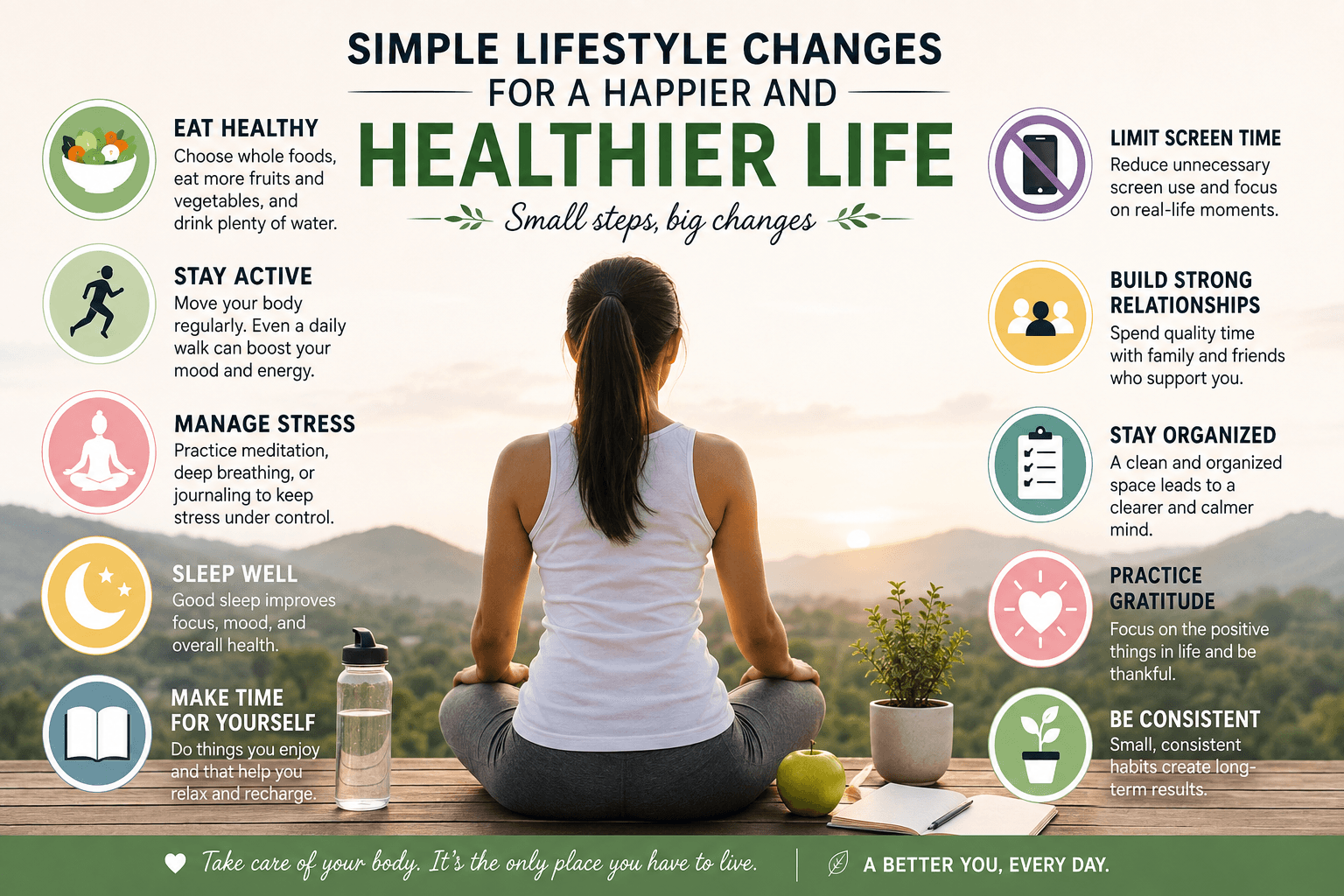
A better lifestyle does not require a complete transformation. Start with simple habits: eat nutritious foods, stay active, sleep well, manage stress, spend time with people you care about, and make room for yourself.
The most important thing is to create a lifestyle that is realistic and enjoyable. When healthy habits become part of your everyday routine, they can improve not only your physical health but also your confidence, productivity, relationships, and overall quality of life.
FAQs: Simple Lifestyle Changes for a Happier and Healthier Life
1. What is a healthy lifestyle?
A healthy lifestyle involves balanced nutrition, regular physical activity, sufficient sleep, stress management, meaningful relationships, and habits that support overall well-being.
2. Why is having a daily routine important?
A consistent routine can help you stay organized, manage your time, reduce stress, and build healthier habits.
3. What should I eat for a healthy lifestyle?
Focus on a balanced diet that includes vegetables, fruits, whole grains, protein, healthy fats, and plenty of water.
4. How much exercise do I need?
The right amount varies by person, but regular movement throughout the week is important. Walking, cycling, stretching, swimming, and sports are all useful options.
5. Can walking improve my lifestyle?
Yes. Regular walking can support physical fitness, cardiovascular health, energy levels, and mood.
6. Why is sleep important for a healthy lifestyle?
Quality sleep supports physical recovery, concentration, mood, energy, and overall health.
7. How can I improve my sleep habits?
Maintain a consistent bedtime, create a relaxing evening routine, keep your sleeping environment comfortable, and reduce stimulating screen use before bed.
8. How does stress affect lifestyle and health?
Long-term stress can affect mood, sleep, concentration, energy, and overall well-being. Managing stress is therefore an important part of a balanced lifestyle.
9. What are some simple ways to reduce stress?
Try walking, deep breathing, journaling, reading, spending time outdoors, listening to music, or talking with someone you trust.
10. How can I reduce unnecessary screen time?
Set specific periods for checking your phone, turn off unnecessary notifications, and replace some screen time with activities such as reading, exercise, hobbies, or socializing.
11. Why are relationships important for a healthy lifestyle?
Positive relationships can provide emotional support, companionship, encouragement, and a sense of connection.
12. How can I make more time for myself?
Schedule personal time just as you would schedule other responsibilities. Use it for hobbies, relaxation, exercise, reading, or other activities you enjoy.
13. Does keeping my home organized affect my lifestyle?
An organized environment can make daily tasks easier, reduce distractions, and create a more comfortable space for relaxation and productivity.
14. How can I develop healthy habits?
Start with one or two small changes and repeat them consistently. Gradually add new habits instead of trying to change everything at once.
15. Is it necessary to completely avoid unhealthy foods?
Not necessarily. A sustainable lifestyle generally focuses on balance and moderation rather than completely eliminating every favorite food.
16. How can I stay motivated to live healthier?
Set realistic goals, track your progress, celebrate small improvements, and focus on consistency rather than perfection.
17. Can hobbies improve quality of life?
Yes. Enjoyable hobbies can provide relaxation, creativity, personal satisfaction, and a healthy break from everyday responsibilities.
18. What is self-care?
Self-care means intentionally taking care of your physical, emotional, and mental well-being through activities and habits that support your needs.
19. How long does it take to develop a healthy lifestyle?
There is no fixed timeframe. Healthy living is an ongoing process, and small habits can gradually become a natural part of your daily routine.
20. What is the most important lifestyle change to make?
There is no single change that works for everyone. A strong starting point is to focus on balanced nutrition, regular movement, adequate sleep, stress management, and consistent self-care.