

Introduction
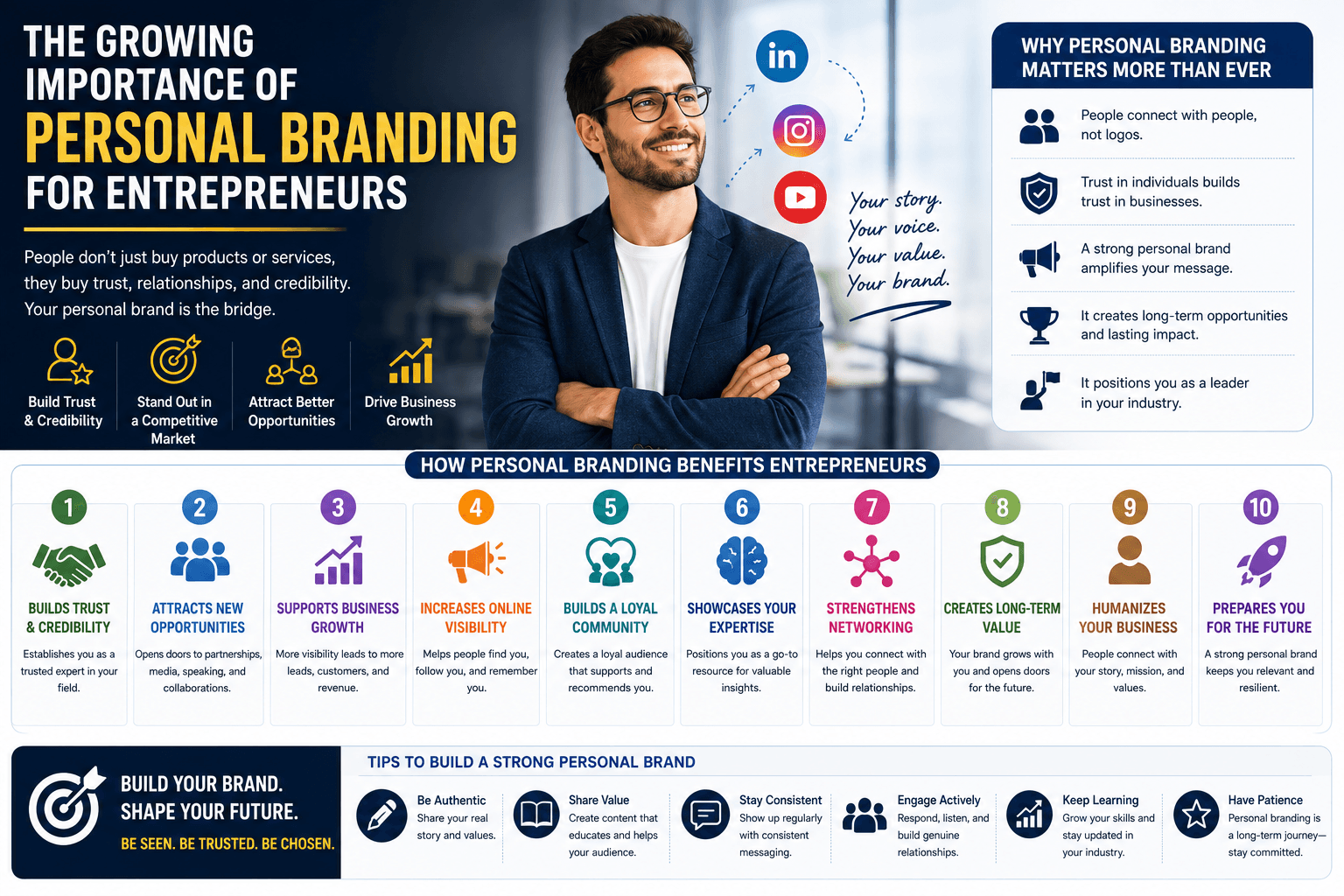
A strong personal brand goes beyond having an attractive social media profile. It reflects your expertise, values, credibility, and unique perspective. Whether you're launching a startup, running a small business, or leading an established company, your personal brand can influence customer trust, business opportunities, and long-term success.
In 2026, entrepreneurs who actively invest in their personal brand are finding it easier to attract clients, grow their audience, establish authority, and differentiate themselves in competitive markets.
What Is Personal Branding?
Personal branding is the process of intentionally shaping how people perceive you professionally. It involves communicating your knowledge, experience, personality, and values consistently across online and offline platforms.
A successful personal brand helps people quickly understand:
Who you are
What you do
What you stand for
What expertise you offer
Why they should trust you
Rather than promoting yourself alone, personal branding focuses on creating genuine value for your audience.
1. Building Trust and Credibility
Trust is one of the most important factors in business success.
Customers are more likely to purchase products or services from entrepreneurs they recognize and trust. By consistently sharing insights, expertise, and authentic experiences, business owners establish credibility within their industries.
Publishing educational content, speaking at events, participating in interviews, and engaging with your audience all contribute to building long-term trust.
2. Standing Out in Competitive Markets
Almost every industry has become more competitive.
A strong personal brand helps entrepreneurs differentiate themselves beyond price or product features. While competitors may offer similar services, your unique experiences, communication style, leadership, and expertise create a distinct identity that is difficult to replicate.
People often choose to work with individuals they know and respect.
3. Attracting More Business Opportunities
Personal branding opens doors to opportunities that traditional marketing may not create.
A recognized entrepreneur is more likely to receive:
Partnership opportunities
Speaking invitations
Media interviews
Podcast appearances
Investor interest
Collaboration requests
Consulting projects
As visibility grows, so does the potential for new business relationships.
4. Supporting Business Growth
A founder's reputation often strengthens the company's reputation.
Customers who trust the entrepreneur behind a business are more likely to trust the products and services the business provides.
Strong personal branding can increase:
Website traffic
Lead generation
Customer loyalty
Brand awareness
Sales opportunities
For startups and small businesses, this visibility can accelerate growth without requiring massive advertising budgets.
5. Building a Loyal Community
Successful entrepreneurs don't simply build audiences—they build communities.
Sharing valuable insights, responding to questions, and engaging consistently with followers helps create meaningful relationships.
A loyal community often becomes a powerful source of referrals, testimonials, and long-term customer support.
6. Demonstrating Industry Expertise
Thought leadership is an essential part of personal branding.
Entrepreneurs who regularly publish articles, share research, discuss industry trends, and provide practical advice position themselves as trusted experts.
Educational content not only helps audiences solve problems but also increases professional credibility.
7. Strengthening Digital Presence
In most cases, a potential customer will search for an entrepreneur online before making contact.
Maintaining a professional digital presence through websites, LinkedIn, blogs, podcasts, newsletters, and social media ensures that people find accurate and consistent information about your expertise.
A strong online presence also improves discoverability through search engines.
8. Creating Long-Term Brand Value
Businesses evolve, products change, and markets shift.
A personal brand, however, can continue creating opportunities regardless of changes in a company's direction.
Entrepreneurs with established reputations often transition more easily into new ventures, consulting roles, investments, or leadership positions because their credibility extends beyond a single business.
9. Humanizing the Business
People connect with stories more than logos.
Sharing your entrepreneurial journey, lessons learned, successes, and challenges creates authentic connections with your audience.
Authenticity helps customers feel more connected to your mission and encourages lasting relationships built on transparency and trust.
10. Preparing for the Future of Business
The future of entrepreneurship is increasingly relationship-driven.
Artificial intelligence can automate many business processes, but genuine human connection, leadership, creativity, and trust remain irreplaceable.
Entrepreneurs who combine technology with authentic personal branding will be better positioned to lead in an increasingly digital economy.
Common Mistakes to Avoid
While building a personal brand, entrepreneurs should avoid:
Being inconsistent across platforms
Focusing only on self-promotion
Ignoring audience engagement
Sharing inaccurate information
Copying competitors instead of developing an authentic voice
Neglecting professional reputation
Authenticity, consistency, and value should remain at the center of every personal branding strategy.
Best Practices for Building a Strong Personal Brand
To develop a lasting personal brand:
Define your niche and expertise.
Share valuable educational content regularly.
Maintain consistent messaging across platforms.
Engage genuinely with your audience.
Publish articles and insights on industry trends.
Continue learning and developing new skills.
Build relationships rather than simply seeking followers.
Let your values and personality show through your content.
These practices help create a professional reputation that supports long-term business success.
Conclusion
Personal branding has become one of the most powerful growth strategies for entrepreneurs in 2026. It builds trust, strengthens credibility, creates meaningful relationships, and opens doors to valuable business opportunities.
In a marketplace where customers increasingly connect with people before companies, entrepreneurs who invest in their reputation, share valuable knowledge, and communicate authentically are better positioned to stand out from the competition.
A strong personal brand is more than a marketing tool—it is a long-term business asset that supports growth, resilience, and leadership. By consistently delivering value and building genuine connections, entrepreneurs can create a reputation that drives success for years to come.
1. What is personal branding, and why is it important for entrepreneurs?
Personal branding is the process of building and promoting a unique professional identity based on your expertise, values, personality, and achievements. For entrepreneurs, a strong personal brand helps establish credibility, attract customers, build trust, and differentiate themselves from competitors. In today's digital world, people often choose to do business with individuals they know and trust, making personal branding a valuable business asset.
2. How does personal branding help entrepreneurs grow their businesses?
A well-developed personal brand increases visibility, strengthens customer relationships, attracts media opportunities, generates qualified leads, and opens doors to partnerships and speaking engagements. By consistently sharing valuable insights and demonstrating expertise, entrepreneurs can position themselves as industry leaders and grow their businesses more effectively.
3. Which platforms are best for building a personal brand?
Popular platforms include LinkedIn for professional networking, X (formerly Twitter) for industry discussions, Instagram for visual storytelling, YouTube for educational content, Facebook for community building, and personal websites or blogs for publishing in-depth content. The best platform depends on your target audience and business goals.
4. Can personal branding increase customer trust?
Yes. A strong personal brand makes entrepreneurs more authentic and relatable. Regularly sharing knowledge, success stories, customer testimonials, and industry insights helps establish credibility, making potential customers more confident in choosing your products or services.
5. How is AI changing personal branding for entrepreneurs?
AI tools help entrepreneurs create content, analyze audience behavior, optimize social media strategies, generate marketing ideas, and improve communication. By automating repetitive tasks, AI allows business owners to focus more on building meaningful relationships with their audience.
6. What are the biggest mistakes entrepreneurs make when building a personal brand?
Common mistakes include inconsistent messaging, neglecting audience engagement, copying competitors, posting only promotional content, lacking authenticity, ignoring feedback, and failing to maintain a professional online presence. Successful personal branding requires consistency, honesty, and delivering long-term value.
7. How long does it take to build a successful personal brand?
Building a strong personal brand is a long-term process that often takes several months or even years. Consistently publishing valuable content, engaging with your audience, networking, and demonstrating expertise over time gradually builds authority and trust within your industry.
8. Can small business owners benefit from personal branding?
Absolutely. Personal branding allows small business owners to compete with larger companies by highlighting their expertise, unique story, and direct connection with customers. A recognizable personal brand often leads to increased customer loyalty and business opportunities.
9. How does personal branding influence business partnerships?
A credible personal brand attracts investors, collaborators, industry experts, and strategic partners. Entrepreneurs who are recognized as knowledgeable and trustworthy are more likely to receive partnership offers, invitations to events, and opportunities to expand their professional network.
10. What is the future of personal branding for entrepreneurs?
The future of personal branding will focus on authenticity, AI-assisted content creation, video marketing, thought leadership, and community engagement. Entrepreneurs who consistently share valuable insights, build genuine relationships, and adapt to evolving digital platforms will be better positioned for long-term business success.