
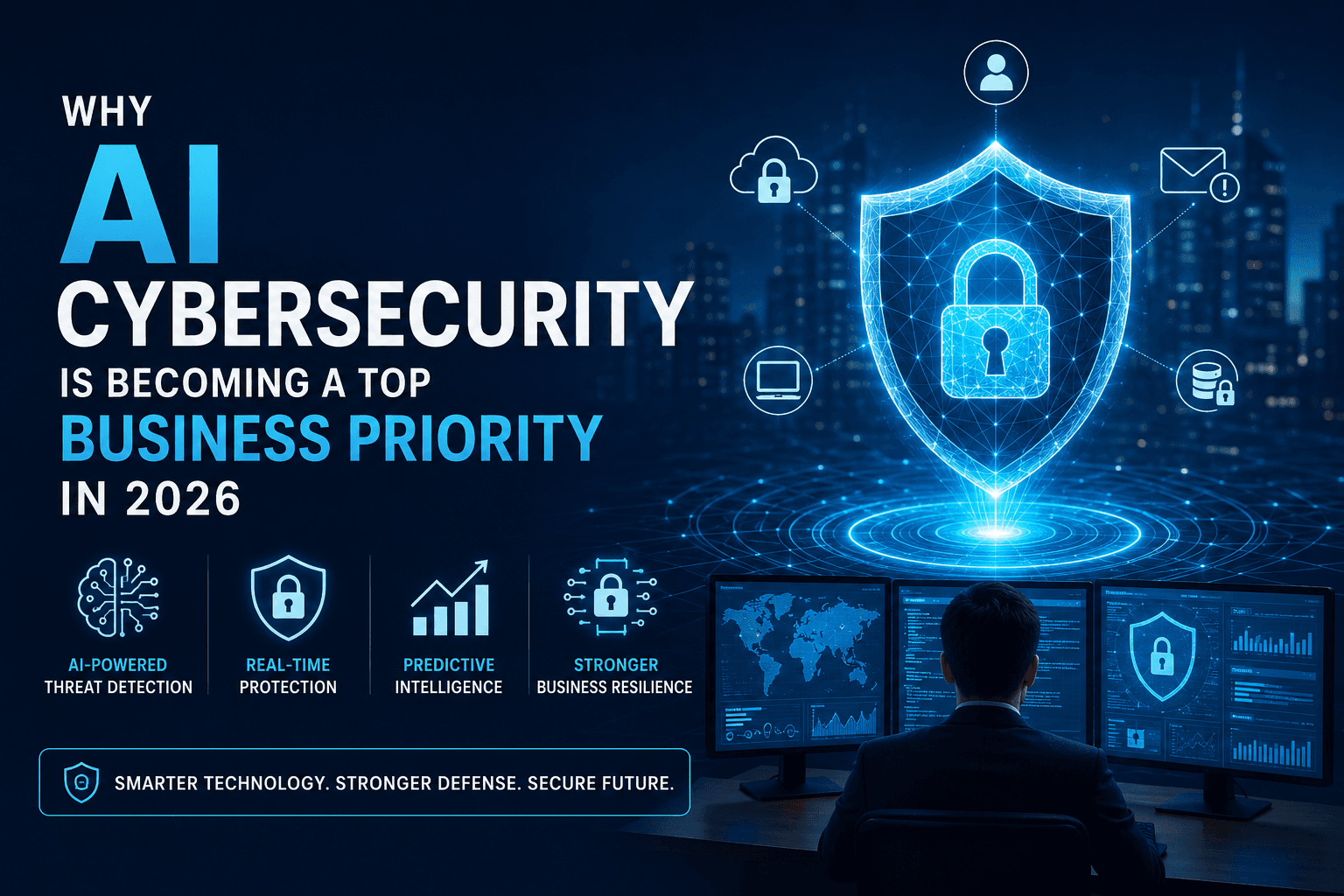

As artificial intelligence continues to reshape industries, it is also changing the cybersecurity landscape. Businesses are adopting AI to improve productivity, automate workflows, and deliver better customer experiences. At the same time, cybercriminals are using the same technology to launch more sophisticated attacks. This dual transformation has made AI cybersecurity one of the most important business priorities in 2026.
Organizations of every size are now realizing that traditional security solutions alone are no longer enough. Modern cyber threats evolve faster than ever, requiring businesses to embrace intelligent, AI-powered security systems capable of detecting and responding to attacks in real time.
The Growing Cyber Threat Landscape
Cyberattacks have become more frequent, targeted, and complex. Attackers are using artificial intelligence to automate phishing campaigns, generate convincing fake emails, develop advanced malware, and identify vulnerabilities more efficiently than before.
Businesses now face threats such as:
AI-generated phishing emails
Deepfake voice and video scams
Ransomware attacks
Credential theft
Cloud security breaches
Supply chain cyberattacks
As organizations continue their digital transformation journeys, their attack surfaces expand, creating more opportunities for cybercriminals.
Why AI Is Transforming Cybersecurity
Artificial intelligence enables security teams to identify unusual patterns that would be impossible for humans to detect manually. Machine learning algorithms continuously analyze network traffic, user behavior, and system activity to detect suspicious events before they become major incidents.
Some of the biggest advantages include:
Faster Threat Detection
AI can analyze millions of events every second, identifying anomalies almost instantly. Early detection helps businesses prevent data breaches before significant damage occurs.
Automated Incident Response
Instead of waiting for manual investigation, AI-powered systems can automatically isolate infected devices, block malicious traffic, and alert security teams immediately.
Predictive Threat Intelligence
Modern AI solutions learn from historical attack patterns to predict future threats, allowing organizations to strengthen defenses proactively.
Reduced Human Error
Many cyber incidents result from simple mistakes. AI assists employees by identifying risky behavior, monitoring access, and enforcing security policies consistently.
AI Is Also Empowering Cybercriminals
While AI strengthens defense, it also enhances offensive cyber capabilities.
Attackers now use AI to:
Create highly personalized phishing campaigns
Generate malware variants that evade detection
Automate vulnerability scanning
Produce realistic deepfake audio and video
Crack passwords more efficiently
This growing "AI versus AI" battle means businesses must continuously update their security strategies.
Key Business Benefits of AI Cybersecurity
Organizations investing in AI cybersecurity gain several competitive advantages.
Better Business Continuity
Rapid threat detection minimizes downtime and keeps operations running during attempted attacks.
Stronger Customer Trust
Customers increasingly expect businesses to protect personal and financial information. Demonstrating strong cybersecurity builds long-term confidence and brand loyalty.
Lower Security Costs
Although AI security platforms require investment, automation reduces manual workloads, enabling security teams to focus on high-value tasks while improving operational efficiency.
Regulatory Compliance
Many industries face strict data protection regulations. AI helps organizations monitor compliance, generate audit logs, and identify potential violations before regulators do.
Best Practices for Businesses
Organizations looking to strengthen cybersecurity should consider the following strategies:
Deploy AI-powered threat detection platforms.
Enable multi-factor authentication across all accounts.
Regularly update software and security patches.
Conduct cybersecurity awareness training for employees.
Monitor cloud environments continuously.
Develop and test incident response plans.
Encrypt sensitive business and customer data.
Perform routine security assessments and penetration testing.
Cybersecurity is no longer solely the responsibility of the IT department. Every employee plays an important role in protecting business assets.
The Future of AI Cybersecurity
As artificial intelligence continues to evolve, cybersecurity solutions will become even more intelligent. Future systems will predict attacks earlier, automate complex investigations, and respond to threats with minimal human intervention.
Businesses that invest in AI-driven cybersecurity today will be better prepared for tomorrow's increasingly complex digital environment. Rather than viewing cybersecurity as an expense, forward-thinking organizations recognize it as a strategic investment that protects revenue, reputation, customer trust, and long-term growth.
Final Thoughts
Artificial intelligence has fundamentally changed the cybersecurity landscape. While cybercriminals are leveraging AI to create more advanced threats, businesses can use the same technology to strengthen their defenses.
Organizations that embrace AI-powered cybersecurity will be better equipped to detect attacks quickly, reduce operational risk, improve compliance, and maintain customer confidence. In today's digital economy, cybersecurity is no longer optional—it is a core business strategy that supports resilience and sustainable growth.
To stay ahead in an increasingly connected world, businesses must continuously invest in modern security technologies, employee awareness, and proactive risk management. Those that do will be well positioned to thrive in the AI-powered future.
Read more business insights at: https://www.1st4ebusiness.com