
Going on your first cruise can be one of the most exciting travel experiences. A cruise allows you to visit multiple destinations while enjoying accommodation, dining, entertainment, and activities in one place.
However, choosing and booking your first cruise can feel confusing. With different cruise lines, destinations, cabin types, packages, and onboard experiences available, it is important to understand the basics before making your booking.
This guide covers everything first-time cruise travelers need to know before booking their first adventure.
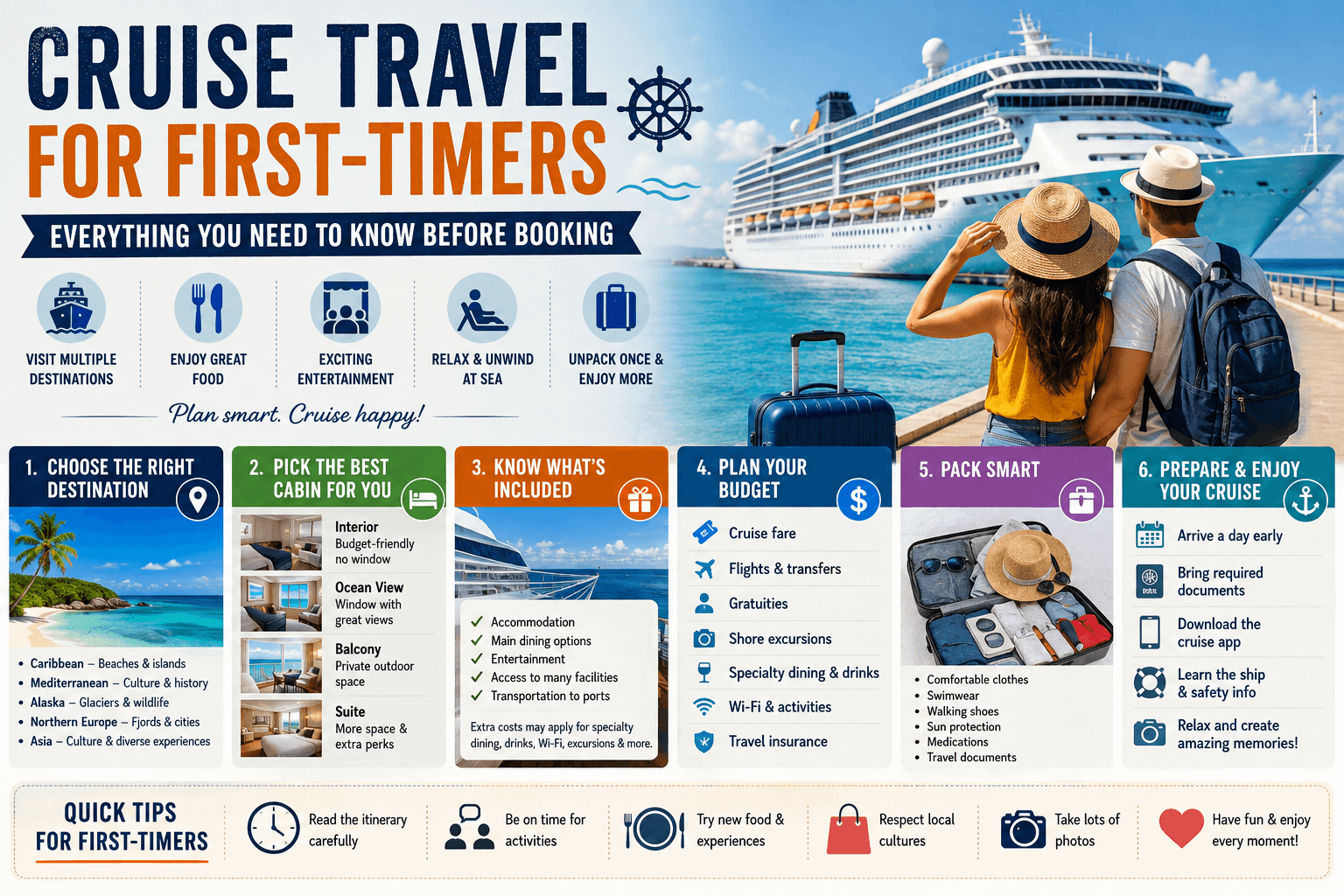
1. Choose the Right Cruise Destination
The first step is deciding where you want to go. Different destinations offer completely different experiences.
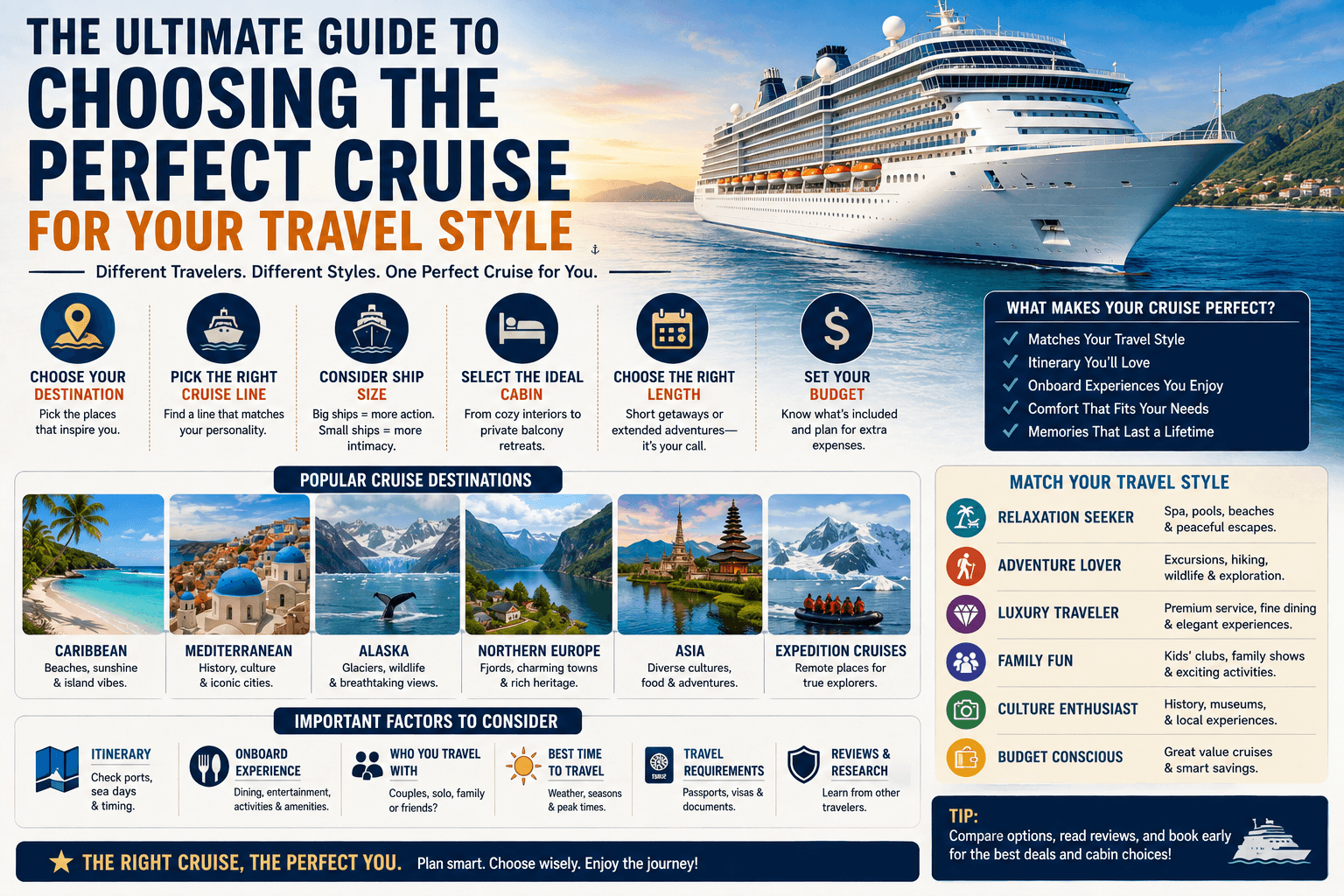
Popular options include:
Caribbean cruises: Beaches, tropical islands, and warm weather
Mediterranean cruises: History, culture, and famous cities
Alaska cruises: Glaciers, wildlife, and dramatic scenery
Northern Europe cruises: Fjords, historic cities, and beautiful landscapes
Asian cruises: Culture, food, and diverse destinations
Choose a destination based on your interests, budget, and preferred travel season.
2. Select the Right Cruise Length
Cruises can range from short weekend trips to voyages lasting several weeks.
For first-time travelers, a cruise of around five to seven nights can be a good option because it provides enough time to experience life onboard without committing to a very long journey.
3. Understand What Is Included
One of the most important things to check before booking is what your cruise fare includes.
Many cruise fares commonly include:
Your accommodation
Main dining options
Selected entertainment
Access to many onboard facilities
Transportation between ports
However, some services may cost extra, such as specialty restaurants, premium drinks, spa services, excursions, Wi-Fi, and certain activities.
Always review the specific cruise line's terms and inclusions.
4. Choose the Right Cabin
Your cabin can significantly affect both your experience and budget.
Common cabin types include:
Interior Cabin
Usually the most affordable option. It typically has no window.
Ocean View Cabin
Includes a window or porthole with outside views.
Balcony Cabin
Provides a private outdoor balcony and more personal space.
Suite
Offers additional space and may include extra amenities, depending on the cruise line.
Consider how much time you expect to spend in your cabin before choosing.
5. Research the Cruise Line
Different cruise lines offer different experiences. Some focus on families, while others are designed around luxury, entertainment, adventure, or quieter experiences.
Before booking, consider:
Passenger age groups
Onboard activities
Dining options
Entertainment
Dress codes
Ship size
Overall atmosphere
Reading recent reviews can also help you understand what to expect.
6. Check the Cruise Itinerary Carefully
Do not choose a cruise based only on the ship. The itinerary is equally important.
Check:
Ports you will visit
Time spent in each destination
Sea days
Arrival and departure times
Available excursions
A great ship cannot replace an itinerary that does not match your interests.
7. Understand Extra Costs
Your initial cruise fare may not represent your total vacation cost.
Possible additional expenses include:
Flights
Transfers
Gratuities
Shore excursions
Specialty dining
Drinks
Internet packages
Travel insurance
Shopping
Create a complete travel budget before booking.
8. Book Shore Excursions Wisely
Shore excursions allow passengers to explore destinations during port visits.
Options may include:
Guided city tours
Beach visits
Adventure activities
Wildlife experiences
Cultural tours
Compare prices, activity levels, and cancellation policies before booking.
9. Don't Forget Travel Documents
International cruises may require important travel documents.
Depending on your itinerary, you may need:
A passport
Visas
Identification documents
Travel insurance information
Check official requirements for every destination before traveling.
10. Arrive Before Your Cruise Departure
If you are flying to your departure port, arriving at least a day before the cruise can reduce the risk of missing the ship because of flight delays.
It can also give you time to relax before your vacation begins.
11. Download the Cruise Line's App
Many cruise lines offer mobile apps that provide useful information about:
Daily activities
Restaurant reservations
Entertainment schedules
Deck maps
Account information
Port details
Downloading the app before your trip can make your experience more convenient.
12. Pack Smartly
Packing for a cruise depends on the destination and season.
Useful items may include:
Comfortable clothing
Swimwear
Comfortable walking shoes
Formal or smart clothing if needed
Sun protection
Essential medications
Travel documents
Check the cruise line's guidelines before packing.
13. Prepare for Sea Sickness
Some travelers may experience motion sickness, especially during rough weather.
Before traveling, consider discussing appropriate options with a qualified healthcare professional. Choosing a mid-ship cabin on a lower deck may also help some travelers feel less movement.
14. Learn Basic Cruise Etiquette
Cruises involve sharing spaces with many other travelers.
Good etiquette includes:
Arriving on time for activities
Respecting other passengers
Following safety instructions
Being polite to crew members
Respecting local cultures during port visits
Small actions can help create a better experience for everyone.
15. Explore the Ship Early
Cruise ships can be surprisingly large.
On your first day, take some time to explore:
Restaurants
Pools
Entertainment venues
Guest services
Important safety areas
Getting familiar with the ship early can make the rest of your cruise easier.
Final Thoughts
Your first cruise can be an unforgettable adventure when you choose the right destination, ship, cabin, and itinerary. Planning ahead and understanding potential extra costs can help you avoid surprises.
The most important advice for first-time cruisers is simple: research carefully, pack wisely, and give yourself time to enjoy both the ship and the destinations.
20 Frequently Asked Questions About First-Time Cruises
1. Is a cruise a good vacation for first-time travelers?
Yes, cruises can be convenient because accommodation, transportation between ports, dining, and entertainment are often available in one place.
2. How many days should my first cruise be?
A five- to seven-night cruise can be a good starting point for many first-time cruisers.
3. What is included in a cruise ticket?
Inclusions vary by cruise line and fare type, but accommodation, some dining, entertainment, and selected onboard activities are commonly included.
4. What is the best cabin for a first-time cruiser?
It depends on your budget and preferences. Interior cabins are often more affordable, while balcony cabins offer private outdoor space.
5. Are cruises expensive?
Prices vary depending on the destination, cruise line, cabin type, season, and additional expenses.
6. Do I need a passport for a cruise?
Passport and travel document requirements depend on your nationality, departure location, and cruise itinerary. Check official requirements before booking.
7. What should I pack for my first cruise?
Pack clothing suitable for your destination, comfortable shoes, swimwear, sun protection, medications, and required travel documents.
8. Can I bring food and drinks on a cruise?
Cruise lines have different rules regarding outside food and beverages. Check the specific cruise line's policy.
9. Do cruise ships have Wi-Fi?
Many modern cruise ships offer Wi-Fi, but availability, speed, coverage, and pricing can vary.
10. What happens if I get seasick?
Some passengers experience motion sickness. You can speak with a qualified healthcare professional about suitable options before traveling.
11. Are meals included on a cruise?
Many cruises include meals at selected dining venues, but specialty restaurants may require an additional payment.
12. Do I need to book shore excursions?
Booking is not always required, but popular excursions may have limited availability.
13. Should I buy travel insurance for a cruise?
Travel insurance can provide protection for certain unexpected events, but coverage varies. Review policies carefully before purchasing.
14. Can families travel on cruises?
Yes, many cruise lines offer family-friendly ships, activities, entertainment, and programs for children and teenagers.
15. Are cruise ships safe?
Cruise ships follow maritime safety requirements and have trained crew members and safety procedures. Passengers should always follow crew instructions.
16. What should I do on the first day of a cruise?
Explore the ship, attend required safety briefings, check your daily schedule, and familiarize yourself with important locations.
17. Can I use my phone on a cruise ship?
You may be able to use Wi-Fi or mobile services depending on your location and service plan. International roaming charges can apply.
18. How early should I arrive at the cruise port?
Follow the cruise line's check-in instructions and allow extra time for travel delays and boarding procedures.
19. Do I need cash during a cruise?
Many ships use onboard accounts or payment systems, but having some local currency may be useful when visiting certain destinations.
20. What is the most important tip for first-time cruisers?
Research your cruise carefully, understand what is included, budget for additional expenses, and check all travel requirements before departure.