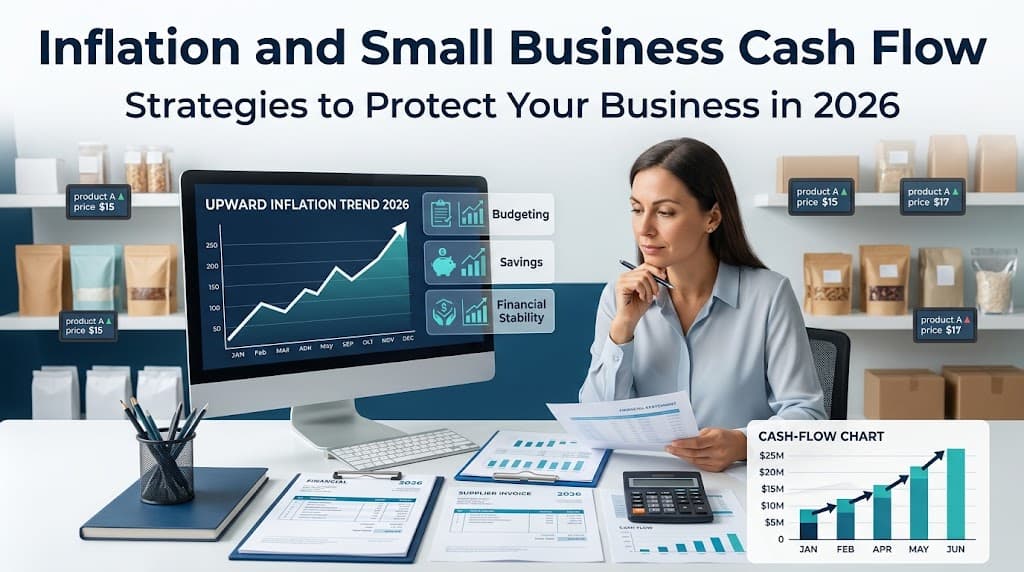

Inflation can create serious cash flow challenges for small businesses by increasing operating expenses, raising inventory costs, and reducing customers’ purchasing power. Even businesses with steady sales may struggle to pay suppliers, employees, rent, and utility bills when money comes in more slowly than expenses go out.
For small business owners, understanding the relationship between inflation and cash flow is essential for maintaining financial stability. Rising prices can increase the amount of working capital needed to operate a business, while delayed customer payments and changing demand can make financial planning more difficult.
The good news is that small businesses can reduce these risks through effective cash flow forecasting, strategic pricing, expense management, supplier negotiations, and careful financial planning.
This guide explains how inflation affects small business cash flow in 2026 and provides practical strategies to protect liquidity, control costs, and support long-term growth.
What Is Small Business Cash Flow?
Cash flow refers to the movement of money into and out of a business over a specific period.
Cash inflows include customer payments, sales revenue, loan proceeds, and other money received by the business.
Cash outflows include supplier payments, employee wages, rent, utilities, taxes, loan repayments, and operating expenses.
A business generally has positive cash flow when its cash inflows exceed its cash outflows during a particular period. Negative cash flow occurs when more cash leaves the business than enters it.
Cash flow is different from profit. A business may report a profit but still lack enough available cash to pay its bills because customers have not paid their invoices or money is tied up in inventory.
During inflation, this distinction becomes especially important because everyday business expenses may increase before additional revenue is collected.
How Inflation Affects Small Business Cash Flow
Inflation influences both the amount of money businesses need and the timing of their payments.
1. Higher Operating Expenses
When prices rise, businesses may pay more for electricity, transportation, packaging, raw materials, rent, software, and maintenance.
These increases create additional cash requirements. If a business continues charging the same prices, it may have less money available to cover its regular obligations.
2. Increased Inventory Costs
Retailers, wholesalers, restaurants, and manufacturers may need more cash to purchase the same quantity of inventory.
For example, a retailer that previously spent $5,000 to replenish its stock might need $5,500 after a 10% increase in purchasing costs, assuming the quantity and product mix remain unchanged.
The additional $500 must come from existing cash reserves, additional sales receipts, supplier credit, or financing.
3. Delayed Customer Payments
Customers experiencing financial pressure may take longer to pay invoices or request extended payment terms.
For businesses that sell on credit, this can create a cash shortage even when reported sales remain stable.
4. Reduced Consumer Spending
As household expenses increase, customers may reduce discretionary purchases, choose cheaper products, or postpone buying decisions.
Lower sales volumes can make it harder for businesses to cover fixed expenses such as rent, insurance, and salaries.
5. Higher Borrowing Costs
If interest rates increase, businesses with variable-rate loans or new borrowing requirements may face higher financing expenses.
These payments reduce the cash available for inventory, marketing, staffing, and other business activities.
6. Pressure on Employee Compensation
Employees may request higher wages as living costs increase. Businesses must consider compensation carefully while maintaining sufficient funds for other essential expenses.
Why Cash Flow Management Becomes More Important During Inflation
Cash flow management helps business owners understand when money will arrive, when payments are due, and whether the business can meet its financial obligations.
During inflation, effective cash flow management can help businesses:
Anticipate upcoming cash shortages.
Prioritize essential payments.
Maintain adequate inventory.
Negotiate more favorable supplier terms.
Avoid unnecessary borrowing.
Identify unprofitable products and services.
Make better-informed pricing decisions.
Prepare for unexpected cost increases.
Without a reliable cash flow plan, even a growing business may experience financial difficulties.
1. Create a Rolling Cash Flow Forecast
A cash flow forecast estimates the money a business expects to receive and pay over a future period.
During inflation, a rolling forecast covering the next 8–13 weeks can help owners identify potential problems before they occur.
Include expected customer payments, supplier invoices, wages, rent, utilities, taxes, loan repayments, and other significant expenses.
Update the forecast regularly using actual results rather than relying entirely on earlier assumptions.
For example, if a major customer delays payment by two weeks, the forecast should show whether the business can still meet its upcoming obligations.
A simple spreadsheet may be sufficient for a small business. Larger or more complex operations may benefit from accounting software with cash flow forecasting features.
2. Improve Accounts Receivable Collection
When customers pay late, businesses must often cover operating expenses using their own cash reserves.
To improve collections:
Issue invoices promptly after delivering products or services.
Include clear payment deadlines and terms.
Send polite reminders before and after due dates.
Offer convenient electronic payment methods.
Investigate disputed invoices quickly.
Review credit limits for customers who repeatedly pay late.
For larger projects, consider requesting a reasonable deposit or milestone payments where commercially appropriate.
Before offering longer payment terms, assess the customer's payment history and the effect on your working capital.
3. Negotiate Better Supplier Payment Terms
Supplier relationships can play an important role in managing cash flow during inflation.
Depending on your purchasing history, you may be able to negotiate longer payment periods, predictable pricing, consolidated shipments, or discounts for reliable order volumes.
However, longer payment terms are useful only when they do not damage supplier relationships or result in higher overall costs.
Compare the complete terms, including delivery fees, minimum order quantities, discounts, interest charges, and late-payment penalties.
Maintain communication with suppliers, especially if you expect a temporary cash shortage. Discussing the issue early is generally better than missing a payment without warning.
4. Review Pricing and Profit Margins
If operating expenses increase while selling prices remain unchanged, profit margins may decline.
Calculate the full cost of each major product or service, including materials, labor, packaging, delivery, overhead, and payment processing.
Then determine whether current prices adequately cover these costs.
Possible responses include gradual price adjustments, redesigned service packages, more efficient production, or replacing consistently unprofitable products.
Price changes should reflect real cost pressures and customer demand. Excessive increases can reduce sales, so test assumptions carefully and communicate adjustments transparently.
5. Control Inventory Without Losing Sales
Inventory can absorb a substantial amount of working capital.
During inflation, some businesses purchase excessive stock because they expect prices to rise further. This may be appropriate in limited circumstances, but it can also create cash shortages if demand weakens or products remain unsold.
Use sales history and demand forecasts to determine appropriate stock levels.
Prioritize fast-moving products, establish reorder points, identify slow-moving inventory, and reduce avoidable waste.
Compare the potential savings from bulk purchasing with storage costs, expiration risks, financing costs, and the possibility that customer preferences may change.
The objective is to maintain enough inventory to serve customers without tying up unnecessary cash.
6. Reduce Unnecessary Expenses
Expense management can help preserve cash when revenue becomes unpredictable.
Review subscriptions, advertising campaigns, delivery arrangements, insurance policies, software plans, and other recurring payments.
Identify duplicate services, unused subscriptions, avoidable fees, and inefficient processes.
However, do not automatically eliminate every expense that does not produce immediate revenue. Staff training, maintenance, customer support, and effective marketing may protect future earnings.
Prioritize reductions that create meaningful savings without undermining product quality, compliance, employee safety, or customer relationships.
7. Build an Emergency Cash Reserve
An emergency reserve provides a financial buffer for unexpected expenses, delayed payments, or temporary reductions in sales.
The appropriate amount depends on the business's operating costs, revenue stability, industry, seasonality, and access to financing.
Start by calculating essential monthly expenses, including wages, rent, utilities, critical supplier payments, and debt obligations.
Set a realistic reserve target and build it gradually when cash flow permits.
Keep emergency funds accessible and avoid committing the entire reserve to inventory, speculative investments, or long-term purchases.
8. Use Financing Carefully
Short-term financing may help a business manage a temporary gap between customer receipts and supplier payments. However, borrowing can create additional pressure if repayment costs are too high.
Before accepting financing, calculate the total repayment amount, interest rate, fees, repayment schedule, and consequences of missed payments.
Test whether the business can afford repayments under a realistic scenario in which sales decline or customers pay late.
Compare financing options and consider alternatives such as negotiating supplier terms, collecting overdue invoices, or reducing unnecessary inventory.
Borrowing should support a clear financial plan rather than cover an ongoing operating problem that remains unresolved.
9. Diversify Revenue and Protect Customer Relationships
Businesses that depend on a single customer, product, or sales channel may face greater cash flow volatility.
Where appropriate, consider additional revenue sources that use existing capabilities. A retailer might introduce online ordering, while a service provider might offer maintenance plans or recurring service packages.
Customer retention is equally important. Reliable service, clear communication, consistent quality, and convenient payment options can encourage repeat business.
Avoid unprofitable discounts that increase sales volume but leave insufficient cash to cover operating costs.
10. Use Technology to Improve Financial Visibility
Digital tools can help small businesses organize invoices, track expenses, manage inventory, and monitor cash balances.
Accounting software may provide updated financial reports, while invoicing tools can automate reminders and payment tracking.
Inventory systems can identify slow-moving products and reduce unnecessary purchases.
Choose tools based on actual business needs, affordability, data security, and ease of use. A simple spreadsheet and consistent bookkeeping may be more appropriate than an expensive software system for a very small operation.
11. Monitor the Right Financial Indicators
Business owners should regularly review indicators that reveal whether inflation is affecting liquidity.
Financial indicator | What it helps measure |
|---|---|
Available cash balance | Money currently accessible to the business |
Operating cash flow | Cash generated or used by regular operations |
Accounts receivable aging | How long customers have owed money |
Inventory turnover | How efficiently inventory is sold and replaced |
Gross profit margin | Revenue remaining after direct costs |
Accounts payable schedule | Supplier payments due and their timing |
Cash flow forecast | Expected future cash shortages or surpluses |
No single indicator provides a complete picture. Reviewing them together helps business owners understand the causes of financial pressure.
12. Prepare for Different Inflation Scenarios
Inflation can change unexpectedly, so businesses should avoid depending on a single financial forecast.
Prepare alternative scenarios based on your company's exposure to rising costs and changing demand.
Stable scenario: Costs and sales remain close to current expectations. Maintain regular monitoring and preserve financial discipline.
Higher-cost scenario: Supplier prices, utilities, or wages rise faster than expected. Review pricing, renegotiate contracts, and identify additional savings.
Weak-sales scenario: Customer demand falls while expenses remain high. Protect essential cash reserves, reduce avoidable spending, and prioritize products and customers that contribute to sustainable cash flow.
Update these scenarios when important assumptions change.
Common Cash Flow Mistakes to Avoid During Inflation
Small businesses can make financial pressure worse by:
Confusing accounting profit with available cash.
Ignoring overdue customer invoices.
Purchasing more inventory than demand justifies.
Accepting expensive financing without a repayment plan.
Raising prices without understanding customer sensitivity.
Failing to update budgets when costs change.
Spending emergency reserves on nonessential purchases.
Delaying communication with suppliers about payment difficulties.
Making large investments based on overly optimistic sales forecasts.
Regular monitoring and early action can help prevent these mistakes from becoming serious financial problems.
A Practical 30-Day Cash Flow Improvement Plan
Week 1: Understand Your Cash Position
Review bank balances, invoices, supplier bills, inventory, operating expenses, and upcoming loan payments. Prepare an initial 8–13-week cash flow forecast.
Week 2: Improve Cash Collection
Follow up on overdue invoices, issue outstanding bills, review customer payment terms, and investigate delayed payments.
Week 3: Control Costs and Working Capital
Request supplier quotations, review recurring expenses, identify slow-moving inventory, and assess product-level margins.
Week 4: Strengthen Financial Planning
Set an emergency reserve target, create alternative cost and sales scenarios, and establish a regular financial review schedule.
At the end of the month, compare actual cash flow with the original forecast. Use the differences to improve future planning.
Conclusion
Inflation and small business cash flow are closely connected because rising prices increase the amount of money required to operate a business. Higher inventory costs, delayed customer payments, reduced demand, and financing expenses can create pressure even when sales remain relatively stable.
Small businesses can respond by improving cash flow forecasting, collecting invoices promptly, negotiating supplier terms, managing inventory, reviewing prices, controlling avoidable expenses, and maintaining an emergency reserve.
The most important step is to monitor cash flow consistently and respond before a shortage becomes urgent. With accurate financial records and a practical plan, small businesses can improve liquidity, protect daily operations, and make better decisions during periods of inflation.