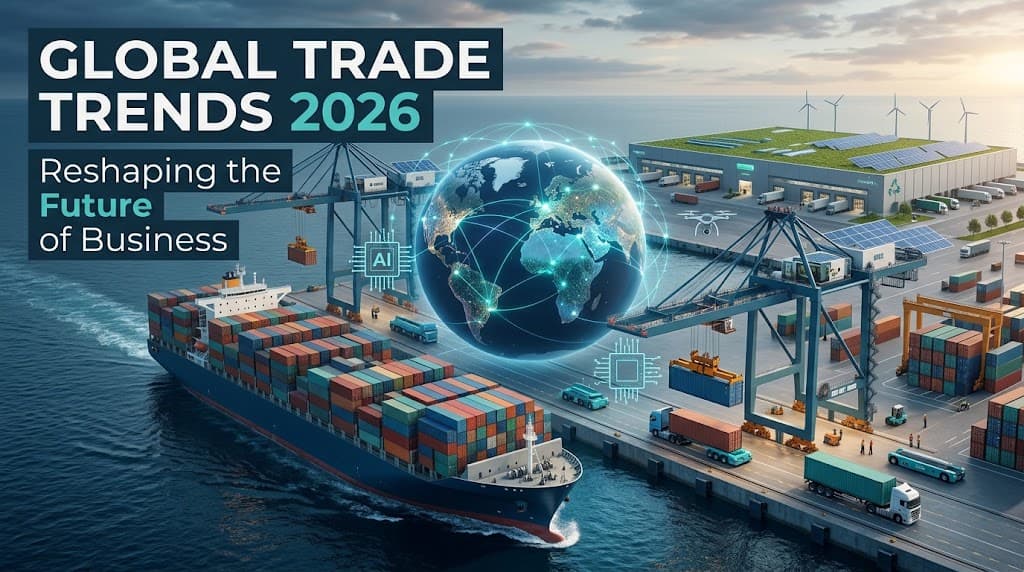
Global trade is undergoing significant changes in 2026 as businesses adapt to evolving economic conditions, technological advancements, geopolitical tensions and changing consumer demands. International trade remains an important driver of economic growth, connecting manufacturers, suppliers, retailers and consumers across different countries. However, companies are increasingly reconsidering how they source products, manage supply chains and access international markets.
In 2026, artificial intelligence (AI), digital commerce, supply chain diversification, sustainable trade and changing international trade policies are influencing business strategies. Companies are exploring new markets, adopting advanced technologies and adjusting their operations to manage uncertainty.
According to the World Trade Organization (WTO), global merchandise trade continued to show resilience in mid-2026 despite geopolitical and policy-related uncertainties. The WTO's Goods Trade Barometer, released on September 9, recorded a reading of 102.0, indicating that merchandise trade was above its recent trend. Demand for electronic components and AI-related goods contributed to this performance.
World Trade Organization
These developments highlight the importance of understanding global trade trends for businesses seeking to remain competitive and identify new opportunities.
1. Artificial Intelligence Is Transforming Global Trade
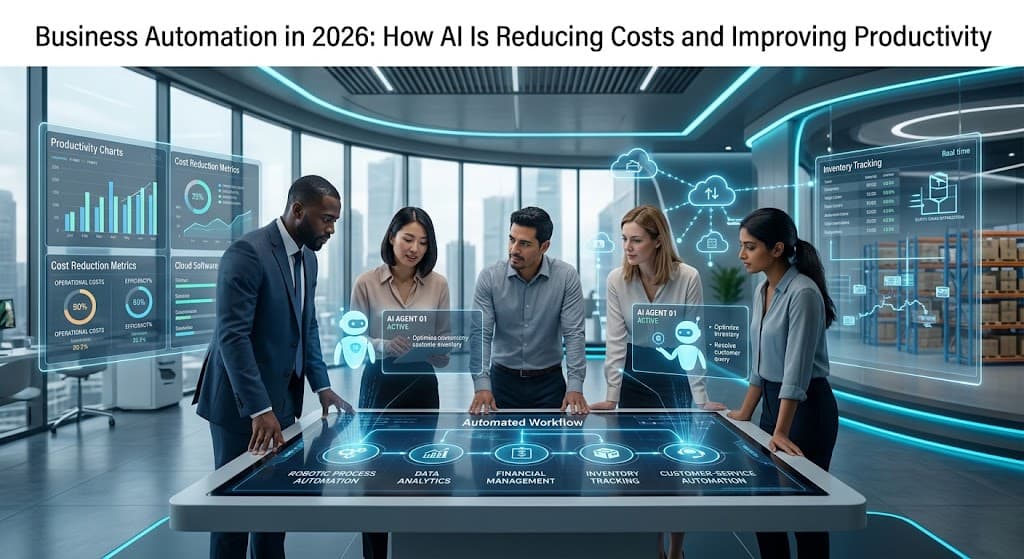
Artificial intelligence is becoming an important tool for businesses involved in international trade. Companies are using AI-powered systems to improve demand forecasting, automate administrative tasks, optimize inventory and manage complex supply chains.
AI can help businesses analyze large amounts of data, identify patterns in consumer demand and estimate future sales. This information can support decisions about production, shipping, purchasing and inventory management.
For example, an international retailer can use AI-driven forecasting to estimate demand across different markets and adjust inventory levels accordingly. Manufacturers can use predictive maintenance tools to reduce equipment downtime, while logistics companies can analyze delivery routes to improve operational efficiency.
AI is also contributing to trade in digital services, software and electronic components. The WTO's September 2026 Goods Trade Barometer identified strong demand for electronic components, with the electronic components index reaching 104.9.
World Trade Organization
As AI adoption expands, businesses may find new opportunities in technology services, automation, data analytics and digital infrastructure. However, companies must also consider implementation costs, cybersecurity, data protection and the skills required to use AI effectively.
2. Supply Chain Diversification Is Becoming a Business Priority
Supply chain diversification is an important trend shaping global trade in 2026. Businesses that depend heavily on a single supplier, country or transportation route may face disruptions when unexpected events affect production or shipping.
Geopolitical tensions, trade restrictions, natural disasters and changes in transportation costs can create uncertainty for international businesses. As a result, some companies are exploring alternative suppliers and manufacturing locations to reduce their exposure to disruptions.
Strategies such as nearshoring, friendshoring and regional sourcing are receiving attention as companies reconsider the geographic structure of their supply chains.
Nearshoring involves moving production or sourcing closer to a company's main market. Friendshoring involves building supply relationships with countries considered reliable partners. Regional sourcing focuses on obtaining goods and materials from suppliers within a particular geographic region.
These approaches can help businesses diversify risks, although they may also involve higher labour costs, additional investment and new logistical challenges.
For small and medium-sized enterprises, maintaining relationships with multiple suppliers and preparing contingency plans can help improve resilience without requiring a complete restructuring of operations.
3. Changes in Trade Policies Are Affecting International Markets
International trade policies continue to influence the movement of goods and services between countries. Tariffs, import regulations, export restrictions, subsidies and trade agreements can affect the cost of doing business and access to overseas markets.
The WTO's 2026 World Trade Report, published on September 15, highlighted significant challenges facing the international trading system, including geopolitical tensions, changing economic relationships and the growing importance of digital and environmental trade rules.
World Trade Organization
+1
Trade agreements can reduce certain barriers, clarify market-access rules and create opportunities for companies to reach new customers.
For example, the European Union and the Philippines announced an initial free trade agreement in September 2026, with plans to eliminate more than 94% of tariffs on both sides once the agreement is implemented. The development forms part of wider efforts to strengthen trade relationships with Southeast Asia.
Reuters
For businesses, changing trade policies make it important to monitor tariff schedules, customs procedures, product standards and rules of origin.
Companies that understand the requirements of their target markets can better assess export opportunities and prepare for regulatory changes.
4. Digital Trade and E-Commerce Are Expanding
Digital trade is changing how businesses reach international customers. E-commerce platforms, online marketplaces, digital payments and cloud-based services enable companies to sell products and provide services across borders without necessarily establishing physical operations in every market.
Small businesses can use online platforms to reach international buyers, display products, communicate with customers and process orders.
Digital services, including software development, online education, marketing, design and business consulting, also allow professionals to serve clients in different countries.
The expansion of digital trade creates opportunities for entrepreneurs who may previously have faced significant barriers to entering international markets.
However, cross-border e-commerce involves challenges such as international shipping, payment processing, taxation, consumer protection, data privacy and customs compliance.
Businesses seeking to expand internationally through digital channels need to consider local customer preferences, delivery infrastructure, payment options and the legal requirements of each market.
5. Sustainable Trade Is Influencing Business Strategies
Sustainability is becoming an increasingly important consideration in international trade. Governments, businesses and consumers are paying greater attention to emissions, energy efficiency, responsible sourcing and environmental impacts.
Companies are exploring renewable energy, sustainable packaging, more efficient transportation and environmentally responsible production methods.
For exporters, environmental standards and sustainability requirements can influence access to particular markets. Businesses may need to provide information about the environmental impact of their products, materials and manufacturing processes.
Sustainable logistics can also help businesses manage fuel consumption and reduce waste. For example, improving vehicle utilization, optimizing delivery routes and reducing unnecessary packaging may help companies lower both operating costs and environmental impacts.
However, adopting sustainable practices can require investment in new equipment, supply chain monitoring and certification.
Businesses should assess the environmental standards relevant to their target markets and develop practical sustainability strategies that align with their operational capabilities.
6. Asia Is Playing an Important Role in Global Trade
Asia remains an important centre for manufacturing, international supply chains, technology production and consumer markets.
Countries across the region participate in global trade through electronics, machinery, textiles, agricultural products, automobiles and digital services.
The WTO's March 2026 trade outlook projected Asia to record merchandise export volume growth of 3.5% in 2026 under its baseline scenario. The outlook also noted that sustained demand for AI-related goods was supporting trade activity.
March 2026
Regional trade relationships are also evolving as countries seek to diversify commercial partnerships and attract investment.
For businesses in Pakistan, Asian markets offer potential opportunities in textiles, agricultural products, sports goods, software services and other export sectors. The scale of these opportunities depends on production capacity, international demand, product quality, trade arrangements and logistics.
Businesses exploring regional expansion need to study market-specific requirements, including certification, customs procedures, payment arrangements and competition.
7. Global Logistics and Shipping Are Facing New Challenges
International logistics is essential to global trade, but shipping routes and transportation networks can be affected by geopolitical developments, fuel prices, port congestion and changing trade patterns.
Disruptions to important maritime routes can increase shipping times, insurance costs and transportation expenses. Such changes may affect businesses that depend on imported raw materials or export finished products.
The WTO's September 2026 Goods Trade Barometer showed that its container shipping index stood at 99.6, slightly below the baseline of 100, even as the overall merchandise trade indicator remained above trend.
World Trade Organization
This highlights how individual parts of the global trading system can experience different conditions.
Businesses can respond by improving logistics planning, maintaining appropriate inventory levels, assessing alternative routes and working with multiple freight providers where practical.
Companies should also consider the balance between holding additional inventory and managing the costs of storage, insurance and working capital.
8. Trade in Digital Services Is Creating New Opportunities
Trade is no longer limited to physical products. Digital services are increasingly important to international commerce, enabling companies to provide expertise and services to customers around the world.
Software development, cloud computing, cybersecurity, digital marketing, financial technology and online consulting are examples of services that can be delivered across borders.
These industries can create opportunities for businesses in countries with skilled workforces and growing digital infrastructure.
For example, Pakistani software companies and independent professionals may provide web development, graphic design, data analytics and customer support services to overseas clients.
The WTO's 2026 World Trade Report identifies digitalization and AI as major forces changing the nature of global trade. It also highlights the need for international cooperation as digital services and data-related activities become more significant.
Executive summary
+1
Businesses involved in digital services need to consider data protection, intellectual property, cybersecurity, international payment systems and regulations in the countries where they operate.
9. Currency Fluctuations and Financial Risks Require Attention
Currency movements can influence the profitability of businesses engaged in international trade. Exchange rate changes affect the cost of imported raw materials, the value of export earnings and the repayment cost of foreign-currency obligations.
Import-dependent companies may face higher costs when their domestic currency weakens against the currencies used for international payments.
Exporters may experience changes in the domestic value of foreign revenue, although the final impact depends on production costs, contracts and the currencies in which expenses are paid.
Businesses can manage some of these risks through careful financial planning, appropriate contract terms, currency diversification and, where suitable, regulated hedging arrangements.
Small businesses should pay particular attention to payment schedules, foreign exchange charges and the currency exposure associated with international orders.
Monitoring financial conditions and maintaining adequate working capital can help companies respond to currency-related uncertainty.
10. Trade Resilience and Business Adaptation Will Shape the Future
Global trade in 2026 is taking place in an environment shaped by technological change, economic uncertainty and evolving international relationships.
The WTO's 2026 World Trade Report emphasizes the importance of adapting international trade cooperation to changing economic conditions. It identifies digitalization, AI, shifts in economic power and geopolitical tensions among the major developments affecting global trade.
World Trade Organization
For individual businesses, resilience involves more than responding to immediate disruptions. It also requires the ability to adapt to new customer demands, regulatory requirements, technologies and competitive conditions.
Companies can strengthen resilience by diversifying suppliers, investing in employee skills, improving data management, maintaining financial flexibility and developing clear risk-management plans.
Businesses should also review their international strategies regularly to ensure that they remain aligned with changing market conditions.
Conclusion
Global trade is evolving rapidly in 2026 as artificial intelligence, digital commerce, supply chain diversification, sustainable business practices and changing trade policies reshape international markets.
The WTO's latest trade indicators show resilience in global merchandise trade, particularly in areas connected with electronic components and AI-related demand. At the same time, geopolitical uncertainty, shipping challenges and changing regulations continue to create risks for businesses.
For entrepreneurs and established companies, understanding these developments can support informed decisions about international expansion, sourcing, investment and technology adoption.
Businesses that monitor market conditions, strengthen their supply chains and adapt to changing customer and regulatory requirements will be better equipped to manage uncertainty and explore emerging opportunities in the global trading environment.