AIAI in Business 2026: How Artificial Intelligence Is Transforming Companies
Introduction
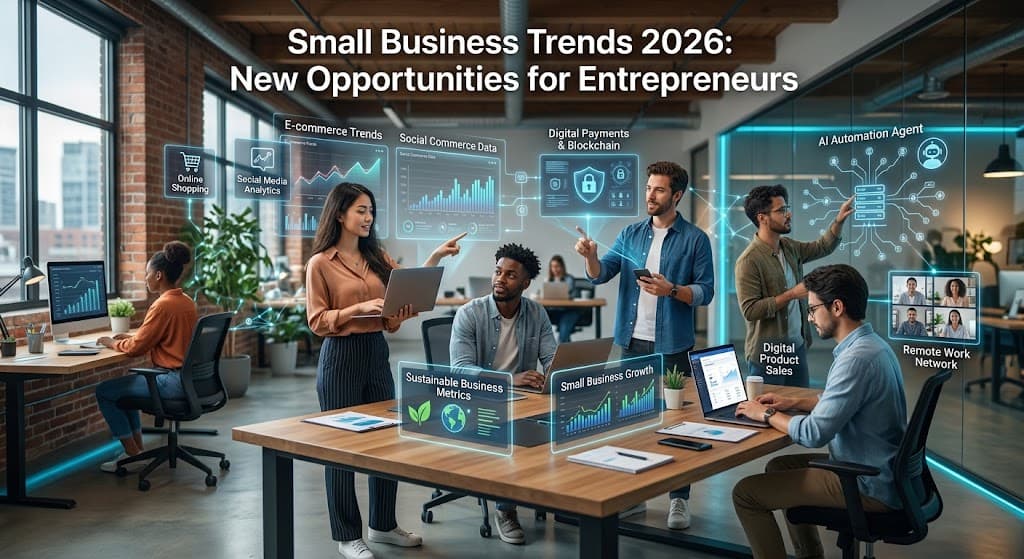
Small businesses are entering 2026 with new opportunities driven by artificial intelligence, e-commerce, digital payments, social media, automation, and changing customer expectations. Entrepreneurs no longer need a large physical office or a huge team to build a successful business. Digital tools can help small companies reach customers, automate repetitive tasks, analyze data, and compete in increasingly competitive markets.
Understanding the latest small business trends in 2026 can help entrepreneurs identify new opportunities and build more efficient business strategies.
1. AI for Small Businesses
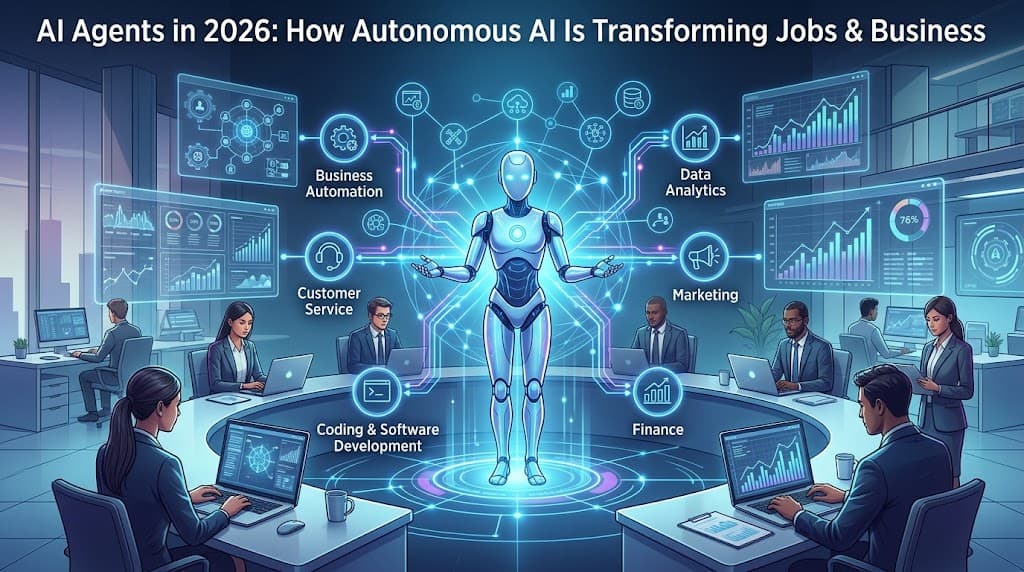
Artificial intelligence is becoming an important business tool. Small companies can use AI for customer support, content creation, market research, data analysis, scheduling, and administrative tasks.
AI-powered tools can help entrepreneurs save time while allowing employees to focus on tasks that require creativity and human judgment.
2. AI-Powered Business Automation
Business automation is another major trend in 2026. Entrepreneurs can automate repetitive processes such as appointment scheduling, email responses, inventory alerts, invoices, and customer follow-ups.
Automation can reduce manual work and create more consistent business processes.
3. Growth of E-Commerce
Online shopping continues to create opportunities for entrepreneurs. Small businesses can sell products through websites, online marketplaces, and social commerce platforms without depending entirely on a physical store.
Niche products, personalized products, digital products, and subscription-based offerings can provide additional opportunities.
4. Social Commerce Is Expanding
Social media is becoming more closely connected with online shopping. Businesses can use short videos, product demonstrations, creator partnerships, and social media storefronts to introduce products to potential customers.
Platforms that combine entertainment and shopping can give small brands new ways to reach audiences.
5. Personalization Is Becoming More Important
Customers increasingly expect businesses to understand their interests and needs. Small companies can use customer data and AI-powered tools to personalize recommendations, emails, offers, and shopping experiences.
However, businesses should use customer information responsibly and clearly communicate how data is handled.
6. Creator and Influencer Partnerships
Small businesses are increasingly working with niche creators and influencers to reach specific audiences. Instead of focusing only on large influencers, brands can collaborate with creators whose followers closely match their target customers.
Authentic product demonstrations and useful content can help businesses communicate their value.
7. Digital Payments and Fintech
Digital payment systems are creating more convenient ways for small businesses to receive payments. Mobile wallets, online payment gateways, QR payments, and other digital solutions can simplify transactions.
Entrepreneurs can also use digital financial tools for invoicing, bookkeeping, budgeting, and expense tracking.
8. Remote and Flexible Work
Remote and hybrid work remain relevant for many businesses in 2026. Small companies can use cloud-based software, video conferencing, project-management platforms, and collaborative tools to work with employees and freelancers from different locations.
This can provide entrepreneurs with access to a wider talent pool.
9. Subscription-Based Business Models
Subscription businesses can create recurring revenue by providing customers with products or services regularly.
Examples include software subscriptions, educational memberships, curated product boxes, digital communities, and professional services.
For entrepreneurs, the key challenge is providing enough ongoing value to encourage customers to remain subscribed.
10. Sustainable Small Businesses
Sustainability is becoming an important consideration for many consumers and businesses. Entrepreneurs can explore environmentally conscious packaging, energy-efficient operations, reusable products, recycling programs, and locally sourced materials.
Sustainable practices can also help businesses reduce waste and improve operational efficiency.
11. Local Businesses Going Digital
Local businesses are combining traditional services with digital tools. Restaurants, salons, clinics, retailers, repair businesses, and other local companies can use online booking, digital payments, websites, social media, and local search optimization.
A strong online presence can make it easier for nearby customers to discover a business.
12. The Rise of Digital Products
Digital products can be attractive to entrepreneurs because they can often be created once and sold repeatedly.
Examples include:
Online courses
E-books
Templates
Digital planners
Design assets
Software tools
Educational resources
Membership content
The opportunity depends heavily on solving a specific customer problem and delivering useful content.
13. Niche Businesses Are Growing
Instead of targeting everyone, entrepreneurs can focus on a specific customer group. Niche businesses can serve specialized interests, industries, lifestyles, or professional needs.
A clearly defined niche can make marketing more focused and help businesses understand their customers better.
14. Cybersecurity for Small Businesses
As businesses become more digital, cybersecurity becomes increasingly important. Small businesses can also become targets for phishing, ransomware, account theft, and other cyber threats.
Basic protections such as strong passwords, multi-factor authentication, software updates, employee awareness training, secure backups, and access controls can reduce common risks.
15. Data-Driven Decision Making
Entrepreneurs have access to more business data than ever before. Analytics tools can help businesses understand website traffic, sales, customer behavior, marketing performance, and inventory.
Instead of relying entirely on intuition, business owners can combine experience with reliable data when making decisions.
16. Freelancers and Specialized Talent
Small companies can work with freelancers and specialized contractors for areas such as graphic design, software development, marketing, accounting, video production, and SEO.
This flexible approach can allow entrepreneurs to access specialized skills without building a large permanent team.
17. Short-Form Video Marketing
Short-form video remains an important digital marketing format. Businesses can use educational videos, product demonstrations, behind-the-scenes content, customer stories, and tutorials to attract attention.
Consistency and useful content can be more important than simply producing large quantities of videos.
18. Customer Experience as a Competitive Factor
Products and prices are not the only factors customers consider. Fast communication, convenient purchasing, easy returns, personalized support, and reliable service can influence customer satisfaction.
Small businesses can compete by creating a simple and customer-friendly experience.
19. Low-Cost Entrepreneurship
Digital tools are lowering some barriers to starting a business. Entrepreneurs can begin with small online stores, freelancing services, consulting, digital products, content businesses, or specialized services.
Starting small can allow entrepreneurs to test demand before making larger investments.
20. The Future of Small Business in 2026
The small-business environment in 2026 is increasingly digital, automated, and customer-focused. AI can handle many repetitive tasks, while e-commerce and social media provide new ways to reach customers.
However, technology alone does not guarantee business success. Entrepreneurs still need a clear value proposition, strong customer relationships, financial discipline, reliable operations, and continuous learning.
Conclusion
The small business trends of 2026 reflect a major shift toward AI, automation, e-commerce, digital payments, social commerce, flexible work, personalization, and niche entrepreneurship.
For entrepreneurs, these trends can create new opportunities across many industries. The most useful approach is to identify a real customer problem, choose suitable technology, test the business idea, monitor results, and improve continuously.
Small businesses that combine technology with strong customer service and practical business strategies can adapt to the changing marketplace and explore new opportunities throughout 2026.
Frequently Asked Questions
1. What are the biggest small business trends in 2026?
Major trends include AI adoption, automation, e-commerce, social commerce, digital payments, personalization, flexible work, and niche businesses.
2. How can AI help a small business?
AI can assist with customer service, content creation, data analysis, scheduling, research, marketing, and repetitive administrative tasks.
3. Is e-commerce still a good opportunity for entrepreneurs?
E-commerce continues to provide opportunities for businesses that offer useful products, strong customer experiences, and effective digital marketing.
4. How can small businesses use social media?
Businesses can use social platforms for brand awareness, customer engagement, product demonstrations, educational content, and social commerce.
5. What is social commerce?
Social commerce combines social media with shopping, allowing customers to discover and sometimes purchase products through social platforms.
6. Are digital products profitable for small businesses?
Digital products can have relatively low distribution costs, but profitability depends on demand, product quality, pricing, and marketing.
7. What is a niche business?
A niche business focuses on a specific customer group, problem, interest, or market rather than targeting a broad audience.
8. How can entrepreneurs reduce business costs?
Automation, cloud software, careful inventory management, digital marketing, and flexible staffing can help entrepreneurs manage costs.
9. Why is cybersecurity important for small businesses?
Small businesses store valuable customer and business information and can face risks such as phishing, malware, ransomware, and account theft.
10. What digital skills should entrepreneurs learn?
Useful skills include digital marketing, data analysis, AI tools, cybersecurity basics, e-commerce, financial management, and content creation.
11. Can a small business operate remotely?
Yes. Many businesses can use cloud platforms, communication tools, digital payments, and project-management software to support remote operations.
12. What is business automation?
Business automation uses software or technology to perform repetitive tasks with limited manual intervention.
13. How can small businesses improve customer experience?
They can provide fast communication, easy purchasing, transparent information, reliable support, convenient payment options, and simple returns.
14. Why are subscriptions popular business models?
Subscriptions can provide recurring revenue while giving customers continued access to products or services.
15. How can small businesses use data?
Businesses can analyze sales, customer behavior, website traffic, advertising performance, and inventory information to support decision-making.
16. What role do freelancers play in small businesses?
Freelancers can provide specialized skills such as design, writing, programming, marketing, accounting, and video production.
17. Is short-form video useful for small businesses?
Short-form videos can help businesses demonstrate products, answer questions, educate customers, and increase brand visibility.
18. What is personalization in business?
Personalization means tailoring products, recommendations, communications, or experiences to individual customer interests or needs.
19. How can someone start a business with a small budget?
Entrepreneurs can consider service businesses, freelancing, digital products, online stores, consulting, or other models with relatively low initial infrastructure requirements.
20. What is the future of small businesses in 2026?
Small businesses are increasingly using AI, automation, digital commerce, data analytics, flexible work models, and personalized customer experiences while maintaining a focus on trust and service.