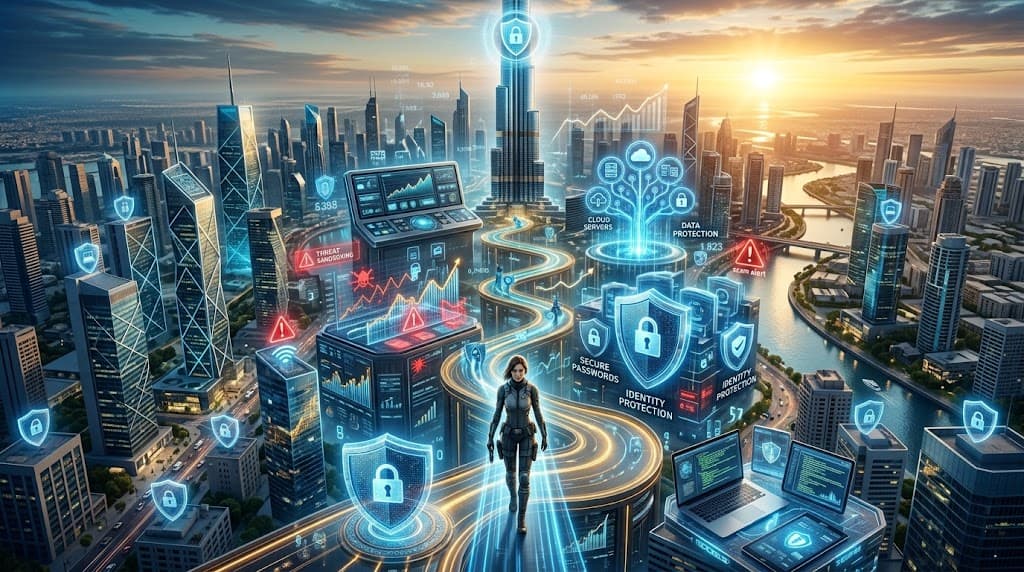

The digital world is expanding rapidly, and so are the risks that come with it. People use smartphones, online banking, social media, cloud services, shopping platforms, and connected devices every day.
As more personal and business information moves online, cybersecurity in 2026 has become an important topic for individuals, organizations, students, and businesses.
Cybersecurity is not only about protecting computers from viruses. Modern security involves protecting accounts, personal information, financial data, devices, networks, and digital identities from a wide range of threats.
What Is Cybersecurity?
Cybersecurity refers to the technologies, processes, and practices used to protect digital systems and information from unauthorized access, damage, disruption, or misuse.
It includes protecting:
Smartphones
Computers
Websites
Networks
Cloud accounts
Financial accounts
Personal information
Business systems
Online identities
Why Cybersecurity Matters in 2026
Digital services are deeply connected to everyday life.
A single compromised account can potentially expose emails, photos, financial information, contacts, or other sensitive data.
For businesses, a security incident can disrupt operations and potentially expose customer or employee information.
This makes basic cybersecurity practices increasingly important.
1. AI-Powered Cyber Threats
Artificial intelligence can help security teams identify suspicious activity, but attackers can also use AI to make certain attacks more convincing and scalable.
AI may be used to assist with:
Creating convincing phishing messages
Generating deceptive content
Automating repetitive attacks
Researching potential targets
Modifying malicious campaigns
This means people should be increasingly careful about trusting unexpected digital messages.
2. Phishing Attacks
Phishing remains one of the most common forms of cybercrime.
A phishing message attempts to trick someone into revealing information or clicking a malicious link.
Messages may appear to come from:
Banks
Social media platforms
Delivery companies
Employers
Schools
Government services
Friends or family
How to Spot Phishing
Look for:
Unexpected requests
Urgent language
Suspicious links
Unusual sender addresses
Requests for passwords or codes
Offers that seem too good to be true
When in doubt, contact the organization through an official website or known phone number instead of using the message's link.
3. Password Attacks
Weak or reused passwords can make accounts easier to compromise.
A strong password should be difficult to guess and should not be reused across important accounts.
Better Password Habits
Use long passwords or passphrases
Avoid obvious personal information
Use unique passwords for important accounts
Consider a reputable password manager
Enable multi-factor authentication
4. Multi-Factor Authentication
Multi-factor authentication, or MFA, adds another verification step beyond a password.
For example, an account may require:
A password
A verification code or authentication approval
Even if someone obtains your password, MFA can provide an additional layer of protection.
Where available, users should consider stronger authentication methods such as passkeys or hardware security keys for important accounts.
5. Ransomware
Ransomware is malicious software that can prevent access to files or systems, often by encrypting data.
Attackers may demand payment in exchange for restoring access.
Businesses are particularly concerned about ransomware because an incident can disrupt operations.
How to Reduce Ransomware Risk
Keep software updated
Maintain offline or otherwise protected backups
Use security software
Limit unnecessary access privileges
Train employees to recognize suspicious messages
Segment important systems where appropriate
6. Identity Theft
Cybercriminals may attempt to obtain personal information and misuse it.
Potentially sensitive information can include:
Full names
Addresses
Account information
Identification details
Login credentials
Financial information
People should avoid sharing sensitive information unnecessarily and should monitor important accounts for unusual activity.
7. Social Engineering
Social engineering attacks target human behavior rather than only technical weaknesses.
An attacker may pretend to be someone trustworthy and create urgency or fear to persuade a person to reveal information.
For example, someone might receive a message claiming that their account will be closed unless they immediately provide a verification code.
A simple rule is important:
Never share passwords or one-time authentication codes with someone who contacts you unexpectedly.
8. Deepfakes and Digital Deception
AI-generated audio, video, and images can make digital deception more difficult to identify.
A person may receive a fake voice message or video that appears to come from someone they know.
For sensitive requests involving money, passwords, or confidential information, verify the request through another trusted communication method.
9. Mobile Security
Smartphones contain a huge amount of personal information.
Protect your phone by:
Using a strong screen lock
Installing updates
Downloading apps from trusted sources
Reviewing app permissions
Avoiding suspicious links
Enabling device tracking features
Keeping backups
10. Public Wi-Fi Risks
Public Wi-Fi can be convenient, but users should be cautious when accessing sensitive accounts on unfamiliar networks.
Avoid performing highly sensitive transactions on unsecured networks unless you understand the security protections being used.
When possible, use trusted networks or mobile data for important activities.
11. Cloud Security
Cloud services store enormous amounts of personal and business information.
Security depends partly on account settings and access controls.
Users should:
Enable MFA
Review connected devices
Remove unnecessary account access
Use strong passwords
Check sharing permissions
Monitor unusual login activity
12. Internet of Things Security
Smart devices such as cameras, televisions, watches, speakers, and home appliances can connect to the internet.
Poorly secured devices can create additional security risks.
Users should change default passwords, install available updates, and disable unnecessary features or remote access.
13. Software Updates Are Important
Software updates often include security fixes.
Ignoring updates can leave known vulnerabilities unpatched.
Keep operating systems, browsers, applications, and connected devices updated whenever practical.
14. Backup Your Important Data
Backups can reduce the impact of device failure, ransomware, accidental deletion, or other incidents.
Important files may include:
Photos
Documents
Schoolwork
Business records
Financial documents
Creative projects
For especially important data, maintain backups in more than one location.
Cybersecurity for Students
Students use many digital services every day.
Basic security habits include:
Using unique passwords
Enabling MFA
Protecting school accounts
Avoiding suspicious links
Keeping devices updated
Not sharing login information
Using secure Wi-Fi
Backing up important coursework
A small mistake with an account can affect both academic and personal information.
Cybersecurity for Businesses
Businesses face additional risks because they manage large amounts of data and multiple users.
Organizations should consider:
Employee security training
Access controls
MFA
Regular software updates
Backups
Incident response plans
Security monitoring
Vendor risk management
Employees should only receive access to the information necessary for their role.
The Role of AI in Cybersecurity
AI can be used defensively to help analyze large amounts of security information.
Security teams may use AI to assist with:
Detecting unusual behavior
Analyzing security alerts
Identifying patterns
Prioritizing potential threats
Supporting incident investigations
However, AI systems themselves need appropriate security controls and human oversight.
Cybersecurity and Privacy
Security and privacy are related but not identical.
Cybersecurity focuses on protecting systems and information.
Privacy concerns how personal information is collected, used, stored, and shared.
Good digital habits should address both.
Simple Cybersecurity Checklist for 2026
Use this checklist to improve your online security:
Enable MFA on important accounts
Use unique passwords
Install software updates
Back up important files
Review account activity
Check app permissions
Avoid suspicious links
Protect your smartphone
Be careful with unexpected requests
Learn about common scams
What To Do If You Suspect Your Account Was Hacked
If you believe an account has been compromised:
Change the password immediately.
Sign out of unfamiliar sessions.
Enable or reset MFA.
Check account recovery information.
Review recent activity.
Contact the service provider if necessary.
Check other accounts that used the same password.
If financial information may have been compromised, contact the relevant financial institution through official channels.
Common Cybersecurity Mistakes
Reusing Passwords
One compromised password can potentially expose multiple accounts.
Clicking Without Checking
Never assume an unexpected link is safe simply because the message looks professional.
Ignoring Updates
Outdated software can contain known security vulnerabilities.
Sharing Verification Codes
Legitimate support staff should not need you to disclose authentication codes unexpectedly.
No Backups
Without backups, recovering from data loss can be much harder.
The Future of Cybersecurity
Cybersecurity will continue evolving as technology changes.
AI, cloud computing, connected devices, digital identities, and new authentication technologies will all influence the security landscape.
Organizations and individuals will need to keep adapting rather than relying on a single security measure.
The strongest approach is usually layered security: strong authentication, updated software, secure backups, careful online behavior, and appropriate monitoring.
Final Thoughts
Cybersecurity in 2026 is a shared responsibility.
You do not need to be a cybersecurity expert to improve your digital safety. Start with simple habits such as using unique passwords, enabling multi-factor authentication, updating devices, backing up important information, and recognizing phishing attempts.
As cyber threats become more sophisticated, digital awareness becomes one of the most valuable forms of protection.
20 Frequently Asked Questions
1. What is cybersecurity?
Cybersecurity is the practice of protecting digital systems, devices, networks, and information from unauthorized access, attacks, damage, and misuse.
2. Why is cybersecurity important in 2026?
People and businesses increasingly depend on digital services, making the protection of accounts, devices, and information essential.
3. What is phishing?
Phishing is a type of attack that attempts to trick people into revealing information or interacting with malicious content.
4. What is MFA?
Multi-factor authentication adds an additional verification step to an account beyond a password.
5. Are strong passwords important?
Yes. Long, unique passwords can reduce the risk associated with password guessing and credential reuse.
6. What is ransomware?
Ransomware is malicious software that can restrict access to data or systems, often by encrypting files.
7. How can I protect my smartphone?
Use a strong screen lock, install updates, review app permissions, download apps from trusted sources, and maintain backups.
8. Can AI be used for cyberattacks?
Yes. AI can potentially help attackers automate or improve certain malicious activities.
9. Can AI help cybersecurity teams?
Yes. AI can assist with analyzing security data, identifying patterns, and prioritizing alerts.
10. Is public Wi-Fi safe?
Public Wi-Fi can introduce security risks. Users should be cautious when accessing sensitive accounts on unfamiliar networks.
11. How often should passwords be changed?
Rather than changing every password on a fixed schedule, focus on using unique passwords and changing them promptly if they are exposed or compromised.
12. Why are software updates important?
Updates often include security patches that address known vulnerabilities.
13. What is social engineering?
Social engineering manipulates people into revealing information or taking actions that benefit an attacker.
14. What are deepfakes?
Deepfakes are AI-generated or manipulated media that can imitate real people or events.
15. Should I back up my files?
Yes. Backups can help protect important information from accidental deletion, hardware failure, ransomware, and other incidents.
16. How can businesses improve cybersecurity?
Businesses can use MFA, access controls, employee training, updates, backups, monitoring, and incident response planning.
17. What information should I never share?
Do not casually share passwords, PINs, one-time verification codes, or sensitive financial information.
18. What should I do if my account is hacked?
Change the password, secure the account with MFA, review active sessions and account activity, and contact the provider through official channels.
19. What is cloud security?
Cloud security involves protecting information, accounts, applications, and infrastructure hosted or accessed through cloud services.
20. What is the most important cybersecurity habit?
A strong starting point is using unique passwords with MFA on important accounts while staying alert to suspicious messages and links.