
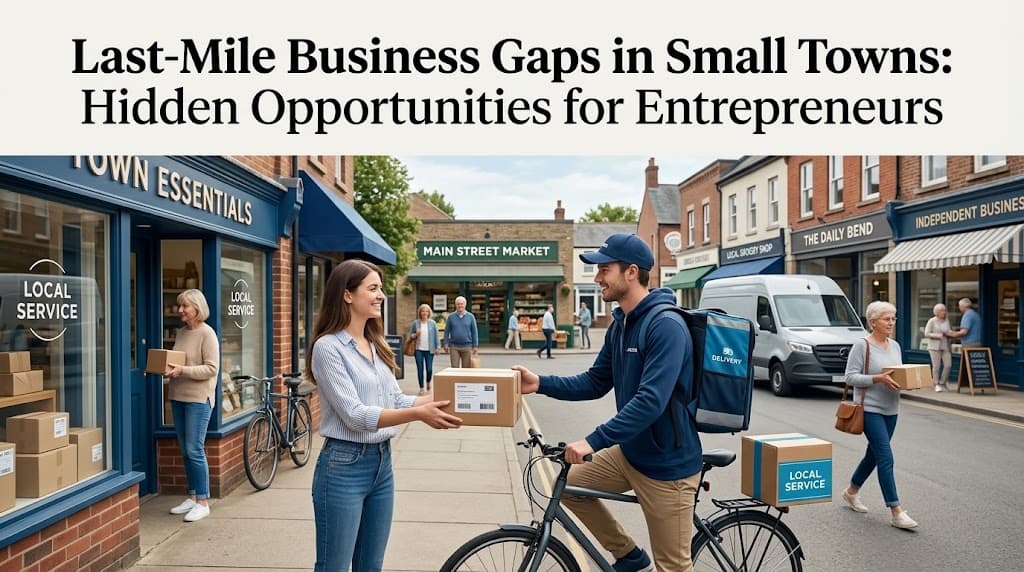

'Last mile' means the last step: getting a product or a service to the person who needs it, in their own town. In big cities, many companies do this. In small towns, that last step is often missing. That gap is a business chance — if you start small and listen to what local people actually need.
What Does a Last-Mile Gap Look Like?
A gap is a simple, everyday need with no easy local answer. Examples: parcels that arrive in the nearest city but no one brings them to the town; food, medicine or everyday goods that people must travel far to buy; small repairs with no local person to do them; or local shops with no delivery at all. Walk around your town and write down what people complain about. Complaints point to gaps.
Business Ideas by Town Need
Delivery and pick-up: collect parcels, groceries or medicine for people who cannot travel, for a small fee per trip. Start with one area and set times, so people know when you come.
Everyday services: cleaning, small repairs, gardening, or help with forms and online orders for older people. One clear service, done well, beats ten services done badly.
Help for local shops: offer delivery for two or three shops, or help them take orders by phone or message. Many small shops want to sell more, but have no time to deliver. See our digital marketing guide for small budgets for low-cost ways to tell the town about the service.
Local food and farm goods: bring fresh goods from nearby farms to town buyers, or take town orders to farms. Keep it simple: one market day, one list, one route
Starting Lean: Small, Simple, Local
Start with what you already have: a bike, a phone, or a small vehicle. Do not buy stock or rent a shop on day one. Test with a few customers first. Ask: will people pay for this, how often, and what fee feels fair? Write down every cost — fuel, phone, packaging, your time — before you set a price. See our small business financial planning guide to plan costs and cash flow in plain terms.
Costs and Pricing in Plain Terms
Set a price that covers all costs and leaves profit. A simple rule: price = cost of the trip or job + your time + a small profit. If the price is too low, you will be busy and still lose money. If it is too high, people will not use it. Test one price for a few weeks, ask customers honestly, and adjust once — not every day.
How to Get the First Customers
Tell people face to face first: shops, neighbours, community groups and local notice boards. Do the first jobs very well, and ask happy customers to tell one other person. Keep a simple list of customers, phone numbers and repeat orders. One happy customer who comes back every week is worth more than ten one-time jobs.
FAQ: Last-Mile Business in Small Towns
Do I need a lot of money to start?
No. Start with one service, one area and customers you already know. Grow only when the first jobs pay for themselves.
How do I find the best gap in my town?
Listen. Ask shop owners and neighbours what is hard to get, what takes too long, or what they travel far for. The most repeated answer is often the best start.
What is the biggest mistake?
Trying to do everything at once. Pick one gap, do it well, and