
Introduction
Pakistan’s economic relationship with the International Monetary Fund (IMF) remains an important factor shaping the country’s business environment, investment climate and financial outlook in 2026. The IMF’s economic reform programme aims to support macroeconomic stability, strengthen public finances, rebuild foreign exchange reserves and encourage sustainable economic growth.
On May 8, 2026, the IMF Executive Board completed Pakistan’s third review under its Extended Fund Facility (EFF) and second review under its Resilience and Sustainability Facility (RSF). This approval made approximately $1.1 billion available under the EFF and $220 million under the RSF.
For businesses, these developments have implications for taxation, energy costs, financing, imports, exports and future investment. Understanding the IMF programme can help entrepreneurs, investors and business owners prepare for changes in Pakistan’s economic environment.
Understanding Pakistan’s IMF Programme
Pakistan’s current IMF programme focuses on economic reforms intended to address long-standing financial challenges. These include government revenue collection, public expenditure, energy-sector sustainability, foreign exchange reserves and structural improvements to the economy.
The IMF’s May 2026 review reported that Pakistan’s economic recovery had gained momentum, with growth accelerating during the first half of the fiscal year. Inflation remained contained during the period covered by the review, while the current account was broadly balanced and foreign exchange reserves had improved.
The programme also focuses on improving competition, strengthening public institutions, reforming state-owned enterprises and supporting social protection.
These reforms are intended to improve Pakistan’s economic resilience and create conditions for sustainable growth. However, their impact will depend on effective implementation and the ability of businesses and households to adapt to changing economic policies.
What the Latest IMF Review Means for Pakistan’s Economy
The completion of the third IMF review in May 2026 represented progress in implementing the agreed programme. The resulting financing was intended to support Pakistan’s external financial position and economic reform efforts.
The approved disbursements included approximately $1.1 billion under the EFF and $220 million under the RSF. Cumulative disbursements under both arrangements reached approximately $4.8 billion.
IMF financing can help support external payments and foreign exchange reserves. It may also contribute to confidence among international lenders and investors. However, IMF funding does not automatically translate into higher business profits, increased employment or lower consumer prices.
The IMF programme includes conditions and reform targets related to public finances, taxation, energy and economic governance. Meeting these targets is an important part of maintaining access to programme financing.
For Pakistan’s business community, economic stability can help companies plan their operations, manage financial risks and make investment decisions with greater clarity.
Impact on Small and Medium-Sized Businesses
Small and medium-sized enterprises (SMEs) play an important role in Pakistan’s economy by supporting employment, local production, retail activity and entrepreneurship.
Economic reforms associated with the IMF programme may affect SMEs in several ways, particularly through taxation, financing and operating expenses.
Tax reforms may broaden the tax base and encourage more businesses to enter the formal economy. Registered businesses may need to maintain accurate financial records, comply with tax requirements and prepare for potential changes in their tax obligations.
Access to financing is another important concern. Greater macroeconomic stability may help improve financial conditions over time. However, the availability and cost of business loans will continue to depend on monetary policy, banks’ lending decisions, creditworthiness and overall economic activity.
Operating expenses may also change as a result of energy pricing, taxation, transport costs and imported input prices. Small businesses with limited financial reserves can be particularly sensitive to these changes.
Entrepreneurs can prepare by improving financial management, maintaining proper accounts, controlling unnecessary expenses and monitoring government policies that affect their industries.
Inflation and Interest Rates: What Businesses Should Know
Inflation and interest rates are important factors influencing business decisions in Pakistan. Inflation affects consumer purchasing power, raw material costs and the prices businesses charge for goods and services.
Higher inflation can make it difficult for companies to forecast expenses, manage inventory and maintain stable profit margins. It can also reduce household spending, affecting businesses that depend on domestic consumer demand.
The IMF’s May 2026 assessment identified higher international commodity and energy prices as potential risks to Pakistan’s economic outlook. External shocks could place upward pressure on inflation and affect economic growth and the balance of payments.
Interest rates also influence the cost of borrowing. Businesses that depend on bank financing may face higher expenses when borrowing costs increase. Changes in monetary conditions can also affect consumer loans, investment decisions and demand for products.
Businesses should consider these factors when preparing budgets, managing working capital and making long-term financial commitments. Careful financial planning can help companies respond to changing economic conditions.
Energy-Sector Reforms and Their Business Impact
Energy-sector reform is one of the central elements of Pakistan’s IMF-supported programme. Energy costs influence manufacturing, agriculture, transportation, retail and many other industries.
Financial difficulties in the energy sector can contribute to payment arrears and put pressure on public finances. The IMF programme includes efforts to improve financial sustainability, enhance efficiency and address structural problems in the sector.
For businesses, energy reforms may affect electricity and fuel expenses, particularly in energy-intensive industries such as textiles, cement, steel and manufacturing.
Greater predictability in energy-sector finances could support long-term planning and investment if reforms improve reliability and reduce financial imbalances. However, changes in energy tariffs may also increase operating costs for some businesses.
Companies can prepare by reviewing energy consumption, investing in energy-efficient equipment where practical and assessing whether renewable energy solutions are financially viable for their operations.
Foreign Investment and Business Confidence
International investment is important for Pakistan’s long-term economic development. Foreign investors typically consider macroeconomic stability, taxation, currency conditions, regulatory consistency, infrastructure and access to markets before making investment decisions.
Progress under an IMF programme may support investor confidence by demonstrating that a country is implementing agreed financial and structural reforms. Nevertheless, investment decisions also depend on political and regulatory conditions, infrastructure, market demand and expected returns.
For Pakistani businesses, improved access to investment could create opportunities for partnerships, technology transfers, exports and business expansion.
Foreign investment can also support employment, introduce new technologies and improve productivity in certain industries. However, these benefits are not automatic and depend on the wider investment environment.
Consistent economic policies, transparent regulations and improvements in infrastructure will remain important for attracting long-term investment.
Pakistan’s Export Sector and International Trade
Pakistan’s export industries, including textiles, garments, agricultural products and manufactured goods, are important sources of foreign exchange and employment.
Economic reforms that improve competitiveness, simplify regulations and strengthen infrastructure may help exporters operate more efficiently.
The IMF programme identifies productivity, competition and competitiveness as important priorities. It also emphasizes reforms aimed at improving the business environment and supporting sustainable growth.
However, exporters continue to face challenges, including international competition, energy expenses, transportation costs, global demand fluctuations and currency-related uncertainty.
Businesses involved in international trade can monitor changes in customs requirements, production costs and export regulations while exploring new markets and improving product quality.
Expanding export capacity and diversifying international markets may help Pakistani companies reduce reliance on a limited number of customers or destinations.
Challenges Facing Pakistan’s Economy
Despite the progress reported in the IMF’s May review, Pakistan continues to face significant economic challenges.
These include public debt pressures, limited fiscal space, the need to broaden the tax base, energy-sector financial difficulties and exposure to external economic shocks.
Developments in the Middle East can affect international energy prices, shipping costs and Pakistan’s import bill. External pressures may slow economic growth, increase inflation and weaken the balance of payments.
Pakistan also needs sustained productivity growth, stronger exports and greater private-sector investment to support long-term economic development.
Addressing these challenges requires consistent implementation of reforms, effective public institutions and policies that take into account the needs of households and businesses.
Economic stability is important, but sustainable growth also requires an environment in which businesses can invest, innovate, compete and create employment.
Opportunities for Entrepreneurs and Investors
Economic reforms and changes in the business environment may create opportunities for entrepreneurs in several areas.
Digital businesses, including e-commerce, digital payments, business software and online services, can help companies reach customers and improve efficiency.
Renewable energy, energy management and energy-efficiency services may attract businesses seeking to manage long-term energy expenses.
Agriculture also offers opportunities through modern farming techniques, food processing, storage facilities and improved supply chains.
Export-oriented manufacturing businesses may be able to explore new markets by improving productivity, product quality and international market access.
Business services, including accounting, tax compliance, logistics and digital transformation, may also see demand as companies adapt to changing requirements.
These are potential opportunities rather than guaranteed investment returns. Entrepreneurs should carefully evaluate market demand, operating costs, regulatory requirements and financial risks before committing capital.
What to Expect from Pakistan’s IMF Programme
Pakistan’s IMF programme is designed to support economic stability while encouraging structural reforms that can strengthen longer-term growth prospects.
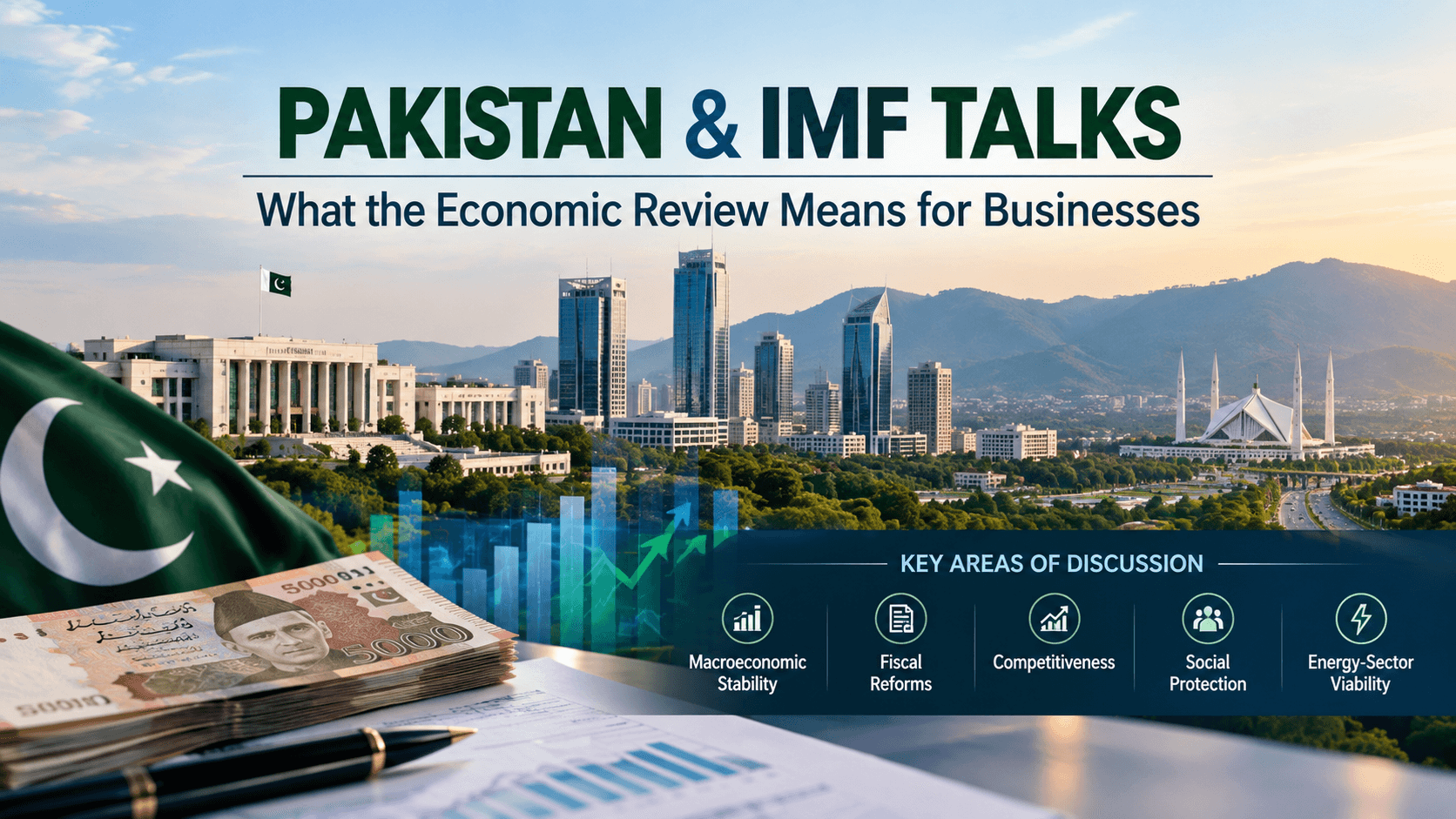
The May 2026 review emphasized fiscal sustainability, revenue mobilization, stronger social protection, improvements in public services, energy-sector viability and reforms to increase competition and productivity.
The impact on businesses will depend on the pace and design of reforms, changes in domestic demand, global market conditions and the government’s ability to maintain economic stability.
Businesses should monitor official announcements relating to tax policy, energy pricing, interest rates, foreign exchange regulations and trade requirements.
Clear and predictable policies can help companies make informed decisions about expansion, hiring, investment and financing.
Conclusion
Pakistan’s IMF programme remains an important part of the country’s economic policy framework in 2026. The completion of the third review in May enabled further financing and reflected progress in implementing agreed reforms. At the same time, economic risks remain, including external shocks, fiscal constraints and structural challenges.
For businesses, the programme may influence taxation, energy costs, access to financing, investment conditions and international trade. Entrepreneurs and investors can prepare by monitoring policy developments, strengthening financial management, improving productivity and assessing new market opportunities.
Pakistan’s longer-term economic performance will depend not only on IMF financing but also on sustainable reforms, private-sector activity, export growth, institutional effectiveness and the creation of a predictable business environment.