
Introduction
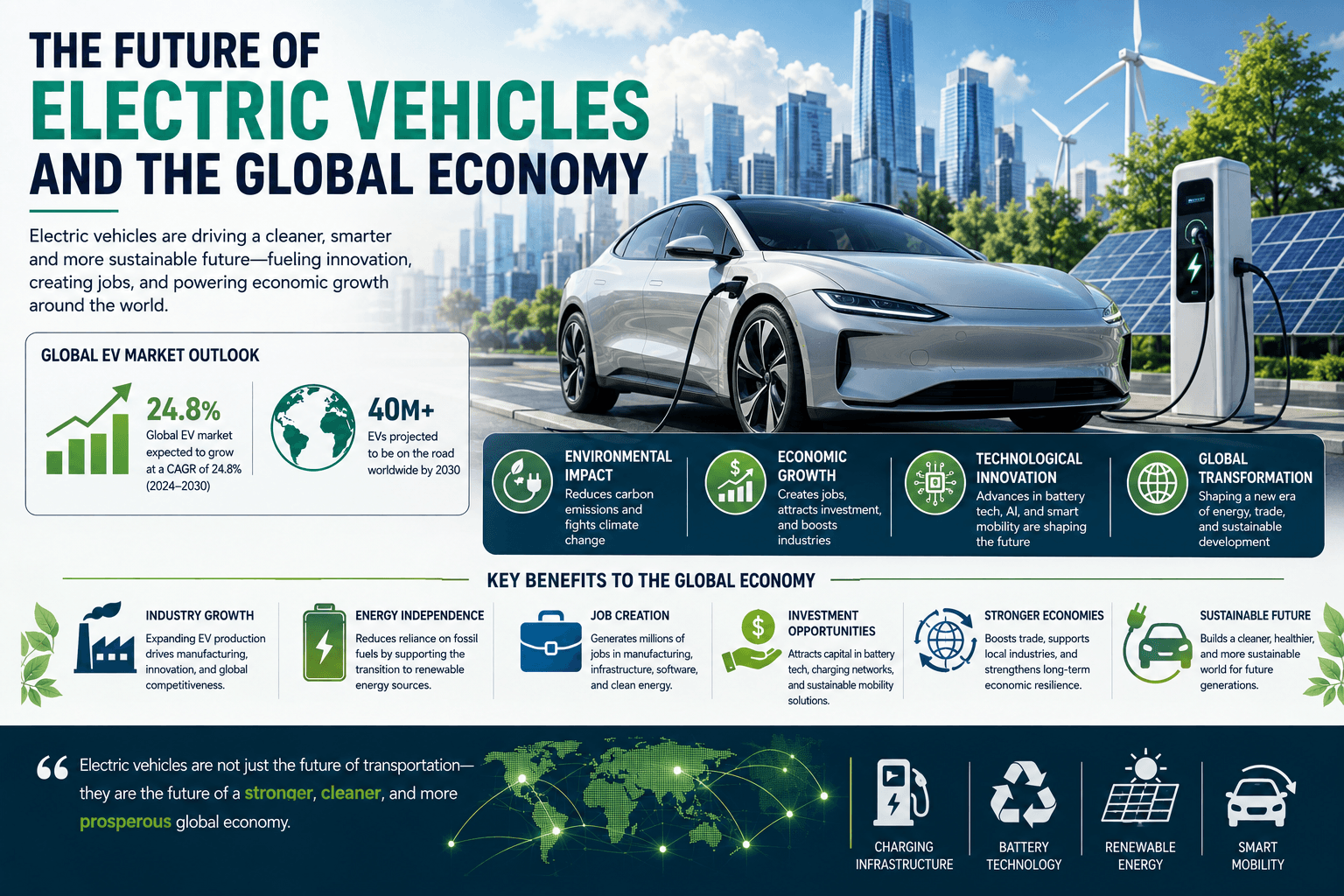
Electric vehicles (EVs) are transforming the global transportation industry and reshaping the future of the world economy. As governments introduce stricter emissions regulations and consumers increasingly prioritize sustainability, EV adoption continues to accelerate. Advances in battery technology, charging infrastructure, and artificial intelligence are making electric vehicles more practical and affordable than ever before.
In 2026, the electric vehicle industry is no longer an emerging market—it is a major economic force influencing manufacturing, energy, technology, employment, and international trade. Businesses and investors worldwide are paying close attention as the transition to electric mobility creates new opportunities and challenges.
Rapid Growth of the Electric Vehicle Market
The global EV market has experienced remarkable growth over the past decade. Major automakers are investing billions of dollars to expand their electric vehicle portfolios, while new manufacturers continue entering the market with innovative models.
Several factors are driving this growth:
Government incentives and tax credits
Increasing fuel prices
Growing environmental awareness
Improvements in battery performance
Expansion of charging infrastructure
As production scales up, electric vehicles are becoming more accessible to consumers across developed and emerging markets.
Economic Benefits of the EV Industry
The rise of electric vehicles is creating significant economic opportunities.
The EV ecosystem supports industries including:
Battery manufacturing
Software development
Renewable energy
Charging infrastructure
Semiconductor production
Recycling and resource management
These sectors are generating new investments, creating high-skilled jobs, and stimulating economic growth worldwide.
Innovation in Battery Technology
Battery technology remains at the heart of the EV revolution.
Manufacturers are developing batteries that offer:
Longer driving ranges
Faster charging times
Improved safety
Lower production costs
Longer life cycles
Innovations such as solid-state batteries and advanced energy storage systems are expected to further accelerate EV adoption over the coming years.
Renewable Energy Integration
Electric vehicles are becoming closely connected with renewable energy systems.
Many EV owners now charge their vehicles using:
Solar power
Wind energy
Home battery storage
Smart energy grids
This integration supports cleaner energy consumption while reducing dependence on fossil fuels and improving energy efficiency.
Global Supply Chain Transformation
The shift toward electric vehicles is changing global supply chains.
Demand for critical minerals such as lithium, nickel, cobalt, and graphite has increased significantly. Countries rich in these resources are attracting substantial investments, while manufacturers are diversifying supply chains to reduce geopolitical risks.
Companies are also investing in battery recycling to recover valuable materials and reduce environmental impact.
Impact on Traditional Automotive Manufacturing
The transition to electric vehicles is transforming automotive production.
Manufacturers are investing in:
Automated production facilities
Digital manufacturing technologies
AI-powered quality control
Advanced robotics
Sustainable production methods
While some traditional automotive jobs are evolving, new opportunities are emerging in battery production, software engineering, and electric drivetrain development.
Smart Vehicles and Artificial Intelligence
Modern electric vehicles increasingly rely on artificial intelligence.
AI enables features such as:
Advanced driver assistance systems
Predictive maintenance
Route optimization
Battery performance monitoring
Personalized driving experiences
These technologies improve safety, efficiency, and customer satisfaction while supporting the future development of autonomous transportation.
Challenges Facing the EV Industry
Despite strong growth, several challenges remain.
These include:
High battery production costs
Limited charging infrastructure in some regions
Supply chain disruptions
Critical mineral availability
Electricity grid capacity
Consumer concerns about charging times
Addressing these issues will require continued investment from governments and private companies.
Investment Opportunities
The expanding EV industry offers attractive opportunities for investors.
Promising sectors include:
Battery technology
Charging infrastructure
Renewable energy
Electric commercial vehicles
Battery recycling
Smart mobility software
Businesses that innovate and adapt to changing market demands are likely to benefit from the industry's long-term growth.
The Future of Electric Mobility
Looking ahead, electric vehicles are expected to become increasingly connected, intelligent, and sustainable.
Emerging trends include:
Ultra-fast charging networks
Vehicle-to-grid (V2G) technology
Autonomous electric vehicles
AI-powered fleet management
Greater integration with renewable energy
More affordable battery technologies
These innovations will further strengthen the role of electric vehicles in the global economy.
Conclusion
Electric vehicles are transforming far more than transportation—they are reshaping manufacturing, energy, technology, employment, and international trade. As governments, businesses, and consumers embrace cleaner mobility, the EV industry will remain a major driver of innovation and economic growth.
Organizations that invest in electric mobility, sustainable technologies, and digital innovation today will be well-positioned to thrive in the rapidly evolving global economy of tomorrow
Frequently Asked Questions
1. What are electric vehicles (EVs)?
Electric vehicles are automobiles powered entirely or primarily by electric motors using rechargeable battery packs instead of traditional internal combustion engines. They produce lower tailpipe emissions and contribute to cleaner transportation.
2. Why are electric vehicles important for the global economy?
EVs are creating new opportunities in manufacturing, battery production, renewable energy, technology, mining, and infrastructure while supporting economic growth and reducing dependence on fossil fuels.
3. How is the EV market expected to grow in the coming years?
The EV market is expected to continue expanding as governments introduce supportive policies, battery costs decline, charging infrastructure improves, and consumers increasingly choose cleaner transportation.
4. How do electric vehicles support environmental sustainability?
EVs reduce greenhouse gas emissions, improve urban air quality, lower fuel consumption, and complement renewable energy systems, helping countries meet climate and sustainability goals.
5. What industries benefit from EV adoption?
Automotive manufacturing, battery production, mining, renewable energy, software development, semiconductor manufacturing, logistics, charging infrastructure, and recycling industries all benefit.
6. Why are batteries so important for electric vehicles?
Batteries determine vehicle range, charging speed, efficiency, safety, and overall ownership costs, making them one of the most valuable components of the EV ecosystem.
7. How does EV adoption affect oil demand?
As more consumers and businesses adopt electric vehicles, demand for gasoline and diesel gradually decreases, influencing global oil markets and energy investment strategies.
8. What is EV charging infrastructure?
Charging infrastructure includes home chargers, workplace charging stations, public fast chargers, and high-speed charging networks that enable convenient EV ownership.
9. Are electric vehicles more affordable to operate?
Although purchase prices may be higher in some markets, EVs often have lower operating and maintenance costs because they require less servicing and electricity is generally cheaper than fuel.
10. What role do governments play in EV adoption?
Governments encourage EV adoption through tax incentives, purchase rebates, charging infrastructure investments, emissions regulations, and clean energy policies.
11. How do electric vehicles influence employment?
The transition to EVs creates jobs in battery manufacturing, software engineering, charging infrastructure, renewable energy, recycling, and advanced automotive production while changing workforce demands in traditional automotive sectors.
12. What are the biggest challenges facing the EV industry?
Challenges include battery supply chains, charging infrastructure expansion, raw material availability, high upfront costs in some markets, recycling, and grid capacity.
13. Why is battery recycling becoming increasingly important?
Battery recycling helps recover valuable materials such as lithium, nickel, cobalt, and copper, reducing environmental impact and strengthening long-term supply chain sustainability.
14. How do renewable energy and electric vehicles work together?
Renewable energy sources such as solar and wind can supply electricity for EV charging, reducing carbon emissions and supporting cleaner transportation systems.
15. How are businesses benefiting from fleet electrification?
Companies reduce fuel expenses, lower maintenance costs, improve sustainability performance, and meet environmental goals by transitioning commercial fleets to electric vehicles.
16. What technologies are driving EV innovation?
Advanced battery chemistry, fast-charging technology, artificial intelligence, connected vehicle software, autonomous driving systems, lightweight materials, and smart energy management are accelerating EV development.
17. Will electric vehicles replace gasoline-powered cars completely?
Many experts expect EVs to represent a growing share of new vehicle sales over time, although gasoline, hybrid, and alternative-fuel vehicles may continue to coexist in certain markets for years.
18. How do electric vehicles contribute to sustainable economic growth?
EVs encourage investment in clean technology, advanced manufacturing, renewable energy, digital infrastructure, and innovation while supporting long-term environmental and economic objectives.
19. What opportunities do electric vehicles create for businesses?
Businesses can expand into battery technology, charging infrastructure, fleet management, software platforms, renewable energy integration, maintenance services, and sustainable mobility solutions.
20. Why should businesses prepare for the future of electric vehicles?
Preparing for the EV transition enables organizations to capitalize on emerging market opportunities, adapt to evolving regulations, improve sustainability performance, strengthen competitiveness, and participate in one of the fastest-growing sectors of the global economy.