Introduction
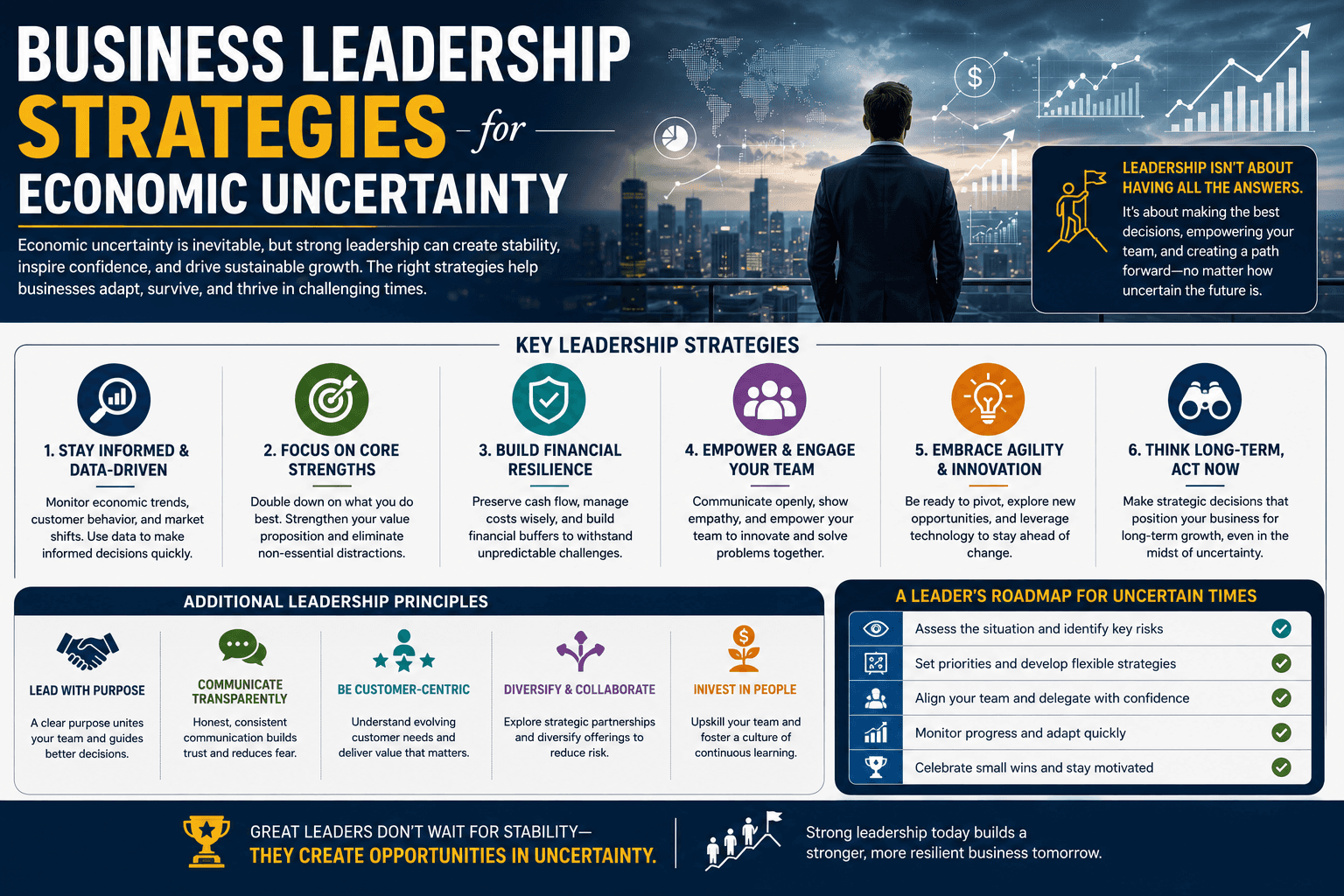
Economic uncertainty has become a constant challenge for businesses of every size. Inflation, changing consumer spending, technological disruption, geopolitical conflicts, and evolving regulations have created an environment where leaders must make critical decisions without complete certainty. While these challenges can slow growth, they also create opportunities for organizations that are prepared to adapt quickly.
Successful business leaders understand that uncertainty is not simply a risk to avoid—it is a reality to manage. Companies that invest in innovation, strengthen financial resilience, embrace digital transformation, and empower their teams are often better positioned to outperform competitors during volatile periods.
Today's leadership is no longer defined only by experience or authority. Modern leaders must combine strategic thinking with data-driven decision-making, strong communication, and the flexibility to respond to rapidly changing market conditions. Organizations that build these capabilities are more likely to sustain growth and remain competitive in an unpredictable global economy.
Understanding Economic Uncertainty
Economic uncertainty refers to periods when businesses face unpredictable market conditions that make planning and forecasting more difficult. These conditions may result from inflation, supply chain disruptions, interest rate changes, political instability, labor shortages, or rapid technological advances.
While uncertainty can increase operational risks, it also encourages businesses to become more innovative and efficient. Organizations that monitor market trends and respond proactively often discover new opportunities that others overlook.
Instead of waiting for markets to stabilize, successful companies focus on building resilience that enables them to perform well under changing conditions.
Develop an Agile Leadership Mindset
Agility has become one of the most valuable leadership qualities in today's business environment.
Traditional business plans often rely on long-term assumptions that can quickly become outdated. Agile leaders regularly review market conditions, evaluate new information, and adjust strategies when necessary.
An agile leadership approach includes:
Making informed decisions quickly
Encouraging continuous learning
Responding rapidly to customer feedback
Testing new ideas before large-scale implementation
Remaining flexible when priorities change
Organizations led by agile executives can react faster to economic shifts while minimizing unnecessary risks.
Build Financial Resilience
Financial strength provides businesses with the flexibility to navigate challenging economic conditions.
Rather than focusing only on revenue growth, effective leaders also prioritize cash flow management, cost optimization, and long-term financial planning.
Important financial strategies include:
Maintaining healthy cash reserves
Monitoring expenses carefully
Diversifying income sources
Improving budgeting accuracy
Managing debt responsibly
Businesses with strong financial foundations can continue investing in innovation, talent, and customer experience even during periods of economic slowdown.
Use Data to Drive Better Decisions
Modern leadership increasingly depends on reliable business intelligence rather than assumptions.
Data analytics enables organizations to understand customer behavior, monitor operational performance, identify market trends, and forecast future demand.
Leaders should regularly analyze key performance indicators such as:
Revenue growth
Customer acquisition costs
Customer retention rates
Operational efficiency
Profit margins
Employee productivity
By using real-time dashboards and predictive analytics, businesses can make faster, evidence-based decisions that reduce uncertainty and improve overall performance.
Accelerate Digital Transformation
Technology has become one of the strongest competitive advantages during economic uncertainty.
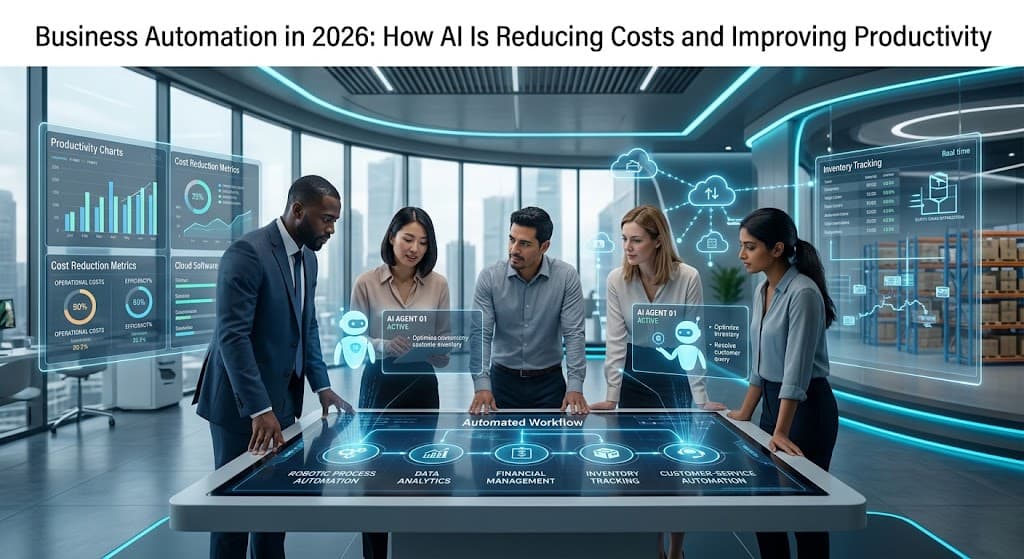
Businesses that invest in digital transformation improve efficiency, reduce operating costs, and create better customer experiences.
Key technologies include:
Cloud computing
Artificial intelligence
Business automation
Customer relationship management (CRM) platforms
Enterprise resource planning (ERP) systems
Cybersecurity solutions
Digital tools also support remote collaboration, streamline workflows, and improve access to business insights.
Rather than viewing technology as an expense, successful organizations consider it a long-term investment that strengthens resilience and supports sustainable growth.
Strengthen Risk Management
Every business faces financial, operational, technological, and strategic risks.
Strong leaders develop comprehensive risk management frameworks that help organizations prepare for unexpected events before they occur.
Effective risk management involves:
Identifying potential business threats
Evaluating financial exposure
Diversifying suppliers
Creating business continuity plans
Monitoring industry developments
Conducting regular scenario planning
Preparing for multiple possible outcomes allows businesses to respond more confidently when market conditions change unexpectedly.
Improve Operational Efficiency
Economic uncertainty often highlights operational inefficiencies that may have gone unnoticed during periods of growth.
Leaders should continuously evaluate business processes to eliminate waste, improve productivity, and optimize resource allocation.
Organizations can improve efficiency by:
Automating repetitive administrative tasks
Simplifying workflows
Improving supply chain visibility
Reducing unnecessary operating costs
Encouraging collaboration across departments
Small operational improvements made consistently can generate significant long-term savings while improving customer satisfaction.
Focus on Customer Relationships
During uncertain economic periods, retaining existing customers is often more cost-effective than acquiring new ones.
Business leaders should prioritize customer satisfaction by delivering consistent value, responsive support, and personalized experiences.
Building trust requires:
Transparent communication
High-quality products and services
Fast customer support
Personalized marketing
Continuous improvement based on customer feedback
Organizations that maintain strong customer relationships often experience greater stability even when overall market demand declines.
Continue Investing in Innovation
Many of the world's most successful companies expanded during periods of economic uncertainty because they continued investing in innovation while competitors reduced spending.
Innovation does not always require major investments. Businesses can begin by encouraging employees to share ideas, improving existing products, exploring new digital services, or testing emerging technologies such as artificial intelligence.
Organizations that embrace innovation are more likely to identify new revenue opportunities, improve operational efficiency, and strengthen their competitive position in changing markets.
Frequently Asked Questions (FAQs)
1. What is business leadership during economic uncertainty?
Business leadership during economic uncertainty involves making strategic decisions that help organizations adapt to changing market conditions, manage risks, maintain financial stability, and identify new growth opportunities despite economic challenges.
2. Why is agile leadership important in uncertain markets?
Agile leadership enables businesses to respond quickly to market changes, customer needs, and emerging risks. It helps organizations remain flexible, make informed decisions faster, and maintain a competitive advantage.
3. How can businesses build financial resilience?
Businesses can strengthen financial resilience by maintaining healthy cash reserves, diversifying revenue streams, controlling operational costs, improving financial forecasting, and managing debt responsibly.
4. How does digital transformation support business resilience?
Digital transformation improves operational efficiency, enhances customer experiences, automates repetitive tasks, strengthens cybersecurity, and provides real-time business insights that help leaders make better decisions during economic uncertainty.
5. What role does data analytics play in leadership?
Data analytics helps leaders understand customer behavior, monitor business performance, forecast market trends, identify risks, and make evidence-based decisions that improve overall business outcomes.
6. How can companies manage risks during economic uncertainty?
Organizations can reduce risks by implementing strong risk management strategies, diversifying suppliers, conducting scenario planning, monitoring market conditions, and developing business continuity plans.
7. Why is customer retention important during economic downturns?
Retaining existing customers is generally more cost-effective than acquiring new ones. Strong customer relationships help maintain steady revenue, increase brand loyalty, and improve long-term business stability.
8. What are the biggest leadership challenges during economic uncertainty?
Common challenges include managing cash flow, responding to market volatility, maintaining employee morale, adapting to technological changes, controlling costs, and making strategic decisions with limited information.
9. How can business leaders encourage innovation during uncertain times?
Leaders can foster innovation by supporting creative thinking, investing in digital technologies, encouraging collaboration, testing new business ideas, and creating a culture that embraces continuous improvement.
10. What are the most effective leadership strategies for long-term success?
Successful leaders focus on agile decision-making, financial resilience, digital transformation, operational efficiency, employee development, risk management, and maintaining a long-term strategic vision despite short-term challenges.