Introduction
The global economy is evolving at an unprecedented pace, creating both opportunities and challenges for businesses of every size. In 2026, organizations are navigating a landscape shaped by artificial intelligence (AI), changing consumer expectations, inflationary pressures, digital transformation, geopolitical uncertainty, and sustainability initiatives. These forces are redefining how businesses operate, compete, and grow in an increasingly connected world.
Economic trends are no longer just concerns for financial analysts or multinational corporations. They directly influence pricing strategies, hiring decisions, investment planning, supply chain management, customer demand, and overall profitability. Businesses that monitor these developments and adapt quickly are better positioned to build resilience, seize new opportunities, and maintain a competitive advantage.
Whether you operate a startup, a small business, or a global enterprise, understanding today's economic environment is essential for making informed decisions. This guide explores the most important economic trends shaping business growth in 2026 and provides practical strategies to help organizations prepare for the future.
Why Economic Trends Matter for Every Business
Economic conditions affect every aspect of business operations. Changes in interest rates, inflation, labor markets, and technology influence customer purchasing behavior, operational expenses, and investment opportunities.
Businesses that rely on historical data alone may struggle to respond to rapidly changing market conditions. Modern organizations increasingly use predictive analytics, AI-driven insights, and real-time economic indicators to guide strategic planning.
Companies that stay informed can anticipate risks, optimize operations, and identify growth opportunities before competitors do.
1. Artificial Intelligence Is Driving Business Productivity
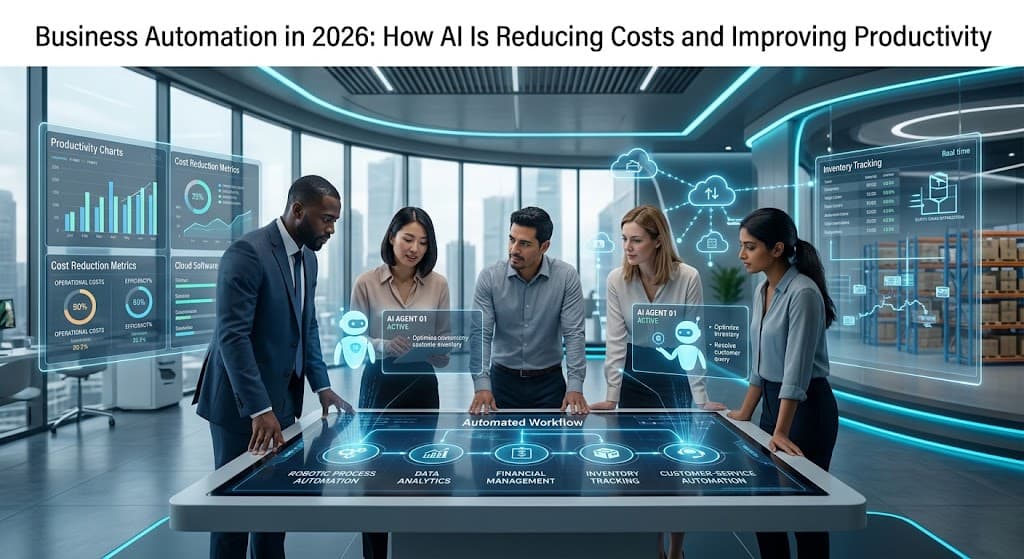
Artificial intelligence has become one of the most significant economic drivers of 2026. Businesses across industries are adopting AI-powered solutions to automate workflows, analyze data, improve customer experiences, and increase operational efficiency.
Generative AI is transforming marketing, customer support, software development, and business communications. AI assistants can generate reports, summarize meetings, create marketing content, and automate repetitive administrative tasks within minutes.
Predictive AI is also helping organizations forecast demand, optimize inventory, identify customer trends, and reduce operational costs.
However, businesses must balance innovation with responsible AI governance by ensuring transparency, protecting customer data, and maintaining human oversight for critical decisions.
What Businesses Should Do
Implement AI for repetitive tasks.
Train employees to work alongside AI tools.
Establish responsible AI policies.
Measure AI performance using business KPIs.
2. Inflation Continues to Influence Business Decisions
Although inflation has stabilized in many regions compared to previous years, businesses continue to experience higher operating costs. Rising expenses for raw materials, logistics, utilities, and labor are affecting profitability across industries.
Consumers are becoming increasingly price-conscious and expect greater value from products and services. Businesses must balance competitive pricing with sustainable profit margins.
Organizations are responding by improving operational efficiency, reducing waste, renegotiating supplier contracts, and investing in automation to offset higher costs.
What Businesses Should Do
Monitor operating expenses regularly.
Improve inventory management.
Focus on value-based pricing.
Automate repetitive processes to reduce costs.
3. Interest Rates Shape Investment Decisions
Interest rates remain a key factor influencing business growth. Higher borrowing costs affect loans, equipment financing, commercial real estate investments, and business expansion plans.
Companies are becoming more selective when making capital investments and are prioritizing projects that deliver measurable returns.
Strong cash flow management and financial planning have become essential as businesses navigate changing borrowing conditions.
What Businesses Should Do
Evaluate financing options carefully.
Strengthen cash reserves.
Reduce unnecessary debt.
Prioritize investments with long-term value.
4. Digital Transformation Becomes a Competitive Necessity
Digital transformation is no longer optional. Businesses that continue relying on outdated systems risk falling behind more agile competitors.
Organizations are investing in cloud computing, automation software, customer relationship management platforms, AI-powered analytics, and digital collaboration tools to improve productivity and customer satisfaction.
Customers increasingly expect seamless digital experiences across websites, mobile apps, social media, and e-commerce platforms. Businesses that deliver convenient and personalized experiences are more likely to build long-term customer loyalty.
What Businesses Should Do
Modernize legacy systems.
Invest in cloud-based technologies.
Improve digital customer experiences.
Use data analytics to support business decisions.
5. Supply Chain Resilience Is a Strategic Priority
Recent global disruptions have highlighted the importance of resilient supply chains. Businesses are reducing dependence on single suppliers and adopting diversified sourcing strategies to minimize operational risks.
AI-powered forecasting tools are helping organizations predict demand, optimize inventory levels, and improve supplier performance.
Companies are also exploring regional sourcing, nearshoring, and digital supply chain technologies to improve flexibility and reduce delays.
What Businesses Should Do
Diversify supplier networks.
Build stronger supplier relationships.
Invest in supply chain visibility.
Develop contingency plans for disruptions.
6. Consumer Behavior Continues to Evolve
Modern consumers expect convenience, speed, personalization, and value. Online shopping, digital payments, subscription services, and social commerce continue to reshape purchasing habits.
Businesses that understand customer preferences through AI and analytics can deliver personalized experiences that improve customer engagement and increase sales.
Consumers are also placing greater importance on transparency, trust, and brand authenticity when making purchasing decisions.
What Businesses Should Do
Analyze customer data regularly.
Personalize marketing campaigns.
Improve omnichannel experiences.
Monitor changing consumer trends.
7. Sustainability Creates Long-Term Business Value
Sustainability has become an important business strategy rather than simply a corporate responsibility initiative. Customers, investors, and regulators increasingly expect businesses to reduce environmental impact and operate responsibly.
Organizations are investing in renewable energy, sustainable sourcing, waste reduction, and energy-efficient operations.
Businesses that integrate sustainability into their long-term strategies often improve brand reputation, reduce operating costs, and strengthen customer loyalty.
What Businesses Should Do
Reduce energy consumption.
Improve resource efficiency.
Communicate sustainability initiatives transparently.
Build environmentally responsible supply chains.
8. Cybersecurity Becomes a Business Imperative
As digital transformation accelerates, cyber threats continue to evolve. Businesses of all sizes face increasing risks from ransomware, phishing attacks, data breaches, and identity theft.
Cybersecurity is no longer solely an IT responsibility—it is a business priority. AI-powered security systems can detect suspicious activities, monitor network behavior, and respond to threats more quickly than traditional security solutions.
Protecting customer data and maintaining business continuity are essential for building trust in an increasingly digital economy.
What Businesses Should Do
Implement multi-factor authentication.
Train employees on cybersecurity awareness.
Conduct regular security audits.
Maintain secure backup and disaster recovery plans.
Traditional Business vs Modern Business in 2026
Traditional Business | Modern Business in 2026 |
|---|---|
Manual processes | AI-powered automation |
Generic marketing | Personalized customer experiences |
Reactive planning | Predictive analytics |
Local operations | Global digital presence |
Manual reporting | Real-time dashboards |
Traditional customer service | AI-powered 24/7 support |
Fixed pricing strategies | Data-driven dynamic pricing |
How Businesses Can Prepare for Economic Changes
Adapting to economic change requires proactive planning rather than reactive decision-making. Businesses should focus on building resilience while embracing innovation.
A practical roadmap includes:
Invest in AI and automation to improve productivity.
Strengthen cash flow management and financial planning.
Diversify suppliers and reduce supply chain risks.
Upskill employees to work with emerging technologies.
Enhance cybersecurity to protect digital assets.
Monitor key economic indicators and business KPIs.
Continuously innovate to meet changing customer expectations.
Organizations that embrace flexibility and continuous improvement will be better equipped to navigate uncertainty and capitalize on new opportunities.
Frequently Asked Questions (FAQs)
What are the biggest economic trends in 2026?
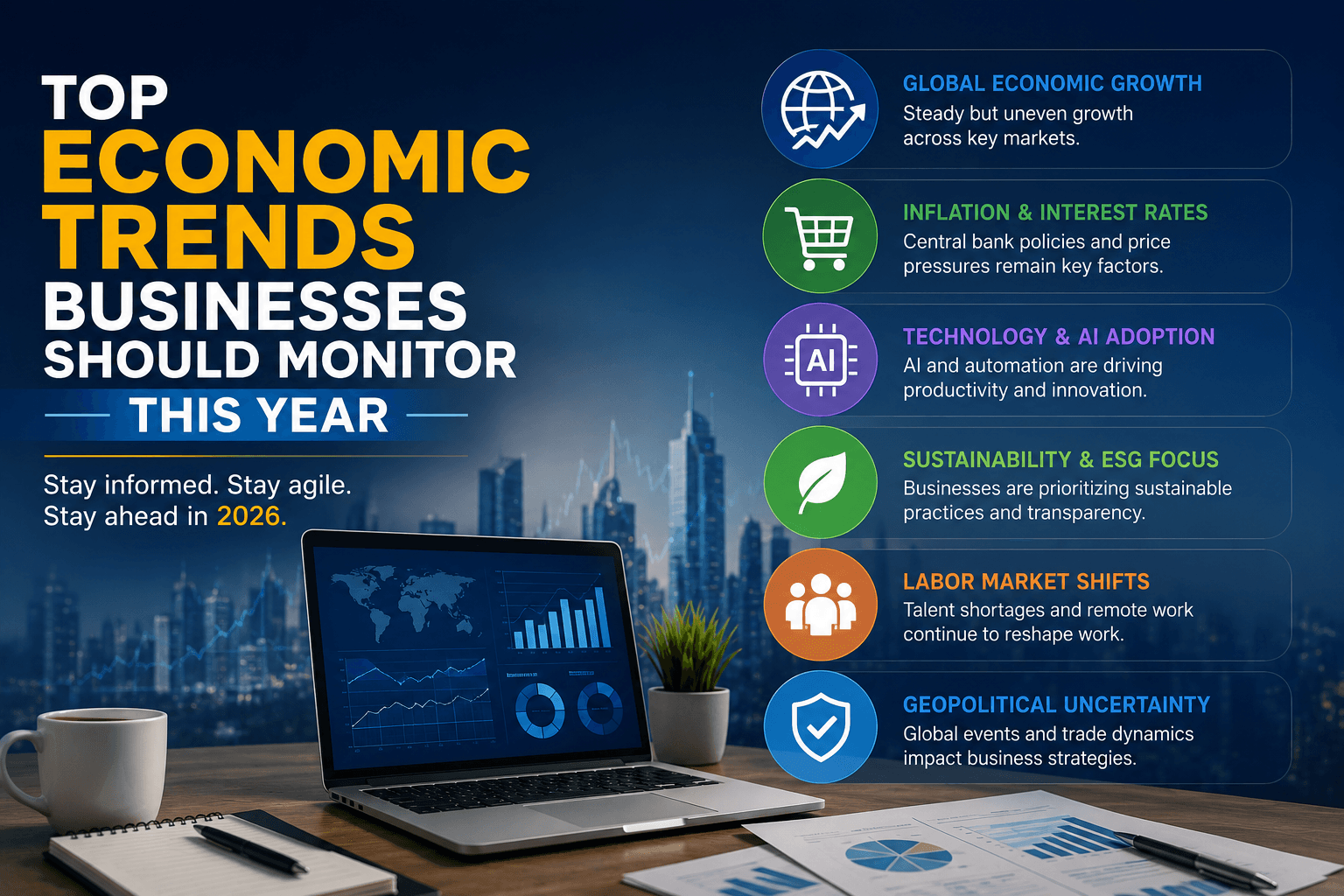
The biggest economic trends include artificial intelligence adoption, inflation management, digital transformation, supply chain resilience, sustainability, evolving consumer behavior, and stronger cybersecurity investments.
How does artificial intelligence impact business growth?
AI improves productivity by automating repetitive tasks, analyzing business data, enhancing customer experiences, optimizing operations, and supporting faster, data-driven decision-making.
How can businesses prepare for inflation?
Businesses can manage inflation by controlling operational costs, improving inventory management, negotiating supplier contracts, investing in automation, and implementing value-based pricing strategies.
Why is digital transformation important in 2026?
Digital transformation helps businesses improve efficiency, enhance customer experiences, strengthen collaboration, leverage data analytics, and remain competitive in an increasingly technology-driven marketplace.
How do interest rates affect businesses?
Higher interest rates increase borrowing costs, affecting loans, expansion plans, equipment financing, and investment decisions. Businesses should carefully evaluate financing options and maintain healthy cash flow.
Why is sustainability becoming a business priority?
Sustainability improves operational efficiency, strengthens brand reputation, meets customer expectations, supports regulatory compliance, and creates long-term competitive advantages.
What role does cybersecurity play in business success?
Cybersecurity protects sensitive business and customer data, prevents financial losses from cyberattacks, ensures regulatory compliance, and helps maintain customer trust in digital operations.
Which industries are expected to benefit the most from these economic trends?
Technology, healthcare, manufacturing, retail, logistics, finance, education, and professional services are among the industries expected to benefit significantly from AI adoption, digital transformation, and evolving consumer demand.
Frequently Asked Questions (FAQs)
1. What are the most important economic trends businesses should watch in 2026?
The most significant economic trends in 2026 include artificial intelligence adoption, inflation, interest rate changes, digital transformation, supply chain resilience, evolving consumer behavior, sustainability initiatives, and cybersecurity. These trends directly impact business growth, operational efficiency, and long-term competitiveness.
2. How is artificial intelligence influencing the global economy?
Artificial intelligence is boosting productivity by automating routine tasks, improving data analysis, enhancing customer service, and supporting faster business decision-making. Companies that strategically adopt AI can reduce costs, increase efficiency, and gain a competitive advantage.
3. Why is digital transformation essential for businesses in 2026?
Digital transformation enables businesses to modernize operations, improve customer experiences, strengthen collaboration, and leverage real-time data for smarter decisions. It has become a key factor in maintaining competitiveness across nearly every industry.
4. How does inflation affect business growth?
Inflation increases the cost of raw materials, transportation, labor, and operations, which can reduce profit margins. Businesses can manage inflation by improving efficiency, optimizing pricing strategies, reducing waste, and investing in automation.
5. How do interest rates impact businesses?
Interest rates affect borrowing costs, business loans, equipment financing, and expansion plans. Higher rates make financing more expensive, while lower rates can encourage investment and business growth. Strong cash flow management is essential regardless of the interest rate environment.
6. Why is supply chain resilience becoming more important?
Global disruptions, geopolitical events, and changing trade policies have highlighted the importance of resilient supply chains. Businesses that diversify suppliers, improve inventory visibility, and use AI-powered forecasting are better prepared to handle unexpected disruptions.
7. What role does sustainability play in business success?
Sustainability has become a competitive advantage. Businesses that reduce environmental impact, improve energy efficiency, and adopt responsible sourcing practices often strengthen their brand reputation, attract environmentally conscious customers, and improve long-term profitability.
8. How can businesses prepare for future economic uncertainty?
Businesses can prepare by investing in technology, strengthening financial planning, diversifying suppliers, improving cybersecurity, monitoring economic indicators, and continuously adapting to changing market conditions. Organizations that remain agile and data-driven are more likely to succeed during periods of economic change.
Conclusion
The economic landscape of 2026 is being shaped by rapid technological innovation, evolving consumer expectations, global market shifts, and increasing demand for sustainable business practices. While challenges such as inflation, interest rate fluctuations, supply chain disruptions, and cybersecurity risks remain significant, they also encourage businesses to become more agile, efficient, and resilient.
. and digital transformation are no longer optional investments—they are strategic necessities for organizations seeking long-term growth. Businesses that embrace automation, leverage data-driven insights, strengthen financial planning, and prioritize customer experience will be better positioned to outperform competitors in an increasingly dynamic marketplace.
Success in today's economy requires more than simply reacting to change. It demands continuous learning, proactive planning, and a willingness to innovate. By closely monitoring economic trends and implementing forward-thinking strategies, businesses can reduce risk, uncover new opportunities, and build a solid foundation for sustainable growth.
As the global economy continues to evolve, organizations that remain adaptable, technology-driven, and customer-focused will not only navigate uncertainty but also thrive in the competitive business environment of the future.