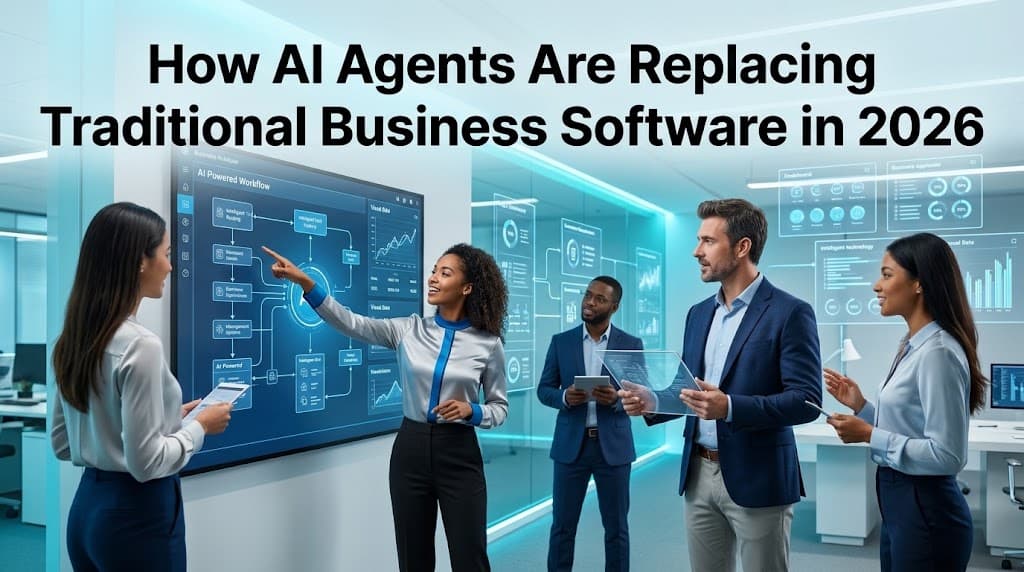

AI agents replacing traditional business software is one of the biggest changes in how small and large businesses work in 2026. Traditional software waits for you. You open it, click through menus, enter data, and run a report. An AI agent can follow a set of steps on its own — read a customer message, find the answer, draft a reply, and update a record — and then ask a person to check the result.
That does not mean software is disappearing. It means the way we use it is changing.
What Is an AI Agent, in Plain Terms?
An AI agent is a system that can take a goal, break it into steps, use tools to complete those steps, and report back. A chatbot only answers. An agent can also act: send an email, book a meeting, update a spreadsheet, or raise a ticket.
Think of it as a careful assistant for repetitive work. It still needs clear rules, good data, and human checks. AI automation for small business works best when the task is clear and the result is easy to check.
How AI Agents Are Changing Traditional Business Software
In the past, a business might use one tool for email, one for customer records, one for invoices, and one for reports. Staff copied information between them.
Now, an agent can connect those steps. A customer question can trigger a search of your help pages, a draft reply, and a note in your customer system — without someone copying and pasting. That saves time, especially for small teams doing the same tasks every day.
This is part of how AI is transforming business in 2026: less manual copying, more connected work, and more time for decisions that need a person.
Where AI Agents Help Most in a Business
AI agents work best for work that is repetitive, clear, and easy to check:
-
Customer support: answering common questions, sorting messages, and drafting replies for a person to approve.
-
Admin work: summarising meetings, drafting emails, updating records, and preparing simple reports.
-
Sales follow-up: reminding staff about leads, drafting follow-up messages, and logging calls.
-
Reporting: pulling numbers together and writing a first draft of a weekly summary.
They are less useful for work that needs judgement, trust, or a personal relationship — like closing a difficult deal, handling a sensitive complaint, or making a hiring decision.
For a small online store, for example, an agent could draft replies to common delivery questions, while a person handles refunds and complaints. That keeps speed without losing control.
What AI Agents Should Not Replace
AI agents should not replace good judgement. They should not make final decisions about money, customer promises, hiring, or anything that cannot be easily undone without a human check.
Before you use an agent, you also need clear rules for data. Decide what it can see, what it can change, and what it must never touch. Those rules are part of enterprise AI governance, and they matter even for a small team.
Risks and Limits of AI Agents
AI agents can make mistakes. They can misunderstand a request, use old information, or act on the wrong record. They can also expose private data if they are given too much access.
Cost is another limit. A tool that looks cheap can become expensive if it runs many times a day. Start small and measure the time it actually saves. If it does not save time after a fair test, stop using it for that task.
How to Start Using AI Agents in Your Business
Do not replace all your software at once. Pick one repetitive task that takes a lot of time. Write down the steps, the rules, and what a good result looks like. Test the agent on old examples first. Check every result for a week or two. Only then let it handle more.
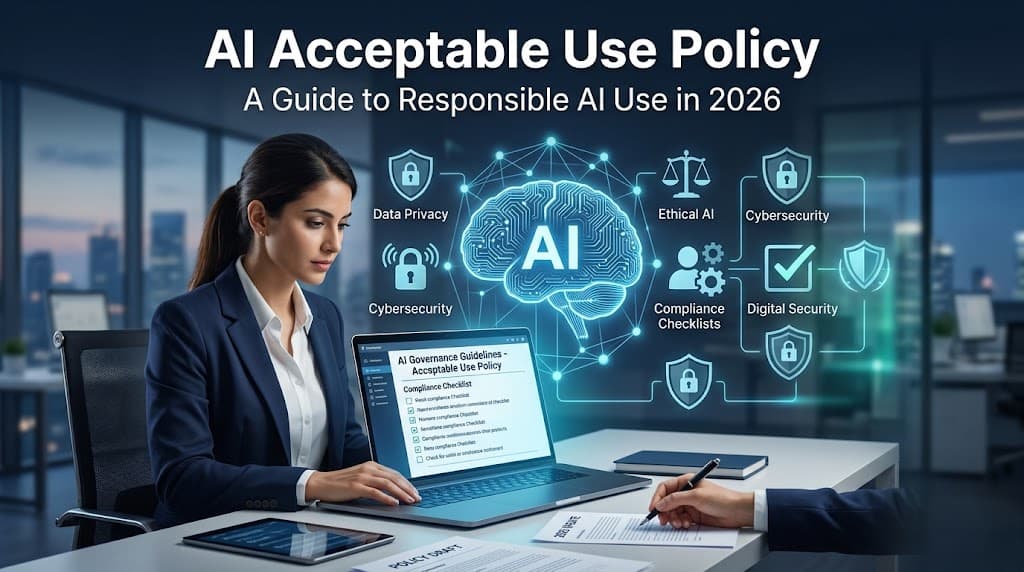
Set a simple rule: the agent drafts, a person approves. Also write a short AI acceptable use policy for your team, so everyone knows what is allowed, what is risky, and what data must stay private.
FAQ: AI Agents and Business Software
Will AI agents replace all business software?
No. They are changing how software is used, not removing the need for records, security, and human decisions. Most businesses will use a mix of old tools and agents.
Do small businesses need AI agents?
Not always. If a task takes only a few minutes and rarely happens, a simple checklist may be enough. Agents help most when the same task happens many times a day.
What should I check before choosing an AI tool?
Check what data it can access, what it can change, how you can undo an action, and how you can see what it did. If you cannot answer those questions, do not connect it to customer or payment data yet.
AI agents will not replace good judgement. Used carefully, they can remove repetitive work so people can focus on customers, quality, and decisions that actually need a person.
INTERNAL LINKS TO ADD:
-
Select: enterprise AI governance → Link to: Enterprise AI Governance in 2026: Frameworks, Risks and Best Practices for Businesses
-
Select: AI acceptable use policy → Link to: AI Acceptable Use Policy: A Complete Guide to Responsible AI Use in 2026
-
Select: small online store in the “Where AI Agents Help Most” section → Link to: SEO for Small Online Stores: A Beginner's Checklist That Brings in Customers (slug: /seo-for-small-online-stores)