
Search engine optimization (SEO) is one of the most effective ways to attract visitors to your website without relying entirely on paid advertising. A well-optimized website can appear higher in search engine results, reach the right audience, and generate consistent organic traffic over time.
Whether you run a small business, e-commerce store, blog, or professional website, understanding the fundamentals of SEO can help you build a stronger online presence. The good news is that SEO does not always require a huge budget. With the right strategy and consistent effort, businesses of all sizes can improve their visibility.
What Is SEO?
SEO is the process of improving a website so that search engines can better understand, index, and rank its pages for relevant searches.
When someone searches for information, products, or services on Google or another search engine, the goal of SEO is to make your website more likely to appear among the useful results.
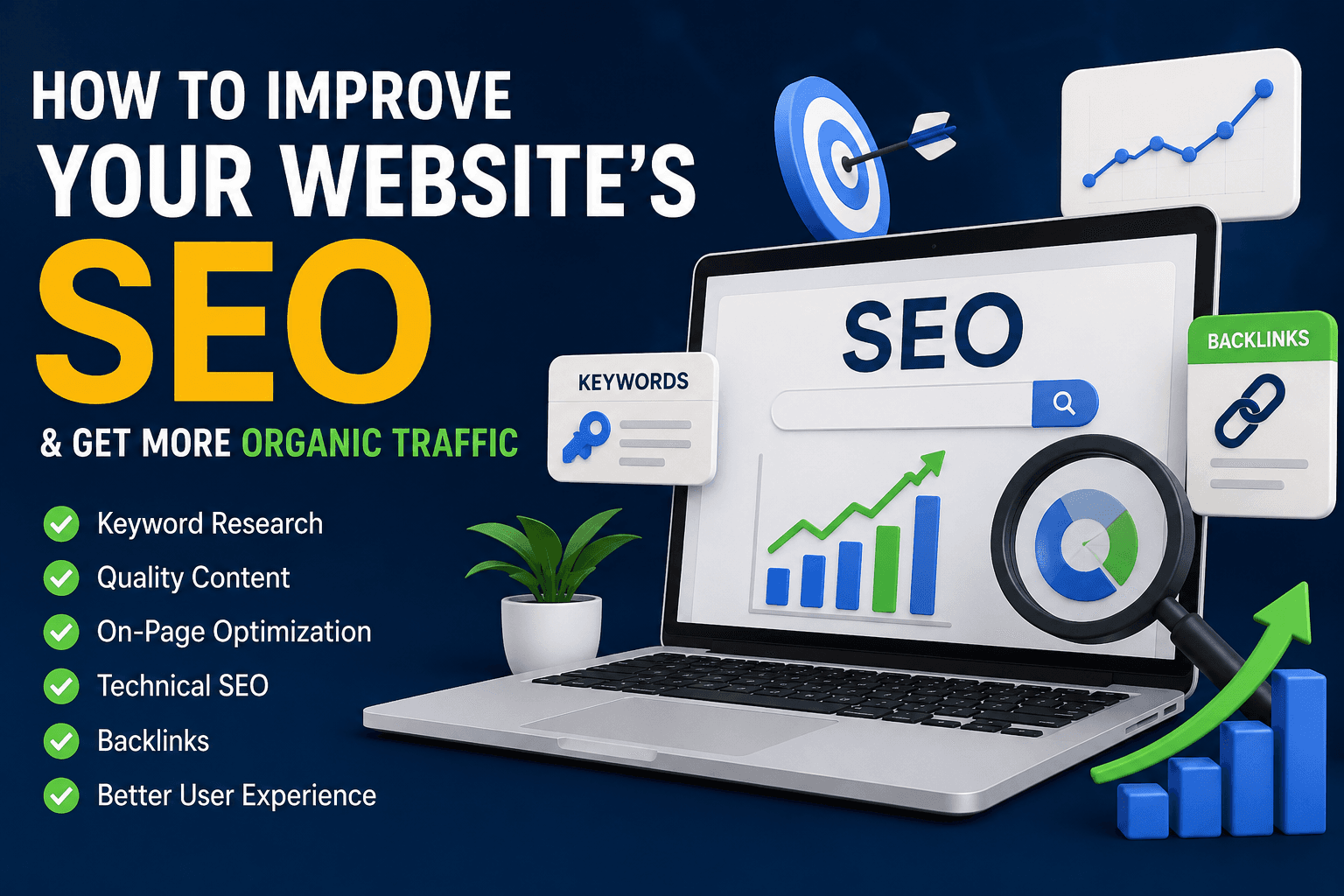
SEO generally includes several areas:
Keyword research
High-quality content
On-page optimization
Technical SEO
Internal linking
Website performance
Mobile optimization
Authority and backlinks
User experience
The goal is not simply to attract more visitors. It is to attract relevant visitors who are genuinely interested in what your website offers.
1. Research the Right Keywords
Keyword research is a fundamental part of SEO. Keywords are the words and phrases people type into search engines when looking for information.
For example, a small business marketing website might target keywords such as:
Small business marketing
Digital marketing strategies
SEO for small businesses
Online marketing tips
How to improve website traffic
Instead of targeting only highly competitive keywords, consider finding specific long-tail keywords. These usually contain several words and can indicate a clearer search intent.
For example, instead of targeting "SEO," a website could target "how to improve SEO for a small business website."
Use keyword research to understand:
What your audience searches for
How competitive a topic is
What questions people ask
What type of content already ranks
Which topics are relevant to your products or services
Choose keywords naturally. Avoid stuffing the same keyword repeatedly into an article because excessive keyword use can make content difficult to read and may hurt the user experience.
2. Create Helpful, Original Content
Content remains one of the most important parts of a successful SEO strategy.
Your content should answer the questions your target audience is actually asking. Instead of creating articles simply to include keywords, focus on providing useful information.
Good SEO content should be:
Original
Accurate
Useful
Easy to understand
Well organized
Relevant to the target audience
Updated when necessary
For example, if you are writing about website SEO, don't simply define SEO. Explain how readers can conduct keyword research, improve page titles, optimize content, fix technical problems, and measure results.
The more completely your content addresses a user's needs, the more valuable the page can become.
3. Optimize Your Page Titles
The page title is one of the first things users see in search results.
A strong title should clearly communicate what the page is about and encourage the right users to click.
For example:
Weak:
"SEO Tips"
Better:
"How to Improve Your Website’s SEO and Get More Organic Traffic"
A good title should be descriptive, relevant, and natural. Avoid making exaggerated promises that the content does not deliver.
4. Write Better Meta Descriptions
A meta description provides a short summary of a webpage and may appear underneath the title in search results.
Although meta descriptions are not simply a direct ranking shortcut, a useful description can help users understand what they will find on the page and potentially improve clicks.
For example:
"Learn practical SEO strategies to improve website visibility, attract organic traffic, optimize content, and grow your online presence."
Keep your description relevant to the actual content and write it primarily for searchers.
5. Use Clear Headings
Organize your content with descriptive headings and subheadings.
Instead of creating a large block of text, divide an article into logical sections such as:
What Is SEO?
How to Find the Right Keywords
How to Optimize Your Website
Technical SEO Basics
How to Build Backlinks
How to Measure SEO Performance
Clear headings make content easier for visitors to scan and help search engines understand the structure of a page.
6. Improve Your Website’s Loading Speed
Website performance has an important impact on user experience.
If a page takes too long to load, visitors may leave before reading your content. Improving performance can therefore benefit both users and your overall website experience.
Some ways to improve performance include:
Compressing large images
Using modern image formats
Reducing unnecessary scripts
Removing unused plugins
Using browser caching
Choosing reliable hosting
Optimizing website code
Regularly test your important pages, especially on mobile devices.
7. Make Your Website Mobile-Friendly
A large portion of web browsing happens on smartphones and other mobile devices.
Your website should work properly across different screen sizes. Text should be readable, buttons should be easy to tap, and visitors should not need to zoom or scroll horizontally.
A mobile-friendly website can provide a significantly better experience and make it easier for visitors to engage with your content.
8. Build a Strong Internal Linking Structure
Internal links connect one page of your website to another.
For example, an article about SEO could link to related articles about:
Keyword research
Content marketing
Technical SEO
Website analytics
Local SEO
Internal linking helps visitors discover related information and can also help search engines understand the relationships between pages on your website.
Use descriptive anchor text rather than generic phrases such as "click here."
9. Earn High-Quality Backlinks
Backlinks are links from other websites to your website. When relevant and trustworthy websites link to your content, those links can contribute to your site's authority.
However, quality is more important than quantity.
Instead of trying to collect hundreds of low-quality links, focus on creating content that other websites genuinely want to reference.
You can attract backlinks by creating:
Original research
Comprehensive guides
Useful statistics
Industry resources
Expert insights
Helpful tools
Valuable visual content
Guest contributions and digital PR can also help when done naturally and ethically.
10. Optimize Images
Images can improve content, but poorly optimized images can slow down your website.
Before uploading images:
Compress large files
Use appropriate formats
Give files descriptive names
Add useful alternative text
Avoid unnecessarily large dimensions
Alternative text is particularly useful for accessibility and helps describe images when they cannot be displayed.
For example, instead of:
IMG12345.jpg
use a descriptive filename such as:
small-business-seo-strategy.jpg
11. Improve User Experience
SEO should not be viewed as something separate from user experience.
A website should be easy to navigate, trustworthy, readable, and useful.
Consider:
Is the navigation simple?
Can visitors quickly find important information?
Are paragraphs easy to read?
Are buttons clearly labeled?
Are important pages easy to access?
Does the website work properly on mobile devices?
Are intrusive pop-ups affecting visitors?
A website designed for humans is more likely to provide lasting value than one designed solely around search engine rankings.
12. Use Technical SEO Best Practices
Technical SEO helps search engines crawl and understand your website.
Important areas include:
XML sitemaps
Robots.txt configuration
HTTPS security
Canonical URLs
Proper redirects
Crawlability
Indexability
Structured data where appropriate
Clean URL structures
Regularly check your website for broken links, duplicate pages, indexing problems, and other technical issues.
13. Understand Search Intent
One of the biggest SEO mistakes is focusing only on keywords without understanding why someone is searching.
Search intent generally falls into categories such as:
Informational:
The user wants to learn something.
Navigational:
The user wants to find a particular website or page.
Commercial:
The user is researching products or services before making a decision.
Transactional:
The user is ready to take an action, such as purchasing a product.
Your content should match the intent behind the search.
For example, someone searching "what is SEO" probably needs an educational guide, while someone searching "best SEO software for small business" may be comparing solutions.
14. Keep Content Updated
SEO is not a one-time activity.
Information can become outdated, competitors can publish better resources, and search behavior can change. Review important pages periodically and update them when necessary.
You can improve older content by:
Updating statistics
Adding new examples
Removing outdated information
Improving readability
Adding relevant internal links
Expanding incomplete sections
Updating screenshots or resources
Updating existing high-value content can be an efficient part of a long-term SEO strategy.
15. Measure Your SEO Performance
You cannot improve what you do not measure.
Use analytics and search performance tools to monitor important metrics such as:
Organic traffic
Search impressions
Clicks
Click-through rate
Keyword performance
Indexed pages
Conversions
Engagement
Top-performing content
Do not focus exclusively on rankings. A page ranking highly for an irrelevant keyword may generate little business value.
Instead, connect SEO performance with meaningful outcomes such as leads, sales, newsletter subscriptions, or other conversions.
Common SEO Mistakes to Avoid
Several mistakes can prevent a website from reaching its full potential.
Keyword Stuffing
Repeating keywords unnaturally can make content difficult to read.
Publishing Low-Quality Content
Creating large amounts of shallow content simply to target keywords is unlikely to produce sustainable results.
Ignoring Mobile Users
A website that works poorly on smartphones can lose valuable visitors.
Buying Low-Quality Backlinks
Manipulative link-building practices can create long-term risks.
Neglecting Technical SEO
Even excellent content can struggle if search engines cannot properly crawl or index your website.
Never Updating Old Content
Outdated information can reduce the usefulness and competitiveness of previously successful pages.
How Long Does SEO Take to Work?
SEO usually requires patience. Results can vary depending on factors such as competition, website history, content quality, technical health, industry, and the effectiveness of the strategy.
New websites may need significant time to establish authority, while established websites with strong content and technical foundations may see improvements sooner.
Instead of expecting instant results, treat SEO as a long-term investment.
Final Thoughts
Getting more organic traffic is not about finding a single SEO trick. Sustainable growth comes from combining useful content, strong technical foundations, effective keyword targeting, excellent user experience, internal linking, and legitimate authority-building.
Start by understanding your audience and the searches they perform. Then create genuinely helpful content, make your website fast and accessible, fix technical problems, and consistently measure your results.
SEO takes time, but a well-maintained website can continue attracting relevant visitors long after individual marketing campaigns have ended. For businesses looking to build a sustainable online presence, investing in SEO can be one of the most valuable long-term strategies.