
Digital marketing continues to evolve at an extraordinary pace, and 2026 is proving to be a year of innovation driven by artificial intelligence, data analytics, and changing consumer expectations. Businesses that rely on outdated marketing techniques risk falling behind, while those embracing modern strategies are seeing stronger engagement, higher conversion rates, and improved return on investment.
Today's consumers expect personalized experiences, valuable content, and seamless interactions across multiple digital platforms. As a result, successful marketers are combining technology with creativity to build stronger relationships with their audiences. Here are the digital marketing strategies delivering the best results in 2026.
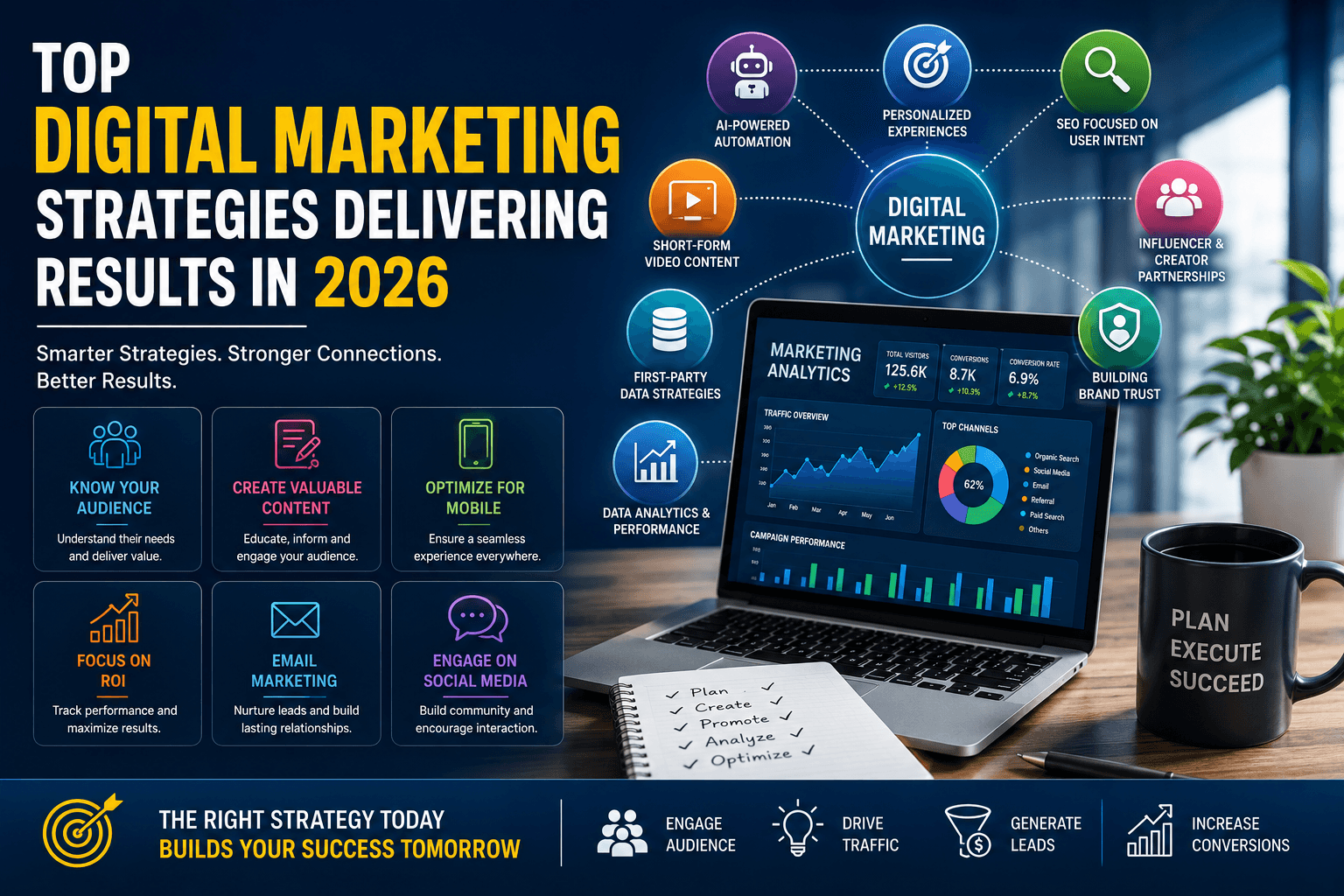
AI-Powered Marketing Automation
Artificial intelligence has become a core component of modern marketing. AI-powered platforms can analyze customer behavior, automate repetitive tasks, optimize advertising campaigns, and generate personalized content at scale.
Businesses are using AI to:
Create email campaigns
Generate social media content
Optimize search engine performance
Recommend products
Improve customer support
Predict buying behavior
Rather than replacing marketers, AI enables teams to focus on strategy, creativity, and customer engagement while reducing time spent on manual tasks.
Personalized Customer Experiences
Consumers increasingly expect brands to understand their preferences and deliver relevant experiences. Personalization is no longer optional—it has become a key competitive advantage.
Companies are using customer data to personalize:
Website content
Product recommendations
Email marketing
Digital advertisements
Promotional offers
Customer support interactions
Personalized marketing helps increase customer satisfaction, improve loyalty, and boost conversion rates.
SEO Focused on User Intent
Search engine optimization remains one of the most cost-effective digital marketing strategies, but its focus has shifted toward understanding user intent rather than simply targeting keywords.
Businesses are creating high-quality content that answers customer questions, solves problems, and provides genuine value. Search engines increasingly reward websites that demonstrate expertise, trustworthiness, and a positive user experience.
Key SEO priorities include:
High-quality content
Fast website performance
Mobile optimization
Internal linking
Structured data
Voice search optimization
Organizations investing in long-term SEO continue to benefit from sustainable organic traffic.
Short-Form Video Content
Short-form videos remain one of the most engaging content formats across social media platforms. Consumers prefer quick, informative, and entertaining videos that deliver value within seconds.
Businesses are creating videos that:
Demonstrate products
Share customer success stories
Explain industry trends
Offer educational tips
Highlight company culture
Showcase behind-the-scenes content
Video marketing increases visibility while encouraging higher engagement and social sharing.
Influencer and Creator Partnerships
Influencer marketing continues to evolve beyond celebrity endorsements. Many brands are partnering with niche creators who have highly engaged communities.
These collaborations often generate greater trust because audiences view creators as authentic voices rather than traditional advertisers.
Successful partnerships focus on long-term relationships that align naturally with brand values and customer interests.
First-Party Data Strategies
As privacy regulations continue to evolve and third-party cookies become less important, businesses are investing in first-party data collected directly from their customers.
Companies gather information through:
Website registrations
Email subscriptions
Customer surveys
Loyalty programs
Mobile applications
First-party data helps marketers create more accurate audience segments while respecting user privacy.
Omnichannel Marketing
Modern customers interact with businesses through multiple channels before making purchasing decisions.
Successful marketing strategies maintain consistent messaging across:
Websites
Email campaigns
Social media
Mobile apps
Online advertising
Customer support
An integrated omnichannel approach creates a smoother customer journey and strengthens brand recognition.
Voice and Visual Search Optimization
Consumers increasingly use voice assistants and image-based searches to discover products and services.
Businesses are adapting by creating conversational content, optimizing local search information, and improving image quality with descriptive metadata.
These optimizations help companies remain visible as search behavior continues to evolve.
Data Analytics and Performance Measurement
Modern marketing decisions are driven by data rather than assumptions.
Businesses regularly analyze:
Website traffic
Conversion rates
Customer acquisition costs
Engagement metrics
Advertising performance
Customer lifetime value
Continuous analysis enables marketers to refine campaigns, allocate budgets more effectively, and maximize return on investment.
Building Brand Trust
Trust has become one of the most valuable assets in digital marketing. Consumers are more likely to support brands that demonstrate transparency, authenticity, and consistent communication.
Businesses strengthen trust by:
Publishing helpful content
Protecting customer data
Responding promptly to customer feedback
Sharing genuine customer testimonials
Demonstrating social responsibility
Strong brand credibility often leads to higher customer retention and long-term business growth.
Preparing for the Future
Digital marketing will continue to evolve as AI, automation, and emerging technologies reshape customer expectations. Businesses that remain flexible, invest in innovation, and prioritize customer value will be best positioned for long-term success.
Rather than relying on a single marketing channel, organizations should build integrated strategies that combine search engine optimization, content marketing, social media, video, email, and data-driven decision-making.
Conclusion
The most successful digital marketing strategies in 2026 combine advanced technology with authentic human connections. AI, personalization, first-party data, and high-quality content are helping businesses engage audiences more effectively than ever before.
Companies that embrace these trends while remaining focused on delivering real value will strengthen customer relationships, improve marketing performance, and achieve sustainable growth in an increasingly competitive digital landscape.