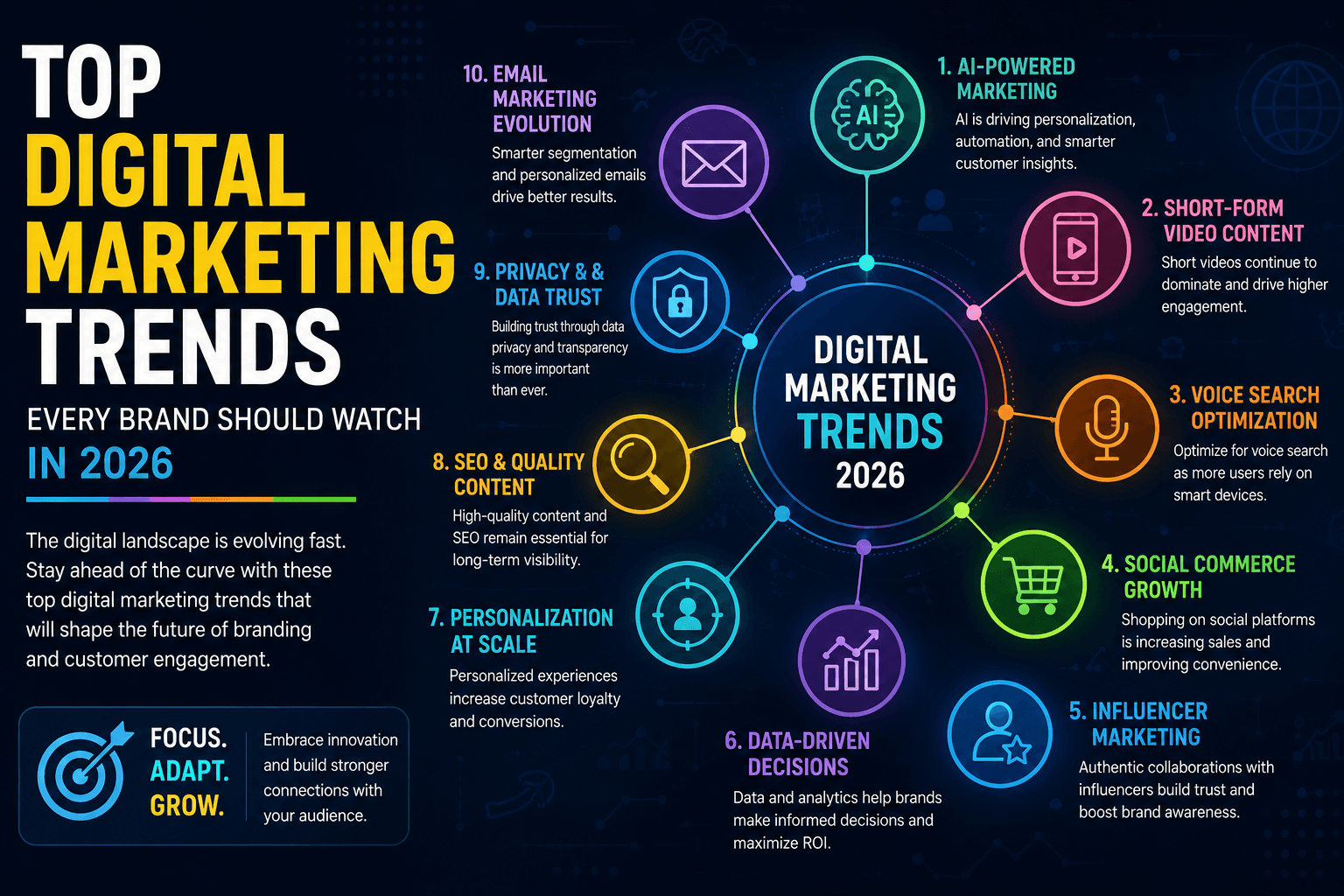

Digital marketing continues to evolve at an incredible pace. As technology advances and consumer expectations change, brands must adapt their marketing strategies to remain competitive. In 2026, businesses are focusing on personalized customer experiences, artificial intelligence, short-form video, and data-driven decision-making to attract and retain customers.
Whether you're a startup, small business, or global enterprise, understanding the latest digital marketing trends can help improve brand awareness, generate qualified leads, and increase sales.
Artificial Intelligence Is Transforming Marketing
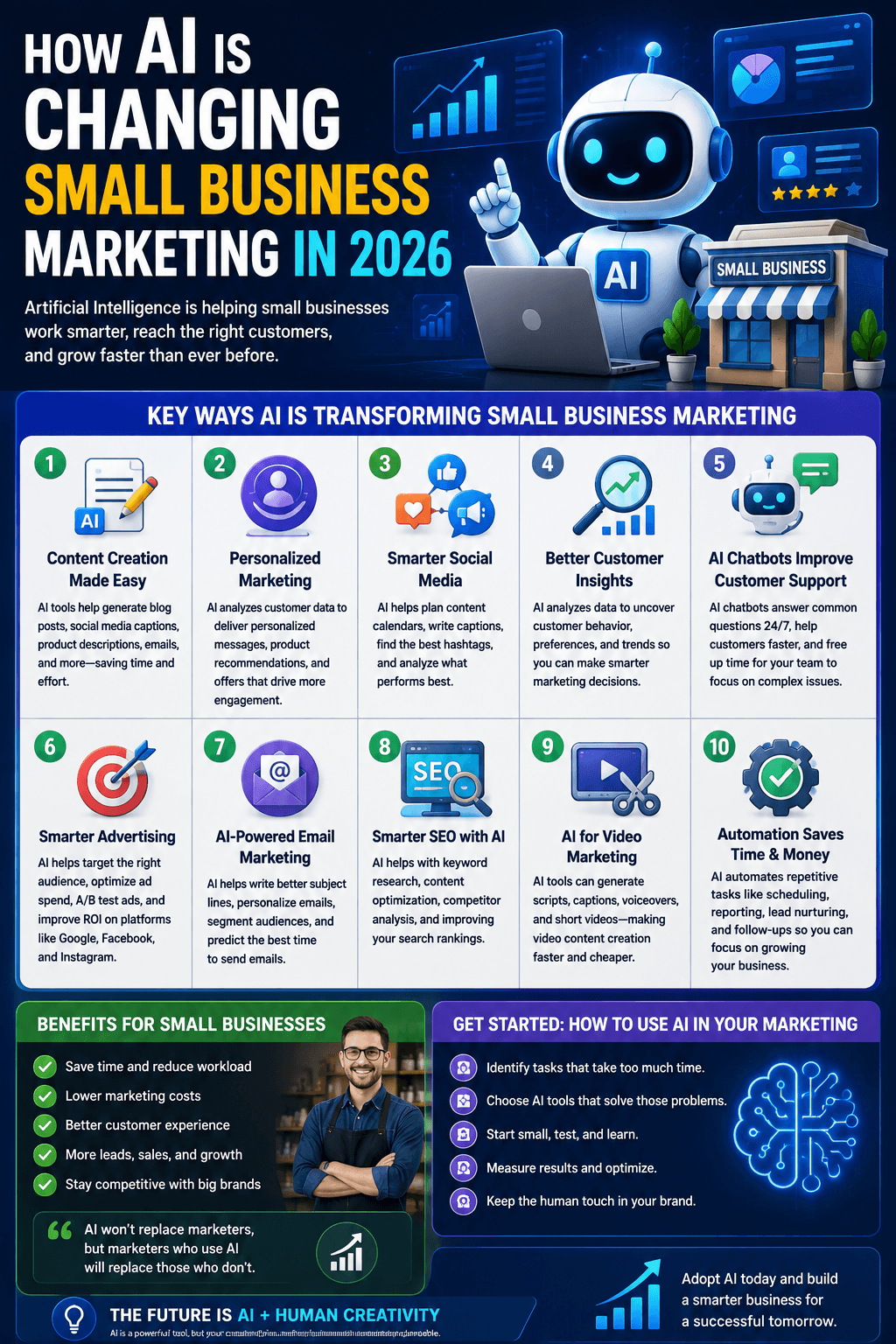
Artificial intelligence has become one of the most powerful tools in digital marketing. Businesses are using AI to create personalized customer experiences, automate repetitive tasks, analyze customer behavior, and improve advertising performance.
AI-powered chatbots provide instant customer support, while predictive analytics helps marketers understand purchasing patterns and customer preferences. Content creation tools are also helping businesses produce blogs, email campaigns, and social media posts more efficiently.
Companies that integrate AI into their marketing strategies can improve productivity while delivering more relevant content to their audiences.
Personalized Marketing Is Becoming Essential
Consumers increasingly expect brands to understand their interests and preferences.
Businesses are using customer data to deliver personalized emails, product recommendations, website experiences, and targeted advertising campaigns. Personalized marketing helps improve customer engagement, increase conversion rates, and build long-term loyalty.
Instead of sending the same message to everyone, successful brands are creating customized experiences based on customer behavior and purchase history.
Short-Form Video Continues to Dominate
Video content remains one of the most effective digital marketing tools.
Platforms featuring short-form videos continue attracting millions of daily users, encouraging brands to create engaging visual content that captures attention within seconds.
Educational videos, product demonstrations, customer testimonials, behind-the-scenes content, and industry insights are helping businesses build stronger relationships with their audiences.
Brands investing in high-quality video marketing often experience higher engagement and improved brand recognition.
Voice Search Optimization Is Growing
With the increasing popularity of smart speakers and voice assistants, more consumers are using voice search to find products and services online.
Businesses are optimizing their websites using conversational keywords and answering common customer questions to improve visibility in voice search results.
Voice search optimization is becoming an important part of modern SEO strategies as search behavior continues evolving.
Influencer Marketing Continues to Deliver Results
Consumers often trust recommendations from creators more than traditional advertisements.
Brands are partnering with industry experts, content creators, and niche influencers to reach highly engaged audiences. Micro-influencers, in particular, continue generating strong engagement because of their authentic relationships with followers.
Successful influencer campaigns focus on building trust rather than simply promoting products.
First-Party Data Is More Valuable Than Ever
As privacy regulations evolve and third-party cookies continue disappearing, businesses are placing greater emphasis on collecting first-party customer data.
Email subscribers, loyalty programs, customer accounts, surveys, and website interactions provide valuable insights while respecting consumer privacy.
Brands that build strong relationships with customers can create more effective marketing campaigns using reliable first-party data.
Search Engine Optimization Remains Critical
SEO continues to play a major role in digital marketing success.
Businesses are creating high-quality content, improving website speed, optimizing for mobile devices, and focusing on user experience to improve search engine rankings.
Long-form articles, educational resources, and helpful content continue attracting organic traffic while establishing brand authority.
SEO remains one of the most cost-effective long-term marketing strategies.
Social Commerce Is Expanding
Consumers increasingly purchase products directly through social media platforms.
Integrated shopping features allow customers to discover products, read reviews, and complete purchases without leaving their favorite social apps.
Businesses that combine engaging content with seamless shopping experiences can increase conversions while reaching new audiences.
Data Analytics Drives Better Decisions
Modern marketing depends heavily on data.
Businesses are using analytics platforms to measure campaign performance, monitor customer engagement, identify successful marketing channels, and improve return on investment.
Data-driven decision-making helps companies allocate marketing budgets more effectively while continuously improving campaign performance.
Building Customer Trust
Consumers increasingly choose brands they trust.
Transparent communication, authentic storytelling, positive customer experiences, strong cybersecurity, and responsible data practices all contribute to long-term customer relationships.
Businesses that consistently deliver value while maintaining customer trust are more likely to build loyal communities and sustainable growth.
Looking Ahead
Digital marketing will continue evolving as artificial intelligence, automation, privacy regulations, and changing consumer behavior reshape the industry.
Businesses that remain flexible, embrace innovation, and prioritize customer experience will be better positioned to succeed in the competitive digital marketplace.
Rather than relying on a single marketing channel, successful brands will combine SEO, content marketing, social media, email marketing, paid advertising, and data analytics into an integrated strategy.
Conclusion
Digital marketing in 2026 is more intelligent, personalized, and data-driven than ever before. Artificial intelligence, video marketing, SEO, influencer partnerships, voice search, and first-party data are helping businesses connect with customers in meaningful ways.
Brands that embrace these emerging trends while focusing on delivering real value will strengthen their competitive position, increase customer loyalty, and achieve sustainable business growth in the years ahead.
FAQs: Top Digital Marketing Trends Every Brand Should Watch in 2026
1. What are the biggest digital marketing trends in 2026?
The biggest trends include AI-powered marketing, voice search optimization, short-form video content, influencer partnerships, first-party data strategies, personalized customer experiences, social commerce, and predictive analytics.
2. Why is AI becoming essential in digital marketing?
AI helps businesses automate campaigns, personalize content, analyze customer behavior, improve targeting, generate marketing copy, optimize advertisements, and increase overall marketing efficiency.
3. How is personalization changing digital marketing?
Brands are using customer data and AI to deliver personalized emails, product recommendations, advertisements, and website experiences that improve engagement and conversion rates.
4. What role does short-form video play in marketing?
Short-form videos on platforms like TikTok, Instagram Reels, and YouTube Shorts continue to drive high engagement, helping brands increase visibility, educate audiences, and boost sales.
5. Why is first-party data becoming more important?
As third-party cookies are phased out, businesses rely more on customer data collected directly through websites, apps, loyalty programs, and email subscriptions to create targeted marketing campaigns.
6. How does voice search affect SEO strategies?
Voice searches are typically more conversational than text searches. Businesses should optimize content with natural language, long-tail keywords, and FAQ sections to improve visibility in voice search results.
7. What is social commerce?
Social commerce allows consumers to discover and purchase products directly within social media platforms such as Instagram, Facebook, TikTok, and Pinterest without leaving the app.
8. How are influencers evolving in 2026?
Brands are increasingly partnering with micro- and nano-influencers who often have highly engaged audiences and stronger trust among followers compared to larger influencers.
9. Why is content marketing still important?
High-quality content builds trust, improves search engine rankings, educates customers, generates leads, and supports long-term brand authority across digital channels.
10. How does predictive analytics improve marketing?
Predictive analytics uses AI and historical data to forecast customer behavior, optimize marketing budgets, identify trends, and deliver more effective campaigns.
11. What is conversational marketing?
Conversational marketing uses AI chatbots, live chat, messaging apps, and virtual assistants to communicate with customers in real time, improving engagement and customer satisfaction.
12. How can brands improve customer engagement in 2026?
Businesses can improve engagement by creating interactive content, personalizing communications, responding quickly to customer inquiries, and delivering consistent experiences across multiple channels.
13. Is email marketing still effective?
Yes. Email marketing remains one of the highest-return digital marketing channels, especially when combined with AI-driven personalization, automation, and customer segmentation.
14. How is AI changing search engine optimization (SEO)?
AI helps marketers identify keyword opportunities, optimize content, analyze competitors, automate technical SEO tasks, and create search-focused content that aligns with user intent.
15. Why is omnichannel marketing important?
Omnichannel marketing provides customers with a seamless experience across websites, social media, email, mobile apps, and physical stores, strengthening brand loyalty and increasing conversions.
16. What is the importance of privacy-focused marketing?
Consumers increasingly value data privacy. Businesses must follow privacy regulations, use transparent data collection practices, and build trust through ethical marketing strategies.
17. How does marketing automation benefit businesses?
Marketing automation saves time by handling repetitive tasks such as email campaigns, lead nurturing, social media scheduling, customer segmentation, and performance reporting.
18. What metrics should marketers track in 2026?
Key performance indicators (KPIs) include website traffic, conversion rate, customer acquisition cost (CAC), return on investment (ROI), engagement rate, click-through rate (CTR), and customer lifetime value (CLV).
19. How can small businesses keep up with digital marketing trends?
Small businesses can adopt affordable AI tools, invest in SEO, create valuable content, focus on local marketing, leverage social media, and continuously analyze campaign performance to stay competitive.
20. What is the future of digital marketing beyond 2026?
The future of digital marketing will be driven by AI-powered personalization, immersive technologies, predictive analytics, voice and visual search, privacy-first strategies, automation, and deeper customer engagement across digital platforms.