Digital marketing continues to be one of the most effective ways for businesses to reach customers, build brand awareness, and increase sales. In 2026, however, the digital landscape is changing quickly. Artificial intelligence, search evolution, short-form video, personalization, and data-driven marketing are becoming increasingly important.
Whether you run a small business, an online store, a startup, or an established company, the right digital marketing strategy can help you attract the right audience without wasting time and money.
Here are some of the most effective digital marketing strategies businesses can use in 2026.
1. Focus on SEO
Search engine optimization remains an important source of long-term organic traffic.
Businesses should create useful, original content that answers real customer questions rather than simply publishing content to target keywords.
Effective SEO in 2026 includes:
Search intent optimization
Helpful and original content
Technical SEO
Mobile optimization
Internal linking
High-quality backlinks
Local SEO
Strong page experience
Businesses should also consider how their content appears in AI-powered search experiences and answer engines.
2. Use AI to Improve Marketing
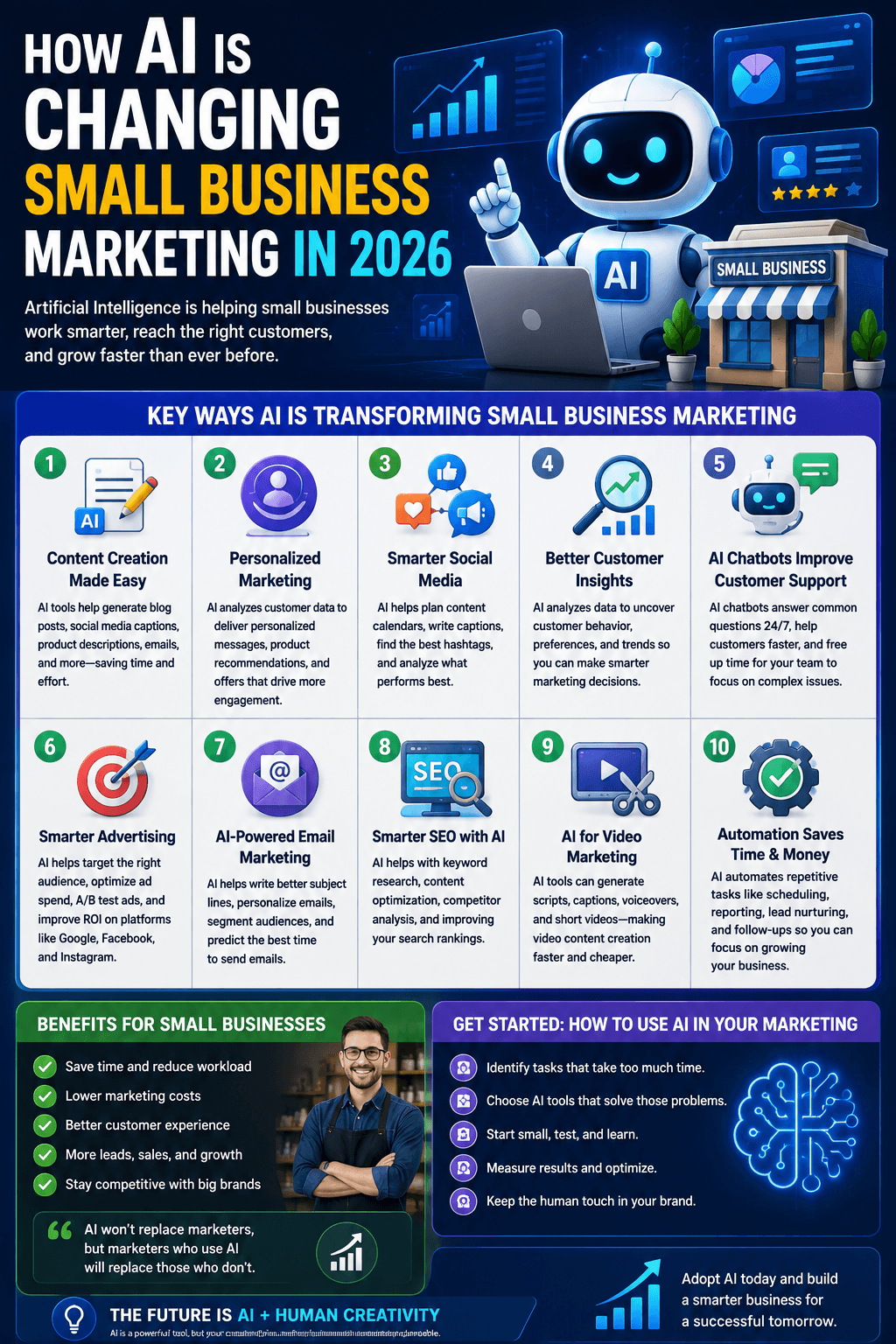
AI can help marketing teams work faster and analyze information more efficiently.
Businesses can use AI for:
Content brainstorming
Audience research
Customer segmentation
Email personalization
Ad copy variations
Content repurposing
Marketing analytics
Customer support
Campaign optimization
The best results come from combining AI efficiency with human creativity, expertise, and review.
3. Create High-Quality Content
Content marketing remains a powerful way to build trust and attract potential customers.
Instead of producing large quantities of generic content, businesses should focus on content that provides genuine value.
Useful formats include:
Blog posts
Tutorials
Case studies
Guides
Videos
Infographics
Customer stories
Industry reports
FAQs
A strong content strategy should answer the questions customers have before they decide to buy.
4. Invest in Short-Form Video
Short-form video continues to be an effective format for reaching audiences on social platforms.
Businesses can create videos that demonstrate products, answer questions, share tips, explain services, or show behind-the-scenes content.
You do not necessarily need expensive equipment. A smartphone, good lighting, clear audio, and useful ideas can be enough to get started.
5. Build a Strong Social Media Strategy
Social media should not simply be a place to post advertisements.
Businesses can use social platforms to educate audiences, demonstrate expertise, communicate with customers, collect feedback, and build communities.
The best platform depends on your target audience. Rather than trying to maintain a presence everywhere, focus on the channels that are most relevant to your customers.
6. Use Email Marketing
Email marketing remains valuable because businesses can communicate directly with people who have already shown interest.
Effective email strategies include:
Welcome sequences
Educational newsletters
Product recommendations
Special offers
Abandoned-cart reminders
Customer updates
Personalized campaigns
Businesses should prioritize relevant and useful emails instead of sending excessive promotional messages.
7. Personalize the Customer Experience
Customers increasingly expect brands to understand their needs.
Personalization can include recommending relevant products, creating targeted email campaigns, showing appropriate content, and tailoring offers to different customer groups.
AI and customer data can make personalization easier, but businesses should always respect privacy and applicable data-protection requirements.
8. Strengthen Local SEO
For businesses serving specific geographic areas, local SEO can be extremely valuable.
Optimize your online presence with accurate business information, relevant location-based content, customer reviews, and consistent contact details.
A well-maintained business profile can help potential customers discover your company when searching for nearby products or services.
9. Use Paid Advertising Strategically
Paid advertising can generate traffic quickly, but businesses need to manage budgets carefully.
Platforms such as search and social advertising can help companies target specific audiences and measure campaign performance.
Start with a clear objective, test different messages, monitor conversions, and improve campaigns based on actual performance rather than clicks alone.
10. Optimize for Conversions
Getting visitors to your website is only part of digital marketing.
Businesses also need to turn visitors into leads or customers.
Conversion optimization can involve:
Clear calls to action
Simple navigation
Faster page loading
Trust signals
Customer reviews
Easy checkout
Mobile-friendly design
Clear product descriptions
Small improvements to a website can sometimes have a significant effect on conversion rates.
11. Build Trust Through Reviews and Social Proof
People often look at reviews before purchasing a product or service.
Encourage satisfied customers to leave genuine feedback and display relevant testimonials where appropriate.
Case studies can be particularly powerful because they demonstrate how your product or service helped a real customer solve a problem.
Never manufacture reviews or use misleading testimonials.
12. Track Marketing Performance
Digital marketing provides access to large amounts of performance data.
Businesses should track metrics that connect marketing activity to business goals.
Important metrics can include:
Website traffic
Leads
Conversion rate
Customer acquisition cost
Return on advertising spend
Email engagement
Sales
Customer retention
The goal is not to collect every possible metric. Focus on the numbers that help you make better decisions.
13. Repurpose Existing Content
Creating new content constantly can be time-consuming.
A better strategy is to repurpose valuable content into multiple formats.
For example, one detailed article can become:
Several social media posts
A short video
An email newsletter
An infographic
A carousel
A podcast discussion
AI tools can help speed up this process while humans maintain quality and brand consistency.
14. Focus on Customer Retention
Acquiring a new customer can be more expensive than keeping an existing one.
Businesses should therefore invest in customer experience, loyalty programs, useful follow-up communication, personalized offers, and responsive support.
Happy customers can also become a source of repeat purchases and referrals.
15. Develop a Multi-Channel Strategy
Customers rarely follow a single path from discovering a brand to making a purchase.
Someone might discover a company through search, watch its videos, visit its website, read reviews, receive an email, and finally make a purchase.
A connected multi-channel strategy allows businesses to remain visible throughout this journey.
How to Build a Digital Marketing Strategy in 2026
You do not need to implement every strategy at once.
Start with these steps:
Step 1: Define your goal.
Decide whether you want more leads, sales, traffic, brand awareness, or customer retention.
Step 2: Understand your audience.
Identify your ideal customers, their problems, preferences, and buying behavior.
Step 3: Choose your channels.
Focus on the platforms where your target audience is most active.
Step 4: Create useful content.
Answer customer questions and demonstrate your expertise.
Step 5: Test and measure.
Track performance and identify what produces meaningful business results.
Step 6: Improve continuously.
Digital marketing changes constantly, so update your strategy based on customer behavior and performance data.
Conclusion
The best digital marketing strategy in 2026 is not about using every available platform or technology. It is about choosing the right combination of strategies for your audience and business goals.
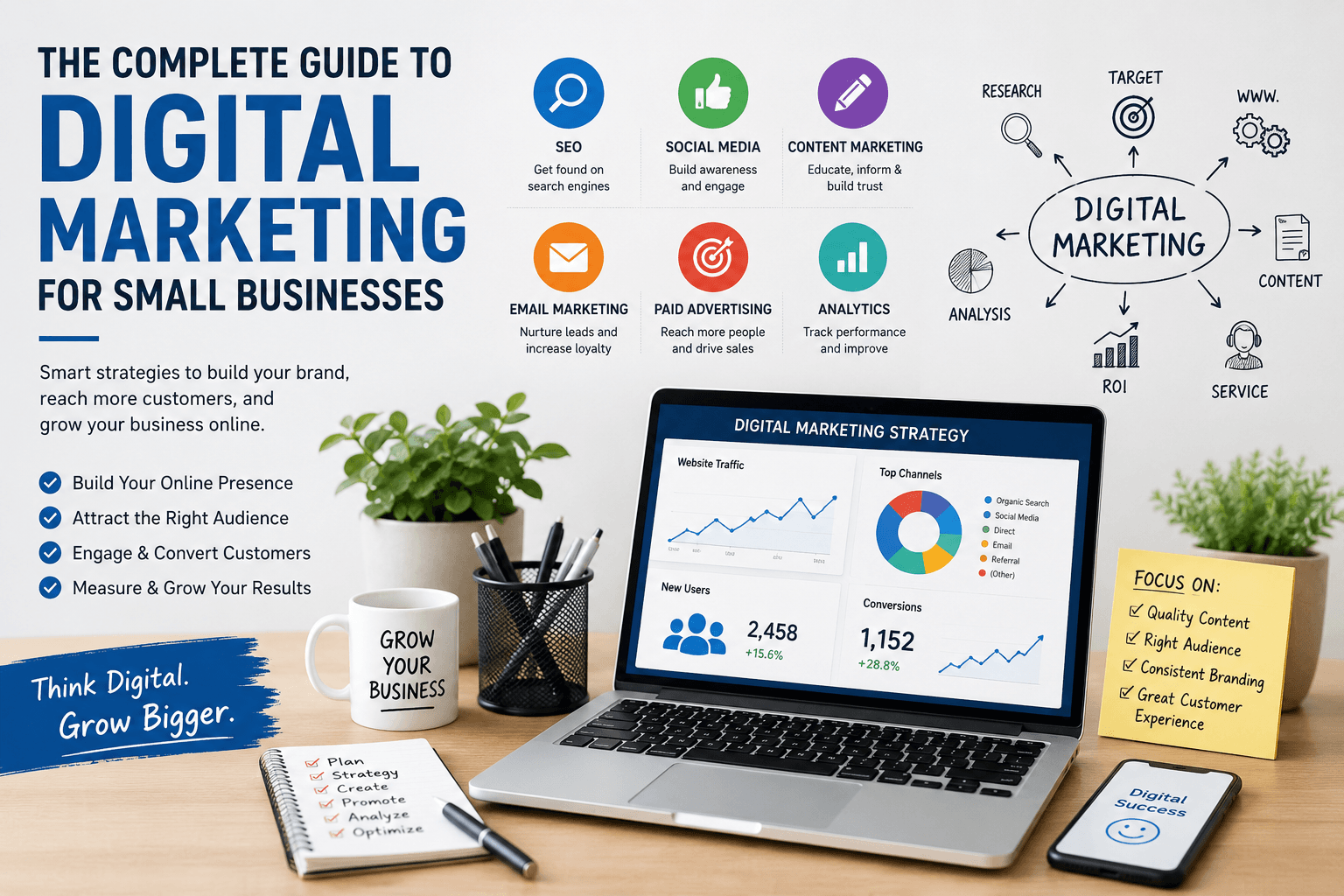
SEO, AI, content marketing, short-form video, social media, email marketing, personalization, local SEO, paid advertising, and conversion optimization can all contribute to sustainable growth.
Businesses that consistently provide value, understand their customers, measure results, and adapt to changing digital behavior will be better positioned to compete and grow in 2026.
Frequently Asked Questions
1. What is the best digital marketing strategy in 2026?
There is no single strategy that works for every business. A combination of SEO, valuable content, social media, email marketing, AI-assisted marketing, and conversion optimization can create a strong foundation.
2. Is SEO still important in 2026?
Yes. SEO can provide long-term organic visibility when businesses create useful content, maintain technically sound websites, and optimize for evolving search experiences.
3. How can AI help with digital marketing?
AI can assist with content ideas, audience analysis, personalization, campaign optimization, customer support, marketing automation, and data analysis.
4. Is social media marketing still effective?
Yes. Social media can help businesses build awareness, engage customers, showcase products, and create communities. Success depends heavily on choosing the right platform and providing useful content.
5. Is email marketing still worth using?
Yes. Email allows businesses to communicate directly with interested customers and can be effective for nurturing leads, promoting products, and encouraging repeat purchases.
6. What type of content should businesses create?
Businesses should create content that addresses customer questions and problems. Tutorials, guides, case studies, videos, FAQs, and educational articles are useful formats.
7. How important is video marketing in 2026?
Video is an important marketing format because it can communicate information quickly and create engaging customer experiences. Short-form videos are particularly useful for social media discovery.
8. What is local SEO?
Local SEO helps businesses become more visible to customers searching for products or services in a particular geographic area. It is especially important for businesses with physical locations or local service areas.
9. How can a small business compete with larger companies online?
Small businesses can compete by focusing on a specific audience, creating specialized content, providing excellent customer service, building trust, and developing a strong local or niche presence.
10. How much should a business spend on digital marketing?
There is no universal budget. Spending should depend on business goals, industry, revenue, competition, and expected return. Start with a manageable budget and increase spending when campaigns demonstrate positive results.
11. What digital marketing metrics should I track?
Useful metrics include conversions, leads, sales, customer acquisition cost, conversion rate, website traffic, email engagement, and return on advertising spend.
12. How can I improve my website's conversion rate?
Improve page speed, simplify navigation, use clear calls to action, provide strong product or service information, display genuine reviews, optimize for mobile devices, and make purchasing or contacting the business easy.
13. Should businesses use paid advertising and SEO together?
Yes. SEO can build long-term organic visibility, while paid advertising can provide faster exposure. Using both can create a more balanced marketing strategy.
14. How often should a business post on social media?
There is no universal number. Consistent, high-quality content is generally more valuable than posting frequently without a clear purpose. Choose a schedule your team can maintain.
15. What is the future of digital marketing?
Digital marketing is likely to become increasingly personalized, automated, AI-assisted, and data-driven. Businesses will need to adapt to changing search behavior while continuing to prioritize useful content, customer trust, privacy, and strong experiences.