Digital marketing has become one of the most effective ways for small businesses to reach customers, build brand awareness, and generate sales. Unlike traditional advertising, digital marketing allows businesses to connect with specific audiences, measure results, and adjust their strategies based on performance.
For small businesses with limited budgets, having a clear digital marketing strategy can make a significant difference. You do not need to use every platform or spend a large amount of money. The key is choosing the right channels, understanding your customers, and consistently providing useful content.
What Is Digital Marketing?
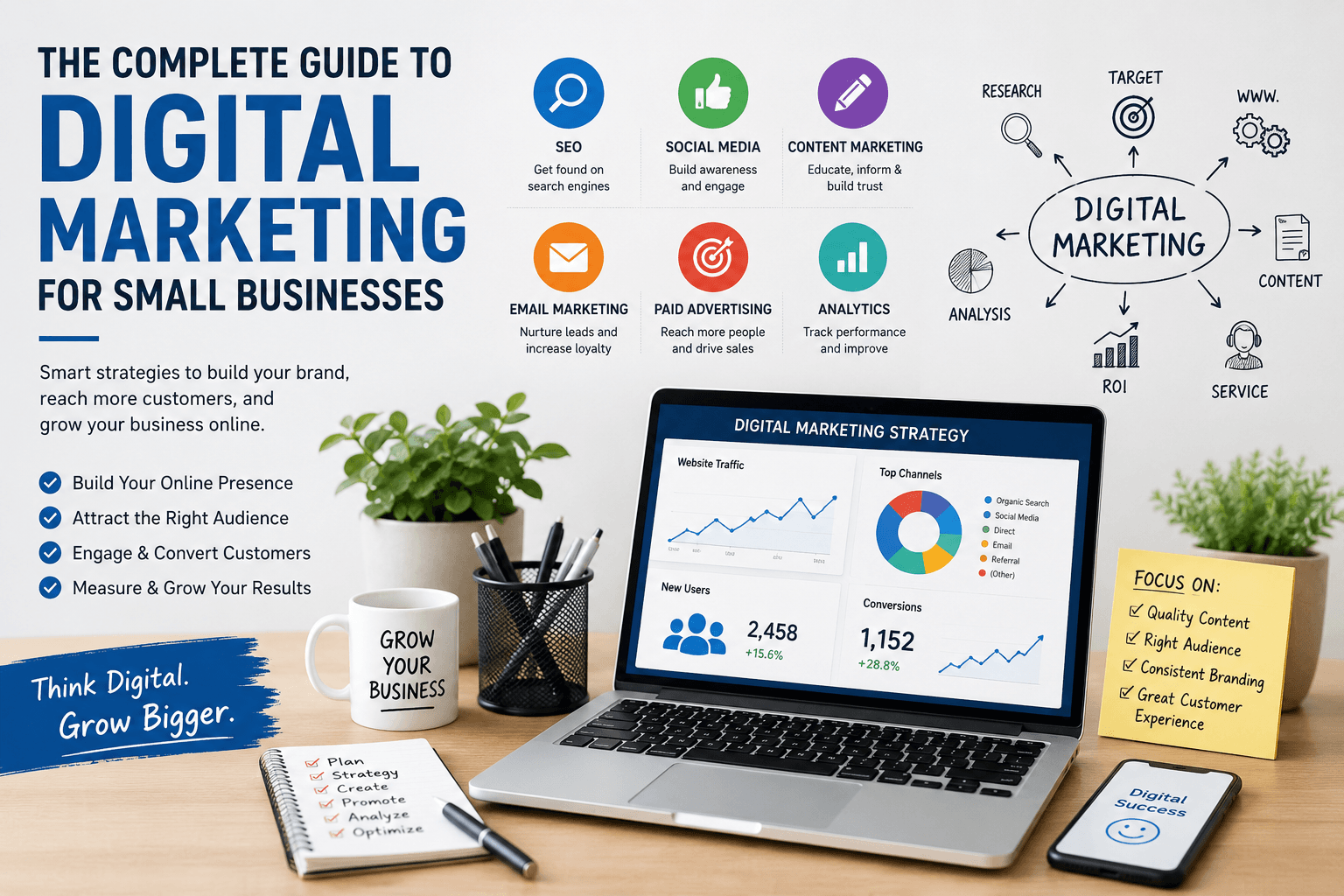
Digital marketing refers to promoting products, services, or brands through online channels.
Common digital marketing channels include:
Search engine optimization (SEO)
Content marketing
Social media marketing
Email marketing
Paid advertising
Video marketing
Online reviews
Influencer marketing
Affiliate marketing
A successful strategy usually combines several of these methods rather than depending on one channel.
Why Digital Marketing Matters for Small Businesses
Small businesses often compete with larger companies that have bigger advertising budgets. Digital marketing can help reduce that gap by allowing smaller brands to target specific audiences and build relationships directly with potential customers.
Some major benefits include:
Greater Online Visibility
A strong online presence makes it easier for potential customers to discover your business when searching for products, services, or information.
Cost-Effective Marketing
Many digital marketing activities can be started with relatively small budgets. Businesses can also choose exactly how much they want to spend on paid campaigns.
Targeted Audiences
Digital advertising platforms can allow businesses to target audiences based on factors such as interests, demographics, location, or online behavior.
Measurable Results
Digital marketing provides access to performance data such as website visits, clicks, conversions, engagement, and sales.
Stronger Customer Relationships
Social media, email, and useful content allow businesses to communicate with customers beyond a single transaction.
1. Build a Professional Business Website
Your website is often the foundation of your digital marketing strategy.
A professional website should clearly explain:
What your business offers
Who your products or services are for
Why customers should choose you
How customers can contact you
How customers can make a purchase or request information
Your website should also be mobile-friendly, fast, secure, and easy to navigate.
Include clear calls to action such as Buy Now, Request a Quote, Book a Consultation, or Contact Us depending on your business.
2. Invest in Search Engine Optimization
SEO helps your website appear in relevant search engine result so without requiring you to pay for every visitor.
Start by researching keywords your potential customers use. Then create useful pages and articles that answer their questions.
Important SEO practices include:
Keyword research
Optimized page titles
Useful meta descriptions
Clear headings
Internal linking
Fast page speed
Mobile optimization
Helpful content
Technical SEO
Quality backlinks
SEO is generally a long-term strategy. Consistency is more important than expecting immediate results.
3. Create Valuable Content
Content marketing can help small businesses attract people who are researching problems, products, and solutions.
Examples include:
Blog articles
How-to guides
Tutorials
Case studies
Videos
Infographics
FAQs
Industry reports
Customer stories
For example, a web design company could publish an article about how to create a business website, while a fitness business could publish educational content about healthy exercise routines.
The goal is to create content that is genuinely useful to your target audience.
4. Use Social Media Strategically
Social media can help small businesses build awareness and communicate directly with customers.
Popular platforms include:
Facebook
Instagram
LinkedIn
TikTok
YouTube
Pinterest
However, you do not need to be active on every platform.
Choose platforms based on where your target customers spend their time.
A business selling visually appealing products may benefit from image- and video-focused platforms, while a B2B company may find professional networks more valuable.
5. Develop an Email Marketing Strategy
Email marketing remains a useful way to maintain relationships with customers.
Businesses can use email to send:
Product announcements
Special offers
Newsletters
Educational content
Event invitations
Helpful tips
Personalized recommendations
Build your email list through legitimate opt-in methods and provide subscribers with a clear reason to stay subscribed.
Avoid sending excessive promotional messages. A balanced mix of useful information and relevant offers can provide a better customer experience.
6. Try Local SEO
Local SEO is especially important for businesses that serve customers in a specific geographic area.
Examples include:
Restaurants
Salons
Dentists
Repair services
Retail stores
Consultants
Local agencies
Make sure your business information is accurate and consistent across important online listings. Encourage satisfied customers to leave genuine reviews and create location-relevant website content where appropriate.
Local search visibility can help customers find businesses when they are actively looking for nearby products or services.
7. Use Online Reviews to Build Trust
Customers often research a business before making a purchase.
Positive, authentic reviews can help establish credibility.
Encourage satisfied customers to share honest feedback. Make it easy for them to leave reviews on relevant platforms.
If a customer leaves a negative review, respond professionally and try to resolve the underlying issue rather than becoming defensive.
A business's response to criticism can also influence how potential customers perceive it.
8. Experiment With Paid Advertising
Organic marketing can take time. Paid advertising can help businesses reach potential customers more quickly.
Common options include:
Search advertising
Social media advertising
Display advertising
Video advertising
Retargeting campaigns
Start with a manageable budget and test different messages, audiences, and landing pages.
Do not assume that increasing your advertising budget will automatically increase profits. Track conversions and calculate whether campaigns are generating a worthwhile return.
9. Create Short-Form Video Content
Video has become an important part of online marketing.
Small businesses can create simple videos without expensive equipment.
Examples include:
Product demonstrations
Behind-the-scenes videos
Customer FAQs
Tutorials
Quick tips
Business introductions
Before-and-after examples
Authentic and useful videos can often be more effective than overly polished promotional content.
10. Use Content to Build Authority
Businesses can strengthen their reputation by demonstrating expertise.
Instead of constantly saying that your company is the best, show your knowledge through useful resources.
For example, a cybersecurity company could publish security guides, while an accounting firm could create educational content about small business finances.
Over time, valuable educational content can help position a business as a trusted source of information.
11. Understand Your Target Audience
One of the most important parts of digital marketing is knowing who you are trying to reach.
Identify:
Customer needs
Common problems
Buying motivations
Preferred communication channels
Budget considerations
Questions customers frequently ask
Create customer profiles to help guide your messaging.
When you understand your audience, it becomes easier to create relevant content and advertising.
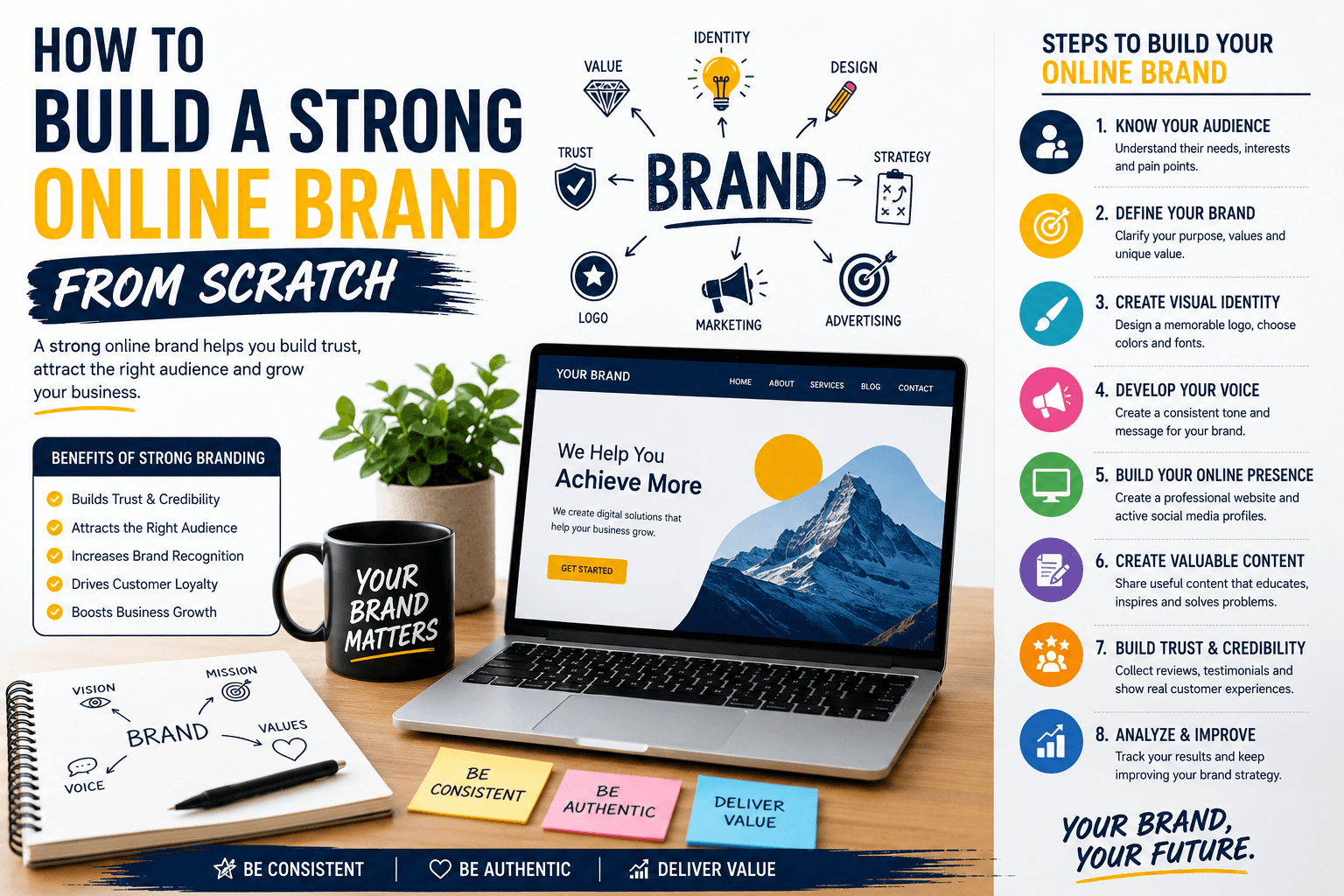
12. Build a Strong Brand Identity
Digital marketing is not only about getting clicks. It is also about building recognition.
Maintain consistency across your:
Logo
Colors
Website
Social media profiles
Content
Messaging
Customer communications
A consistent brand can make your business easier to recognize and remember.
13. Use Analytics to Measure Performance
Digital marketing produces large amounts of data. Use that information to understand what is working.
Monitor metrics such as:
Website traffic
Organic search traffic
Social media engagement
Email open rates
Click-through rates
Leads
Sales
Conversion rates
Customer acquisition cost
Do not measure success only by likes or followers. Focus on metrics that connect marketing activity to actual business goals.
14. Focus on Conversion Optimization
Getting visitors to your website is only one part of digital marketing. You also need to make it easy for visitors to take the next step.
Improve conversions by:
Using clear calls to action
Simplifying forms
Improving landing pages
Showing customer reviews
Explaining benefits clearly
Reducing unnecessary distractions
Making checkout easier
Small changes to a website can sometimes produce meaningful improvements in conversion rates.
15. Create a Consistent Marketing Schedule
Consistency is more important than trying to publish everything at once.
Create a simple content calendar that includes:
Blog posts
Social media posts
Emails
Videos
Promotional campaigns
Plan content around customer questions, seasonal opportunities, industry events, and business goals.
A realistic schedule is better than creating an ambitious plan that becomes impossible to maintain.
Common Digital Marketing Mistakes
Small businesses can waste time and money by making avoidable mistakes.
Trying Every Platform
Being everywhere can spread your resources too thin. Focus on channels that matter to your audience.
Ignoring SEO
Paid advertising can generate traffic, but SEO can provide long-term visibility.
Creating Content Without a Strategy
Publishing random content does not necessarily produce business results. Each piece should have a clear purpose.
Focusing Only on Promotion
Customers generally do not want constant sales messages. Educational and useful content can help build trust.
Not Measuring Results
Without tracking performance, it is difficult to know which marketing activities deserve more investment.
Giving Up Too Quickly
Many digital marketing strategies require time before meaningful results appear. Test, learn, improve, and continue.
How Much Should a Small Business Spend on Digital Marketing?
There is no universal marketing budget that works for every business.
The appropriate amount depends on factors such as:
Business size
Industry
Revenue
Competition
Marketing goals
Customer acquisition costs
Available resources
Start with a realistic budget and track the return from each major channel.
As you learn which strategies generate the best results, you can gradually increase investment in those areas.
A Simple Digital Marketing Strategy for Beginners
If you are starting from scratch, keep your strategy simple.
Step 1: Build a professional website.
Step 2: Define your target audience.
Step 3: Research relevant keywords.
Step 4: Create useful website content.
Step 5: Establish a presence on one or two relevant social platforms.
Step 6: Collect customer reviews and build trust.
Step 7: Start an email list.
Step 8: Test small paid advertising campaigns if appropriate.
Step 9: Track results.
Step 10: Improve your strategy based on the data.
This approach allows small businesses to build their online presence without trying to do everything simultaneously.
Final Thoughts
Digital marketing gives small businesses powerful opportunities to compete, reach new customers, and build lasting relationships online.
The most successful strategies are not necessarily the ones with the largest budgets. They are the ones that understand the target audience, provide genuine value, maintain consistency, and use performance data to make better decisions.
Start with the fundamentals: a strong website, useful content, SEO, social media, email marketing, and reliable analytics. Once those foundations are established, experiment with additional channels such as paid advertising and video marketing.
Digital marketing is an ongoing process. By continuously testing, learning, and improving, small businesses can build a stronger online presence and create sustainable growth over time.