

Introduction
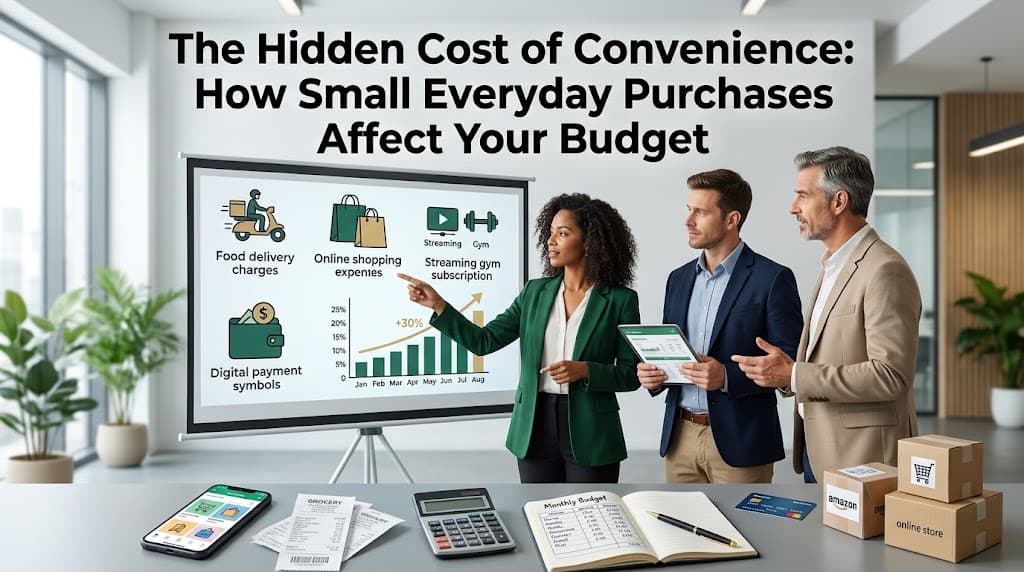
Convenience has become an essential part of modern life. From ordering food through mobile applications to paying for streaming subscriptions and purchasing everyday items with a single click, consumers can save time with very little effort. However, these small conveniences can gradually become expensive habits.
A delivery fee here, a monthly subscription there, and an occasional online purchase may seem insignificant individually. Over time, however, repeated spending can put pressure on a household budget, reduce savings, and make financial goals harder to achieve.
The hidden cost of convenience is not simply about spending money. It is about understanding how everyday decisions influence financial security. By identifying unnecessary expenses and making thoughtful purchasing choices, consumers can enjoy modern conveniences without losing control of their budgets.
This article explores how convenience spending works, why it can become difficult to manage, and how practical changes can help people make better financial decisions.
What Is the Hidden Cost of Convenience?
The hidden cost of convenience refers to the additional money people spend to save time, reduce effort, or make everyday activities easier.
Examples include paying delivery charges instead of collecting an order, purchasing ready-made meals instead of cooking, maintaining unused subscriptions, and choosing express shipping for items that are not urgently needed.
These services are not necessarily bad. Convenience can be valuable for busy professionals, caregivers, students, and people with mobility limitations. The problem arises when small expenses become automatic and consumers stop evaluating whether the benefits justify the cost.
Understanding the difference between useful convenience and unnecessary spending is the first step toward better money management.
How Small Purchases Become Big Expenses
1. Food Delivery and Takeaway Orders
Food delivery platforms make meals accessible within minutes. However, the total cost can include delivery charges, service fees, small-order fees, taxes, and tips, depending on the platform and location.
Ordering occasionally may fit comfortably within a budget. Ordering several times a week can create a significant recurring expense.
Practical tip: Plan meals in advance and keep simple ingredients available at home. Reserve delivery for occasions when the convenience is genuinely worth the additional cost.
2. Subscriptions That Continue Automatically
Streaming services, music platforms, premium applications, cloud storage, and digital memberships often charge recurring fees.
Because individual subscriptions may appear inexpensive, consumers can forget how many they have activated. Some may continue paying for services they rarely use.
Practical tip: Review your bank or payment statements every month. Cancel subscriptions that no longer provide enough value, and consider rotating entertainment services instead of paying for several simultaneously.
3. Impulse Buying Through Shopping Apps
Shopping platforms make browsing and purchasing remarkably easy. Personalized recommendations, limited-time promotions, saved payment information, and one-click checkout can reduce the time available for careful consideration.
A discounted product is not a saving if you did not need it in the first place.
Practical tip: Add nonessential items to a wishlist and wait 24 to 48 hours before purchasing. This pause can help separate genuine needs from temporary excitement.
4. Paying Extra for Speed
Express shipping, premium delivery, same-day services, and urgent processing can all carry additional costs.
Sometimes these services are necessary. At other times, standard delivery or a little advance planning would work just as well.
Practical tip: Before paying for faster service, ask whether receiving the item earlier will provide a meaningful benefit.
Why Convenience Spending Is So Easy to Overlook
Small Amounts Feel Less Important
People often pay more attention to large purchases than to minor transactions. A single small fee may seem harmless, but repeated charges can add up.
For example, spending an extra 300 units of your local currency five times a week would equal 1,500 units weekly. Over 52 weeks, that would total 78,000 units.
This is an illustration, not an estimate of typical consumer spending. The actual amount depends on personal habits and local prices.
Digital Payments Can Feel Less Noticeable
Cash payments make money leaving your wallet physically visible. Digital payments are faster and more convenient, but they may make individual transactions easier to overlook.
Practical tip: Enable spending notifications, review transaction histories, and set weekly limits for discretionary purchases.
Marketing Encourages Immediate Decisions
Promotional messages, countdown timers, personalized recommendations, and free-delivery thresholds can encourage consumers to purchase quickly.
These offers may provide genuine value, but they can also encourage unnecessary spending.
Practical tip: Compare the final price rather than focusing only on a discount or promotional message. Avoid adding unnecessary products simply to qualify for free delivery.
How Convenience Spending Affects Financial Goals
Reduced Savings
Money spent on unnecessary recurring purchases is money that cannot be used for savings or other priorities.
Even modest changes can free up funds for emergency savings, education, household expenses, or future plans.
Greater Financial Pressure
Households already dealing with high living costs may find recurring convenience expenses difficult to absorb. When budgets are tight, unplanned purchases can increase reliance on credit or leave less money available for essential bills.
Delayed Long-Term Goals
Regular discretionary spending may delay goals such as building an emergency fund, paying down debt, or saving for a major purchase.
The solution is not to eliminate every enjoyable expense. It is to decide which purchases deserve a place in the budget.
Practical Ways to Reduce the Hidden Cost of Convenience
1. Track Your Spending for 30 Days
Record your purchases for one month. Include delivery fees, subscriptions, takeaway orders, app purchases, convenience store visits, and express shipping.
Categorize spending into essentials, useful conveniences, and expenses you could reasonably avoid.
You may discover patterns that are difficult to notice when looking at individual transactions.
2. Set a Convenience Budget
Instead of banning all convenience spending, establish a realistic monthly allowance.
For example, you might allocate a fixed amount for takeaway meals, digital entertainment, and occasional delivery services. Adjust the figure to your income, essential expenses, and financial goals.
Once the allowance is used, consider waiting until the next budget period before making additional nonessential purchases.
3. Plan Ahead to Save Time and Money
Planning can reduce the need to pay extra for last-minute solutions.
Try preparing a weekly meal plan, keeping a shopping list, combining errands into one trip, and ordering household essentials before they run out.
A small amount of preparation can reduce both stress and avoidable expenses.
4. Calculate the Annual Cost of Recurring Charges
A monthly subscription may appear inexpensive, but multiplying its price by 12 reveals its yearly cost.
For example, a subscription costing 500 units per month totals 6,000 units annually. Reviewing several subscriptions together can provide a clearer picture of their combined financial impact.
5. Use a Waiting Rule for Nonessential Purchases
For items you do not urgently need, introduce a waiting period before buying.
A 24-hour pause may be enough for inexpensive items, while larger purchases may deserve several days of consideration.
During this time, ask yourself whether you genuinely need the product, whether you already own something similar, and whether the purchase supports your priorities.
6. Compare the Total Cost of Different Options
The cheapest option is not always the best, and the most convenient option is not always wasteful.
Compare the total price, time saved, reliability, quality, and personal circumstances. A delivery service may be worthwhile when someone is unwell or caring for a family member. Cooking at home may be more economical when time and facilities allow.
Make decisions based on actual value rather than following a rigid rule.
Can Convenience Actually Save Money?
Yes. Convenience is not automatically a financial problem.
Buying groceries online can help some people avoid unnecessary supermarket purchases. Meal-preparation services may reduce food waste for certain households. Digital banking can save travel costs, while reliable transport services may help someone reach work on time.
The key question is whether the service provides enough value to justify its total cost.
Evaluate convenience using three factors:
Financial cost: How much extra are you paying?
Time saved: Does the service meaningfully reduce the time required?
Practical value: Does it improve accessibility, safety, health, or daily responsibilities?
A useful convenience should support your life rather than quietly undermine your financial goals.
Conclusion
The hidden cost of convenience often comes from repeated decisions that seem insignificant on their own. Delivery fees, unused subscriptions, impulse purchases, and unnecessary upgrades can gradually reduce the money available for savings and essential expenses.
Fortunately, managing these costs does not require giving up every modern service. Start by tracking your spending, reviewing recurring charges, planning essential purchases, and setting a realistic budget for convenience.
The goal is not to make life unnecessarily difficult. It is to spend intentionally, pay for services that genuinely improve your life, and avoid expenses that provide little lasting value.
Frequently Asked Questions (FAQs)
1. What does the hidden cost of convenience mean?
It refers to extra expenses associated with saving time or effort, such as delivery fees, express shipping, takeaway meals, and recurring subscriptions. These costs can become significant when repeated frequently.
2. Why is convenience spending difficult to control?
Convenience spending often involves small, quick transactions. Digital payments, automatic renewals, and shopping applications can make it easier to overlook how much money is being spent over time.
3. How can I identify unnecessary convenience expenses?
Review your transactions for 30 days. Look for unused subscriptions, frequent delivery charges, impulse purchases, and premium services that provide little additional value.
4. Is food delivery always more expensive than cooking?
Not always. Costs depend on local prices, delivery fees, ingredients, household size, and food waste. Comparing the total cost of realistic alternatives helps you make an informed decision.
5. How can subscriptions affect my budget?
Multiple recurring subscriptions can reduce the money available for essentials and savings. Review them regularly and cancel services you rarely use or no longer need.
6. What is the 24-hour rule for shopping?
It means waiting at least 24 hours before making a nonessential purchase. The pause gives you time to decide whether the item is necessary and affordable.
7. Can small purchases really affect long-term savings?
Yes. Repeated expenses can accumulate over months and years. Redirecting some avoidable spending toward savings can help support emergency funds and other financial goals.
8. How do digital payments influence spending habits?
Digital payments make transactions fast and convenient, which may make spending less noticeable for some people. Transaction alerts and regular account reviews can improve awareness.
9. Should I stop using convenience services to save money?
No. The better approach is to evaluate which services provide meaningful value and which expenses can be reduced without harming your health, safety, or quality of life.
10. How can families reduce convenience spending?
Families can plan meals, prepare shopping lists, review subscriptions together, establish spending limits, and compare delivery costs with other available options.
11. What is a convenience budget?
A convenience budget is a planned amount of money reserved for services that save time or effort, such as takeaway meals and delivery. It helps prevent these expenses from interfering with essential financial priorities.
12. How can I avoid impulse purchases online?
Disable unnecessary promotional notifications, remove saved payment details if they encourage rushed purchases, use wishlists, and introduce a waiting period before checking out.
13. Are free-delivery offers always worth using?
No. If you spend more than necessary to qualify, the additional purchase may cost more than the delivery fee you avoided. Compare the final bill before accepting the offer.
14. Can convenience spending contribute to debt?
It can contribute to financial pressure when recurring discretionary expenses exceed available income, particularly if purchases are financed through credit. Monitoring spending and prioritizing essential payments can help reduce this risk.
15. What is the easiest way to start spending more intentionally?
Begin by reviewing your latest bank or payment statement and identifying three expenses you could reduce. Make small, realistic changes and check their impact at the end of the month.
16. How often should I review my subscriptions?
A monthly review is a useful habit. Also review subscriptions when introductory offers expire, prices change, or your household needs change.
17. Is buying ready-made food always a waste of money?
No. Ready-made food can be useful when time is limited or cooking is impractical. The important consideration is whether the cost fits your budget and provides sufficient value.
18. How can I calculate the yearly cost of convenience purchases?
Multiply a recurring weekly expense by 52 or a monthly expense by 12. For irregular purchases, add the actual transactions recorded over the year.
19. Can convenience help people with disabilities or limited mobility?
Absolutely. Delivery services, accessible transport, and other convenience tools can provide essential support and independence. Financial decisions should consider accessibility needs rather than focusing only on minimizing costs.
20. What is the most important lesson about convenience spending?
Convenience should be a deliberate choice. When you understand the total cost and the value received, you can enjoy useful services while protecting your budget and long-term financial goals.