
Introduction
What would happen if your salary stopped arriving next month? For some people, an unexpected job loss, delayed payment, reduced working hours, or sudden business slowdown can quickly turn ordinary expenses into serious financial challenges. Even people with stable jobs may face situations that disrupt their income without warning.
This uncertainty has encouraged more households and professionals to think about financial backup plans. Instead of relying entirely on one source of income, people are exploring emergency savings, transferable skills, freelance opportunities, and practical ways to reduce financial risk.
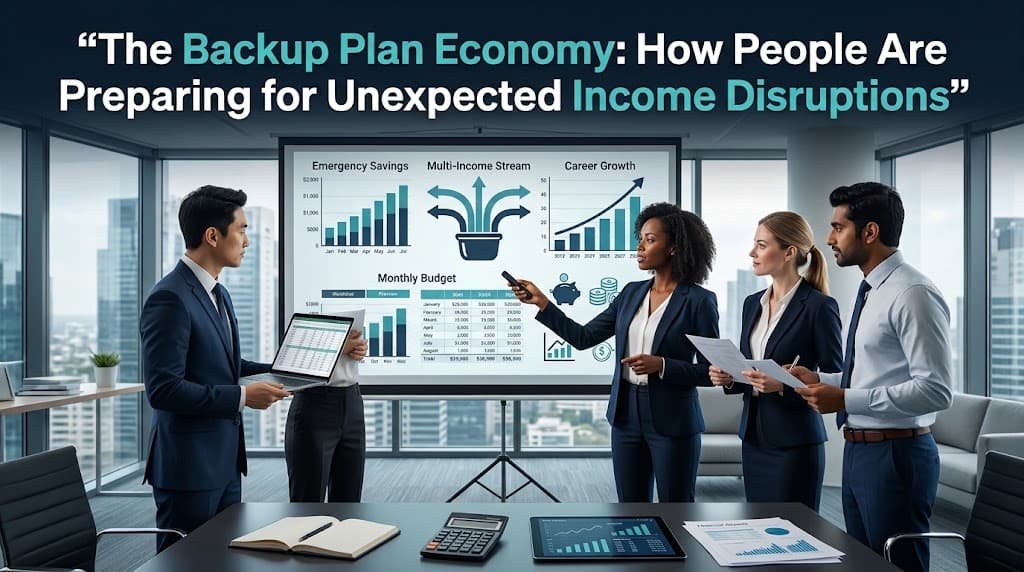
This shift can be described as the backup plan economy: a way of thinking about personal financial resilience in which people prepare for possible disruptions before they happen.
A backup plan does not mean expecting the worst or working constantly. It means building enough flexibility to respond to unexpected changes without making rushed financial decisions. This guide explains how to create a realistic plan, protect essential expenses, develop additional earning options, and prepare for a more uncertain financial future.
What Is the Backup Plan Economy?
The backup plan economy describes the growing importance of preparing for income uncertainty. People may have a main job, a small business, or freelance work, but they also consider what they would do if their usual earnings temporarily disappeared.
A backup plan can include several elements:
Emergency savings for essential expenses.
Skills that can be used across different jobs or industries.
A realistic secondary income option.
A plan for reducing nonessential spending.
Updated professional contacts and employment documents.
Protection against scams and financial emergencies.
The objective is not to eliminate every risk. That is impossible. Instead, the aim is to reduce the financial damage that an unexpected event could cause.
Why Income Disruptions Matter
1. Employment Can Change Unexpectedly
Businesses may restructure, reduce staff, change working hours, or close departments. Contract workers may experience gaps between projects, while employees in seasonal industries may have predictable periods of lower income.
Even when the wider economy is performing well, individual workers can face uncertainty.
Preparing in advance gives people more time to assess their options and search for suitable work rather than accepting the first available opportunity under pressure.
2. Freelancers and Small Businesses Face Irregular Payments
Independent workers may earn a reasonable amount overall but experience unpredictable payment schedules. A client might pay late, a project may be cancelled, or demand may decline during certain months.
Small business owners can face similar problems when customers delay payments or operating costs rise.
A cash-flow reserve, clear payment terms, and a broader client base can help reduce the impact of these disruptions.
3. Household Expenses Do Not Stop When Income Falls
Rent or mortgage payments, food, utilities, transportation, education, and medical needs continue even when earnings decline.
Without preparation, a household may need to use expensive credit, sell assets at an unfavorable time, or delay essential payments.
Planning for essential expenses helps people identify which costs must be covered first and where adjustments may be possible.
Build an Emergency Fund Before You Need It
An emergency fund is money reserved for unexpected expenses or a temporary loss of income. It should be accessible when needed and separate from everyday spending where practical.
How Much Should You Save?
A common starting goal is to save enough to cover one month of essential expenses. Over time, many people aim for three to six months, although the appropriate amount depends on employment stability, household responsibilities, health needs, and access to other support.
People with irregular income or significant dependants may need a larger reserve if their circumstances allow. Someone with very limited income may need to begin with a much smaller target.
For example, if your essential monthly expenses are 40,000 units of your local currency, a three-month emergency fund would equal 120,000 units. This is an illustration; actual targets should reflect your own expenses and currency.
How to Start When Money Is Tight
You do not need to wait until you can save a large amount.
Start by reviewing your income and essential costs. Choose a manageable weekly or monthly contribution, even if it is small. Put aside extra money during stronger earning periods when possible.
Keep emergency savings in a reasonably accessible place that is appropriate for your country and circumstances. Consider safety, fees, inflation, and withdrawal restrictions before choosing an account.
Create a Realistic Secondary Income Plan
Additional income can improve financial flexibility, but it should be approached carefully. Not every side business generates a profit, and many opportunities require time, equipment, training, or an initial investment.
Freelance Services
People with marketable skills may offer services such as writing, translation, graphic design, website development, bookkeeping, tutoring, or video editing.
Start with a skill you can demonstrate. Create a small portfolio, define the service you provide, and look for legitimate clients through appropriate professional networks or established marketplaces.
Avoid paying large upfront fees for promises of guaranteed work.
Online Tutoring and Education
People with strong knowledge of a school subject, language, or professional skill may be able to tutor others online or in person.
The best starting point is a subject you understand well and can teach responsibly. Check local requirements, platform rules, and any qualifications expected by clients.
Selling Products or Specialized Services
Some people earn additional income by selling handmade goods, digital templates, repair services, or other products that meet a genuine customer need.
Before investing heavily, test demand with a small, affordable experiment. Calculate material costs, delivery charges, platform fees, taxes, and the time required to fulfill orders.
Temporary or Part-Time Work
A short-term contract, seasonal role, or part-time position may provide a more predictable backup than launching a business from scratch.
Consider how the additional work will affect your health, family responsibilities, main job, and available time.
Develop Skills That Improve Your Options
A backup plan becomes stronger when it includes skills that can be used in more than one setting.
Useful examples include:
Written and verbal communication.
Spreadsheet and basic data skills.
Digital marketing fundamentals.
Customer service and sales.
Project organization.
Industry-specific technical skills.
Problem-solving and professional collaboration.
Choose skills based on real opportunities in your industry or region rather than following every popular trend.
A practical approach is to identify one skill that employers or customers need, complete a manageable learning project, and create evidence of your ability. A small portfolio or completed project can be more useful than collecting certificates without practical experience.
Reduce Financial Dependence on One Source
Having one primary income source is not automatically a problem. A stable job may be the most appropriate arrangement for many people.
However, relying entirely on one source can increase vulnerability when that source is interrupted.
Where practical, you can reduce this risk by maintaining professional relationships, keeping your résumé current, learning about other roles in your field, and developing skills that can support a career change.
For business owners, diversification might involve serving different customer groups or avoiding dependence on a single major client.
The goal is to create options, not to overload your schedule with multiple jobs.
Prepare a Bare-Bones Budget
A bare-bones budget identifies the minimum amount needed to cover essential expenses during a difficult period.
Include housing, basic food, utilities, necessary transportation, essential insurance, debt payments, and required healthcare or education costs.
Then separate expenses into three groups:
Essential: Costs that must continue for safety, health, and basic living.
Adjustable: Costs that can be reduced, renegotiated, or temporarily changed.
Optional: Purchases or subscriptions that can be paused if necessary.
Review the list periodically. Knowing which expenses could be reduced before an emergency occurs can make decisions easier during a stressful period.
Protect Yourself From Financial Scams
Financial uncertainty can make people more vulnerable to fraudulent job offers, fake investment schemes, and promises of guaranteed income.
Be especially cautious of opportunities that demand payment before revealing the work, promise unusually high returns with no risk, or pressure you to act immediately.
Before accepting a job or business opportunity, verify the organization independently, read the terms carefully, and understand how payment works.
Never share passwords, one-time security codes, or sensitive banking details with an unverified person. Be skeptical of anyone who asks you to move money on their behalf or recruit others into a scheme.
A genuine backup plan should reduce risk rather than introduce a new financial danger.
What to Do When Income Actually Stops
Even a good plan may not prevent every disruption. If your income suddenly falls, take practical steps in order.
Step 1: Calculate Available Resources
Review accessible savings, final salary payments, outstanding invoices, and any legitimate benefits or assistance for which you may qualify.
Distinguish money that is immediately available from funds that are restricted or uncertain.
Step 2: Prioritize Essential Bills
Identify due dates and contact lenders, landlords, or service providers early if you expect difficulty paying. Depending on your circumstances, they may offer payment arrangements or hardship options.
Do not assume assistance is guaranteed; confirm the terms directly.
Step 3: Pause Avoidable Spending
Temporarily review subscriptions, nonessential purchases, and other costs that can be reduced without creating greater problems.
Avoid making rushed decisions about important assets or taking on expensive debt without understanding the consequences.
Step 4: Pursue Income Opportunities Systematically
Update your résumé, contact professional connections, apply for suitable roles, and follow up on unpaid invoices. If you have a secondary income option, assess whether it can provide short-term support.
Set a manageable daily routine so that job searching and financial administration remain organized.
A Simple 90-Day Backup Plan
A structured timeline can make preparation easier.
Days 1–30: Understand your finances. Calculate essential monthly expenses, review existing savings, cancel unnecessary recurring costs, and identify the most important risks to your income.
Days 31–60: Strengthen your options. Begin building emergency savings, update your résumé or professional profile, and identify one realistic secondary earning opportunity or transferable skill.
Days 61–90: Test and review. Try a small project, build a portfolio, contact potential clients, or explore suitable employment alternatives. Review your budget and adjust your savings target.
This is a flexible framework, not a deadline. If your income is limited, focus first on essential expenses and small, sustainable steps.
Conclusion
The backup plan economy is ultimately about financial resilience. Unexpected income disruptions can affect employees, freelancers, business owners, and households in different ways, but preparation can create more room to respond.
An emergency fund, a realistic budget, transferable skills, trustworthy professional connections, and a carefully evaluated secondary income option can all strengthen financial flexibility.
You do not need to build a second career or save several months of expenses overnight. Start by understanding your essential costs, setting a manageable savings goal, and identifying one practical step that would improve your situation.
A backup plan cannot guarantee financial security, but it can help you make calmer, better-informed decisions when circumstances change.
Frequently Asked Questions (FAQs)
1. What is the backup plan economy?
The backup plan economy describes the importance of preparing for unexpected changes in income through savings, adaptable skills, alternative earning options, and careful financial planning.
2. Why should I prepare for an income disruption?
Preparation can help you cover essential expenses, reduce reliance on expensive credit, and make decisions with less pressure if your salary, business income, or freelance payments are interrupted.
3. How much emergency savings should I have?
A common long-term target is three to six months of essential expenses. However, the appropriate amount depends on your income stability, responsibilities, financial resources, and personal circumstances.
4. Can I build an emergency fund on a low income?
Yes, although progress may be slow. Begin with a manageable amount, prioritize essential bills, and increase contributions when your financial circumstances improve. Access to public or community assistance may also matter.
5. What are realistic ways to earn additional income?
Options include tutoring, freelance services, temporary employment, selling products, and providing specialized services. Choose opportunities that match your skills, available time, and local demand.
6. Is a side hustle necessary for financial security?
No. A side hustle is only one possible option. Stable employment, savings, lower financial obligations, transferable skills, and suitable insurance or benefits can also support resilience.
7. How can freelancers prepare for irregular income?
Freelancers can track income and expenses, maintain an emergency reserve where possible, use clear contracts, follow up on unpaid invoices, and avoid relying too heavily on one client.
8. What should I do first if I lose my job?
Calculate your available resources, identify essential expenses, review eligibility for legitimate benefits, contact relevant providers if payments may be difficult, and begin a structured job search.
9. How can I identify a fake work-from-home opportunity?
Be cautious of guaranteed high earnings, unexplained upfront fees, pressure to act quickly, requests for sensitive banking information, and jobs involving suspicious money transfers. Verify the organization independently.
10. What skills can improve employment flexibility?
Communication, spreadsheet use, customer service, project organization, and relevant technical skills may be useful across different roles. The best choice depends on actual opportunities in your field.
11. Should I invest my emergency fund?
Emergency savings generally need to remain accessible and relatively stable. Risky or illiquid investments may fall in value or be difficult to sell when money is urgently required.
12. How can small businesses prepare for delayed customer payments?
Maintain cash-flow forecasts, establish clear payment terms, follow up on invoices, monitor overdue balances, and avoid excessive dependence on a single customer where possible.
13. Can a backup plan help during inflation?
Yes. A budget review, emergency savings, careful comparison shopping, and stronger earning options can help households respond to rising costs, although these measures cannot eliminate inflation's effects.
14. How often should I review my backup plan?
Review it every few months and after major changes in employment, income, household expenses, debt, or family responsibilities.
15. What is the first step toward financial resilience?
Start by calculating your essential monthly expenses and comparing them with your reliable income. This gives you a practical foundation for setting savings goals and identifying risks.
16. Is it better to have multiple income sources or one stable job?
Neither arrangement is universally better. Multiple sources can offer flexibility but may also create additional workload and uncertainty. Consider your needs, skills, time, and the reliability of each option.
17. How can I avoid burnout while earning extra income?
Set realistic time limits, protect sleep and rest, choose manageable work, and review whether the extra income is worth the effort. Do not sacrifice essential health needs for a small financial gain.
18. What should a bare-bones budget include?
It should cover essential housing, food, utilities, transportation, necessary healthcare, required insurance, and important debt obligations. Other costs can be assessed for possible reductions.
19. Can students prepare for future income uncertainty?
Students can develop useful skills, learn basic budgeting, maintain a résumé or portfolio, and understand potential career paths. They should prioritize education and avoid opportunities that require risky upfront payments.
20. Does having a backup plan guarantee financial security?
No. Unexpected events can exceed anyone's resources. However, planning can improve flexibility, reduce avoidable risks, and help people respond more effectively when income changes.