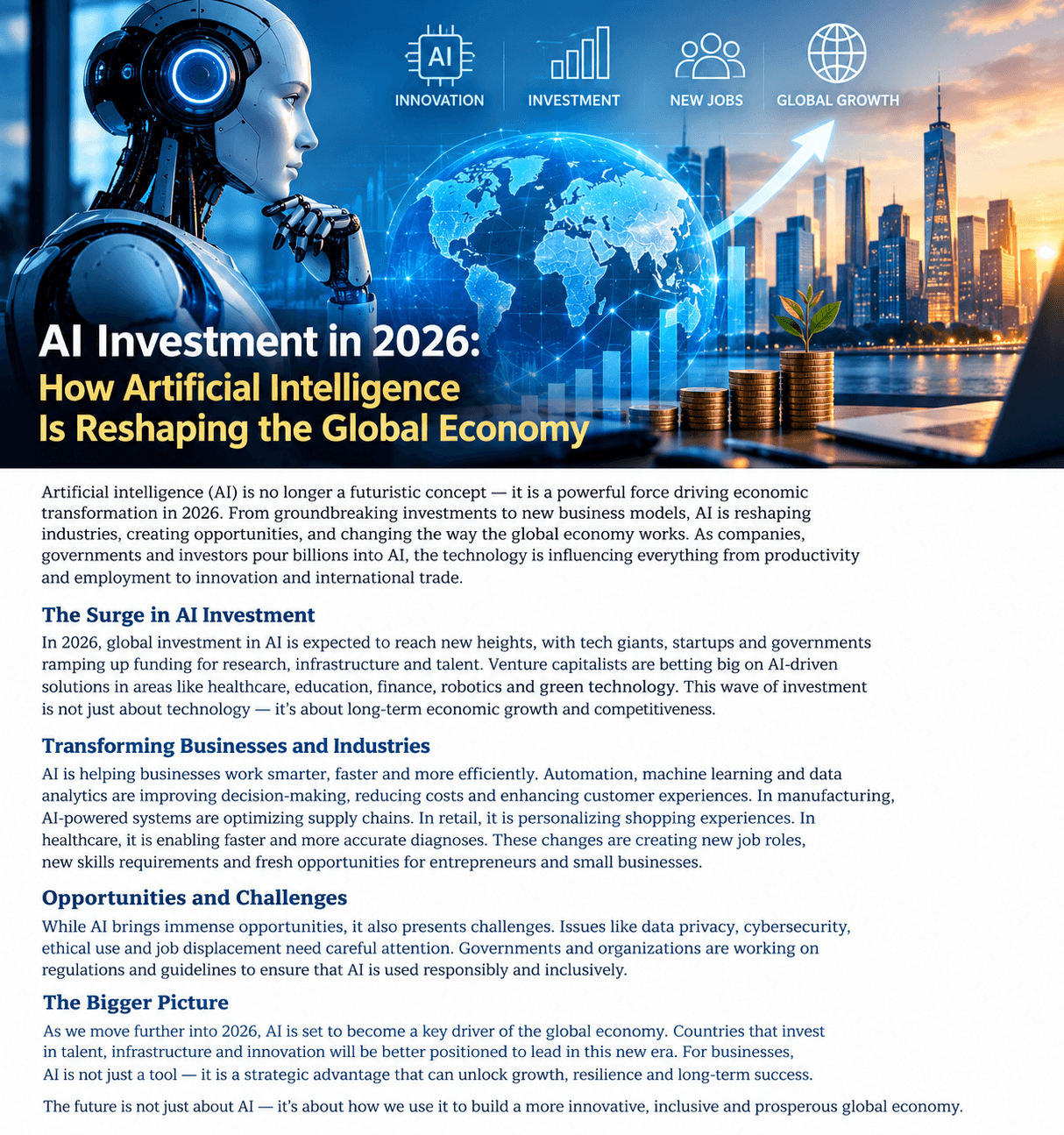
Artificial intelligence has become the foundation of digital transformation, and in 2026, enterprise investment in AI infrastructure continues to grow at an unprecedented pace. While global markets remain uncertain due to inflation concerns, geopolitical tensions, and changing technology regulations, businesses are increasing their AI budgets instead of reducing them. This trend highlights a significant shift in how organizations view artificial intelligence—not as an optional technology but as a critical business infrastructure.
From multinational corporations to mid-sized enterprises, organizations are investing billions of dollars in AI data centers, cloud computing, specialized AI chips, and high-performance networking systems. The goal is simple: build scalable AI platforms capable of supporting intelligent automation, advanced analytics, predictive decision-making, and next-generation customer experiences.
This article explores why enterprise AI infrastructure spending is accelerating in 2026, the technologies driving investment, and how businesses can prepare for the future.
AI Infrastructure Has Become a Business Necessity
Just a few years ago, businesses viewed AI as an experimental technology. Today, it powers customer support, cybersecurity, software development, financial forecasting, healthcare diagnostics, marketing automation, and supply chain optimization.
As organizations deploy more AI applications, traditional IT infrastructure can no longer meet performance demands. Large language models, multimodal AI systems, and autonomous AI agents require enormous computational resources. This has made AI infrastructure one of the most important technology investments for enterprises worldwide.
Companies are now designing their technology strategies around AI-first architectures that combine cloud computing, edge computing, high-speed networking, and dedicated AI hardware.
Why Businesses Continue Investing Despite Market Volatility
Economic uncertainty typically causes companies to reduce technology spending. However, AI is proving to be the exception.
Several factors explain why enterprises continue increasing AI investments.
Competitive Pressure
Organizations recognize that competitors adopting AI can improve efficiency, reduce costs, and launch innovative products faster. Delaying AI adoption increases the risk of losing market share.
Operational Efficiency
AI automates repetitive processes, reducing labor costs while increasing productivity. Businesses often recover infrastructure investments through long-term operational savings.
Data Growth
Companies generate more data than ever before. AI infrastructure enables organizations to process and analyze massive datasets quickly, turning raw information into actionable insights.
Customer Expectations
Consumers increasingly expect personalized recommendations, intelligent chatbots, faster service, and seamless digital experiences. These capabilities depend on scalable AI infrastructure.
The Core Components of Modern AI Infrastructure
Enterprise AI infrastructure consists of several integrated technologies working together.
High-Performance AI Chips
Specialized processors designed for AI workloads dramatically outperform traditional CPUs when training and running machine learning models.
Modern enterprises increasingly deploy GPU clusters and AI accelerators capable of processing trillions of calculations every second.
Cloud AI Platforms
Cloud providers offer scalable computing environments that allow organizations to deploy AI applications without building physical infrastructure.
Businesses benefit from flexible pricing, rapid deployment, and global availability.
AI Data Centers
Dedicated AI data centers provide optimized cooling systems, energy-efficient designs, and high-speed networking required for modern AI applications.
Many organizations are expanding data center capacity specifically to support generative AI workloads.
Edge AI Computing
Instead of sending every request to centralized cloud servers, edge AI processes information closer to users and devices.
This reduces latency, improves privacy, and enables real-time decision-making for manufacturing, healthcare, logistics, and smart cities.
High-Speed Networking
AI systems exchange enormous amounts of data between servers, storage, and cloud platforms.
Modern networking technologies ensure low latency and high bandwidth required for large-scale AI operations.
Industries Driving AI Infrastructure Investment
Financial Services
Banks use AI for fraud detection, algorithmic trading, customer support, compliance monitoring, and personalized financial advice.
These applications require highly secure computing environments capable of processing millions of transactions.
Healthcare
Hospitals deploy AI for medical imaging, patient monitoring, clinical decision support, and drug discovery.
Healthcare organizations increasingly invest in secure AI infrastructure that protects sensitive patient information.
Manufacturing
Factories use AI-powered predictive maintenance, robotics, computer vision, and quality inspection.
Industrial AI systems require edge computing infrastructure capable of real-time processing.
Retail
Retailers leverage AI for inventory forecasting, recommendation engines, dynamic pricing, and customer analytics.
Growing e-commerce competition continues driving AI investment.
Logistics
Transportation companies optimize routes, warehouse automation, and fleet management using AI-powered systems.
Real-time logistics depends on scalable infrastructure connecting vehicles, warehouses, and cloud platforms.
The Rise of Enterprise AI Platforms
Rather than building isolated AI tools, organizations increasingly adopt unified enterprise AI platforms.
These platforms combine:
Data management
Machine learning
Large language models
Security controls
Governance tools
Automation workflows
Analytics dashboards
Unified platforms reduce operational complexity while enabling faster AI deployment across departments.
Sustainability Is Becoming a Major Priority
Training advanced AI models consumes significant energy.
As AI infrastructure expands, enterprises focus on reducing environmental impact through:
Energy-efficient AI chips
Liquid cooling technologies
Renewable-powered data centers
AI workload optimization
Carbon-aware computing
Sustainability initiatives not only reduce operating costs but also support corporate ESG commitments.
AI Infrastructure Security Challenges
Expanding AI infrastructure introduces new cybersecurity risks.
Organizations must secure:
AI training data
Large language models
Cloud environments
APIs
User identities
AI agents
Edge devices
Zero Trust security frameworks, encryption, identity management, and continuous monitoring are becoming essential components of enterprise AI infrastructure.
The Role of AI Governance
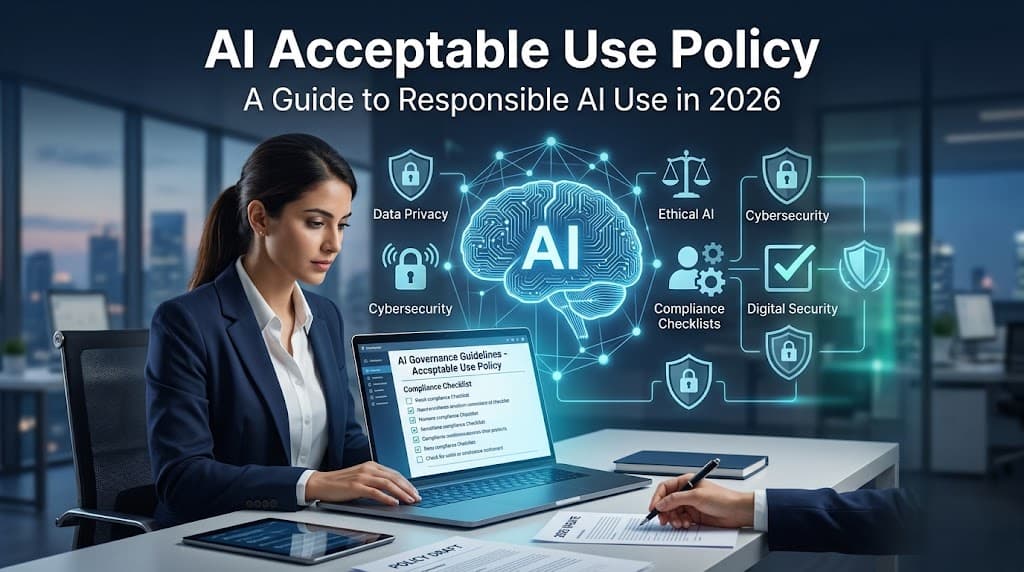
As businesses deploy AI at scale, governance has become equally important.
Effective AI governance ensures:
Regulatory compliance
Responsible AI development
Transparent decision-making
Risk management
Ethical AI deployment
Data privacy protection
Strong governance frameworks help organizations maximize AI benefits while minimizing legal and operational risks.
How Small and Mid-Sized Businesses Are Adopting AI
AI infrastructure is no longer limited to large enterprises.
Cloud-based AI services enable small businesses to access enterprise-grade AI capabilities without massive capital investment.
Subscription-based AI platforms allow companies to:
Automate customer support
Generate marketing content
Analyze customer behavior
Improve forecasting
Enhance cybersecurity
Streamline operations
This democratization of AI continues accelerating adoption across industries.
Preparing for the Future of AI Infrastructure
Business leaders planning AI investments should focus on:
Building scalable cloud architectures.
Investing in high-quality data management.
Implementing strong cybersecurity measures.
Developing AI governance frameworks.
Training employees in AI technologies.
Selecting infrastructure capable of supporting future AI models.
Prioritizing energy-efficient computing solutions.
Organizations that build flexible AI infrastructure today will be better positioned to adopt emerging technologies tomorrow.
Conclusion
Enterprise AI infrastructure spending in 2026 reflects a fundamental shift in business strategy. Rather than viewing artificial intelligence as a standalone technology, organizations now treat it as essential infrastructure supporting innovation, efficiency, and long-term growth.
Despite market volatility, businesses continue investing in cloud platforms, AI data centers, GPU computing, edge AI, cybersecurity, and governance because these technologies provide measurable competitive advantages.
As AI models become more powerful and integrated into everyday operations, scalable infrastructure will determine which organizations lead their industries over the coming years. Companies that invest wisely today will be prepared for the next generation of intelligent business systems, while those that delay risk falling behind in an increasingly AI-driven global economy.
Looking ahead, AI infrastructure will continue evolving with more energy-efficient hardware, faster networking technologies, and intelligent automation platforms capable of supporting increasingly complex business operations. Organizations that embrace flexible, scalable, and secure infrastructure today will be better positioned to adopt future innovations such as autonomous AI agents, advanced multimodal models, and real-time enterprise intelligence. Success will depend not only on investing in cutting-edge technology but also on building a skilled workforce, maintaining strong governance practices, and prioritizing cybersecurity at every level. Businesses that align their AI infrastructure strategy with long-term digital transformation goals will improve resilience, unlock new revenue opportunities, and deliver better customer experiences. In an era where AI is becoming the backbone of competitive advantage, strategic infrastructure investment is no longer optional—it is a critical requirement for sustainable growth and continued innovation.Conclusion
Enterprise AI infrastructure spending in 2026 reflects a fundamental shift in business strategy. Rather than viewing artificial intelligence as a standalone technology, organizations now treat it as essential infrastructure supporting innovation, efficiency, and long-term growth.
Despite market volatility, businesses continue investing in cloud platforms, AI data centers, GPU computing, edge AI, cybersecurity, and governance because these technologies provide measurable competitive advantages.
As AI models become more powerful and integrated into everyday operations, scalable infrastructure will determine which organizations lead their industries over the coming years. Companies that invest wisely today will be prepared for the next generation of intelligent business systems, while those that delay risk falling behind in an increasingly AI-driven global economy.
Looking ahead, AI infrastructure will continue evolving with more energy-efficient hardware, faster networking technologies, and intelligent automation platforms capable of supporting increasingly complex business operations. Organizations that embrace flexible, scalable, and secure infrastructure today will be better positioned to adopt future innovations such as autonomous AI agents, advanced multimodal models, and real-time enterprise intelligence. Success will depend not only on investing in cutting-edge technology but also on building a skilled workforce, maintaining strong governance practices, and prioritizing cybersecurity at every level. Businesses that align their AI infrastructure strategy with long-term digital transformation goals will improve resilience, unlock new revenue opportunities, and deliver better customer experiences. In an era where AI is becoming the backbone of competitive advantage, strategic infrastructure investment is no longer optional—it is a critical requirement for sustainable growth and continued innovation.
Enterprise AI infrastructure spending in 2026 reflects a fundamental shift in business strategy. Rather than viewing artificial intelligence as a standalone technology, organizations now treat it as essential infrastructure supporting innovation, efficiency, and long-term growth.
Despite market volatility, businesses continue investing in cloud platforms, AI data centers, GPU computing, edge AI, cybersecurity, and governance because these technologies provide measurable competitive advantages.
As AI models become more powerful and integrated into everyday operations, scalable infrastructure will determine which organizations lead their industries over the coming years. Companies that invest wisely today will be prepared for the next generation of intelligent business systems, while those that delay risk falling behind in an increasingly AI-driven global economy.
By aligning infrastructure investments with business objectives, security best practices, and sustainability goals, enterprises can create a strong foundation for continued innovation and resilience in the rapidly evolving digital landscape.