
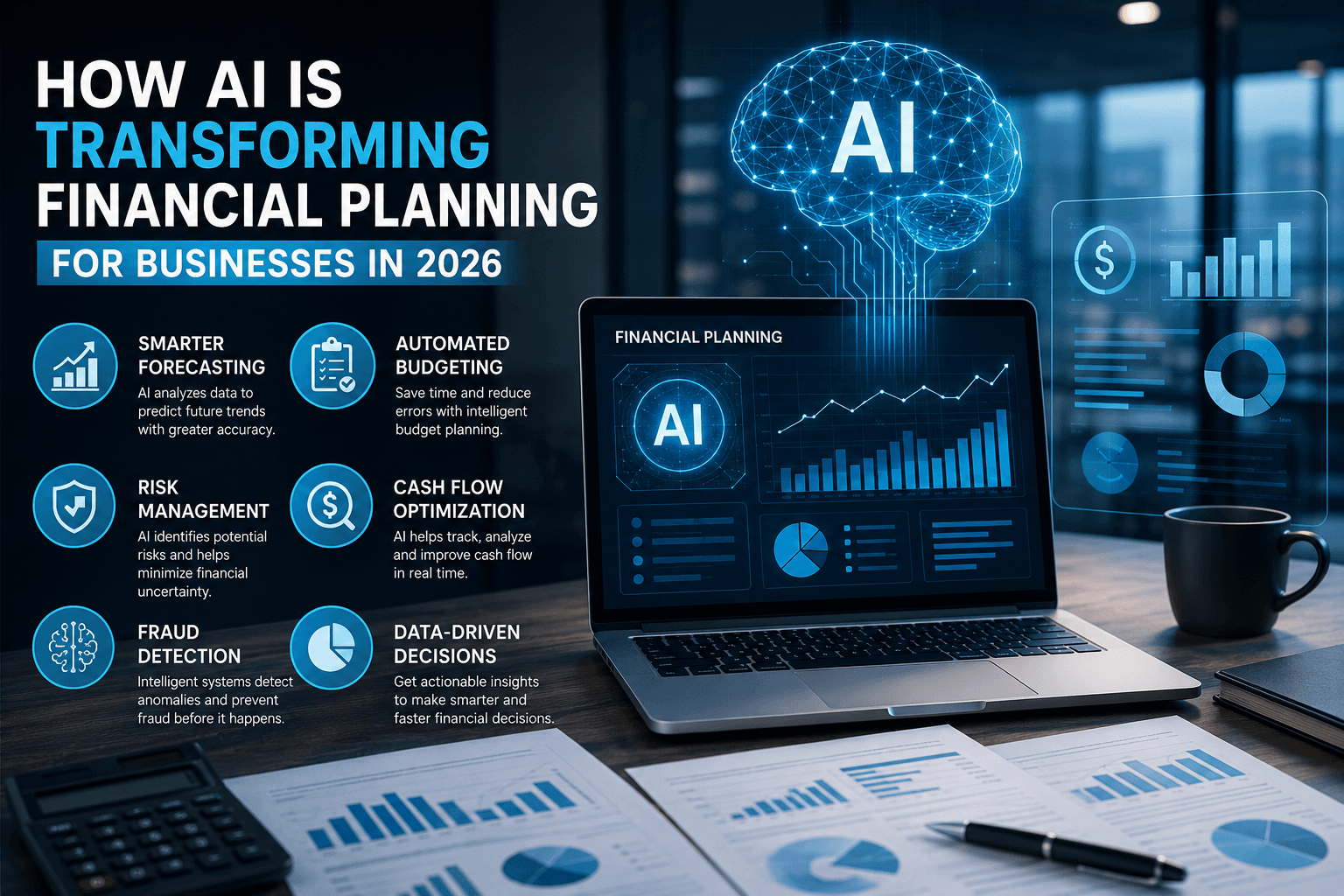
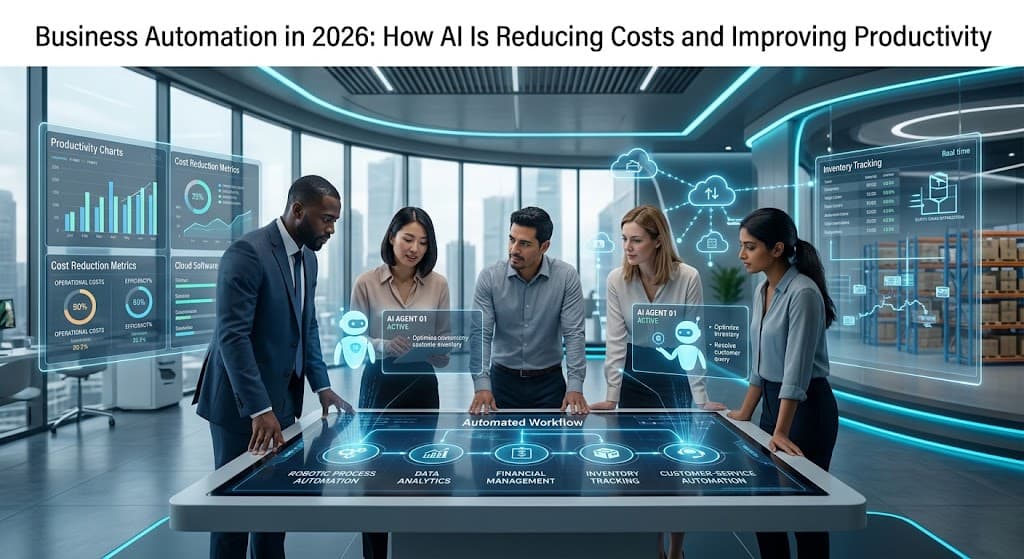
Artificial intelligence (AI) has evolved from a futuristic concept into a practical business tool that is reshaping financial planning across industries. In 2026, organizations of all sizes are increasingly using AI to improve budgeting, forecasting, cash flow management, investment decisions, and financial reporting.
Traditional financial planning often relies on historical data, spreadsheets, and manual analysis. While these methods remain useful, they can be time-consuming and may not respond quickly to changing market conditions. AI-powered solutions help businesses analyze vast amounts of financial information in real time, enabling leaders to make faster and more informed decisions.
This transformation is improving efficiency, reducing costs, and giving companies a stronger foundation for long-term growth.
The Shift Toward Intelligent Financial Planning
Financial planning is no longer limited to annual budgets or quarterly forecasts. Today's businesses operate in an environment where market conditions, customer behavior, and global events can change rapidly.
AI helps finance teams by:
Processing large volumes of financial data within seconds.
Identifying trends and patterns that humans might overlook.
Predicting future financial outcomes with greater accuracy.
Automating repetitive financial tasks.
Supporting faster strategic decision-making.
By reducing manual work, finance professionals can spend more time on analysis and business strategy.
Smarter Budgeting Through AI
Budget preparation has traditionally been one of the most labor-intensive financial processes. AI simplifies this task by analyzing previous spending, seasonal trends, operational costs, and projected revenue.
AI-powered budgeting tools can:
Recommend realistic spending limits.
Detect unnecessary expenses.
Suggest cost-saving opportunities.
Adjust budgets as business conditions change.
Improve financial discipline across departments.
This dynamic approach helps businesses remain agile in uncertain economic environments.
More Accurate Financial Forecasting
Forecasting is essential for planning investments, hiring employees, expanding operations, and managing cash flow.
AI improves forecasting by combining historical financial data with external factors such as:
Market demand
Inflation trends
Customer purchasing behavior
Industry performance
Supply chain conditions
Instead of relying solely on historical averages, AI models continuously update forecasts as new information becomes available.
This allows businesses to respond quickly to changing conditions and reduce financial uncertainty.
Better Cash Flow Management
Cash flow is often described as the lifeblood of any business. Even profitable companies can face challenges if they struggle to manage incoming and outgoing payments.
AI helps organizations monitor cash flow by:
Predicting future cash shortages.
Tracking customer payment behavior.
Optimizing payment schedules.
Improving invoice management.
Identifying late-payment risks.
These insights help businesses maintain healthier financial positions.
Fraud Detection and Risk Management
Financial fraud continues to be a major concern for organizations worldwide.
AI-powered systems analyze thousands of transactions in real time and identify unusual patterns that may indicate fraudulent activity.
Common capabilities include:
Monitoring suspicious transactions.
Detecting duplicate payments.
Identifying unauthorized account activity.
Flagging abnormal spending behavior.
Improving compliance monitoring.
Early detection reduces financial losses and strengthens overall security.
Automating Financial Reporting
Preparing financial reports often requires significant manual effort.
AI automates many reporting tasks, including:
Income statements
Balance sheets
Cash flow reports
Expense summaries
Performance dashboards
Automation reduces errors while ensuring that financial reports remain accurate and up to date.
Executives can access real-time financial insights whenever they need them.
Supporting Better Investment Decisions
Businesses frequently evaluate investment opportunities involving equipment, technology, acquisitions, or expansion.
AI supports these decisions by analyzing:
Market trends
Historical investment performance
Risk factors
Economic indicators
Expected return on investment
Rather than replacing financial experts, AI provides additional data-driven insights that strengthen decision-making.
Helping Small Businesses Compete
Advanced financial technology was once available primarily to large corporations.
Today, cloud-based AI platforms have made sophisticated financial planning tools accessible to small and medium-sized businesses.
These solutions help smaller companies:
Improve financial forecasting.
Manage operating expenses.
Monitor profitability.
Generate financial reports automatically.
Make more informed growth decisions.
Affordable AI tools are helping level the competitive playing field.
AI and Predictive Analytics
Predictive analytics is becoming one of the most valuable applications of AI in finance.
Instead of simply reporting what happened in the past, predictive models estimate what is likely to happen next.
Businesses can forecast:
Revenue growth
Sales performance
Customer demand
Inventory requirements
Seasonal fluctuations
This forward-looking approach allows organizations to prepare proactively.
Improving Strategic Planning
AI contributes to long-term business strategy by providing leaders with clearer financial visibility.
Executives can evaluate multiple scenarios, compare financial outcomes, and model different business strategies before making important decisions.
Scenario planning helps businesses prepare for:
Economic slowdowns
Market expansion
Pricing changes
New product launches
Supply chain disruptions
Better planning reduces uncertainty and improves confidence.
Challenges Businesses Should Consider
Although AI offers significant advantages, successful implementation requires careful planning.
Organizations should address:
Data Quality
AI systems depend on accurate, reliable financial data.
Cybersecurity
Financial information must be protected through strong cybersecurity practices.
Employee Training
Finance teams should understand how to interpret AI-generated insights.
Human Oversight
AI supports decision-making but should not replace professional financial judgment.
Combining technology with human expertise delivers the best results.
The Future of AI in Financial Planning
As AI technologies continue to advance, businesses can expect:
Real-time financial forecasting
Autonomous financial analysis
Smarter investment recommendations
Improved regulatory compliance
Personalized financial insights
Greater automation of routine finance tasks
These innovations will enable finance professionals to focus on strategic leadership rather than administrative work.
Conclusion
Artificial intelligence is transforming financial planning by making it faster, more accurate, and more strategic. From budgeting and forecasting to fraud detection and investment analysis, AI enables businesses to make informed decisions based on real-time insights.
Organizations that embrace AI-driven financial planning today will be better equipped to navigate uncertainty, improve efficiency, and achieve sustainable growth. As technology continues to evolve, AI will play an increasingly central role in shaping the future of business finance.