
AAAI Agents in 2026: How Autonomous AI Is Changing Jobs, Business & Everyday Life
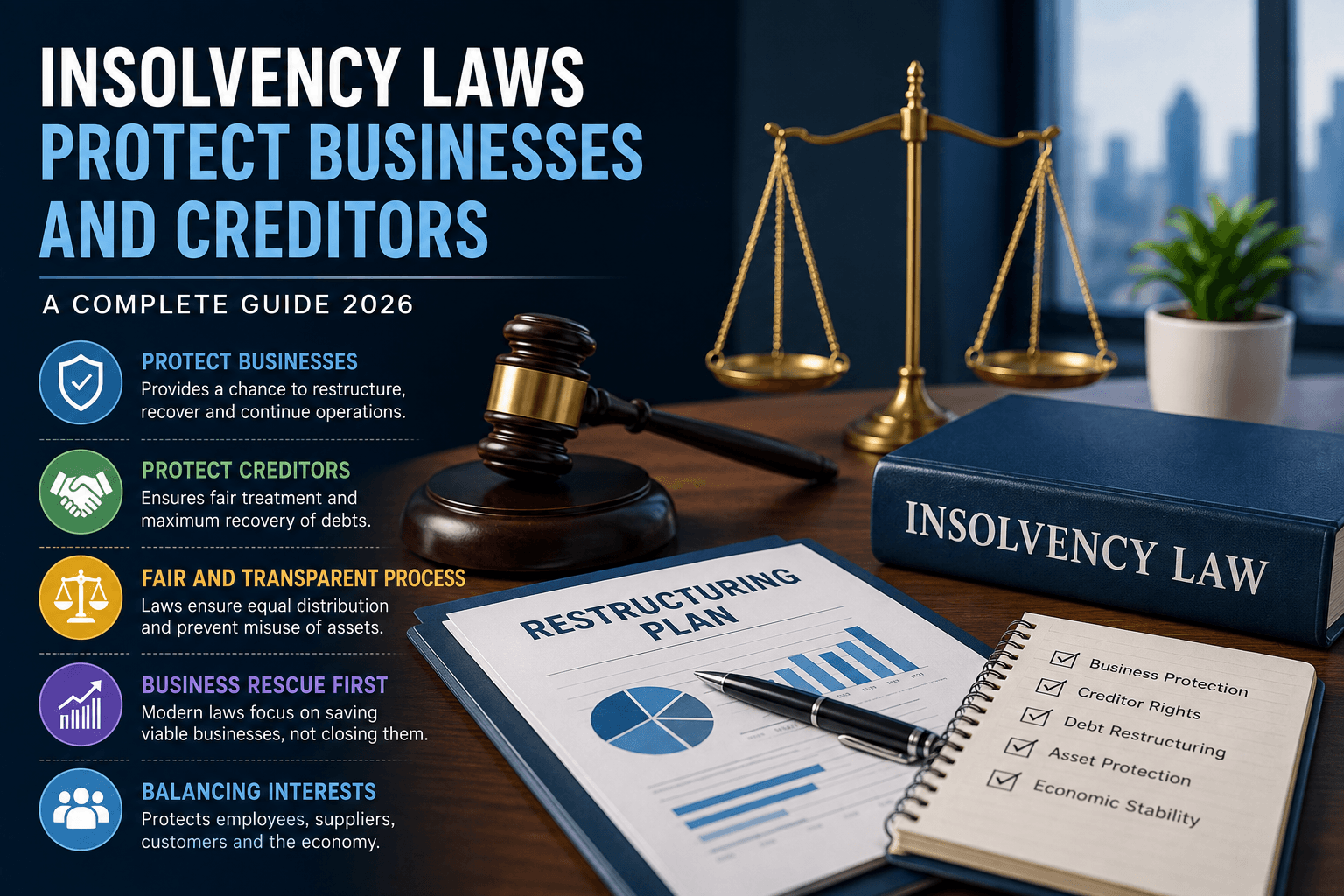
Financial challenges can affect businesses of every size, from startups to multinational corporations. Economic uncertainty, rising borrowing costs, changing consumer behavior, and operational disruptions have increased the number of companies facing financial distress. When a business can no longer meet its financial obligations, insolvency laws provide a legal framework that protects both the company and its creditors while ensuring a fair and transparent resolution.
Modern insolvency laws are designed not only to recover debts but also to preserve viable businesses whenever possible. Instead of immediately forcing companies into liquidation, many legal systems now encourage restructuring, debt negotiation, and business rescue strategies that benefit employees, suppliers, customers, and investors.
This guide explains how insolvency laws work in 2026, why they are essential for the business environment, and how they balance the interests of businesses and creditors.
What Are Insolvency Laws?
Insolvency laws are legal rules that govern the process when a business or individual cannot repay outstanding debts. These laws establish procedures for managing financial distress, protecting assets, resolving disputes, and determining whether a company should be restructured or liquidated.
The primary objectives of insolvency laws include:
Protecting creditors' rights
Giving financially distressed businesses an opportunity to recover
Ensuring fair treatment of all stakeholders
Maximizing the value of company assets
Promoting economic stability
Without clear insolvency laws, creditors might compete unfairly for company assets, leading to legal disputes and unnecessary business failures.
Understanding Business Insolvency
A company is generally considered insolvent when:
It cannot pay debts as they become due.
Its liabilities exceed the value of its assets.
Insolvency does not always mean a business must close permanently. Many companies successfully recover through restructuring and careful financial planning.
How Insolvency Laws Protect Businesses
Opportunity to Restructure
Modern insolvency frameworks often allow businesses to continue operating while developing a financial recovery plan. Companies may renegotiate loans, reduce expenses, sell non-essential assets, or attract new investment without immediately shutting down.
Temporary Protection from Creditors
Many jurisdictions provide temporary legal protection that prevents creditors from taking immediate enforcement actions while restructuring negotiations are underway. This gives businesses valuable time to stabilize operations.
Business Continuity
Insolvency laws encourage businesses with long-term potential to continue serving customers, maintaining supplier relationships, and preserving jobs during restructuring.
Encouraging Investment
Clear legal protections increase investor confidence because financial recovery procedures are predictable and transparent.
How Insolvency Laws Protect Creditors
Creditors also receive significant legal protections.
Fair Distribution of Assets
If liquidation becomes necessary, insolvency laws establish an orderly process for distributing company assets according to legal priority.
Equal Treatment
Most insolvency systems prevent one creditor from receiving preferential treatment over others in similar positions.
Transparency
Businesses must disclose financial information, allowing creditors to understand the company's financial position before making decisions.
Creditor Participation
Creditors may vote on restructuring proposals, negotiate repayment terms, or participate in court-supervised proceedings.
Common Insolvency Procedures
Business Restructuring
Restructuring aims to restore financial stability while allowing the company to continue operating.
Common restructuring measures include:
Debt refinancing
Loan extensions
Operational cost reductions
Asset sales
Management restructuring
New investment
Administration
In some jurisdictions, an independent administrator temporarily manages the business to maximize recovery for creditors while exploring rescue options.
Liquidation
If recovery is no longer possible, liquidation involves selling company assets and distributing proceeds among creditors according to legal priorities.
Rights and Responsibilities of Directors
Company directors have important legal obligations during financial distress.
They should:
Monitor financial performance regularly.
Avoid reckless trading.
Keep accurate financial records.
Seek professional advice promptly.
Act in the best interests of creditors once insolvency becomes likely.
Failure to meet these responsibilities may result in legal penalties.
Employee Protection
Many insolvency laws provide safeguards for employees.
These may include:
Priority payment of unpaid wages
Protection of pension rights
Notice requirements
Employment transfer provisions during business sales
Protecting employees helps reduce the social impact of business failures.
Technology and Insolvency in 2026
Digital transformation is reshaping insolvency management.
Artificial intelligence assists professionals by analyzing financial risks, forecasting cash flow, identifying restructuring opportunities, and improving decision-making. Cloud-based accounting systems also make financial records more transparent and accessible during insolvency proceedings.
These technologies help businesses respond to financial challenges earlier and improve recovery outcomes.
Common Mistakes Businesses Should Avoid
Companies facing financial difficulties often make avoidable mistakes, including:
Waiting too long before seeking advice
Ignoring cash flow problems
Taking on excessive debt
Failing to communicate with creditors
Delaying operational changes
Early intervention usually provides more restructuring options and increases the likelihood of recovery.
The Future of Insolvency Laws
Governments around the world continue modernizing insolvency legislation to support business recovery rather than immediate liquidation. Greater international cooperation, digital court systems, AI-assisted financial analysis, and faster restructuring procedures are expected to improve efficiency throughout 2026 and beyond.
Businesses that understand their legal rights and responsibilities are better positioned to navigate financial uncertainty while protecting stakeholders.
Conclusion
Insolvency laws play a critical role in maintaining confidence within the business environment. They provide a structured process that protects businesses facing financial distress while ensuring creditors receive fair treatment. By encouraging restructuring where possible and establishing transparent procedures when liquidation becomes necessary, these laws help preserve economic stability and support long-term business resilience.
For business owners, directors, and creditors, understanding insolvency laws is essential. Acting early, seeking professional guidance, and following legal procedures can significantly improve outcomes for everyone involved.
Frequently Asked Questions (FAQs)
1. What are insolvency laws?
Insolvency laws are legal rules that govern how businesses and individuals resolve financial distress when they cannot repay their debts.
2. What is the difference between insolvency and bankruptcy?
Insolvency is a financial condition where debts cannot be paid, while bankruptcy is a legal process that may result from insolvency, depending on the jurisdiction.
3. How do insolvency laws protect businesses?
They allow eligible businesses to restructure debts, continue operations, negotiate with creditors, and seek legal protection during financial recovery.
4. How do insolvency laws protect creditors?
They ensure fair treatment, transparent financial disclosures, and an orderly process for recovering debts or distributing company assets.
5. Can an insolvent business continue operating?
Yes. Many businesses continue operating during restructuring if there is a realistic chance of financial recovery.
6. What is business restructuring?
Business restructuring involves reorganizing finances, operations, or management to restore profitability and improve financial stability.
7. When is liquidation necessary?
Liquidation is generally used when a business cannot recover financially and must sell its assets to repay creditors.
8. What responsibilities do company directors have during insolvency?
Directors must act responsibly, protect creditor interests, maintain accurate records, and seek professional advice when insolvency becomes likely.
9. Do employees have legal protections during insolvency?
In many jurisdictions, employees receive protections such as priority wage payments and certain employment rights during insolvency proceedings.
10. Why is early action important during financial distress?
Early intervention increases restructuring options, improves negotiations with creditors, and enhances the chances of business survival.How Insolvency Laws Protect Businesses and Creditors: A Complete 2026 Guide
11. Can creditors reject a restructuring proposal?
Yes. Depending on the jurisdiction, creditors may vote to accept or reject a restructuring plan if they believe it does not provide a fair outcome.
12. Does insolvency always mean a business will close?
No. Many businesses successfully recover through restructuring, refinancing, or other legal rescue procedures without permanently closing.
13. How long does an insolvency process usually take?
The duration varies depending on the complexity of the case, the company's financial situation, and the applicable insolvency laws, ranging from several months to a few years.
14. What documents are typically required during insolvency proceedings?
Businesses usually need to provide financial statements, asset and liability records, creditor lists, contracts, tax records, and other relevant financial documents.
15. Why should businesses seek professional insolvency advice?
Professional advisors can help evaluate recovery options, ensure legal compliance, negotiate with creditors, and develop effective restructuring strategies that improve the chances of long-term success.