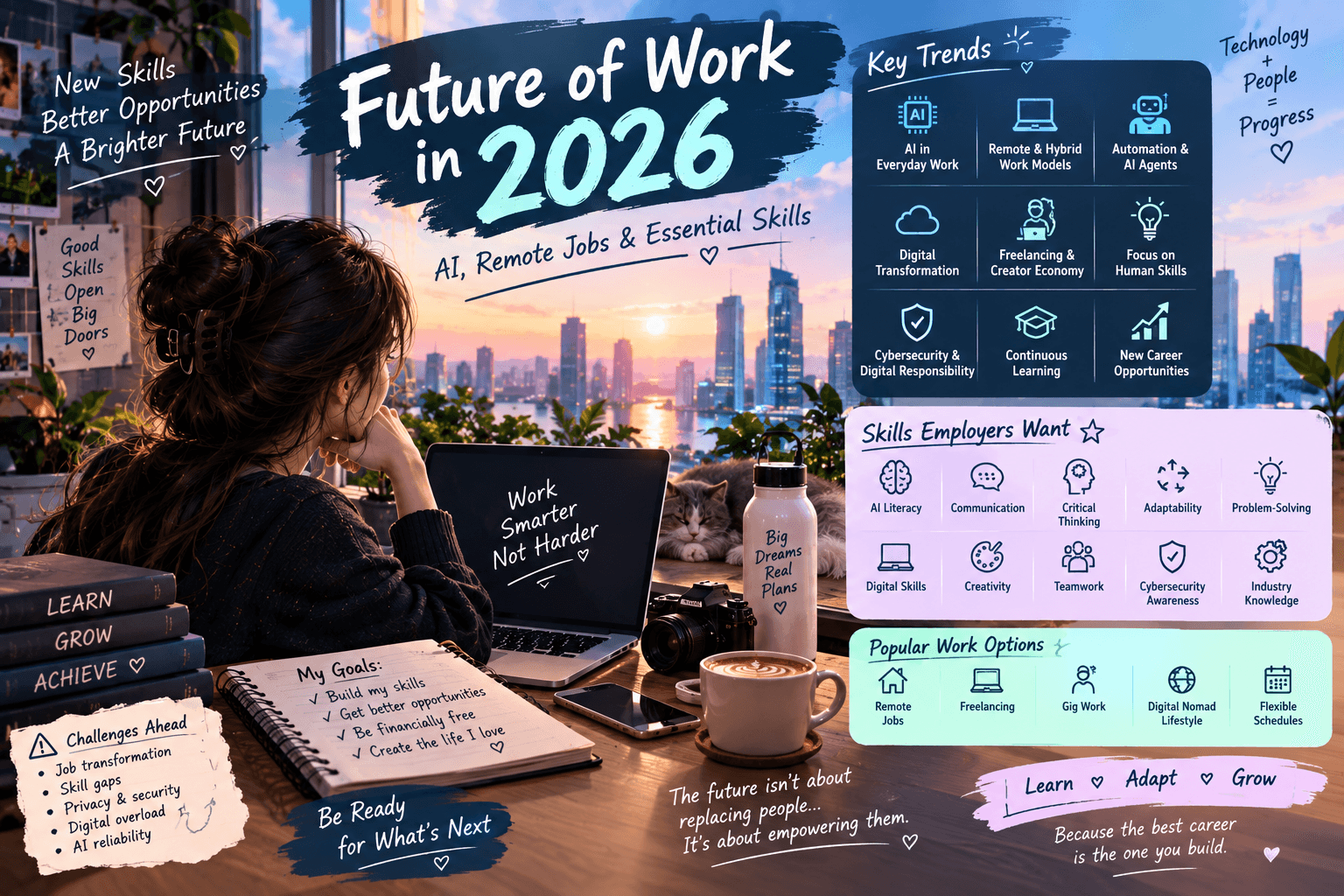

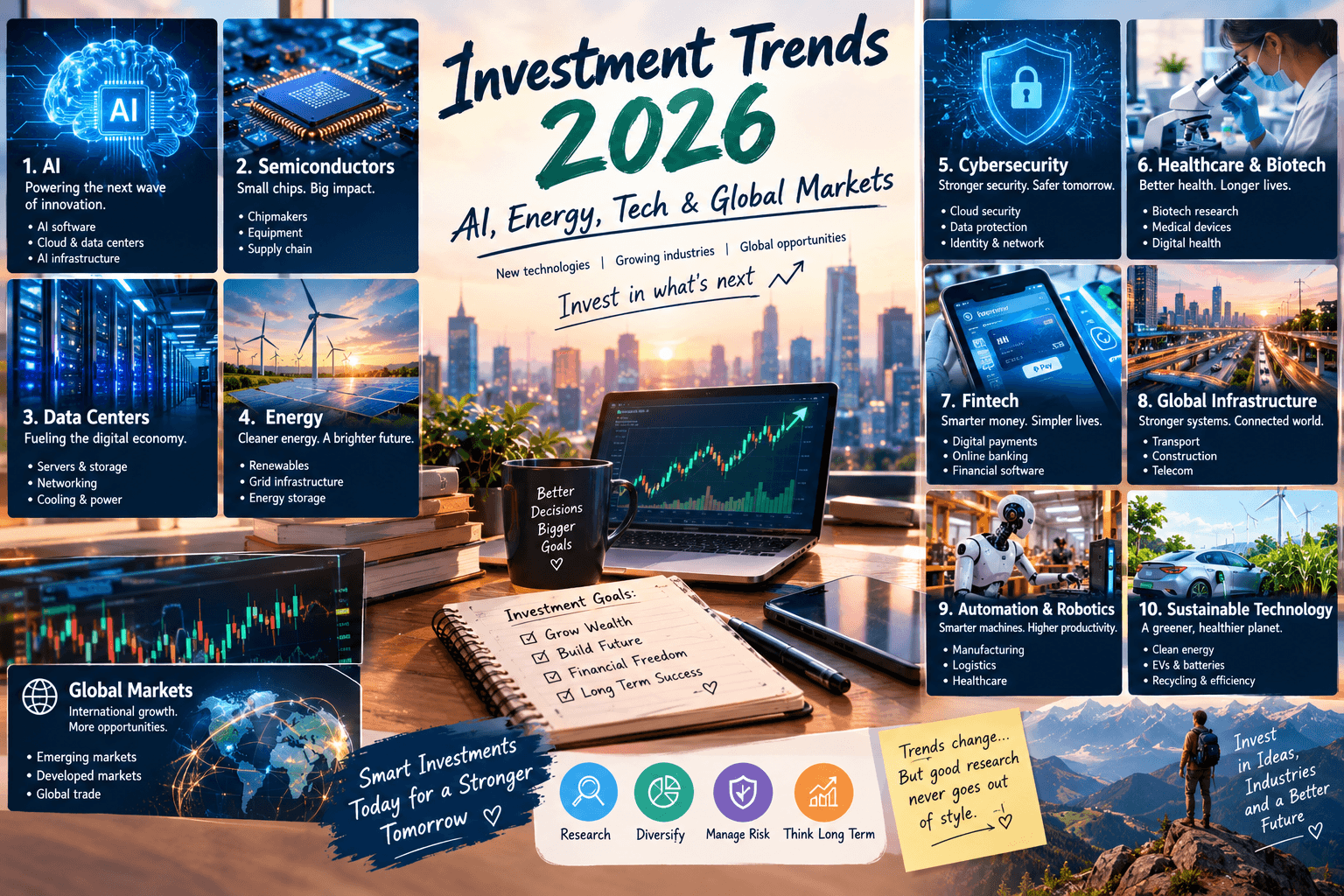
The financial world is evolving at an unprecedented pace. Rapid technological innovation, shifting economic conditions, changing consumer expectations, and evolving government regulations are transforming how businesses manage money, invest in growth, and compete in the global marketplace. In 2026, companies that understand these financial trends will be better equipped to make informed decisions, improve profitability, and remain resilient in an increasingly competitive environment.
Whether you're a startup founder, small business owner, investor, or executive leading a multinational organization, staying informed about the latest financial developments is essential. The businesses that embrace innovation while managing financial risks are likely to outperform those that fail to adapt.
Here are the top financial trends every business should watch in 2026.
1. Artificial Intelligence Is Revolutionizing Financial Management
Artificial intelligence has become one of the most significant developments in modern finance. Businesses are increasingly using AI-powered tools to automate accounting processes, detect fraud, analyze financial data, forecast cash flow, and improve investment decisions.
AI can process enormous amounts of financial information in seconds, helping organizations identify trends that would be difficult to detect manually. Financial institutions are also using AI to strengthen risk management, automate customer support, and enhance compliance monitoring.
For businesses of every size, AI is improving efficiency while reducing operating costs.
2. Digital Payments Continue to Expand
Cashless transactions have become the preferred payment method for millions of consumers worldwide.
Digital wallets, mobile payment applications, contactless cards, and real-time payment systems continue gaining popularity as businesses seek faster, safer, and more convenient payment options.
Companies that offer multiple digital payment methods often improve customer satisfaction while reducing transaction delays.
As cross-border commerce continues growing, businesses are also investing in payment technologies that support international transactions more efficiently.
3. Interest Rate Uncertainty Remains a Major Challenge
Central banks continue monitoring inflation and economic growth when making interest rate decisions.
Higher borrowing costs affect business loans, mortgages, equipment financing, and expansion plans. Companies that rely heavily on debt financing must carefully monitor interest rate trends when planning future investments.
Strong cash flow management and careful budgeting have become increasingly important as businesses prepare for changing financial conditions.
Organizations that maintain financial flexibility are generally better positioned to respond to economic uncertainty.
4. Cybersecurity Has Become a Financial Priority
Financial cybercrime continues evolving as businesses become more digitally connected.
Ransomware attacks, phishing scams, payment fraud, and data breaches can result in significant financial losses while damaging customer trust.
Businesses are increasing investments in cybersecurity software, employee awareness training, multi-factor authentication, and advanced fraud detection systems.
Protecting financial data is no longer simply an IT responsibility—it has become a critical business priority.
5. Sustainable Finance Continues Growing
Environmental, Social, and Governance (ESG) considerations are becoming increasingly important in corporate finance.
Many investors now evaluate companies based on sustainability initiatives, environmental impact, ethical governance, and social responsibility alongside traditional financial performance.
Business investing in renewable energy, energy-efficient operations, and responsible supply chain management may improve both investor confidence and long-term competitiveness.
Sustainable finance is expected to remain a major trend throughout the coming decade.
6. Data-Driven Financial Decisions
Business leader now have access to more financial information than ever before.
Advanced analytics platforms help companies monitor spending patterns, evaluate profitability, forecast revenue, and identify operational inefficiencies.
Instead of relying solely on historical reports, organizations increasingly use predictive analytics to support strategic planning and improve financial performance.
Accurate financial data allows businesses to respond more quickly to changing market conditions.
7. Supply Chain Finance Is Becoming More Important
Global supply chains continue experiencing disruptions caused by geopolitical events, transportation costs, and changing trade policies.
Businesses are strengthening supplier relationships while improving inventory planning and working capital management.
Supply chain financing solutions are helping companies improve cash flow while ensuring suppliers receive payments more efficiently.
Organizations with diversified supply chains are generally more resilient during periods of market uncertainty.
8. Cloud-Based Financial Systems Are Replacing Legacy Software
Traditional accounting software is increasingly being replaced by cloud-based financial management platforms.
Cloud solutions provide real-time reporting, automated updates, improved collaboration, and secure remote access for finance teams.
Businesses can integrate accounting, payroll, invoicing, budgeting, and financial reporting into a single platform, improving efficiency while reducing administrative workloads.
Cloud technology also supports business growth by making financial systems more scalable.
9. Strategic Risk Management Is Essential
Economic uncertainty, inflation, cybersecurity threats, regulatory changes, and market volatility continue creating financial risks for organizations worldwide.
Businesses are strengthening enterprise risk management by developing contingency plans, diversifying revenue sources, maintaining healthy cash reserves, and regularly reviewing financial strategies.
Organizations that proactively manage risk are often better prepared to navigate unexpected challenges while maintaining long-term stability.
10. Long-Term Financial Planning Is More Important Than Ever
Successful businesses are focusing less on short-term market fluctuations and more on sustainable long-term growth.
Financial planning now includes technology investment, workforce development, digital transformation, operational efficiency, and responsible capital allocation.
Businesses with clear financial strategies are better positioned to adapt to changing economic conditions while identifying new opportunities for expansion.
Long-term planning helps organizations remain competitive regardless of market cycles.
Preparing for the Future
The financial landscape will continue evolving as new technologies emerge and global economic conditions change.
Business leaders should regularly review financial performance, monitor industry developments, embrace digital innovation, and remain flexible when adjusting strategies.
Continuous learning and informed decision-making will become increasingly valuable as finance grows more technology-driven.
Organizations that invest in innovation while maintaining strong financial discipline are likely to gain a competitive advantage in the years ahead.
Conclusion
The financial trends shaping 2026 extend far beyond traditional accounting and investment strategies. Artificial intelligence, digital payments, cybersecurity, cloud technology, sustainable finance, data analytics, and strategic risk management are transforming how businesses operate and grow.
Companies that embrace these developments while maintaining sound financial planning will be better prepared for future challenges and opportunities. In a rapidly changing global economy, staying informed is no longer optional—it is essential for long-term business success.
Businesses that understand today's financial trends will not only improve resilience but also position themselves to thrive in the increasingly digital and interconnected economy of tomorrow.
1. How is AI changing global business strategies in 2026?
AI is enabling businesses to automate operations, improve customer experiences, enhance decision-making, reduce costs, and create new revenue opportunities through predictive analytics and intelligent automation.
2. Why is AI considered a competitive advantage?
Companies using AI can analyze data faster, personalize services, optimize supply chains, and respond to market changes more quickly than competitors.
3. Which industries are benefiting the most from AI?
Healthcare, finance, retail, manufacturing, logistics, education, cybersecurity, and marketing are among the industries experiencing significant AI-driven transformation.
4. How does AI improve business decision-making?
AI analyzes massive datasets, identifies trends, predicts outcomes, and provides actionable insights that help leaders make informed strategic decisions.
5. What role do AI agents play in businesses?
AI agents automate repetitive tasks, manage workflows, assist customers, generate reports, and support employees in daily operations.
6. Can small businesses benefit from AI?
Yes. Affordable AI tools help small businesses automate customer support, marketing, accounting, inventory management, and content creation.
7. How is AI transforming customer experience?
AI powers personalized recommendations, intelligent chatbots, voice assistants, and predictive customer support, resulting in higher satisfaction and loyalty.
8. What are the biggest AI trends in 2026?
Key trends include autonomous AI agents, generative AI, multimodal AI, predictive analytics, AI-powered cybersecurity, and AI governance.
9. How does AI reduce operational costs?
AI automates repetitive tasks, minimizes errors, optimizes resource allocation, and improves productivity, leading to significant cost savings.
10. Is AI replacing human workers?
AI is automating certain tasks, but it is also creating new roles that require human creativity, strategic thinking, and oversight.
11. How does AI improve supply chain management?
AI forecasts demand, optimizes inventory, predicts disruptions, improves logistics, and enhances delivery efficiency.
12. What challenges do businesses face when adopting AI?
Common challenges include data privacy concerns, integration complexity, employee training, regulatory compliance, and implementation costs.
13. Why is AI governance important?
AI governance ensures responsible AI use, transparency, compliance with regulations, and ethical decision-making while minimizing risks.
14. How does generative AI support businesses?
Generative AI creates marketing content, software code, product descriptions, business reports, presentations, and customer communications.
15. What is predictive analytics in AI?
Predictive analytics uses historical and real-time data to forecast customer behavior, sales trends, market demand, and business risks.
16. How is AI influencing digital transformation?
AI accelerates digital transformation by modernizing businesses processes, improving automation, enabling data-driven decisions, and enhancing innovation.
17. What skills will businesses need in the AI era?
Organizations need AI literacy, data analysis, cybersecurity, prompt engineering, cloud computing, machine learning knowledge, and critical thinking skills.
18. How does AI improve cybersecurity?
AI detects unusual network activity, identifies threats in real time, automates incident response, and strengthens fraud detection systems.
19. What should businesses consider before implementing AI?
Businesses should define objectives, assess data quality, choose scalable AI solutions, train employees, and monitor AI performance continuously.
20. What is the future of AI in global business?
AI will become a core component of business strategy, driving innovation, improving efficiency, enabling personalized services, and supporting sustainable growth across industries