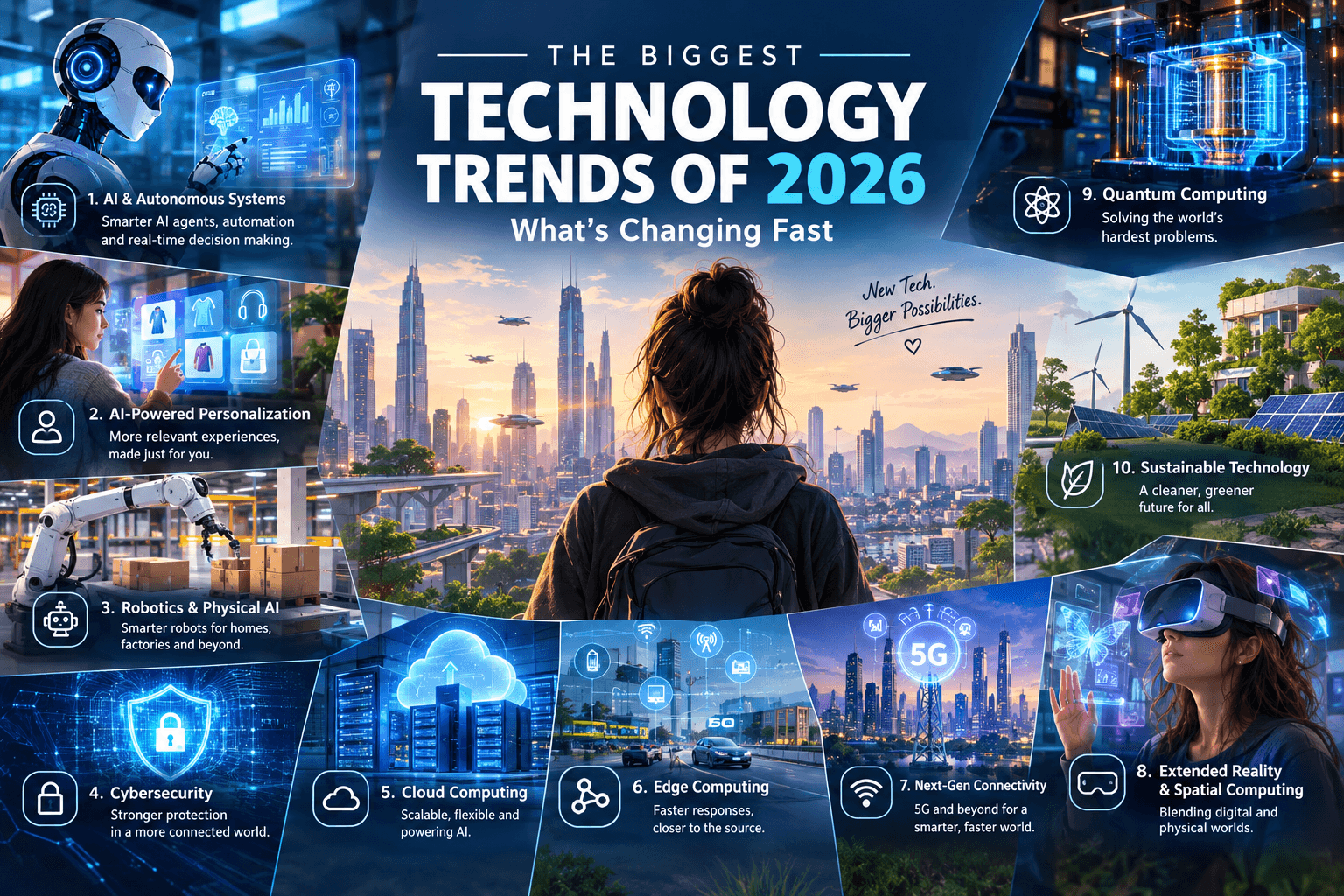
Technology continues to evolve rapidly in 2026, influencing how people communicate, work, study, shop, entertain themselves, and interact with digital services. From artificial intelligence and smartphones to cloud computing, cybersecurity, robotics, and wearable devices, new technologies are changing the digital landscape.
AI Remains at the Center of Tech News
Artificial intelligence continues to be one of the biggest technology trends in 2026.
AI is increasingly being integrated into:
Smartphones
Search engines
Productivity software
Customer service
Healthcare platforms
Education tools
Creative applications
Business software
The focus is shifting from simple AI chatbots toward systems that can assist with more complex tasks and workflows.
AI Agents and Automation
AI agents are becoming an important area of technology development.
Unlike basic chatbots, AI agents can potentially complete multiple steps, interact with software tools, analyze information, and help users accomplish specific objectives.
Businesses are exploring agents for customer support, research, coding, administration, and workflow automation.
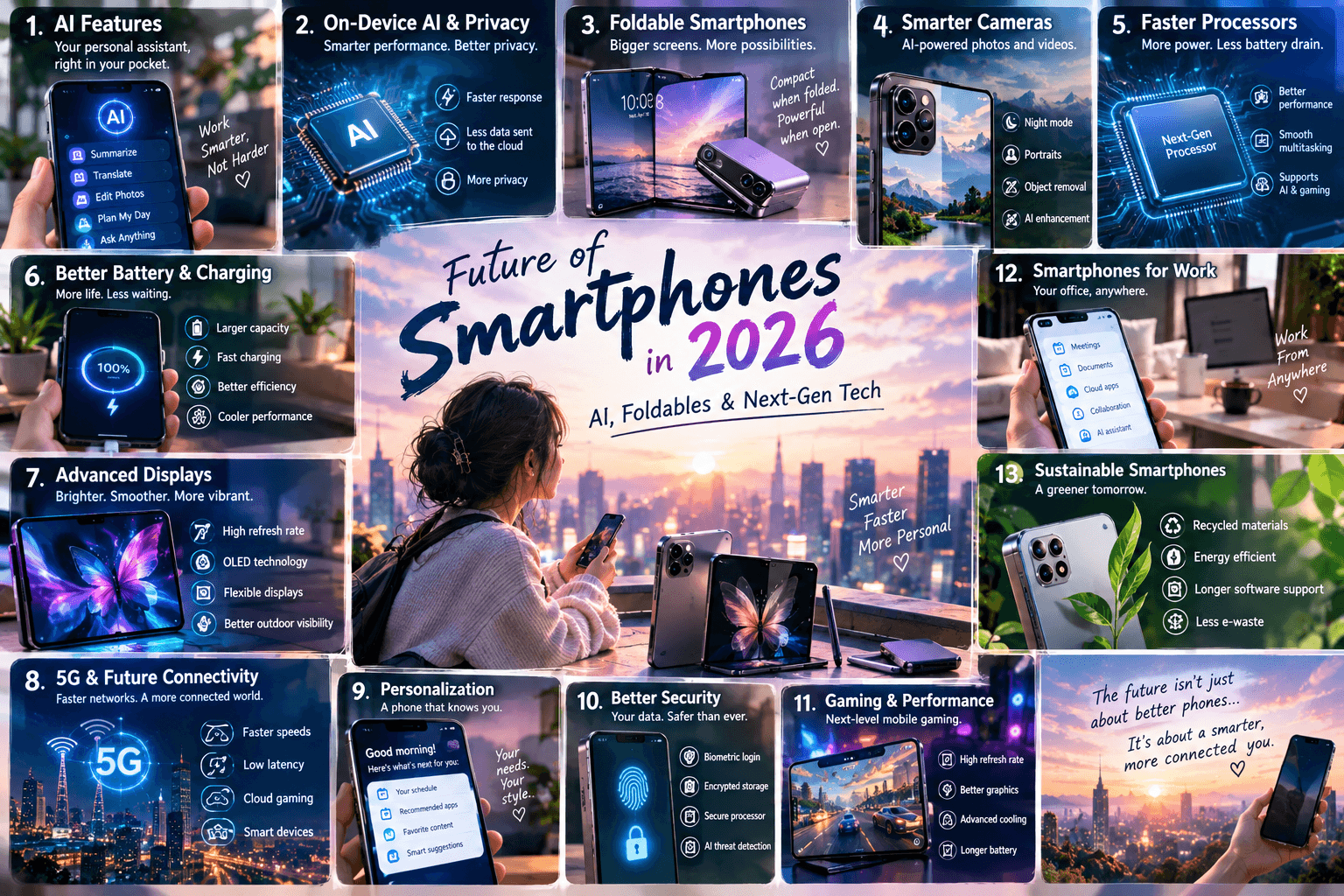
Smartphone Technology in 2026
Smartphones remain a major part of the consumer technology market.
New devices are increasingly focused on:
AI-powered features
Better cameras
Faster processors
Improved battery efficiency
Enhanced displays
Privacy and security
On-device processing
AI-powered editing, translation, search, and personalization are becoming increasingly common smartphone features.
Big Tech Continues to Shape the Industry
Major technology companies continue to influence the direction of the digital economy.
Big Tech companies are investing heavily in areas such as:
Artificial intelligence
Cloud computing
Data centers
Semiconductors
Cybersecurity
Digital services
Consumer devices
Their investments can influence startups, developers, businesses, and consumers around the world.
Semiconductors and Advanced Chips
Semiconductors are essential for modern technology.
Advanced chips power smartphones, computers, data centers, vehicles, AI systems, and many connected devices.
As AI workloads become more demanding, competition around high-performance processors and specialized AI hardware remains an important technology trend.
Cloud Computing Continues to Grow
Cloud computing allows individuals and businesses to access computing resources and software over the internet.
Companies use cloud platforms for:
Data storage
Software development
AI applications
Business operations
Data analysis
Cybersecurity
Cloud infrastructure is also closely connected to the expansion of AI.
Cybersecurity Becomes More Important
As more services move online, cybersecurity remains a major concern.
Organizations are investing in tools designed to protect:
Personal information
Financial data
Business systems
Cloud platforms
Digital identities
Connected devices
AI is also being used by security teams to identify suspicious activity and analyze large volumes of security data.
Robotics and Automation
Robotics is another technology area receiving significant attention.
Modern robots are being developed for applications in:
Manufacturing
Warehousing
Healthcare
Logistics
Agriculture
Research
More FAQs About Tech News 2026
21. What are the biggest technology trends to watch in 2026?
Some of the biggest technology trends in 2026 include artificial intelligence, AI agents, advanced smartphones, robotics, cybersecurity, cloud computing, semiconductor innovation, wearable technology, and connected devices. AI is particularly important because it is being integrated into many different products and services rather than remaining limited to standalone applications.
22. How is artificial intelligence changing technology in 2026?
Artificial intelligence is becoming a core component of many digital products and business systems. AI can help users analyze information, generate content, automate repetitive tasks, improve search, personalize experiences, and assist with software development. Its growing integration is also increasing demand for powerful chips, cloud infrastructure, data centers, and cybersecurity solutions.
23. What new smartphone features are becoming popular in 2026?
Smartphones are increasingly focusing on AI-powered features, improved cameras, faster processors, better battery efficiency, enhanced displays, privacy controls, and on-device processing. AI can assist with photography, translation, writing, search, editing, and personalization, making smartphones more capable productivity and entertainment devices.
24. Why are semiconductor chips important for modern technology?
Semiconductor chips are the foundation of many modern technologies. They power smartphones, computers, vehicles, servers, data centers, artificial intelligence systems, industrial equipment, and connected devices. As technology becomes more advanced, demand for faster and more energy-efficient processors continues to make semiconductor development an important part of the global technology industry.
25. How are AI agents different from traditional chatbots?
Traditional chatbots are generally designed to respond to individual questions or commands. AI agents are being developed to handle more complex, multi-step tasks by analyzing information, using digital tools, and carrying out actions within defined workflows. This could make them particularly useful for business operations, research, customer service, administration, and software development.
26. How is cloud computing influencing technology in 2026?
Cloud computing allows individuals and organizations to access computing power, software, storage, databases, and other digital resources through internet-based infrastructure. It supports modern applications, remote work, data analysis, AI development, online services, and business operations. The continued growth of AI is also increasing demand for cloud infrastructure.
27. Why is cybersecurity becoming more important?
As more personal, financial, business, and government activities move online, protecting digital systems becomes increasingly important. Cybersecurity helps organizations defend against unauthorized access, malware, phishing, data theft, and other threats. The growing use of AI can also create new security opportunities as well as new risks, making strong cybersecurity practices essential.
28. How is AI affecting cybersecurity?
AI can help cybersecurity teams process large amounts of information and identify unusual activity more efficiently. Security organizations may use AI to detect patterns, prioritize potential threats, and support incident response. However, attackers can also use AI to create more convincing scams or automate certain malicious activities, creating an ongoing technology and security challenge.
29. What role will robotics play in technology in 2026?
Robotics is expanding across industries such as manufacturing, logistics, healthcare, agriculture, research, and warehousing. Modern robots can perform repetitive or physically demanding tasks with increasing levels of precision. Advances in AI may also allow robots to better understand environments and perform more flexible tasks, although practical capabilities vary significantly between systems.
30. How are wearable devices changing in 2026?
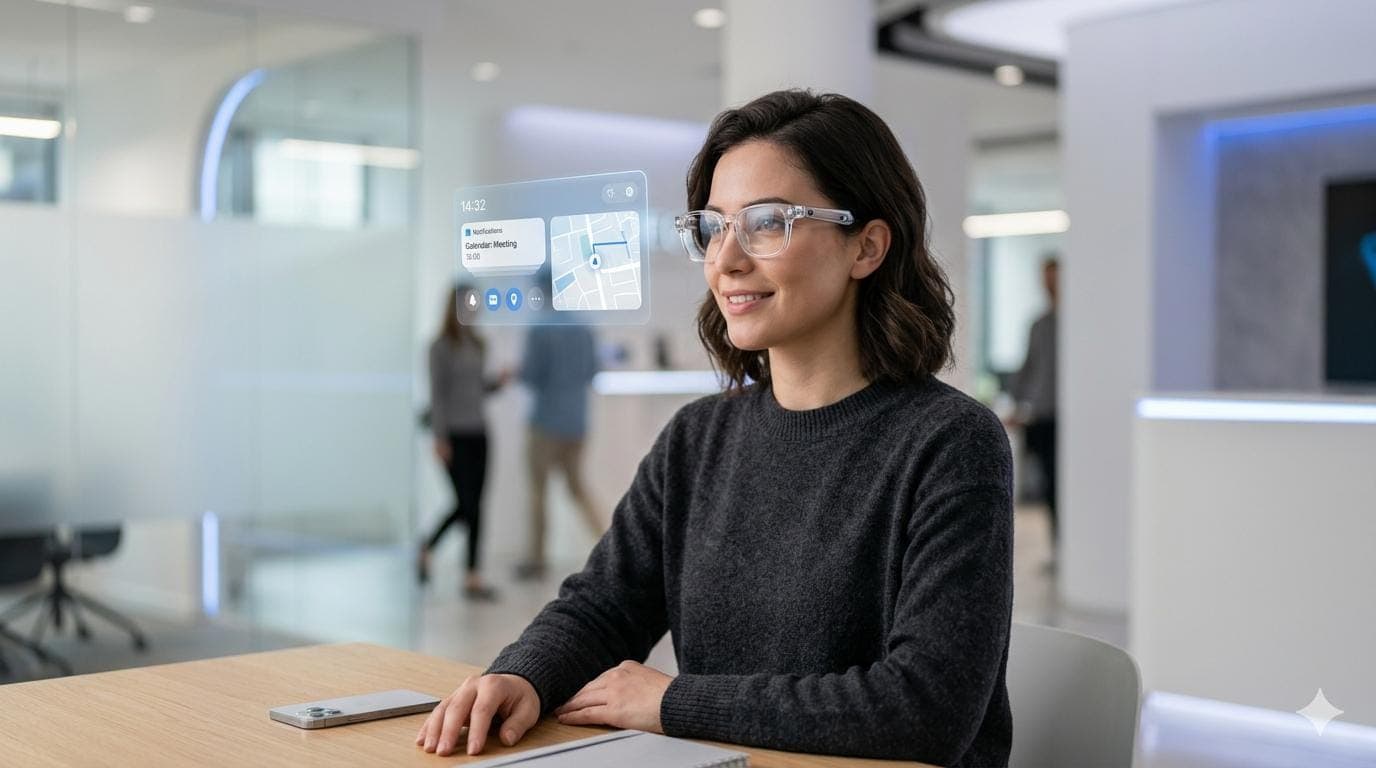
Wearable technology includes smartwatches, fitness trackers, smart glasses, and other connected devices. Newer products are increasingly focused on health-related tracking, notifications, communication, AI assistance, fitness information, and seamless interaction with smartphones and other digital services. Battery life, privacy, comfort, and accuracy remain important considerations for consumers.
31. How is technology changing the way people work?
Digital technology is changing workplaces through cloud software, automation, AI assistants, video communication, collaboration platforms, and data analytics. Employees can use these tools to complete tasks faster, communicate remotely, organize information, and automate repetitive processes. At the same time, workers may need to develop new digital and AI-related skills as job responsibilities evolve.
32. Will AI replace human workers in 2026?
AI may automate some repetitive tasks, but its impact on employment is likely to vary across industries and occupations. In many situations, AI can function as a productivity tool that helps employees complete work rather than completely replacing them. Human judgment, communication, creativity, leadership, and specialized expertise can remain important even as automation increases.
33. What are the biggest challenges facing technology companies in 2026?
Technology companies may face challenges involving cybersecurity, privacy, regulation, competition, high infrastructure costs, semiconductor supply, energy requirements, changing consumer expectations, and responsible AI development. Companies must balance rapid innovation with reliability, security, affordability, and compliance with applicable rules.
34. How is technology affecting education in 2026?
Technology is giving students and teachers access to digital learning platforms, AI-assisted tools, online resources, interactive applications, and personalized learning experiences. AI can help explain difficult concepts and support research or practice. However, schools also need to consider academic integrity, privacy, accuracy, and appropriate use of AI-generated content.
35. How is technology changing healthcare?
Technology is supporting healthcare through digital records, telemedicine, medical imaging, wearable devices, data analysis, and AI-assisted tools. These technologies may improve efficiency and help professionals analyze information. However, healthcare technology requires careful testing, security, privacy protection, and professional oversight because errors can have serious consequences.
36. Why are data centers important for modern technology?
Data centers provide the computing power, storage, networking, cooling, and other infrastructure required to operate many online services. They are particularly important for AI because advanced AI models can require substantial computing resources. As demand for AI and cloud services grows, investment in data-center infrastructure and energy efficiency is receiving increased attention.
37. What technology trends could influence businesses in 2026?
Businesses are paying attention to AI automation, cloud computing, cybersecurity, data analytics, digital payments, robotics, software platforms, and advanced communication technologies. Companies are increasingly evaluating technology not only for innovation but also for its ability to reduce costs, improve productivity, serve customers, and create new revenue opportunities.
38. How important is privacy in the technology industry?
Privacy is increasingly important because digital products can collect large amounts of personal and behavioral information. Consumers and organizations want greater control over how data is collected, stored, processed, and shared. Companies therefore need appropriate security measures, transparent data practices, and compliance with applicable privacy requirements.
39. What should consumers consider before buying new technology?
Consumers should consider the device's features, price, performance, battery life, software support, security, privacy, durability, compatibility, and long-term usefulness. Marketing claims do not always provide the complete picture, so comparing independent information and understanding actual needs can help consumers make better purchasing decisions.
40. What should people expect from the technology industry in the rest of 2026?
Technology is likely to remain focused on AI, automation, advanced computing, smartphones, cybersecurity, robotics, cloud services, and digital innovation. The pace of change may vary between sectors, but businesses and consumers can expect continued experimentation with AI-powered products and services. Responsible development, security, affordability, and practical usefulness will remain important factors in determining which technologies achieve widespread adoption.