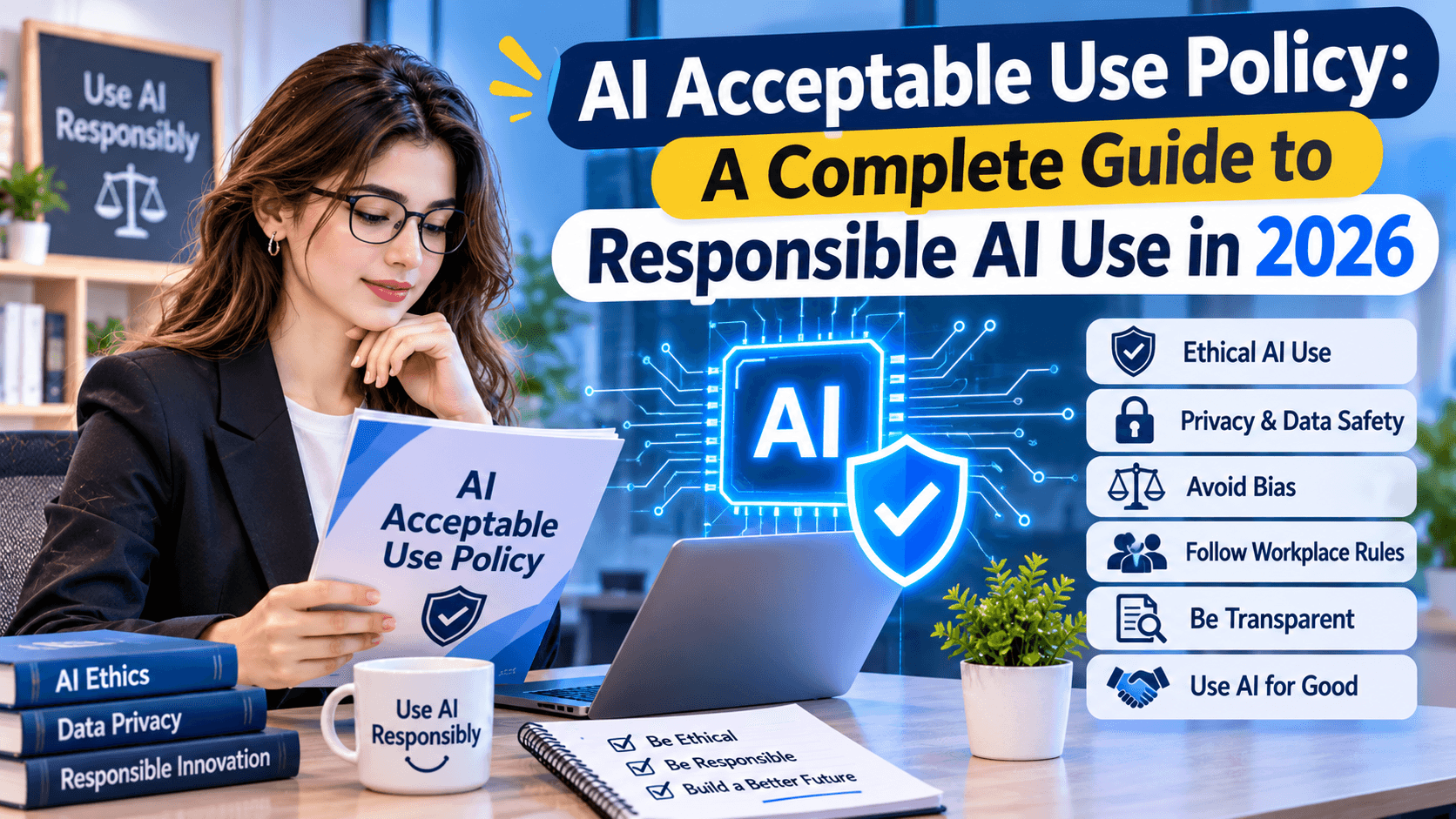

An AI acceptable use policy is a short, plain-language list of rules for how your team may use AI tools at work. It says what is allowed, what is banned, what data AI may see, and who checks the work.You do not need a long legal document. For a small team, one or two pages that people actually read will do more good than a 20-page policy nobody opens.
Why a Small Team Needs One Now
Most teams did not plan their AI use. One person tries a new tool, another pastes in a customer email, a third lets an AI draft a reply and sends it without checking. None of them meant harm, but the risks add up: private data shared, wrong answers sent to customers, and work nobody can explain later.
A policy fixes that. It gives everyone the same rules, so good use is faster, and risky use is stopped before it causes a problem. It also helps new staff. They should not have to guess what is safe.
What to Include: The 6 Parts That Matter
1. The tools you allow. List every AI tool the team may use, and what each one may be used for. If a tool is not on the list, staff must ask before using it with work data.
2. Allowed uses. Be specific. For example: drafting first versions, summarising public information, brainstorming ideas, and checking grammar are usually allowed, with a human check before anything goes out.
3. Banned uses. Be just as specific. For example: no AI decisions about hiring, pay, or firing without a human review; no AI tool connected to payments without approval; and no tool that can spend money or move funds on its own.
4. Data rules. This is the most important part. State what must never go into a public AI tool: customer names and contact details, passwords, payment details, private business data, and email codes. Use only approved business tools for work data, and check their privacy settings.
5. Checking work. Every AI draft that reaches a customer, a quote, or a public post must be checked by a person. The checker is responsible for facts, tone, and promises made in the text
6. Who owns the policy. Name one person who keeps the tool list up to date, answers questions, and reviews the policy every few months, or when a new tool arrives.
Allowed vs Risky: Simple Examples
Ask first: using AI with customer data, connecting AI to email, calendars, or files, and using a new tool that stores your prompts.
A 1-Page Policy You Can Copy and Adapt
1. Use only the AI tools on our approved list for work.
2. Never put customer data, passwords, payment details, or private business data into a personal AI tool.
3. Check every AI draft before it reaches a customer or goes public.
4. AI must never approve spending, payments, or customer promises on its own.
5. Tell the policy owner about mistakes at once. Reporting a mistake is safe.
6. Ask before connecting AI to email, files, or customer systems.
7. If you are unsure, ask. A quick question is better than a costly mistake.
Review it every few months. AI tools change fast, and a policy written in January may miss a tool your team started using in June.
FAQ: AI Acceptable Use Policy
Do small businesses really need an AI policy?
Yes, in a simple form. Even one rule — “never paste customer data into a public AI tool” — prevents the most common mistake.
Is a policy the same as AI governance?
No. Governance is the full system: rules, roles, checks, and reviews. An acceptable use policy is one part of it: the written rules staff follow every day.
How long should the policy be?
As short as you can make it while still answering: which tools, what data, what needs a human check, and who to ask. Two pages is plenty for most small teams.
Good rules do not slow people down. They let your team use AI with confidence, because everyone knows where the line is.