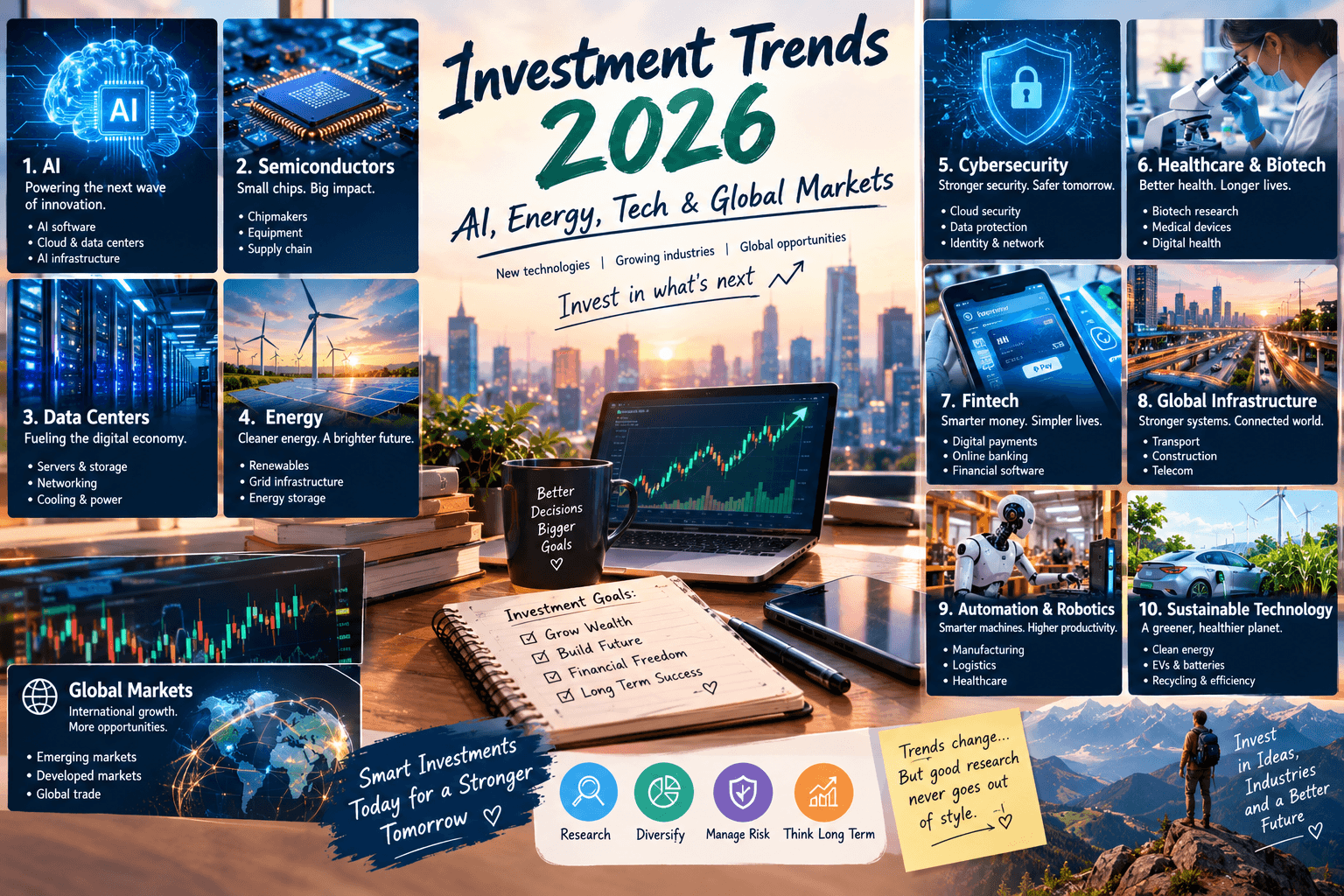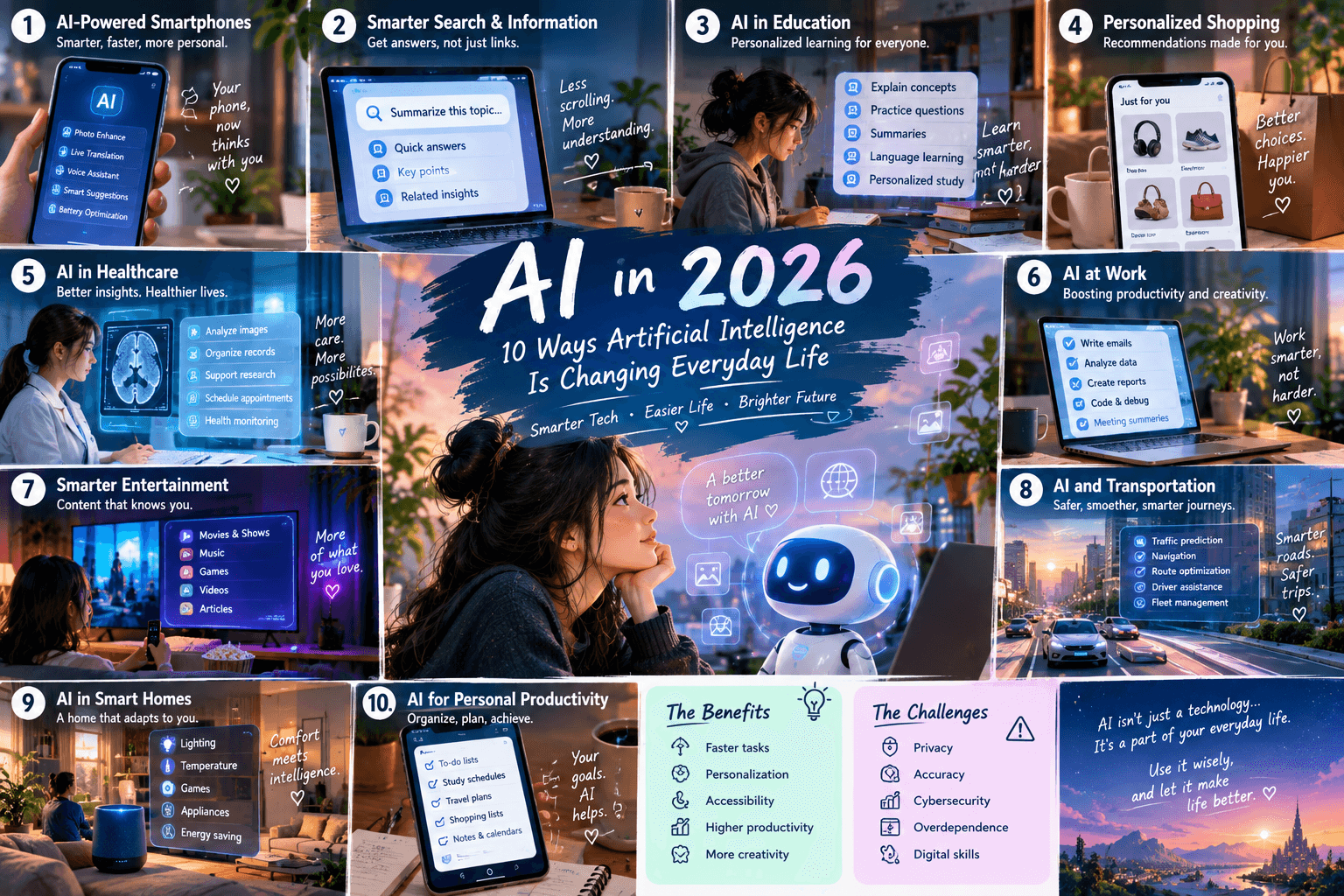

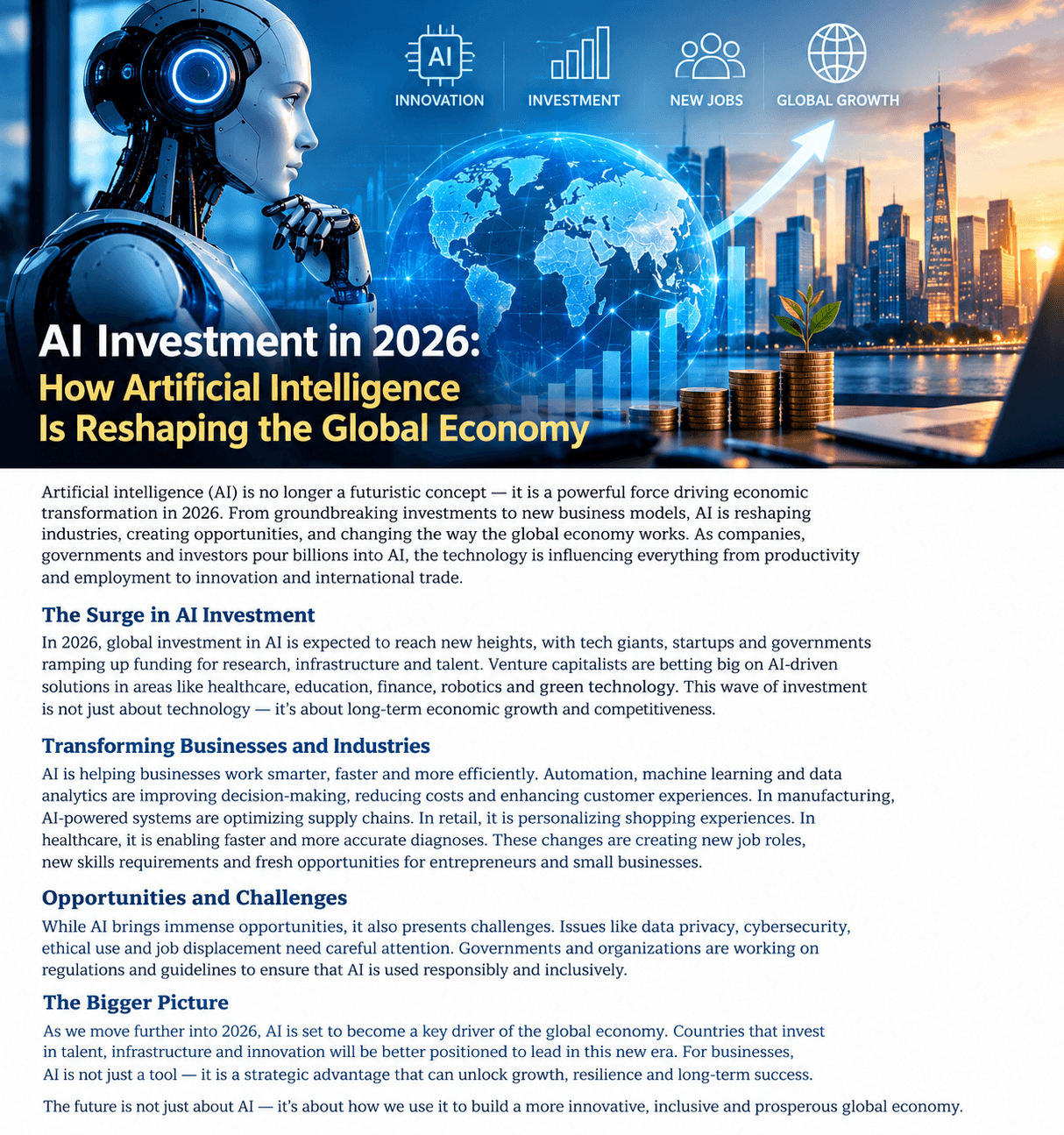
Artificial intelligence remains one of the most important technology trends of 2026i. AI is moving beyond experimental tools and becoming increasingly integrated into business software, consumer applications, healthcare, education, cybersecurity, finance, and creative work.
As AI capabilities continue to develop, businesses, governments, developers, and consumers are paying closer attention to new models, AI agents, automation, computing infrastructure, and the wider impact of artificial intelligence.
AI Continues to Expand Across Industries
AI is no longer limited to technology companies. Organizations across many industries are exploring ways to use AI to improve productivity, analyze information, automate repetitive tasks, and create new digital services.
Industries exploring AI applications include:
Healthcare
Finance
Education
Retail
Manufacturing
Transportation
Cybersecurity
Marketing
Customer service
The speed of adoption varies considerably between industries and organizations.
AI Agents Are Becoming a Major Trend
One of the most discussed developments in AI is the rise of AI agents.
AI agents are designed to handle multi-step tasks rather than simply responding to individual prompts. Depending on the system, an agent may be able to analyze information, use software tools, complete workflows, and assist with decision-making.
Businesses are particularly interested in agents for research, customer support, software development, administration, and workflow automation.
Generative AI Continues to Evolve
Generative AI can produce text, images, audio, video, and software code.
In 2026, generative AI continues to influence creative and professional workflows. Users are increasingly using AI tools for brainstorming, editing, content creation, research assistance, and productivity.
However, questions about accuracy, copyright, privacy, and responsible use remain important.
AI and Business Productivity
Businesses are evaluating AI based not only on its capabilities but also on whether it delivers measurable value.
Potential benefits include:
Faster data analysis
Automated administrative tasks
Improved customer support
Software development assistance
Personalized marketing
Workflow optimization
Organizations also need to consider implementation costs, security, employee training, and governance.
AI Infrastructure and Data Centers
Advanced AI systems require substantial computing infrastructure.
This has increased attention on:
AI chips
GPUs and specialized processors
Data centers
Cloud computing
Networking infrastructure
Energy consumption
The growth of AI is therefore connected to both the semiconductor industry and the global energy sector.
AI Chips and Semiconductors
Specialized computing hardware plays an important role in AI development.
Companies across the semiconductor ecosystem are competing to develop processors capable of handling increasingly demanding AI workloads.
Demand for advanced chips is also influencing investment in manufacturing capacity and technology infrastructure.
AI in Healthcare
Healthcare is one of the areas where AI has significant potential.
AI tools may assist with:
Medical image analysis
Research
Administrative tasks
Patient data analysis
Drug discovery
Clinical decision support
Healthcare AI requires careful testing and oversight because errors can have serious consequences.
AI in Education
AI is also changing the education technology landscape.
Students may use AI tools for explanations, brainstorming, language practice, research assistance, and personalized learning.
At the same time, schools and educators continue to consider issues involving academic integrity, assessment, privacy, and appropriate AI use.
AI and Cybersecurity
AI has become increasingly relevant to cybersecurity.
Security teams can use AI to analyze large volumes of data and identify unusual activity more quickly.
However, malicious actors can also use AI to create more convincing phishing messages, automate certain attacks, or scale malicious activity.
This makes responsible AI security increasingly important.
AI and the Job Market
The impact of AI on employment remains one of the biggest questions surrounding the technology.
AI may automate certain repetitive tasks while increasing demand for people with skills in areas such as AI development, data analysis, cybersecurity, system management, and AI governance.
Many jobs may evolve rather than disappear completely, with workers using AI as a productivity tool.
AI Regulation and Governance
As AI adoption grows, governments and organizations are developing approaches to AI governance.
Important areas include:
Data privacy
Transparency
Safety
Copyright
Accountability
Security
High-risk AI applications
Different countries may take different approaches, making regulation an important issue for companies operating internationally.
AI and Consumer Technology
AI is increasingly being integrated into consumer products.
Examples include:
Smartphones
Search tools
Digital assistants
Cameras
Smart-home devices
Wearables
Personal productivity applications
The goal is often to make devices more personalized, automated, and useful.
AI and the Creative Industries
Writers, designers, filmmakers, musicians, and other creators are experimenting with AI-assisted workflows.
AI can help with brainstorming, editing, visual concepts, audio generation, and other creative tasks.
At the same time, creators and businesses continue to debate copyright, originality, attribution, and responsible use.
Challenges Facing Artificial Intelligence
Despite rapid progress, AI still faces important challenges.
These include:
Inaccurate outputs
Bias
Privacy concerns
Cybersecurity risks
High computing costs
Energy consumption
Copyright questions
Regulatory uncertainty
Understanding these limitations is important when evaluating AI products and claims.
What to Watch in AI News
Readers following AI developments in 2026 may want to monitor:
New AI models
AI agents
Semiconductor developments
Data-center investment
Enterprise AI adoption
AI regulation
AI cybersecurity
Healthcare AI
AI-related job trends
Consumer AI products
These areas can provide a broader picture of how artificial intelligence is developing.
FAQs About AI News 2026
1. What is the biggest AI trend in 2026?
AI agents, generative AI, enterprise adoption, specialized AI hardware, and AI infrastructure are among the major areas receiving attention.
2. What are AI agents?
AI agents are systems designed to perform multi-step tasks and interact with digital tools or software to accomplish objectives.
3. How is AI changing businesses?
AI can automate repetitive work, analyze data, assist employees, improve customer service, and support business decision-making.
4. What is generative AI?
Generative AI refers to systems capable of creating content such as text, images, audio, video, or code.
5. Why are AI chips important?
AI applications often require significant computing power, making specialized processors important for training and running advanced models.
6. How is AI being used in healthcare?
AI can assist with medical research, image analysis, administrative processes, data analysis, and some forms of clinical decision support.
7. Can AI replace jobs?
AI can automate certain tasks and change job responsibilities, but its overall employment impact varies by industry, occupation, and how organizations adopt the technology.
8. Is AI useful for students?
AI can support learning, explanations, brainstorming, language practice, and research, but students should follow their school's rules regarding AI use.
9. Why is AI regulation important?
Regulation can address issues such as privacy, safety, transparency, accountability, and the use of AI in sensitive applications.
10. How does AI affect cybersecurity?
AI can help security teams identify threats, while attackers may also use AI to increase the scale or sophistication of malicious activity.
11. Does AI consume a lot of energy?
Some large AI systems require substantial computing resources, which can increase electricity and infrastructure requirements.
12. What industries are adopting AI?
Technology, finance, healthcare, retail, manufacturing, education, transportation, marketing, and customer service are among the industries exploring AI.
13. What are the risks of generative AI?
Risks can include inaccurate information, bias, privacy problems, copyright disputes, security issues, and misuse.
14. How is AI changing smartphones?
AI features can support photography, translation, search, voice assistants, personalization, editing, and other device functions.
15. Can AI create images and videos?
Yes. Generative AI systems can create or modify visual and video content, depending on the capabilities of the specific tool.
16. Why are data centers important for AI?
Data centers provide the computing, storage, networking, and cooling infrastructure required by many AI systems.
17. What skills are becoming important because of AI?
AI literacy, data analysis, cybersecurity, software development, critical thinking, communication, and domain-specific expertise can be valuable.
18. Will AI continue growing in 2026?
AI development and adoption are expected to remain major technology themes, although the pace can vary across industries and markets.
19. What should people watch in AI news?
New models, AI agents, chips, regulation, business adoption, cybersecurity, healthcare applications, and consumer AI products are important areas.
20. How can people use AI responsibly?
Users should verify important information, protect sensitive data, understand tool limitations, follow applicable rules, and use AI as a support tool rather than blindly trusting every output.
Conclusion
AI news in 2026 is being shaped by rapid advances in generative AI, AI agents, specialized hardware, enterprise adoption, cybersecurity, healthcare, education, and consumer technology.
The next stage of AI development will depend not only on better models but also on infrastructure, regulation, responsible adoption, and how effectively people and organizations integrate AI into real-world workflows.