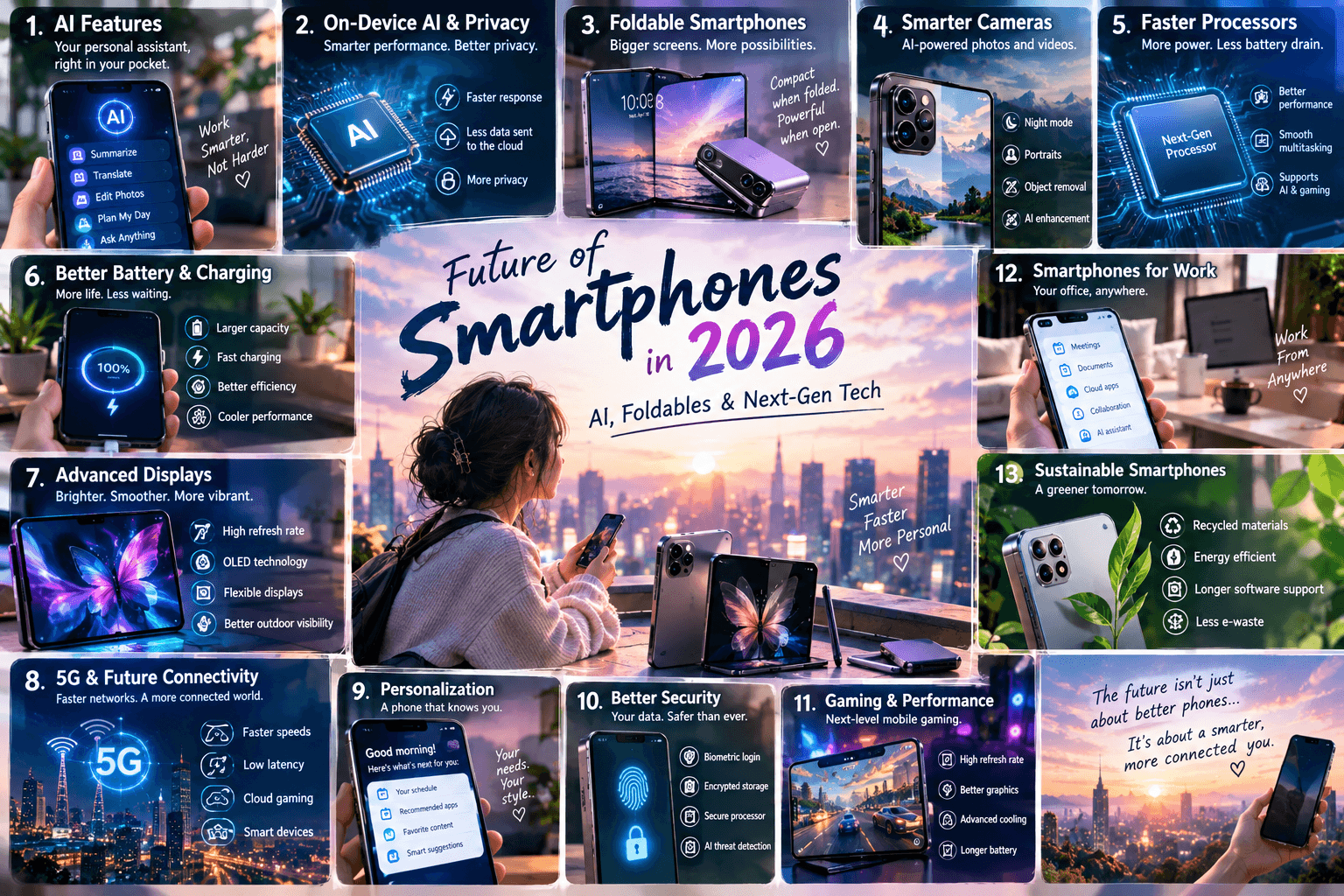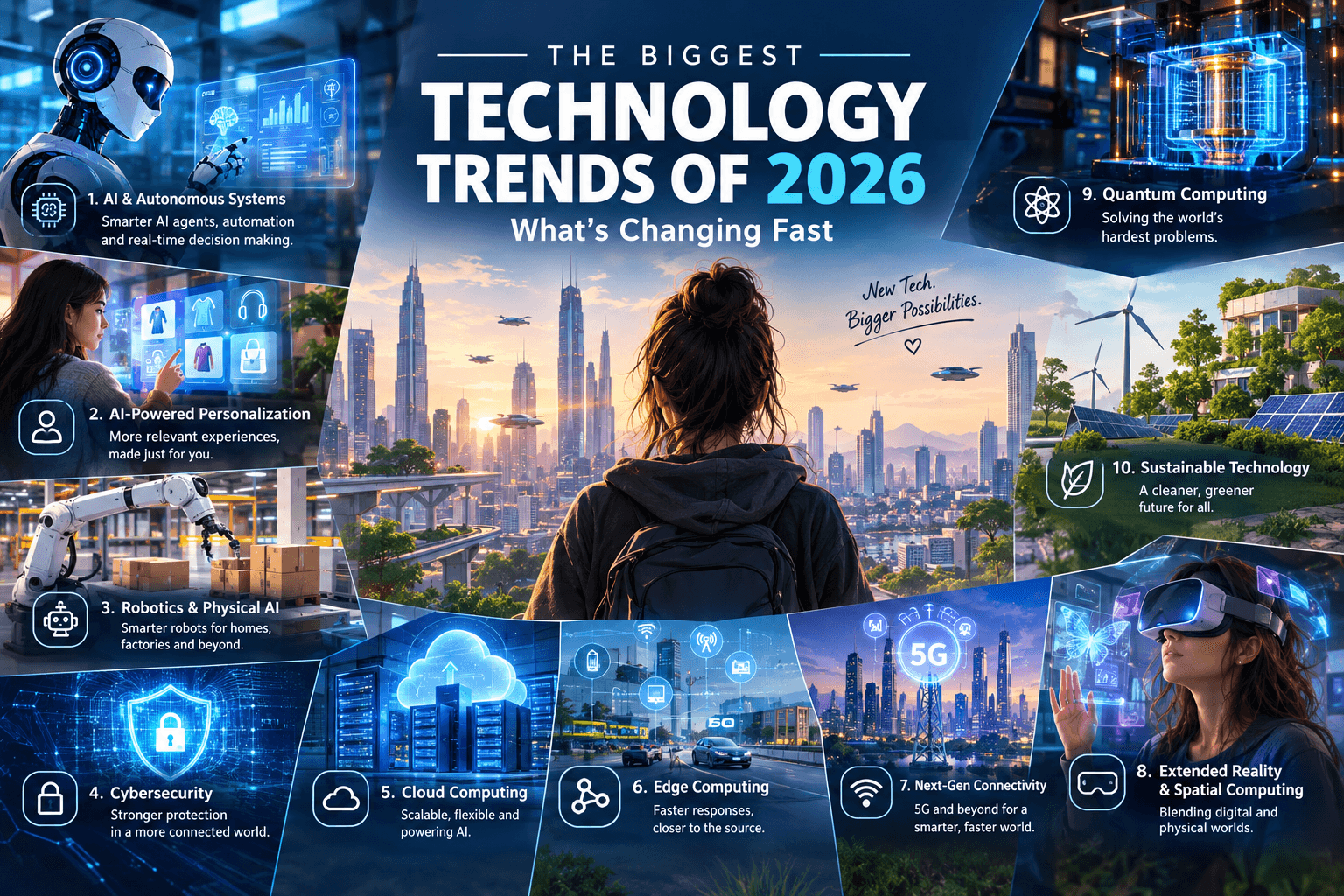
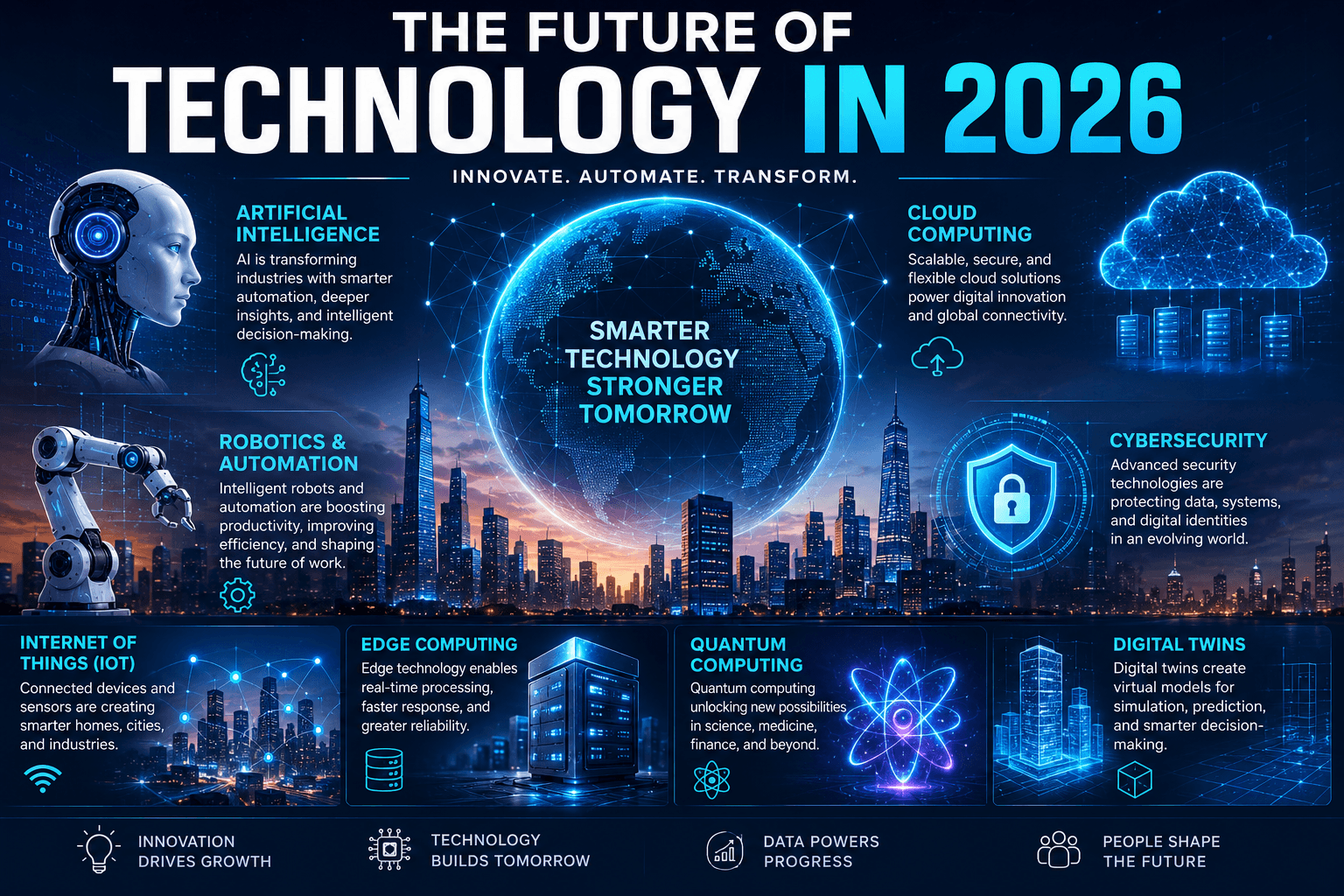

Technology is entering a new era in 2026. Artificial intelligence, cloud computing, cybersecurity, robotics, quantum computing, and connected devices are changing how businesses and individuals work, communicate, and solve problems.
Unlike previous technology cycles, today's transformation is not centered on one innovation. Instead, multiple technologies are developing together and creating new digital ecosystems.
For businesses, understanding these changes is becoming essential for remaining competitive.
Artificial Intelligence Is Driving the Technology Revolution
Artificial intelligence has become one of the most influential technologies shaping the digital economy.
Businesses are using AI to automate tasks, analyze information, generate content, support customers, detect risks, and improve decision-making.
The emergence of more capable AI agents is also changing how software works. Instead of simply responding to commands, AI systems can increasingly perform multi-step tasks with limited human intervention.
This could transform areas such as software development, research, marketing, customer service, and business operations.
AI Agents Are Becoming Digital Workers
AI agents represent an important evolution beyond traditional chatbots.
An AI agent can potentially understand an objective, plan a sequence of actions, use digital tools, and complete tasks.
For example, an organization could use an AI agent to gather information, analyze documents, prepare a report, and send the results to an employee for review.
As these systems improve, companies will need new approaches to managing AI-powered workflows, permissions, security, and human oversight.
Cloud Computing Continues to Expand
Cloud computing remains a foundation of modern digital infrastructure.
Businesses rely on cloud platforms for computing power, storage, applications, analytics, and AI development.
The next stage of cloud computing is becoming increasingly focused on flexibility and specialized infrastructure.
Companies can combine public cloud, private infrastructure, and specialized computing resources to meet different performance, security, and cost requirements.
Edge Computing Enables Faster Technology
Not every digital task can depend entirely on centralized cloud systems.
Edge computing processes information closer to where it is generated.
This can be particularly useful for applications that require rapid responses, such as industrial automation, autonomous systems, connected vehicles, smart cities, and real-time monitoring.
By reducing the distance data needs to travel, edge computing can support faster responses and potentially reduce network demands.
Cybersecurity Is Becoming More Important
As businesses become increasingly digital, cybersecurity is becoming a fundamental technology priority.
Organizations face risks ranging from phishing and ransomware to data breaches and attacks against cloud infrastructure.
AI is also changing cybersecurity.
Security teams can use AI to identify unusual behavior, analyze large volumes of security information, and detect potential threats more quickly.
At the same time, attackers can use AI to create more sophisticated attacks.
This means organizations need stronger security strategies, employee training, identity protection, and continuous monitoring.
Quantum Computing Is Moving Forward
Quantum computing is another technology attracting significant attention.
Unlike traditional computers, quantum computers use quantum mechanical principles to process certain types of problems differently.
Potential applications include advanced simulations, materials research, optimization, and some areas of cryptography.
Quantum computing is still developing, and practical large-scale applications remain limited. However, businesses and governments are increasingly researching the technology and preparing for its potential long-term impact.
Robotics Is Becoming More Intelligent
Robotics is evolving through advances in AI, sensors, computer vision, and machine learning.
Modern robots can perform increasingly complex tasks in manufacturing, logistics, healthcare, agriculture, and other industries.
AI-powered robotics could allow machines to operate in environments that previously required significant human control.
The combination of robotics and AI may become particularly important for warehouses, factories, delivery systems, and industrial operations.
The Internet of Things Is Creating Connected Environments
The Internet of Things (IoT) connects physical objects to digital networks.
Sensors can collect information from machines, vehicles, buildings, appliances, and industrial equipment.
Businesses can use this information to monitor performance, predict maintenance requirements, optimize energy consumption, and improve operational efficiency.
When IoT data is combined with AI and edge computing, connected systems can become significantly more intelligent.
Digital Twins Are Transforming Operations
Digital twins create digital representations of physical objects, systems, or environments.
Organizations can use digital twins to simulate conditions, monitor performance, and test potential changes before implementing them in the real world.
For example, manufacturers can create digital models of production systems to identify potential bottlenecks and test operational improvements.
This can reduce experimentation costs and improve decision-making.
Technology Is Changing the Workplace
The modern workplace is increasingly shaped by AI and collaboration technologies.
Employees can use AI assistants to summarize information, prepare documents, analyze data, and support research.
Rather than replacing every human task, these technologies are increasingly being used to augment employee capabilities.
The result could be a workplace where humans focus more on judgment, creativity, communication, and strategic thinking while technology handles repetitive activities.
The Growing Importance of Technology Skills
Technology adoption is also changing the skills businesses need.
Employees increasingly benefit from understanding AI tools, cybersecurity, data analysis, automation, and digital collaboration.
AI literacy is becoming particularly valuable because employees need to understand not only how to use AI systems but also their limitations and risks.
Organizations that invest in continuous learning can help employees adapt as technology evolves.
Sustainable Technology Is Becoming a Priority
Technology development also needs to consider energy consumption and environmental impact.
Data centers, AI infrastructure, electronic devices, and digital networks require significant resources.
Businesses are therefore exploring more efficient computing systems, renewable energy, improved cooling technologies, and sustainable hardware practices.
The future of technology will increasingly involve balancing performance with efficiency.
The Importance of Responsible Technology
Rapid innovation creates new ethical and regulatory challenges.
AI systems can raise questions about privacy, bias, transparency, intellectual property, and accountability.
Businesses need clear policies governing how technology is developed and used.
Responsible technology strategies can help organizations innovate while protecting customers, employees, and other stakeholders.
Conclusion
The technology landscape in 2026 is being shaped by the convergence of AI, cloud computing, edge computing, cybersecurity, robotics, IoT, quantum computing, and digital twins.
These technologies are not developing independently. They are increasingly working together to create smarter and more connected systems.
For businesses, the key challenge is not simply adopting the newest technology. It is identifying where technology can solve real problems, create value, improve efficiency, and support long-term growth.
As innovation continues, organizations that combine technology with skilled people, strong security, responsible governance, and clear business strategies will be better positioned for the digital future.
FAQs: The Future of Technology in 2026
1. What are the biggest technology trends in 2026?
Major trends include artificial intelligence, AI agents, cloud computing, edge computing, cybersecurity, robotics, IoT, quantum computing, and digital twins.
2. How is AI changing technology?
AI is helping machines understand information, automate tasks, analyze data, generate content, and support complex decision-making. It is becoming a core component of many modern technology systems.
3. What are AI agents?
AI agents are intelligent systems designed to understand objectives, plan actions, use digital tools, and complete multi-step tasks with limited human intervention.
4. Why is cloud computing important?
Cloud computing provides businesses with flexible access to computing power, storage, applications, and AI infrastructure without requiring organizations to maintain all infrastructure themselves.
5. What is edge computing?
Edge computing processes data closer to where it is generated instead of sending everything to a centralized cloud. This can improve response times for applications that require real-time processing.
6. How is technology changing cybersecurity?
AI and advanced analytics can help security teams detect unusual activity and respond to threats faster. However, cybercriminals can also use new technologies to create more sophisticated attacks.
7. What is quantum computing?
Quantum computing is a developing form of computing that uses quantum mechanical principles. It has potential applications in areas such as scientific simulation, optimization, materials research, and cryptography.
8. How is robotics becoming more advanced?
Advances in AI, sensors, and computer vision are allowing robots to perform increasingly complex tasks in manufacturing, logistics, healthcare, agriculture, and other industries.
9. What is the Internet of Things?
The Internet of Things (IoT) refers to connected physical devices that collect and exchange data. IoT technology is used in smart buildings, factories, vehicles, homes, and cities.
10. What is a digital twin?
A digital twin is a digital representation of a physical object, system, or environment. Businesses can use it to monitor performance, run simulations, identify problems, and test improvements.
11. What technology skills will be important in 2026?
AI literacy, data analysis, cybersecurity awareness, automation, digital communication, problem-solving, and adaptability are becoming increasingly valuable skills.
12. What is the future of technology?
Technology is likely to become more intelligent, connected, automated, and personalized. The strongest developments will come from combining AI with cloud computing, robotics, IoT, cybersecurity, and other emerging technologies.