
TNTech News 2026: New Gadgets, Big Tech & Digital Trends
Introduction
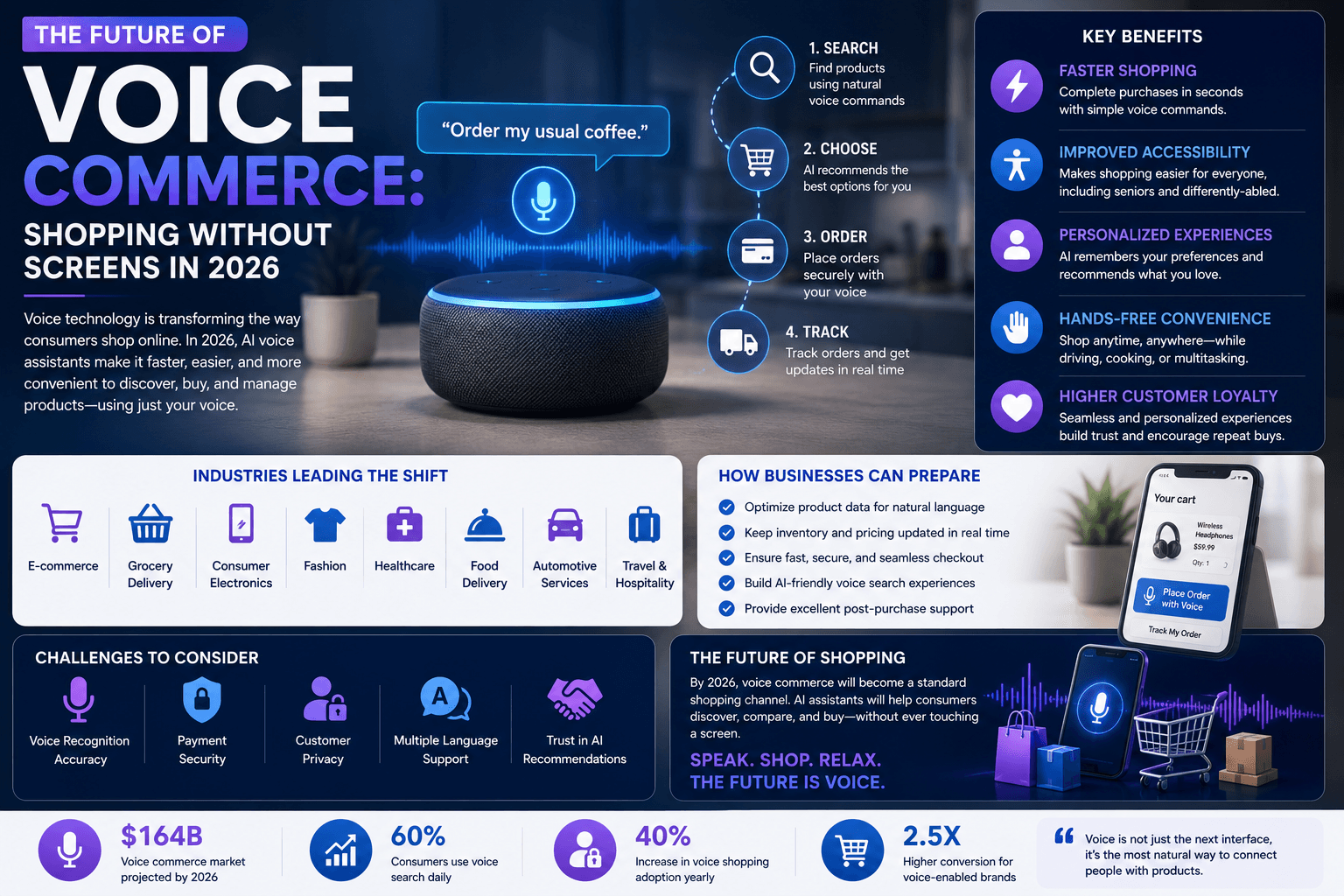
At our organisation, we believe voice commerce is reshaping the future of digital retail by making shopping faster, more convenient, and more personalised. As AI-powered voice assistants continue to evolve, customers increasingly expect seamless shopping experiences that allow them to search for products, compar
Our strategy focuses on helping businesses prepare for this shift by adopting voice-friendly technologies, optimising digital experiences, and creating customer journeys that are intuitive, secure, and accessible across multiple devices.
1. Deliver Customer-Centric Voice Experiences
Our approach begins with understanding how customers naturally communicate. By designing voice interactions that feel conversational and intuitive, businesses can provide faster responses and improve the overall shopping experience.
2. Optimise Content for Voice Search
Voice searches are more conversational than traditional text searches. We encourage businesses to optimise product descriptions, FAQs, and website content using natural language and long-tail keywords that align with how customers speak.
3. Build AI-Ready Product Catalogues
Accurate and well-structured product data is essential for voice commerce. Our strategy focuses on maintaining organised product information, clear descriptions, real-time inventory updates, and structured data that AI assistants can easily understand.
4. Create Seamless Omnichannel Shopping
Customers expect consistent experiences whether they shop through a smart speaker, smartphone, website, or connected vehicle. We promote integrated systems that deliver a unified shopping journey across every digital touchpoint.
5. Personalise Every Interaction
Modern consumers value personalised experiences. By using customer preferences, purchase history, and browsing behaviour responsibly, businesses can recommend relevant products and create more meaningful customer relationships.
6. Prioritise Security and Trust
Customer confidence is essential for voice commerce. Our strategy emphasises secure payment systems, strong authentication methods, transparent privacy practices, and compliance with data protection standards to ensure every transaction is safe.
7. Support Accessibility
Voice technology makes digital shopping more inclusive for older adults and individuals with visual or physical disabilities. We encourage businesses to develop accessible voice experiences that serve a wider audience.
Frequently Asked Questions (FAQs)
1. What is voice commerce?
Voice commerce, or V-commerce, is the process of searching for, purchasing, and managing products or services using voice commands through AI-powered assistants and smart devices.
2. How does voice commerce work?
Voice commerce uses artificial intelligence, natural language processing (NLP), and voice recognition technology to understand spoken commands, search for products, complete purchases, and provide order updates.
3. Why is voice commerce becoming popular?
Consumers prefer faster, hands-free, and more convenient shopping experiences. Voice technology simplifies the purchasing process by allowing users to shop without typing or browsing websites.
4. What are the benefits of voice commerce for businesses?
Businesses can improve customer engagement, increase sales, provide personalised shopping experiences, strengthen customer loyalty, and reach consumers across multiple voice-enabled devices.
5. Which industries benefit most from voice commerce?
Voice commerce is widely used in e-commerce, grocery delivery, healthcare, fashion, consumer electronics, food delivery, travel, hospitality, and automotive services.
6. How can businesses optimise for voice commerce?
Businesses should optimise website content for natural language, implement structured data, maintain accurate product information, improve page speed, and create secure, seamless checkout experiences.
7. Is voice commerce secure?
Yes, modern voice commerce platforms use encryption, secure payment gateways, multi-factor authentication, and privacy protections. Businesses should also follow best practices for safeguarding customer information.
8. How does artificial intelligence improve voice commerce?
AI analyses customer behaviour, understands natural language, personalises product recommendations, automates customer support, and improves the accuracy of voice interactions.
9. What challenges does voice commerce face?
Some challenges include voice recognition accuracy, customer privacy concerns, payment security, multilingual support, and building trust in AI-generated recommendations.
10. How can businesses prepare for the future of voice commerce?
Businesses should invest in AI technologies, optimise content for voice search, improve digital accessibility, monitor customer behaviour, and continuously update their voice commerce strategy to meet evolving consumer expectations.
11. Will voice commerce replace traditional online shopping?
Voice commerce is expected to complement rather than replace websites and mobile apps. Consumers will continue using multiple shopping channels depending on their preferences and purchasing needs.
12. Why should businesses invest in voice commerce now?
Early adoption allows businesses to stay ahead of competitors, improve customer experiences, increase brand visibility in voice search, and prepare for the growing demand for AI-powered shopping experiences.,,
13. Enhance Customer Engagement Through Voice Interactions
Voice commerce is more than a purchasing tool—it creates a more engaging customer experience. AI-powered voice assistants can answer product questions, provide recommendations, notify customers about promotions, and assist with post-purchase support. Businesses that create meaningful voice interactions can strengthen customer relationships and improve overall satisfaction.
14. Improve Product Discovery with AI
Finding the right product quickly is one of the biggest advantages of voice commerce. AI analyses customer preferences, shopping history, and search intent to recommend products that match individual needs. This personalised approach helps customers make faster purchasing decisions while increasing sales opportunities for businesses.
15. Create a Seamless Omnichannel Experience
Consumers use multiple devices throughout the day, including smartphones, smart speakers, laptops, tablets, and connected vehicles. Businesses should ensure that customers enjoy a consistent shopping experience regardless of the device they use. Integrating voice commerce with websites, mobile apps, and physical stores creates a smooth and connected customer journey.
16. Optimise Product Information for AI Assistants
AI-powered voice assistants rely on accurate product information to answer customer questions. Businesses should maintain detailed product titles, descriptions, pricing, availability, specifications, and images. Well-structured product data improves search accuracy and increases the likelihood of products being recommended during voice searches.
17. Reduce Cart Abandonment with Voice Purchasing
Many online shoppers abandon their carts because traditional checkout processes are lengthy or complicated. Voice commerce simplifies the buying journey by allowing customers to complete purchases using simple spoken commands. A faster checkout experience can increase conversion rates and improve customer satisfaction.
18. Build Stronger Customer Loyalty
Voice assistants can remember customer preferences, previous purchases, and favourite brands. This allows businesses to deliver personalised recommendations and faster repeat purchases. Consistent, personalised experiences encourage long-term customer loyalty and increase lifetime customer value.
19. Expand Global Market Reach
As voice recognition technology continues to support multiple languages and regional accents, businesses have greater opportunities to reach international customers. Offering multilingual voice experiences allows companies to improve accessibility and expand into new global markets without significantly changing their business model.
20. Prepare for the Future of AI-Powered Commerce
Voice commerce is expected to become a standard feature of digital shopping as artificial intelligence continues to evolve. Businesses that invest in conversational AI, voice search optimisation, secure payment systems, and customer-focused digital experiences today will be better prepared to compete in the future retail landscape.
Early adoption not only improves operational efficiency but also positions businesses to meet changing consumer expectations and maintain a competitive advantage as voice technology becomes increasingly integrated into everyday life.
Conclusion
Our voice commerce strategy is built on innovation, customer experience, security, and long-term digital growth. By preparing for conversational commerce today, businesses can improve customer engagement, strengthen brand loyalty, and create shopping experiences that meet the expectations of tomorrow's consumers.
As voice technology becomes a standard part of everyday life, organisations that invest in voice-ready digital experiences will be better positioned to succeed in the future of e-commerce.
Voice commerce is redefining digital shopping, and businesses that invest in AI-powered, voice-first experiences today will be best positioned to thrive in the future of retail.