
Introduction
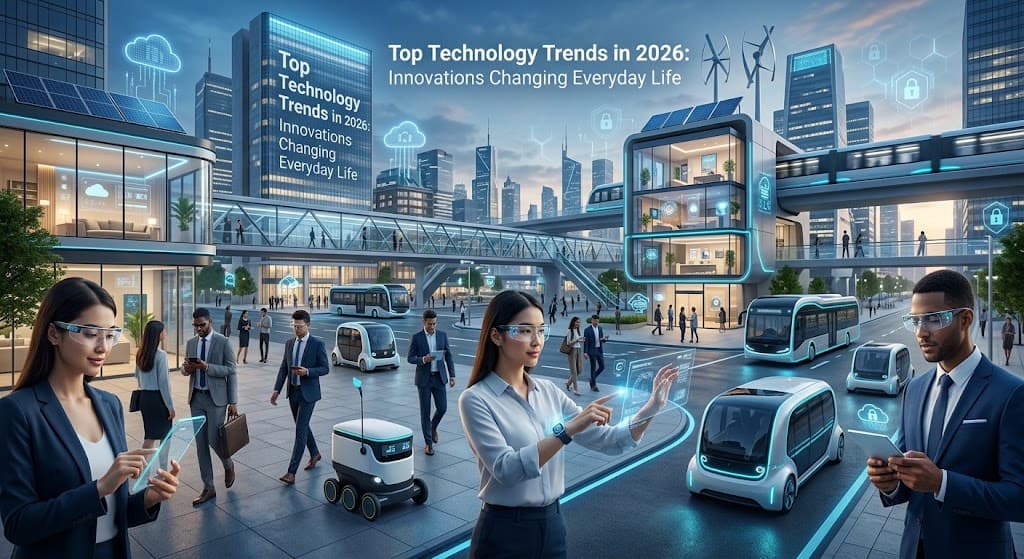
Technology in 2026 is evolving faster than ever, transforming how people work, communicate, shop, learn, travel, and manage their daily lives. From artificial intelligence and smart devices to robotics and next-generation connectivity, emerging technologies are becoming more practical and accessible.
1. Artificial Intelligence Everywhere
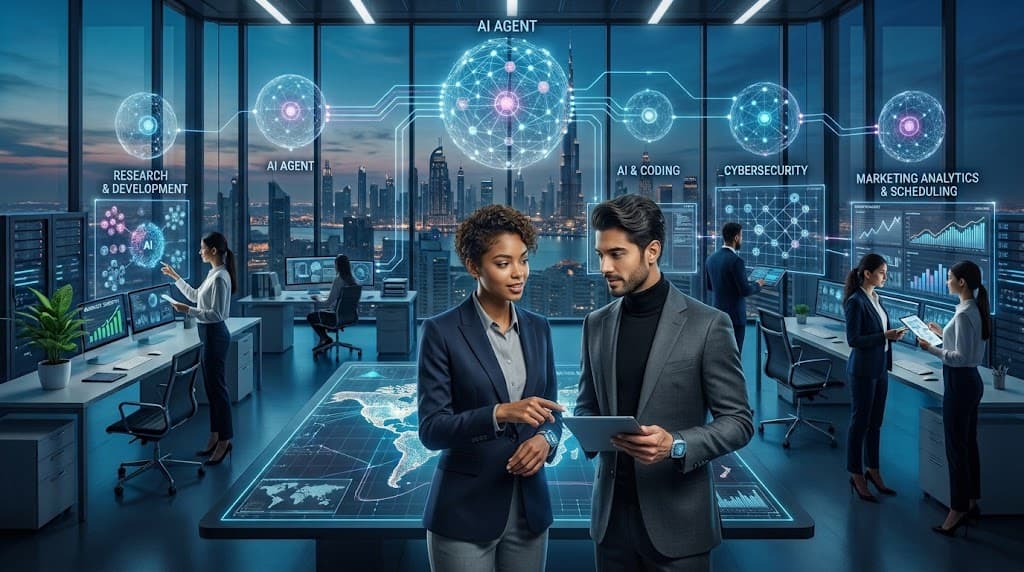
AI is moving beyond chatbots and search engines. AI-powered tools are increasingly being integrated into smartphones, computers, customer service, education, healthcare, and business software.
2. AI-Powered Personal Assistants
Modern digital assistants can help users organize schedules, summarize information, create content, manage tasks, and interact with different applications.
3. Smart Homes Get Smarter
Smart lighting, security cameras, appliances, thermostats, and voice-controlled systems are becoming more connected. AI can help these devices automate everyday routines.
4. Robotics and Automation
Robots are expanding beyond factories. Businesses are exploring robots for warehouses, deliveries, cleaning, healthcare assistance, and other repetitive tasks.
5. Faster and More Connected Devices
Advances in wireless connectivity and edge computing are helping devices communicate more quickly while reducing delays for applications that require real-time processing.
6. Wearable Technology
Smartwatches, fitness trackers, smart glasses, and other wearable devices are becoming increasingly capable of monitoring activity, providing notifications, and supporting personalized digital experiences.
7. Cybersecurity Becomes More Important
As more personal and business activities move online, cybersecurity is becoming a major technology priority. AI-based threat detection and stronger authentication methods are helping organizations respond to evolving cyber threats.
8. The Future of Work
Remote collaboration, AI productivity tools, automation, and digital workplaces are changing how many companies organize work. Employees are increasingly expected to combine traditional skills with digital and AI literacy.
9. AI in Education and Online Learning
AI-powered learning platforms can personalize lessons, generate study materials, and provide instant feedback, making digital education more interactive.
10. Cloud Computing in 2026
Cloud platforms continue to support businesses by providing flexible storage, computing power, software, and collaboration tools without requiring organizations to maintain all infrastructure themselves.
11. Internet of Things (IoT) Expansion
Connected sensors and devices are increasingly being used in homes, transportation, manufacturing, agriculture, and smart-city systems.
12. Augmented Reality and Mixed Reality
AR and mixed-reality technologies are creating new experiences for gaming, education, shopping, training, design, and entertainment.
13. Green Technology and Sustainable Innovation
Technology companies are developing more energy-efficient hardware, renewable-energy solutions, smart grids, and systems designed to reduce resource consumption.
14. Quantum Computing Developments
Quantum computing remains an emerging field with potential applications in areas such as optimization, scientific research, materials development, and cryptography.
15. Digital Payments and Financial Technology
Digital wallets, contactless payments, mobile banking, and automated financial services are continuing to reshape how consumers and businesses manage transactions.
16. AI and Healthcare Technology
Healthcare organizations are exploring AI for medical research, administrative tasks, medical imaging, drug discovery, and personalized care, while human oversight remains important.
17. Autonomous Vehicles and Smart Transportation
AI, sensors, mapping technologies, and connected infrastructure are helping advance autonomous-driving systems and intelligent transportation.
18. Privacy and Responsible Technology
As technology becomes more deeply integrated into daily life, privacy, data protection, transparency, and responsible AI development are becoming increasingly important.
FAQs
1. What are the biggest technology trends in 2026?
Major trends include artificial intelligence, robotics, smart devices, cybersecurity, cloud computing, IoT, extended reality, fintech, and sustainable technology.
2. How is AI changing technology in 2026?
AI is being integrated into software, smartphones, business applications, education, healthcare, customer service, and many other areas.
3. What is the future of AI technology?
AI development is increasingly focused on more capable assistants, automation, multimodal systems, personalized experiences, and integration into everyday software.
4. Is AI the most important technology trend in 2026?
AI is one of the most prominent technology trends, but other areas such as robotics, cybersecurity, quantum computing, and sustainable technology are also developing.
5. How is technology changing the workplace?
AI tools, cloud platforms, automation, and digital collaboration systems are changing workflows and the skills required for many jobs.
6. What are AI agents?
AI agents are software systems designed to perform tasks by interpreting instructions, using available tools, and completing multi-step workflows with varying levels of autonomy.
7. What is IoT technology?
The Internet of Things refers to physical devices connected to networks that can collect, exchange, or process data.
8. Why is cybersecurity important in 2026?
More connected devices and digital services create additional opportunities for cyberattacks, making data protection and secure authentication increasingly important.
9. How is technology affecting education?
Digital learning platforms, AI tutors, interactive tools, and personalized educational software are creating new ways for students to learn and practice skills.
10. What is cloud computing?
Cloud computing provides computing resources such as storage, servers, databases, and software through internet-connected infrastructure.
11. Will robotics become more common?
Robotics is expanding into areas including manufacturing, logistics, healthcare, agriculture, and service industries.
12. What is wearable technology?
Wearable technology includes devices such as smartwatches, fitness trackers, smart glasses, and other electronics designed to be worn on the body.
13. What is mixed reality?
Mixed reality combines digital elements with the physical environment, allowing users to interact with virtual content in real-world surroundings.
14. How can technology support sustainability?
Technology can support sustainability through renewable-energy systems, energy-efficient devices, smart grids, electric transportation, and improved resource management.
15. What is quantum computing?
Quantum computing is a computing approach that uses quantum-mechanical principles to process information in ways fundamentally different from conventional computers.
16. How is technology changing healthcare?
Digital tools and AI are being explored for areas such as medical research, diagnostics, administrative automation, drug discovery, and patient monitoring.
17. What role does technology play in digital payments?
Technology enables mobile wallets, contactless payments, online banking, digital transfers, and other electronic financial services.
18. Are smart homes becoming more popular?
Connected lighting, security systems, appliances, thermostats, and entertainment devices are making smart-home technology increasingly accessible.
19. What technology skills will be useful in the future?
AI literacy, cybersecurity awareness, data analysis, programming, digital communication, problem-solving, and adaptability are increasingly valuable skills.
20. What will technology look like in the future?
Future technology is likely to become more connected, automated, personalized, and AI-assisted, while privacy, security, and responsible development remain important considerations.