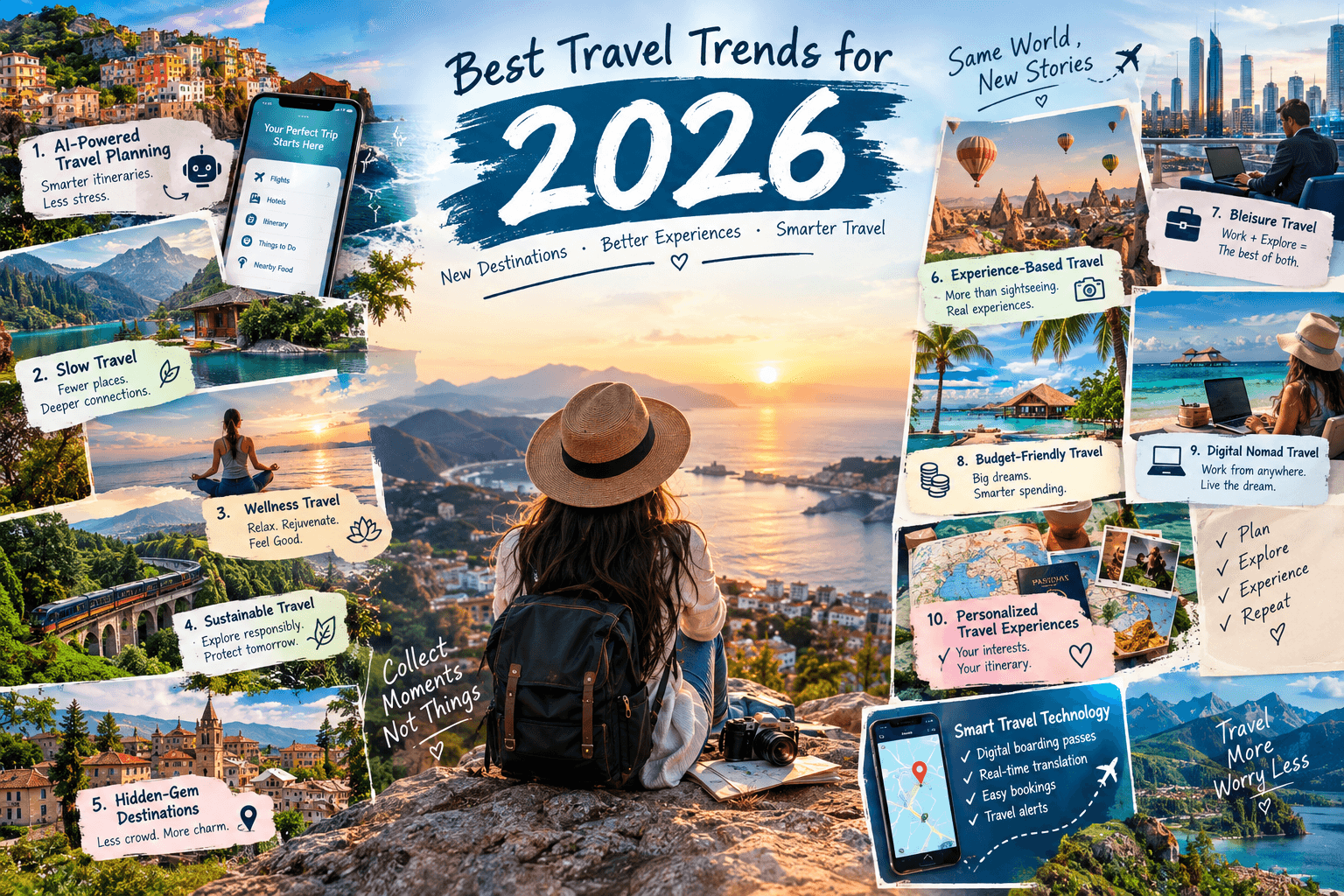
Travel is changing rapidly in 2026. Travelers are no longer simply choosing a destination and booking a standard hotel. Instead, they are looking for more personalized, flexible, meaningful, and technology-driven experiences.
1. AI-Powered Trip Planning
Artificial intelligence is becoming a useful travel-planning assistant. Travelers can use AI tools to create itineraries, compare destinations, organize activities, find restaurants, and adjust plans based on their interests.
Instead of spending hours researching dozens of websites, travelers can increasingly create a personalized starting itinerary in minutes.
Best for: Busy travelers, first-time visitors, and personalized trips.
2. Slow Travel
Slow travel focuses on spending more time in fewer places rather than rushing through multiple destinations.
A traveler might spend two weeks exploring one region instead of visiting five cities in seven days. This approach allows people to understand local culture, enjoy regional food, and travel at a more relaxed pace.
Best for: Couples, families, culture lovers, and people seeking relaxation.
3. Wellness Vacations
Wellness is becoming a major part of modern travel. Instead of simply visiting a resort, travelers are booking trips centered around fitness, relaxation, healthy food, meditation, nature, and spa experiences.
Wellness vacations can range from luxury retreats to affordable nature-focused getaways.
Best for: Relaxation, fitness, self-care, and stress reduction.
4. Bleisure Travel
“Bleisure” combines business and leisure travel.
Remote and hybrid work have made it easier for some professionals to extend work trips by several days. Someone traveling for a business meeting might stay longer to explore the destination rather than immediately returning home.
Best for: Remote workers, entrepreneurs, and business travelers.
5. Off-Season Travel
More travelers are discovering the advantages of visiting popular destinations outside their busiest periods.
Off-season and shoulder-season travel can potentially mean fewer crowds, more accommodation choices, and better prices, although weather and local operating schedules should always be checked.
Best for: Budget-conscious travelers and people who dislike crowds.
6. Experience-First Travel
Instead of choosing a destination first, travelers are increasingly choosing an experience first.
For example, someone might plan a trip around learning to cook local cuisine, hiking a famous trail, attending a music festival, taking a scenic train journey, or experiencing wildlife.
The destination becomes part of the experience rather than the entire reason for the trip.
Best for: Adventure seekers, food lovers, photographers, and culture enthusiasts.
7. Multi-Generational Vacations
Families are increasingly looking for trips that bring multiple generations together.
A single vacation may include grandparents, parents, children, and teenagers. Destinations with family-friendly accommodation, different activity levels, convenient transportation, and flexible dining options can work particularly well.
Best for: Large families and extended-family trips.
8. Digital Detox Getaways
As people spend more time connected to phones, social media, and digital devices, some travelers are deliberately looking for places where they can disconnect.
Digital detox trips may involve countryside stays, mountain cabins, wellness resorts, nature retreats, or remote destinations with limited connectivity.
Best for: People seeking relaxation, nature, and a break from screens.
9. Sustainable and Local Travel
Travelers are paying greater attention to how their trips affect destinations.
This can include staying at locally owned accommodations, supporting local restaurants and businesses, choosing lower-impact transportation where practical, reducing waste, and respecting natural and cultural environments.
Sustainable travel isn't necessarily about giving up comfort. It can mean making more thoughtful choices.
Best for: Environmentally conscious travelers and culturally curious visitors.
10. “Set-Jetting” and Pop-Culture Travel
Movies, television shows, documentaries, and social media continue to influence travel decisions.
A destination featured prominently in a popular film or series can suddenly attract travelers who want to experience the scenery themselves.
This trend is often called set-jetting.
Best for: Film fans, photographers, and pop-culture travelers.
Why Travel Is Changing in 2026
Several factors are influencing modern vacation habits.
Technology
AI-powered planning tools, digital booking platforms, translation tools, mobile payments, and travel apps are making international travel easier to organize.
Flexible Work
Remote and hybrid work have changed how some people combine work and travel.
Search for Meaningful Experiences
Many travelers want more than photographs. They want memorable experiences, cultural connections, outdoor adventures, and opportunities to learn.
Rising Travel Costs
Higher costs are encouraging travelers to become more strategic about destinations, timing, accommodation, and transportation.
How to Use These Trends for Your Next Trip
You don't have to follow every trend. Pick the ones that match your travel style.
Want relaxation? Try wellness travel or a digital detox.
Want to save money? Consider off-season or slow travel.
Love adventure? Build your trip around a specific experience.
Work remotely? Consider adding leisure days to a work trip if your employer and schedule allow it.
Traveling with family? Look for multi-generational destinations with activities for different age groups.
Final Thoughts
Travel in 2026 is becoming more flexible, personalized, and experience-focused. AI is changing how trips are planned, while slow travel, wellness, sustainability, and digital detoxes are changing what travelers want from their vacations.
The biggest trend may be simple: people are increasingly trying to make their limited vacation time more meaningful.
Whether that means staying longer in one place, exploring a destination during the quieter season, disconnecting from technology, or planning an unforgettable experience, the modern traveler has more ways than ever to design a trip around their own priorities.
FAQs
1. What is the biggest travel trend in 2026?
Personalized and experience-focused travel is one of the major trends, with travelers increasingly looking for trips that match their interests and lifestyles.
2. How is AI changing travel planning?
AI can help travelers generate itineraries, research destinations, organize activities, and personalize trip ideas.
3. What is slow travel?
Slow travel means spending more time in fewer destinations instead of trying to see as many places as possible.
4. What is bleisure travel?
Bleisure combines business travel with leisure time, allowing travelers to explore a destination before or after work commitments.
5. Is off-season travel cheaper?
It can be. Prices vary by destination, but traveling outside peak periods may provide better accommodation and flight deals.
6. What is a wellness vacation?
A wellness vacation focuses on activities and experiences related to relaxation, fitness, healthy living, mindfulness, or personal well-being.
7. What is experience-first travel?
Experience-first travel means choosing the main activity or experience you want and then selecting a destination around it.
8. Why is digital detox travel becoming popular?
People increasingly want breaks from constant notifications, social media, and screen time, making remote and nature-focused destinations attractive.
9. What is sustainable travel?
Sustainable travel involves making choices that can reduce negative environmental and social impacts while supporting local communities.
10. What is set-jetting?
Set-jetting is traveling to locations featured in movies, television shows, or other popular entertainment.
11. Is AI reliable for travel planning?
AI can be useful for ideas and itinerary planning, but travelers should verify important information such as opening hours, entry requirements, transportation schedules, and current travel advisories.
12. What is the best travel trend for families?
Multi-generational travel can be particularly useful for families because trips can be designed around different ages and interests.
13. How can I make my vacation more relaxing?
Consider staying longer in one destination, reducing the number of activities, traveling during quieter periods, and choosing accommodation that supports your preferred pace.
14. How can I save money while following 2026 travel trends?
Travel during shoulder seasons, compare accommodation options, consider less crowded destinations, and focus spending on experiences that matter most to you.
15. Is slow travel better than visiting many destinations?
It depends on your preferences. Slow travel offers more time to experience a place, while multi-destination trips allow travelers to see more locations.
16. What is the best trend for solo travelers?
Solo travelers may enjoy experience-first travel, wellness retreats, slow travel, and organized cultural or adventure experiences.
17. Can remote workers travel while working?
Some remote workers combine work and travel, but they should consider employer policies, internet reliability, time zones, visa rules, and tax requirements.
18. How can travelers make their trips more sustainable?
Using public transportation where practical, avoiding unnecessary waste, supporting local businesses, respecting wildlife, and choosing responsible accommodations can help.
19. Will technology replace traditional travel agents?
Technology can simplify many travel-planning tasks, but travel professionals can still be valuable for complicated itineraries, group trips, luxury travel, and situations requiring specialized assistance.
20. What will define travel in 2026?
Personalization, flexibility, meaningful experiences, wellness, technology, and more conscious travel choices are likely to remain important throughout 2026.