
How Digital Payments Are Reshaping International Commerce
R
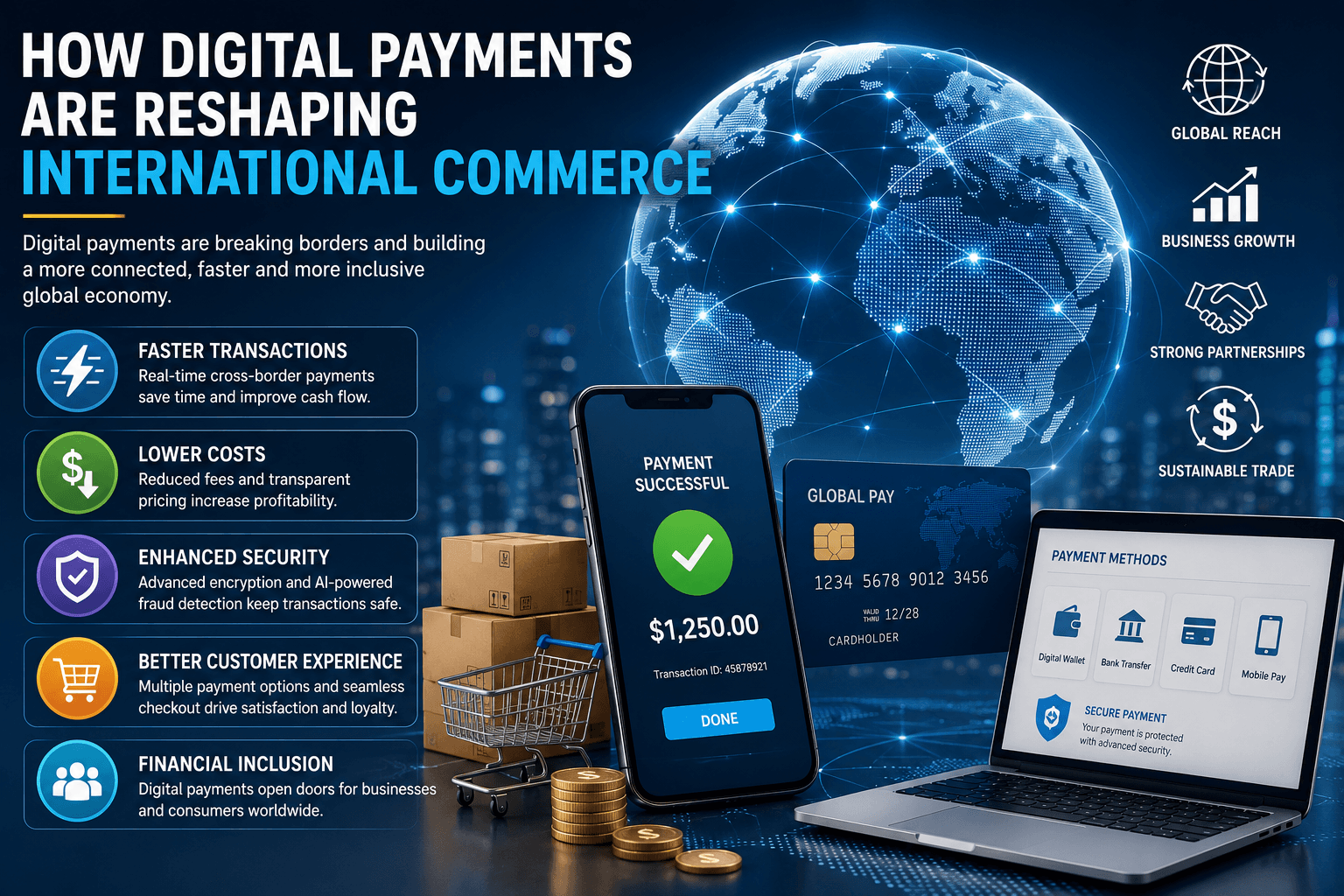
International commerce has undergone a remarkable transformation over the past decade, and one of the biggest drivers of this change is the rapid evolution of digital payments. Businesses and consumers now expect fast, secure, and convenient payment solutions regardless of where they are located.
From online marketplaces and cross-border e-commerce to business-to-business (B2B) transactions, digital payment technologies are making international trade more accessible and efficient than ever before. As global commerce continues to expand in 2026, companies that embrace modern payment systems are better positioned to reach international customers and streamline financial operations.
The Rise of a Cashless Global Economy
Cash is no longer the preferred payment method for many businesses and consumers. Digital transactions have become the standard across retail, e-commerce, travel, logistics, and financial services.
Businesses now rely on:
Digital wallets
Mobile payment apps
Online banking
Instant bank transfers
Contactless payments
Virtual business cards
These payment methods simplify transactions while reducing delays and operational costs.
Faster Cross-Border Transactions
Traditional international payments often required several business days to process.
Modern digital payment platforms significantly reduce transfer times by enabling near real-time transactions between businesses, suppliers, and customers.
Faster payments help companies:
Improve cash flow
Pay suppliers more efficiently
Reduce transaction delays
Increase customer satisfaction
Accelerate international business operations
Speed has become a major competitive advantage in global commerce.
Supporting the Growth of E-Commerce
Cross-border e-commerce continues to grow rapidly as consumers purchase products from international retailers.
Digital payment systems make this possible by allowing customers to complete transactions quickly and securely using their preferred payment methods.
Businesses benefit through:
Higher conversion rates
Simplified international sales
Expanded global reach
Reduced payment friction
Better customer experiences
The ability to accept multiple payment options is becoming essential for online retailers.
Improved Security and Fraud Prevention
Security remains a top priority for businesses handling digital transactions.
Modern payment providers use advanced technologies such as:
Encryption
Tokenization
Multi-factor authentication
AI-powered fraud detection
Real-time transaction monitoring
These security measures help reduce fraud while protecting sensitive financial information.
Lower Transaction Costs
Traditional international banking often involves multiple intermediaries, resulting in higher fees.
Digital payment platforms streamline the payment process by reducing unnecessary processing costs.
Benefits include:
Lower transfer fees
Transparent pricing
Reduced currency conversion costs
Faster settlement times
Improved profitability
Cost savings are particularly valuable for small and medium-sized businesses expanding internationally.
Better Customer Experience
Consumers expect flexible payment options when shopping online.
Businesses that offer digital payment solutions improve customer satisfaction by providing:
Faster checkout
Multiple payment methods
Secure transactions
Mobile-friendly payment experiences
Instant payment confirmations
Convenient payment experiences often lead to increased customer loyalty and repeat purchases.
Mobile Payments Continue to Expand
Smartphones have become powerful financial tools.
Mobile payment applications allow consumers and businesses to send and receive payments from virtually anywhere.
Mobile commerce continues to grow because it offers:
Convenience
Speed
Accessibility
Secure authentication
Easy integration with online shopping
Businesses are increasingly optimizing their websites for mobile payment experiences.
AI Is Making Payments Smarter
Artificial intelligence is transforming payment systems by improving efficiency and reducing risks.
AI helps payment providers:
Detect fraudulent transactions
Analyze customer behavior
Approve legitimate payments faster
Improve credit risk assessments
Automate compliance checks
Machine learning continuously improves payment accuracy while strengthening security.
Supporting Financial Inclusion
Digital payments are expanding access to financial services in many developing markets.
Small businesses can now participate in international trade without relying solely on traditional banking infrastructure.
Benefits include:
Easier business registration
Access to online marketplaces
Faster international payments
Greater economic participation
New opportunities for entrepreneurs
Financial inclusion supports broader economic growth worldwide.
Challenges Businesses Must Address
Despite rapid adoption, businesses should remain aware of several challenges.
Cybersecurity Risks
Payment systems remain attractive targets for cybercriminals.
Regulatory Compliance
International payment regulations vary between countries.
Currency Exchange
Managing multiple currencies requires effective financial planning.
Consumer Trust
Businesses must maintain secure payment environments to protect customer confidence.
Investing in trusted payment technologies helps address these concerns.
The Future of Digital Payments
The future of international commerce will continue to be shaped by payment innovation.
Emerging developments include:
AI-powered payment processing
Embedded finance
Biometric authentication
Real-time global settlements
Open banking integration
Digital identity verification
Blockchain-based payment infrastructure
Central bank digital currencies (CBDCs)
These innovations promise faster, more secure, and more efficient international transactions.
Conclusion
Digital payments have become the foundation of modern international commerce. They enable businesses to process transactions faster, reduce costs, improve security, and reach customers around the world with greater ease.
As global trade becomes increasingly digital, companies that invest in modern payment technologies will strengthen their competitiveness and unlock new opportunities for growth. In 2026 and beyond, seamless digital payments will continue to play a central role in shaping the future of the global economy.
| Category | Details |
|---|---|
| Topic | Business |
| Author | Rose |
| Published | 27/06/2026 |
| Read Time | Not set |
R