How Remote and Hybrid Work Are Changing Company Culture
L
Introduction
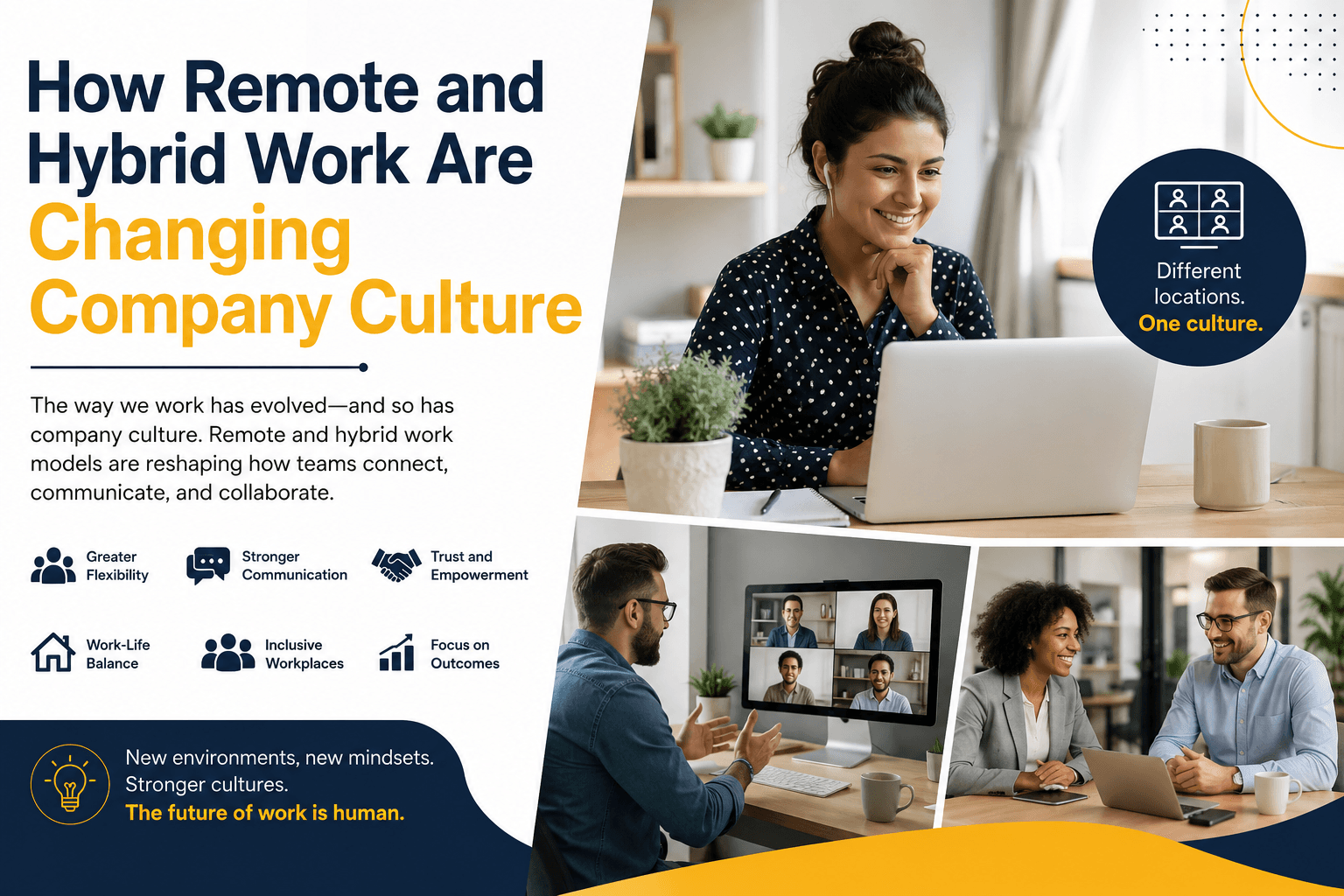
The workplace has undergone a remarkable transformation over the past few years. Remote and hybrid work, once considered temporary solutions, have become permanent strategies for businesses worldwide. In 2026, organizations are redefining company culture to support flexible work environments while maintaining productivity, collaboration, and employee engagement.
Advances in cloud computing, collaboration platforms, artificial intelligence, and digital communication have made it possible for teams to work effectively from virtually anywhere. At the same time, businesses have realized that flexibility can improve employee satisfaction, attract top talent, and reduce operational costs.
However, remote and hybrid work also present new challenges. Companies must find innovative ways to preserve workplace culture, strengthen communication, and maintain a sense of belonging among distributed teams. Understanding these changes is essential for business leaders seeking long-term success.
The Rise of Flexible Work
Flexible work has evolved into a key business strategy rather than an employee benefit.
Many organizations now offer:
Fully remote positions
Hybrid work schedules
Flexible working hours
Results-based performance models
Virtual collaboration environments
This shift reflects changing employee expectations and the growing demand for work-life balance.
1. Employee Well-Being Has Become a Priority
Modern businesses recognize that employee well-being directly influences productivity and retention.
Remote and hybrid work offer benefits such as:
Reduced commuting time
Better work-life balance
Increased schedule flexibility
Lower stress levels
Greater autonomy
Many organizations are also investing in mental health programs, wellness initiatives, and flexible leave policies to support their workforce.
2. Company Culture Is Becoming More Purpose-Driven
In traditional offices, culture often developed naturally through daily interactions.
Remote teams require a more intentional approach.
Successful organizations now build culture through:
Clear company values
Transparent leadership
Regular communication
Virtual team-building activities
Recognition programs
Shared goals and mission
Culture is increasingly defined by behaviors and values rather than physical office spaces.
3. Communication Has Become More Strategic
Distributed teams rely heavily on digital communication.
Businesses use collaboration tools for:
Video meetings
Instant messaging
Project management
Knowledge sharing
Virtual brainstorming
Cross-functional collaboration
Leaders are learning to communicate more clearly, consistently, and transparently to keep employees informed and engaged.
4. Performance Is Measured by Results
Remote work has encouraged organizations to move away from measuring hours worked toward evaluating outcomes.
Businesses increasingly focus on:
Project completion
Goal achievement
Quality of work
Customer satisfaction
Team collaboration
Innovation
This results-oriented approach gives employees greater flexibility while promoting accountability.
5. Access to Global Talent
One of the greatest advantages of remote work is access to a broader talent pool.
Organizations are no longer limited by geographic boundaries when recruiting skilled professionals.
Hiring globally allows businesses to:
Fill specialized roles
Increase workforce diversity
Access new perspectives
Build multilingual teams
Expand international operations
This flexibility strengthens innovation and competitiveness.
6. Technology Is Strengthening Collaboration
Modern workplace technology continues to improve teamwork.
Businesses increasingly rely on:
Cloud computing
AI-powered productivity tools
Digital whiteboards
Shared document platforms
Workflow automation
Virtual meeting software
These technologies enable seamless collaboration regardless of employee location.
7. Leadership Styles Are Evolving
Managing distributed teams requires different leadership skills.
Successful leaders prioritize:
Trust
Empathy
Transparency
Active listening
Coaching
Frequent feedback
Rather than closely monitoring employees, leaders increasingly focus on empowering teams and removing obstacles to success.
8. Diversity and Inclusion Are Expanding
Remote work creates opportunities for more inclusive hiring.
Organizations can recruit talented professionals regardless of:
Geographic location
Physical disabilities
Family responsibilities
Local labor market limitations
Flexible work arrangements often improve workplace accessibility while supporting more diverse teams.
9. Cybersecurity Has Become Essential
As employees access business systems from multiple locations, cybersecurity is more important than ever.
Businesses are investing in:
Multi-factor authentication
Secure cloud platforms
VPNs
Employee cybersecurity training
Endpoint protection
Data encryption
Strong security practices protect sensitive business information while enabling safe remote work.
10. Continuous Learning Supports Long-Term Success
The modern workplace continues to evolve rapidly.
Organizations are investing in employee development through:
Online training programs
Digital learning platforms
Leadership development
AI skills training
Cybersecurity education
Professional certifications
Continuous learning helps employees adapt to changing technologies and business needs.
Challenges of Remote and Hybrid Work
Despite its many benefits, flexible work also presents challenges.
Businesses may experience:
Reduced face-to-face interaction
Communication gaps
Employee isolation
Collaboration difficulties
Maintaining company culture
Time zone coordination
Digital fatigue
Addressing these issues requires thoughtful leadership, effective technology, and regular employee engagement.
Best Practices for Building a Strong Hybrid Culture
Organizations can strengthen remote and hybrid work environments by:
Communicating openly and consistently.
Establishing clear expectations and goals.
Encouraging regular team interaction.
Investing in collaboration technology.
Recognizing employee achievements.
Supporting work-life balance.
Promoting continuous learning and development.
Creating opportunities for both virtual and in-person collaboration when appropriate.
These strategies help maintain strong relationships while improving organizational performance.
Conclusion
Remote and hybrid work are fundamentally reshaping company culture in 2026. Flexibility, technology, employee well-being, and results-driven leadership are becoming defining characteristics of successful organizations.
Rather than viewing workplace flexibility as a challenge, forward-thinking businesses are embracing it as an opportunity to attract top talent, improve employee satisfaction, increase productivity, and build more resilient organizations.
As the future of work continues to evolve, companies that invest in communication, collaboration, trust, and employee development will be best positioned to create thriving workplace cultures—regardless of where their teams are located.
| Category | Details |
|---|---|
| Topic | Finance |
| Author | Lora |
| Published | 29/06/2026 |
| Read Time | Not set |
L