

The Future of Voice Commerce: Shopping Without Screens in 2026
L
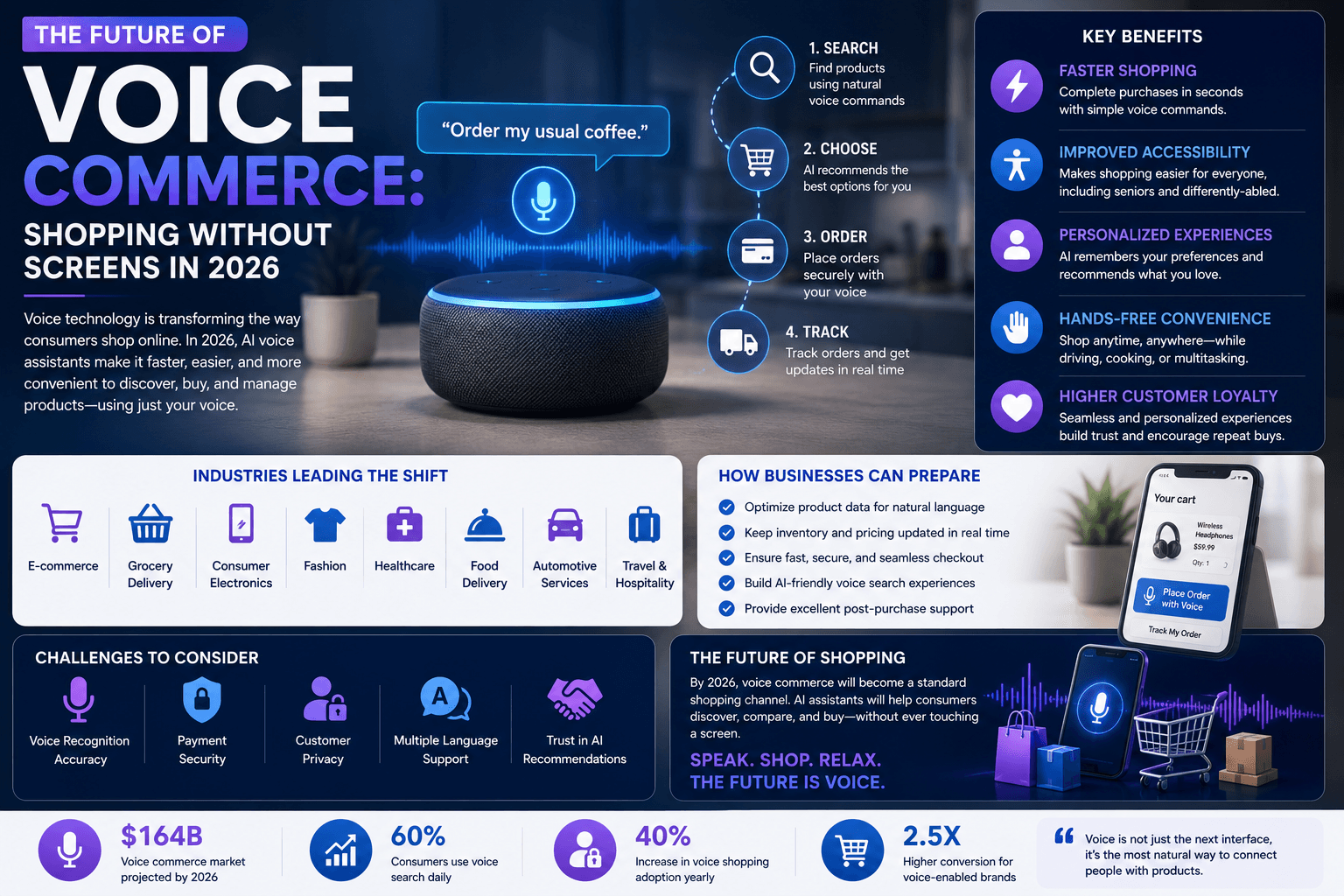
Voice technology is rapidly changing the way consumers interact with brands. In 2026, voice commerce is becoming one of the fastest-growing trends in digital retail. Instead of browsing websites or mobile apps, customers are simply speaking to AI assistants to search for products, compare prices, place orders, and track deliveries.
As AI-powered voice assistants become smarter, businesses are preparing for a future where shopping happens through conversation rather than screens.
What Is Voice Commerce?
Voice commerce (also known as V-commerce) allows consumers to purchase products and services using voice commands through AI assistants, smart speakers, smartphones, connected vehicles, and wearable devices.
Customers can simply say:
"Order my usual coffee."
"Find the best wireless earbuds under $100."
"Track my latest package."
"Buy printer ink before Friday."
The AI assistant completes the entire shopping process within seconds.
Why Voice Commerce Is Growing
Consumers want faster, hands-free, and more convenient shopping experiences. AI-powered voice assistants eliminate typing, searching, and navigating multiple websites.
Businesses adopting voice commerce can reach customers wherever they are—at home, in the car, or at work.
Key Benefits
1. Faster Shopping
Customers can complete purchases using simple voice commands in just a few seconds.
2. Improved Accessibility
Voice commerce makes online shopping easier for older adults and people with visual or physical disabilities.
3. Personalized Recommendations
AI remembers shopping history, favorite brands, sizes, and budgets to recommend relevant products.
4. Hands-Free Convenience
Consumers can shop while cooking, driving, exercising, or multitasking.
5. Higher Customer Loyalty
Personalized voice experiences encourage repeat purchases and stronger brand relationships.
Industries Leading the Shift
Voice commerce is transforming:
E-commerce
Grocery Delivery
Consumer Electronics
Fashion
Healthcare
Food Delivery
Automotive Services
Travel & Hospitality
How Businesses Can Prepare
To succeed in voice commerce, businesses should:
Optimize product descriptions for natural language.
Use structured product data.
Keep inventory updated in real time.
Ensure fast and secure checkout.
Build AI-friendly search experiences.
Challenges to Consider
Businesses should also address:
Voice recognition accuracy
Payment security
Customer privacy
Multiple language support
Trust in AI recommendations
Addressing these concerns will encourage wider adoption.
The Future of Shopping
Experts predict that voice commerce will become a standard shopping channel alongside websites and mobile apps. As AI assistants continue improving, consumers will increasingly rely on voice to discover products, compare prices, and complete purchases without touching a screen.
Businesses that optimize for voice search and AI assistants today will gain a competitive advantage in tomorrow's retail landscape.
Final Thoughts
Voice commerce represents the next evolution of online shopping. By combining artificial intelligence, natural language processing, and personalized recommendations, businesses can create faster, simpler, and more engaging customer experiences.
Companies that embrace voice commerce early will be well-positioned to lead the future of digital retail
SEO Meta Title
The Future of Voice Commerce: Shopping Without Screens in 2026
Meta Description
Discover how voice commerce is transforming online shopping with AI-powered voice assistants, hands-free purchasing, and personalized customer experiences.
Focus Keyword
Voice Commerce
URL Slug
future-of-voice-commerce-shopping-without-screens-2026
| Category | Details |
|---|---|
| Topic | Finance |
| Author | Lora |
| Published | 07/07/2026 |
| Read Time | Not set |
L