
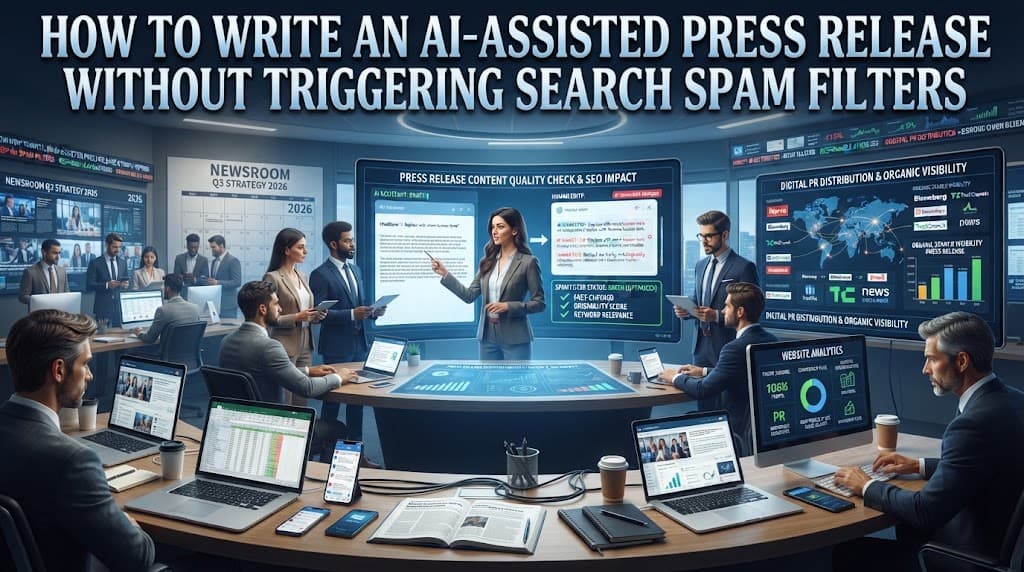
In today's fast-moving digital world, a well-written press release can help businesses, startups, organizations, and individuals share important news with journalists, customers, investors, and the public. Whether you are launching a new product, announcing a business partnership, sharing company news, or promoting an upcoming event, understanding how to write an effective press release is an important communication skill.
This beginner's guide explains everything you need to know about writing a professional press release in 2026.
What Is a Press Release?
A press release is an official written announcement that shares newsworthy information with the media and the public. It is usually written in a clear, professional, and factual style.
Businesses and organizations commonly use press releases to announce:
New products or services
Company launches
Business partnerships
Major achievements
Events
Awards
Leadership changes
Funding announcements
Research or industry reports
The main purpose of a press release is to communicate important news in a format that journalists and media professionals can easily understand and use.
Why Are Press Releases Important in 2026?
Press releases remain valuable because businesses need credible ways to communicate important announcements. In 2026, digital media, online publications, social platforms, and AI-powered search have changed how information is discovered and shared.
A strong press release can help organizations:
Build Brand Awareness
A press release can introduce your business or announcement to a wider audience.
Gain Media Attention
Journalists may use relevant press releases as a starting point for news stories and coverage.
Establish Credibility
Professional announcements can help a company communicate clearly and maintain a trustworthy public image.
Support Online Visibility
When published on relevant and reputable platforms, a press release may help people discover your brand and important announcements.
Share Important Information Quickly
Press releases provide a structured way to communicate the most important details of a story.
The Basic Structure of a Press Release
A professional press release usually includes several important sections.
1. A Strong Headline
The headline is one of the first things readers see. It should clearly explain the main news.
A good press release headline should be:
Clear
Specific
Newsworthy
Concise
Easy to understand
Example:
ABC Company Launches AI-Powered Customer Support Platform for Small Businesses
Avoid vague headlines such as:
ABC Company Has Exciting News
The second example does not explain what the actual news is.
2. Add the Release Date and Location
Include the date and, when relevant, the location where the announcement is being issued.
For example:
August 29, 2026 – New York, NY
This gives readers important context about the announcement.
3. Write a Powerful Opening Paragraph
The first paragraph should answer the most important questions:
Who?
What?
When?
Where?
Why?
Readers should quickly understand the main announcement without needing to read the entire press release.
Example:
ABC Company today announced the launch of its new AI-powered customer support platform designed to help small businesses improve response times and automate routine customer service tasks.
4. Explain the Details
The next paragraphs should provide more information about the announcement.
You can include:
Important product features
Background information
Business goals
Statistics or research
Event details
Information about the people involved
Keep the information relevant to the main news.
5. Include a Meaningful Quote
A quote from a company founder, executive, expert, or spokesperson can add a human perspective.
For example:
“Our goal is to make advanced technology more accessible to small businesses,” said Jane Smith, CEO of ABC Company. “This new platform is designed to help teams work more efficiently while improving the customer experience.”
The quote should provide useful insight rather than simply repeating information already mentioned.
6. Add Supporting Facts and Information
Supporting information can make your announcement more valuable and credible.
Depending on the topic, you might include:
Market research
Product data
Customer results
Industry trends
Event information
Partnership details
Make sure any facts or statistics are accurate and properly sourced.
7. Include a Company Boilerplate
A boilerplate is a short paragraph about your company. It usually appears near the end of the press release.
Example:
About ABC Company
ABC Company is a technology company focused on developing digital solutions for small and growing businesses. The company provides tools designed to improve productivity, customer communication, and business operations.
Keep this section brief and factual.
8. Add Contact Information
Make it easy for journalists or interested readers to contact the appropriate person.
Include:
Contact name
Company name
Email address
Website
Phone number, if appropriate
How Long Should a Press Release Be?
There is no single perfect length, but most press releases should be concise and focused.
A typical press release is often between 400 and 800 words. However, the length should depend on the complexity of the announcement.
The goal is not to write as much as possible. The goal is to communicate the news clearly.
How to Make Your Press Release Newsworthy
Not every business update needs a press release. Before writing one, ask yourself whether the announcement is genuinely interesting or useful to your intended audience.
Potentially newsworthy announcements include:
A major product launch
Significant company growth
Important funding
A major partnership
An innovative technology development
A large community initiative
Important research findings
A major event
Try to focus on why the announcement matters to people outside your organization.
Press Release Writing Tips for 2026
Write for Humans First
Your press release should be easy for people to read and understand. Avoid filling it with unnecessary keywords.
Clear communication is more important than keyword repetition.
Use a Professional Tone
A press release should usually be factual and professional.
Avoid excessive promotional language such as:
Revolutionary
Incredible
The best ever
Guaranteed success
Instead, explain what makes the announcement important using facts and specific details.
Keep the Language Simple
Short sentences and clear paragraphs can make your announcement easier to understand.
Avoid complicated language when a simple explanation will work better.
Use AI Carefully
AI writing tools can help with brainstorming, outlining, grammar, and editing. However, always review the final press release carefully.
Check:
Facts
Names
Dates
Statistics
Quotes
Contact details
Never publish AI-generated information without verifying its accuracy.
Optimize for Digital Discovery
Use clear and relevant language that accurately describes your announcement.
Include important terms naturally in:
The headline
Opening paragraph
Subheadings, when appropriate
Image descriptions
Links to relevant pages
Avoid keyword stuffing.
Common Press Release Mistakes to Avoid
Many press releases fail because they focus too much on promotion instead of actual news.
Avoid these common mistakes:
Writing a Weak Headline
Your headline should clearly communicate the announcement.
Making It Too Promotional
Journalists and readers are usually more interested in useful information than advertising language.
Burying the Main News
The most important information should appear near the beginning.
Using Long Paragraphs
Large blocks of text can make the press release difficult to read.
Forgetting Contact Information
Always provide a way for media professionals to contact the appropriate person.
Sending the Same Release to Everyone Without Targeting
Different journalists cover different industries. Personalizing your outreach can improve relevance.
Simple Press Release Template
FOR IMMEDIATE RELEASE
[Clear and Newsworthy Headline]
[City, Date] – [Company or organization name] today announced [main news]. The announcement will [explain why it matters].
[Provide additional details about the announcement, including important information, features, dates, or background.]
“[Meaningful quote about the announcement],” said [Name and Position].
[Add additional supporting information, relevant facts, or details.]
About [Company Name]
[Write a short description of the organization and what it does.]
Media Contact
Name: [Contact Name]
Company: [Company Name]
Email: [Email Address]
Website: [Website URL]
Final Thoughts
Writing an effective press release in 2026 requires more than simply announcing that something happened. The best press releases communicate genuinely newsworthy information in a clear, concise, and professional format.
Start with a strong headline, explain the most important news immediately, provide useful details, include a meaningful quote, and make it easy for journalists to contact you.
Whether you are a small business owner, entrepreneur, startup founder, marketer, or PR professional, learning how to write a strong press release can help you communicate important news more effectively.
Frequently Asked Questions
1. What is a press release?
A press release is an official written announcement that shares newsworthy information with the media and the public.
2. How long should a press release be?
Most press releases are commonly between 400 and 800 words, depending on the complexity of the announcement.
3. What makes a press release newsworthy?
A press release is more likely to be newsworthy when it involves a significant launch, partnership, achievement, event, research finding, or development that matters to a wider audience.
4. Can a small business write a press release?
Yes. Small businesses can use press releases to announce important and genuinely newsworthy developments.
5. Should a press release include keywords?
Relevant terms can be used naturally, but keyword stuffing should be avoided.
6. Can AI write a press release?
AI can help with drafting and editing, but all facts, names, quotes, and details should be reviewed and verified by a human.
7. What should the headline of a press release include?
The headline should clearly and concisely communicate the main news or announcement.
8. Should I include quotes in a press release?
Yes, a meaningful quote from a relevant spokesperson can add useful context and a human perspective.
9. Where can I publish a press release?
Press releases can be published on a company website, newsroom, relevant PR distribution platforms, or shared directly with appropriate journalists and media outlets.
10. How often should a company publish press releases?
Companies should publish press releases when they have genuinely newsworthy announcements to share.